Blog

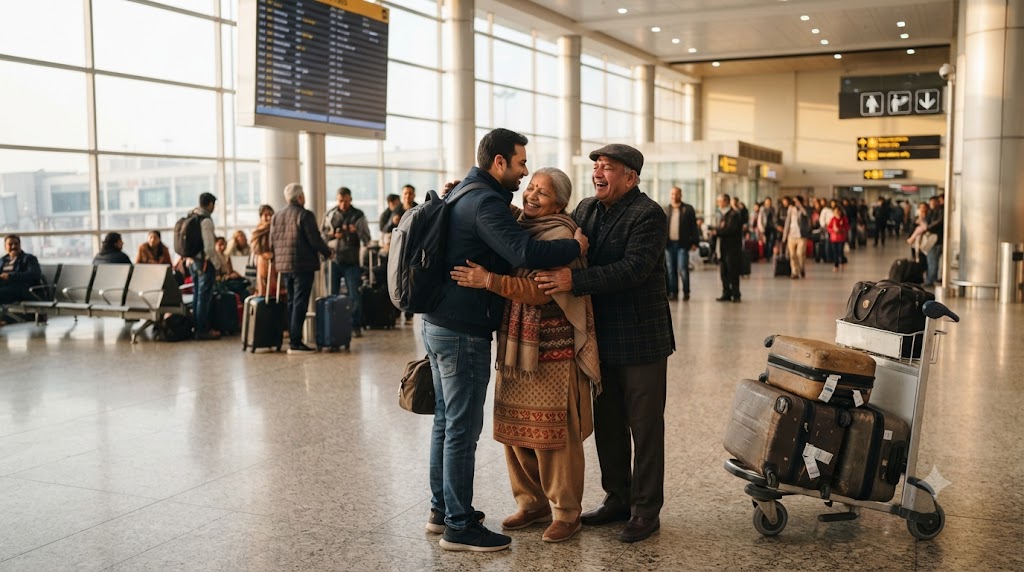
  • VFS Visa Appointment Not Available in Chandigarh: What Actually Works

    VFS Visa Appointment Not Available in Chandigarh: What Actually Works

    “No appointment slots are currently available.” If you have tried booking a visa appointment through VFS Global recently, you have probably seen this message more than once. At Flywings Tour & Packages Pvt Ltd, this is one of the most common frustrations we hear from Chandigarh applicants, and most of the advice floating around either doesn’t apply locally or quietly points people toward paid slot sellers that carry real risk. Here is what actually works.

    Quick context: VFS Global runs the visa application centres for most countries’ Indian missions, including Chandigarh, and slots are released by each destination country’s own system, first come, first served. Shortage isn’t a Chandigarh-specific glitch, it reflects genuine demand, but a few practical habits make a real difference, and a few shortcuts are worth avoiding entirely.

    Why Slots Disappear So Fast

    VFS doesn’t control how many appointment slots exist, each country’s consulate or embassy decides the allocation, and VFS simply operates the booking system on their behalf. Slots are often released in batches rather than all at once, which is why refreshing the page at a specific time of day sometimes works better than checking randomly throughout the day. Peak travel seasons, summer and the winter holiday window in particular, see the sharpest demand spikes, and Schengen countries tend to run tighter than others because of shared quota limits across the zone.

    What to Do Before You Even Try Booking

    • Complete the destination country’s own online application first. Most VFS booking systems need a reference number from the country’s official visa portal before a slot can even be selected, applicants who skip this step waste time discovering it mid-booking
    • Prepare your documents in full beforehand, so you can move quickly the moment a slot appears rather than scrambling to scan a missing paper
    • Book every family member in the same session where possible, linked bookings keep a family’s appointments on the same day, which gets harder to arrange once slots are booked separately
    • Check neighbouring VFS centres, depending on the destination country’s jurisdiction rules, a centre in a nearby city sometimes has more availability than Chandigarh on a given day

    Travel consultant reviewing a visa document checklist with a client across a desk
    A complete, ready-to-submit document file is what actually saves time, slot or no slot

    The Scam to Watch For

    Search for “VFS appointment Chandigarh” and you will find no shortage of people and pages offering to get you a slot for a fee. Some of this is legitimate assistance, document preparation and appointment booking on your behalf, which is a normal part of what a visa desk does. Some of it is not. Paid slot-finder services that use automated bots to grab appointments violate VFS’s terms, and a booking obtained that way can be cancelled without warning, sometimes after you’ve already taken leave and arranged travel around it. A few warning signs worth knowing:

    • Anyone asking for your VFS or visa portal login credentials should raise an immediate flag, a legitimate assistant should not need to log in as you
    • Guaranteed slots for an unusually high fee, no legitimate service can guarantee a government-controlled allocation, genuine help is about preparation and speed, not guarantees
    • Only applicants can collect the passport after processing, if someone claims they can collect it for you without proper authorisation, that’s a red flag

    Our own approach is the legitimate version of this help, we prepare your complete file in advance through our tourist visa assistance service, monitor for genuine slot releases, and book through the official system the moment one opens, with you fully in the loop and your own credentials throughout.

    Processing Timelines, Once You Have the Appointment

    Getting the appointment is only the first hurdle, processing time after submission varies significantly by destination. Based on what our desk sees regularly, UAE applications typically move in three to four working days, Singapore around a week, Schengen countries and the UK usually need three to six weeks during peak season, and US visas depend heavily on interview slot availability, which can itself involve a wait. We always quote the realistic current timeline before you commit to travel dates, since published processing times and actual experience can diverge during busy periods.

    What If You Still Can’t Find a Slot?

    • Check at different times of day, early morning and late evening sometimes catch batch releases that get missed during the day
    • Widen your date range, if your travel dates allow flexibility, a wider acceptable window increases the odds of catching an available slot
    • Ask about premium or priority services, several VFS centres offer a paid premium lounge or priority appointment option directly through the official system, worth checking if your timeline is tight, since this is different from a third-party slot-seller and goes through VFS’s own legitimate channel
    • Consider whether your trip dates can shift, sometimes the honest answer is building in more lead time rather than fighting an oversubscribed system

    Who This Guide Is For

    • First-time visa applicants confused by why a slot never seems to appear
    • Families trying to book linked appointments together, which gets harder the longer you wait
    • Anyone who has already encountered a slot-seller offer and wants to understand what’s legitimate before paying for anything
    • Travellers on a tight timeline who need a realistic read on whether their dates are still workable

    Frequently Asked Questions

    Why does VFS keep showing “no appointment slots available”?

    Slot numbers are set by each destination country’s consulate, not VFS itself, and demand regularly outpaces supply during peak season. Slots are often released in batches at specific times rather than continuously throughout the day.

    Is it safe to pay someone to book a VFS appointment for me?

    Legitimate document preparation and appointment assistance is normal and safe. Paying for a guaranteed slot obtained through bots or unofficial means violates VFS’s terms and the booking can be cancelled without warning. Never share your portal login credentials with anyone offering this.

    Can I book my visa appointment before completing the online application?

    No, most VFS booking systems require a reference number generated by the destination country’s own official visa application first. Attempting to book before this step usually fails.

    Does a travel agent get different or better VFS slots than individuals?

    No, agents use the same official booking system as everyone else. What a good visa desk actually adds is a complete, ready-to-submit file and consistent monitoring for genuine releases, not special access.

    What happens if my documents are incomplete when my appointment arrives?

    Most centres will not accept an incomplete file, meaning the appointment is wasted and a new one has to be booked, often weeks later during busy periods. This is why document preparation before booking matters as much as the booking itself.

    Can I change my VFS centre if Chandigarh has no slots?

    Sometimes, depending on the destination country’s jurisdiction rules for which centres can serve which applicants. Check the specific country’s portal, since this varies and isn’t available for every destination.

    Let Us Handle the File While You Wait for the Slot

    A visa appointment is only useful if the file behind it is ready, and that preparation is where real time gets saved. Explore our tourist visa assistance service, or call us directly at +91 99143 10333 and we will get your documents appointment-ready while you watch for a slot. Flywings team since 2013.
  • Parent Visitor Visa from Chandigarh: Visiting Your Child in Canada, UK or Australia

    Parent Visitor Visa from Chandigarh: Visiting Your Child in Canada, UK or Australia

    Punjab has one of the largest NRI populations in India, and at Flywings Tour & Packages Pvt Ltd, one of our most common requests is not a holiday at all, it is parents wanting to visit a son or daughter settled in Canada, the UK or Australia. The visa category is different from a regular tourist trip, the documentation is heavier, and the rules genuinely vary by country. This guide covers what we see working, and where families most often go wrong.

    Important boundary, stated upfront: this guide covers the visitor visa route only, parents travelling to see their child, not to live, work, study or settle. We are a tourist visa assistance desk, not a licensed immigration consultancy, and we do not handle permanent residency, sponsorship petitions or study/work visa strategy. For those routes, a registered immigration consultant or lawyer is the right call. What we do well is the travel side, document preparation, appointment booking, insurance guidance and honest file review for the visitor visa itself.

    Three Countries, Three Different Visitor Visa Rules

    Country Visa Type Typical Validity The Non-Negotiable
    Canada Super Visa (parents and grandparents) or regular Visitor Visa Super Visa allows stays of up to five years per entry, multiple entries for up to ten years Mandatory medical insurance, commonly cited around CAD 100,000 coverage. Sources differ on whether the insurer must be Canadian or can be an approved foreign insurer under recent rule changes, so confirm the current requirement with IRCC before buying a policy
    United Kingdom Standard Visitor visa Typically up to six months per visit Clear proof of intent to return to India, sufficient funds, and private travel insurance, since UK public healthcare charges visitors for most treatment
    Australia Visitor visa subclass 600 (Tourist stream most common for parents), Sponsored Family stream for longer stays Typically three, six or twelve months depending on the grant Health cover is critical. India does not have a reciprocal health arrangement with Australia, so visiting parents have no automatic Medicare-style cover and need private insurance

    The honest read: Canada’s Super Visa gives the longest single stay by far, which is why it is the most sought-after route for Punjabi families, but it also comes with the strictest insurance requirement of the three. If your child is in the UK or Australia, plan around shorter individual visits with insurance sorted every time, rather than assuming one long-stay option exists like it does for Canada.

    The Insurance Rule That Trips Up Most Families

    Every one of these three visitor visa routes expects proper travel medical insurance, and this is the single most common reason a straightforward-looking application gets delayed or questioned. For Canada’s Super Visa specifically, the mandatory coverage amount is commonly cited around CAD 100,000, with ongoing changes to which insurers qualify, so we check the current approved-insurer list before finalising a policy rather than relying on last year’s answer. For the UK and Australia, insurance is not always a hard visa requirement on paper the way the Super Visa is, but travelling without it is a genuine financial risk given how visitors are billed for healthcare in both countries, and a visa officer reviewing a weak file often reads the absence of insurance as a sign the applicant hasn’t planned the trip properly.

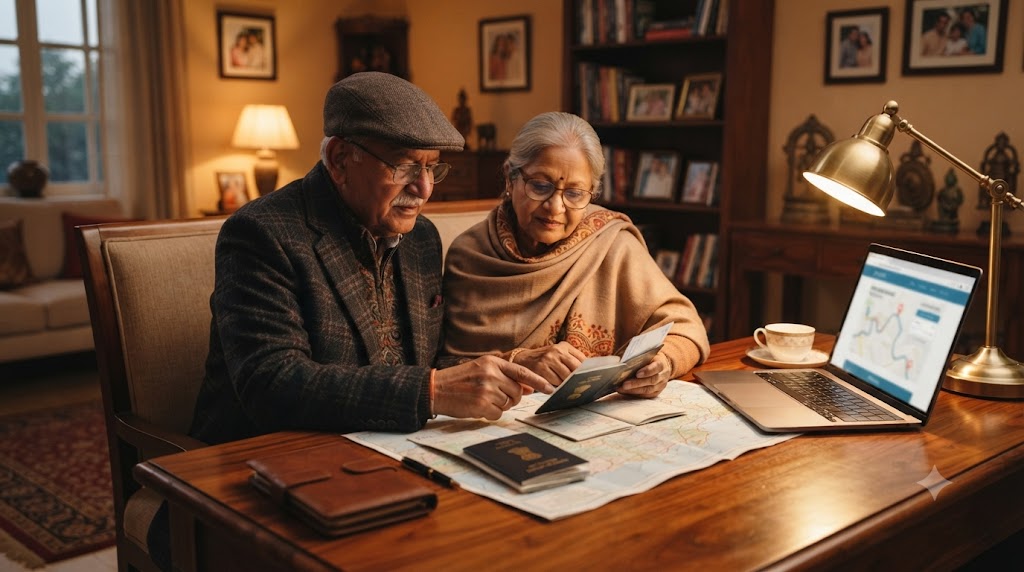
    Senior Indian couple reviewing travel documents and passports together at a desk
    Getting the document file right the first time matters more for this visa category than almost any other

    Document Checklist: What Actually Matters

    • A genuine invitation, a letter from the sponsoring child with their immigration status proof (PR card, visa, or citizenship document), address, and details of the visit
    • Funds trail, bank statements showing stable finances in India, since visa officers want to see the parents can support themselves and intend to return, not that the child is covering everything
    • Ties to India, property documents, pension or income proof, and anything showing a reason to come back, family, assets, or an ongoing medical relationship with a doctor in India
    • Medical insurance, mandatory for Canada’s Super Visa, strongly advised for UK and Australia visits
    • Travel history, a clean prior travel record helps, though a first-time applicant is not automatically disqualified
    • A clear, honest cover letter, stating the purpose of the visit, the relationship to the sponsor, and the intended length of stay

    Our guide to visa rejection reasons for Punjab applicants covers the specific scrutiny patterns we see for this region, worth reading alongside this one if you are preparing a parent visit visa file.

    A Realistic Timeline

    Processing time varies considerably by country and by how complete the file is on first submission. Our own visa desk quotes current realistic timelines at the time of filing rather than a fixed promise, since government processing speed shifts throughout the year, particularly around peak travel seasons. The one constant across all three countries: a complete, well-documented file moves faster than an incomplete one resubmitted after queries, so the preparation stage is where the real time-saving happens.

    Common Mistakes We See

    • Treating it like a regular tourist visa application, the sponsor relationship and funds trail need far more detail than a standard holiday visa
    • Buying the cheapest available insurance without checking approved-insurer requirements, particularly for Canada’s Super Visa, where an unapproved policy can hold up the whole application
    • Submitting bank statements with large, unexplained recent deposits, which raises more questions than it answers, start preparing finances months ahead, not weeks
    • Assuming a long multi-year visa means unlimited single-visit length, most visitor visas still cap how long you can stay per individual trip even when the visa itself is valid for years
    • Skipping proper medical checkups before a long trip, particularly relevant for Canada’s extended stays, where age and existing conditions affect both insurance cost and comfort during the visit

    Planning the Travel Side

    Once the visa file is in motion, the travel planning itself needs the same senior-friendly thinking we cover in our senior citizen travel guide, realistic flight connections, manageable layovers, and comfortable seating for a long-haul journey. Many parents travelling to visit children abroad are making their first-ever international trip, which makes the flight booking and airport-transfer side just as important as the visa itself. We coordinate both together rather than treating them as separate bookings.

    Who This Guide Is For

    • Parents with a child settled in Canada, the UK or Australia planning their first visit or a repeat trip
    • NRI families coordinating a visit from abroad, arranging the visa and travel for parents back in Punjab
    • First-time international travellers in their sixties or older, who want the whole process, visa and travel, handled by one desk rather than juggling an immigration consultant and a separate travel agent

    Frequently Asked Questions

    What is the difference between a Super Visa and a regular Canada visitor visa?

    The Super Visa, available specifically to parents and grandparents of Canadian citizens or permanent residents, allows a much longer stay per visit and a longer overall validity, but requires mandatory medical insurance and proof of the sponsor’s income. A regular visitor visa has shorter per-visit stays and no insurance mandate, but is also harder to extend.

    Do parents need travel insurance to visit the UK or Australia?

    It is not always a strict visa requirement on paper for these two countries the way it is for Canada’s Super Visa, but both the UK and Australia charge visitors for most healthcare, so travelling without insurance is a real financial risk, and a visa officer often views its absence as a sign of poor planning.

    Can you help with Canada PR or work visa applications?

    No, our visa desk handles tourist and visitor visas only. For PR, work, study or sponsorship routes, a registered immigration consultant or lawyer is the right professional to work with.

    How far in advance should we start the process?

    Three to four months before the intended travel date is a comfortable window, more if a first-time insurance policy or financial documentation needs to be arranged. Processing times vary by country and by season.

    What if a parent’s visa application was rejected before?

    We review the specific rejection reason and rebuild the weak part of the file, funds trail, ties to India, or sponsor documentation, before advising on when to reapply. Our visa assistance service handles rejection cases regularly.

    Is it cheaper to apply for the visa ourselves instead of using an agent?

    The government or embassy fee is the same either way, an agent does not change that cost. What an experienced desk adds is catching document gaps before submission, since a rejected application often costs more in reapplication fees and lost time than the assistance fee would have.

    Plan the Visit the Right Way

    A parent visitor visa file succeeds or fails on preparation, and the travel side deserves just as much care as the paperwork. Explore our full tourist visa assistance service, or call us directly at +91 99143 10333 to start the file for your parents’ visit. Flywings team since 2013.
  • Senior Citizen Tour Packages from Chandigarh: Group Travel That Actually Fits the Pace

    Senior Citizen Tour Packages from Chandigarh: Group Travel That Actually Fits the Pace

    Senior citizen travel is one of the fastest-growing parts of our business, and almost every group that calls us asks the same underlying question in different words: will this trip actually suit people our age, or is it just a regular itinerary with a discount attached. Our group tour service exists specifically to answer that properly, with pacing, accessibility and support built in from the first draft of the itinerary, not added as an afterthought.

    Quick context: A senior-friendly trip is not simply a slower version of a regular tour. It needs different hotel choices, a different daily structure, proper travel insurance, and an operator who treats a change in plan as normal rather than an inconvenience. This guide covers what actually matters, and how to tell a genuinely senior-friendly operator from one that just says so.

    What Actually Makes a Trip Senior-Friendly

    Factor What to Look For
    Daily pace Two or at most three sightseeing stops a day, not the five or six packed into a typical leisure itinerary, with a genuine rest window built into the afternoon
    Hotel choice Ground-floor or lift-access rooms confirmed in advance, not assumed, and hotels within easy walking distance of the day’s main sights
    Transport Comfortable vehicles with easy entry and exit, and realistic drive times between stops rather than back-to-back long hauls
    Medical readiness A basic list of nearby hospitals or clinics at each stop, and an operator who asks about medical conditions before travel, not during an emergency
    Group size Smaller groups move easier and wait less, which matters more for senior travellers than for any other segment

    The honest read: any operator can claim a trip is senior-friendly. The real test is whether these five things were already built into the itinerary before you asked, or whether they only get addressed once you raise them.

    Popular Senior-Friendly Circuits from Chandigarh

    Some destinations simply pace better for senior travellers than others. Religious circuits tend to work well because they are built around a small number of meaningful stops rather than constant movement.

    • Vaishno Devi, with pony, palki or helicopter options for the climb itself, see our Vaishno Devi planning guide for how to choose between them based on mobility
    • Golden Temple, Amritsar, flat, walkable, and close enough from Chandigarh for a comfortable day or overnight trip, covered in our Golden Temple guide
    • Kashmir, genuinely suitable for seniors when the itinerary avoids long trekking days and sticks to Srinagar’s houseboats and Gulmarg’s gondola rather than strenuous treks, see our Kashmir package guide
    • Char Dham, demanding by nature, but manageable with a carefully paced itinerary, helicopter options where available, and a realistic conversation about which of the four shrines suit your group’s fitness level

    International trips work too, Dubai and Singapore in particular are popular with senior groups because of easy accessibility, good medical infrastructure, and short flight times, but they need the same pacing principles applied just as carefully as a domestic pilgrimage circuit.

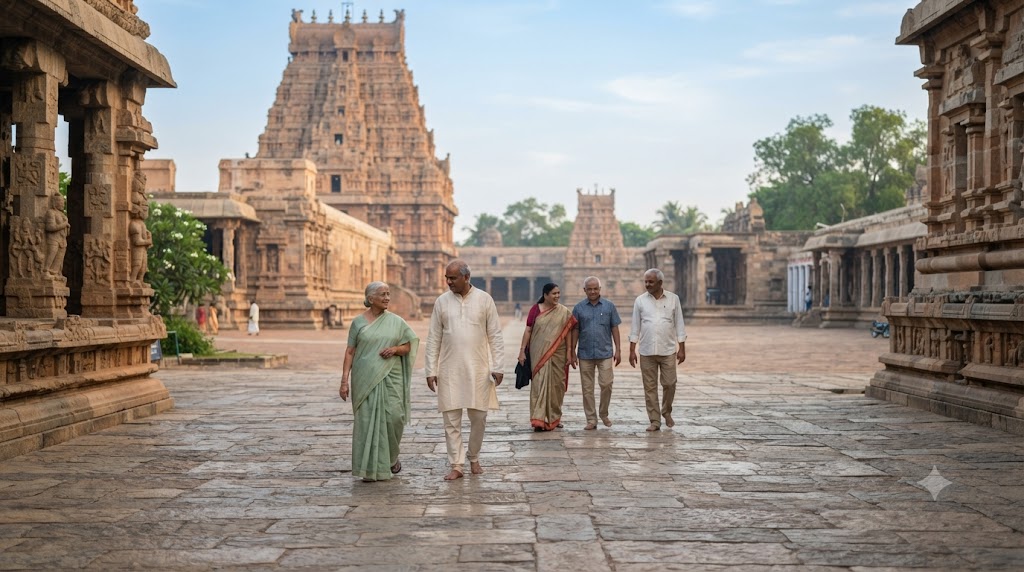
    Senior citizens walking together at an unhurried pace along a temple courtyard pathway
    An unhurried pace through a temple courtyard, the kind of pacing a senior-friendly itinerary is built around

    Health and Insurance Essentials

    Travel insurance is not optional for senior travellers, and it needs to be bought with eyes open rather than as a tick-box. Check specifically whether the policy covers pre-existing conditions, since many standard policies exclude them or charge a steep additional premium, and confirm the claim process for the country or region you are visiting before you travel, not after something goes wrong. Carry a printed list of current medications and dosages, your treating doctor’s contact number, and enough medicine for the full trip plus a few extra days in case of delays. For international trips, check whether your destination requires specific vaccinations or health declarations, and build in buffer time for anything that needs advance booking.

    Group Dynamics for Senior Circles and Kitty Groups

    Many of our senior trips come from existing social circles, a kitty group, a religious satsang group, or a residents’ welfare association rather than a single family. These groups benefit directly from the same tools covered on our group tours page, airline group fare blocks with held seats, hotel room blocks with adjacent rooms, and one coordinator answerable for the whole trip instead of thirty separate bookings. A single WhatsApp group with one itinerary and one point of contact removes most of the coordination headache that otherwise falls on whichever member of the group happens to be the most tech-comfortable.

    Choosing the Right Travel Partner for a Senior Group

    The checklist for picking any travel agent matters even more for a senior group, since the cost of a poor choice is higher. Our guide to choosing a travel agent covers the general evaluation checklist, and for senior groups specifically, add two more questions before you book: does the agent ask about mobility and medical needs unprompted, and do they offer a direct phone contact reachable during the trip itself, not just an office number for before and after. An agent who treats both as standard practice, rather than special requests, is the one worth booking with.

    A Sample Senior-Paced Itinerary: Amritsar Overnight

    • Day 1 morning: Depart Chandigarh at a comfortable hour, not before dawn, arrive Amritsar by late morning
    • Day 1 afternoon: Rest at the hotel, an easy walk to Jallianwala Bagh if energy allows
    • Day 1 evening: Golden Temple visit at a relaxed pace, langar hall visit, early dinner
    • Day 2 morning: A second, quieter Golden Temple visit for those who want it, or a slow breakfast and rest for those who don’t
    • Day 2 afternoon: Return to Chandigarh with a lunch stop along the way

    Notice what’s missing from a typical two-day itinerary, the Wagah Border ceremony and a packed sightseeing list, both left out deliberately because they add a long, crowded, standing-heavy evening that tends to be the single most tiring part of a standard Amritsar trip for older travellers. We offer it as an option, never a default, for senior groups.

    Who This Trip Suits

    • Kitty groups and social circles planning their first trip together, where one coordinator needs the whole process simplified
    • Religious groups and satsang circles travelling to a specific shrine or circuit as a collective
    • Adult children booking for parents, who want the pacing and medical readiness handled by someone other than themselves from a distance
    • Senior citizens travelling independently, as a couple or small group, who want an itinerary built around comfort rather than ticking off a maximum number of sights

    Frequently Asked Questions

    What makes a tour package genuinely senior-friendly?

    A realistic daily pace, confirmed accessible hotel rooms, comfortable transport, medical readiness, and a smaller group size. The real test is whether these are built into the itinerary from the start, not added only when asked.

    Is travel insurance necessary for senior citizens?

    Yes, and it should be checked carefully for pre-existing condition coverage specifically, since many standard policies exclude or heavily surcharge them. Confirm the claim process for your destination before travelling.

    Which destinations work best for senior citizen groups from Chandigarh?

    Golden Temple Amritsar and Vaishno Devi for shorter religious trips, Kashmir with a carefully paced itinerary for a longer domestic trip, and Dubai or Singapore for an accessible, short-haul international option.

    How many people count as a senior group for better rates?

    Ten or more travellers typically unlock airline group fare blocks and hotel room blocks, the same threshold that applies to any group booking, with the added benefit of pacing built specifically around the group’s needs.

    Can you plan a senior citizen trip for Char Dham?

    Yes, with a realistic conversation about which shrines suit your group’s fitness level, helicopter options where available, and a pace that does not try to cover all four in the shortest possible time.

    Do you offer a direct contact during the trip, not just office hours?

    Yes, every senior group trip comes with a direct phone contact reachable during the trip itself, which matters more for this segment than for any other kind of travel we arrange.

    Can adult children book a trip for their parents remotely?

    Yes, this is one of our most common senior group bookings. We coordinate directly with the travelling parents on pacing and preferences while keeping the booking family informed throughout.

    Plan a Trip That Actually Fits the Pace

    A good senior citizen trip is built around comfort and realistic pacing from the first draft of the itinerary, not patched together after the fact. Explore our full group tours service, or call us directly at +91 99143 10333 to plan a trip paced around your group’s actual needs. Flywings team since 2013.
  • Japan Package from Chandigarh: Tokyo, Kyoto, and the Visa Questions Everyone Asks

    Japan Package from Chandigarh: Tokyo, Kyoto, and the Visa Questions Everyone Asks

    Japan is one of the fastest-growing international destinations for Indian travellers right now, and it is also one of the most asked-about at our desk, because two questions keep coming up before anything else. Which season should you actually travel in, and what does the visa process look like today. At Flywings Tour & Packages Pvt Ltd, we answer both before building the itinerary, because getting them right changes the entire trip.

    Quick context: Indian arrivals to Japan rose roughly 18% in the first four months of 2026 compared with the same period last year, even as Japan’s overall inbound numbers softened slightly. Better air connectivity, a weaker yen making the trip relatively better value, and growing interest in Japanese culture and food are the main drivers. The two decisions that shape your trip the most are season and visa timing, both covered below.

    Pick Your Season First

    Season What You Get The Catch
    Late March to early April (cherry blossom) The iconic pink bloom across Tokyo, Kyoto and beyond, postcard scenery everywhere you look The most popular and most expensive window, hotels and flights book out months ahead, and the exact bloom dates shift year to year
    November (autumn colours) Red and gold maple foliage, especially striking in Kyoto’s temple gardens, comfortable walking weather Almost as popular as cherry blossom season now, so book early for this window too
    December to February (winter) Snow-capped landscapes, hot spring onsen towns, skiing in Hokkaido and Nagano, noticeably fewer crowds and often better rates Cold, and some mountain areas need extra travel time and warm layers
    June to August (summer) Long daylight hours, festivals in many cities Hot, humid, and the least comfortable season for a first-time visitor, worth avoiding if you have a choice

    The honest read: if photographs of pink blossoms or red maple leaves are the whole reason you are going, book six to eight months ahead, because rooms near the popular viewing spots sell out early. If you are flexible, winter gives you a genuinely different, less crowded version of Japan at a better price.

    The Visa Process, and Why We Are Not Quoting a Fee

    Indian nationals need a visa to enter Japan, applied for through an authorised visa application centre with your passport, photographs, itinerary and financial documents. Processing is generally straightforward, but published fee figures from different sources genuinely disagree right now, some report a flat concessional rate for Indian applicants, others describe a broader fee increase affecting visa-required markets from mid-2026. Rather than quote a number that may already be wrong by the time you read this, we recommend confirming the current fee and document list directly with the Embassy of Japan in India before you apply, and we’re happy to walk you through the checklist either way.

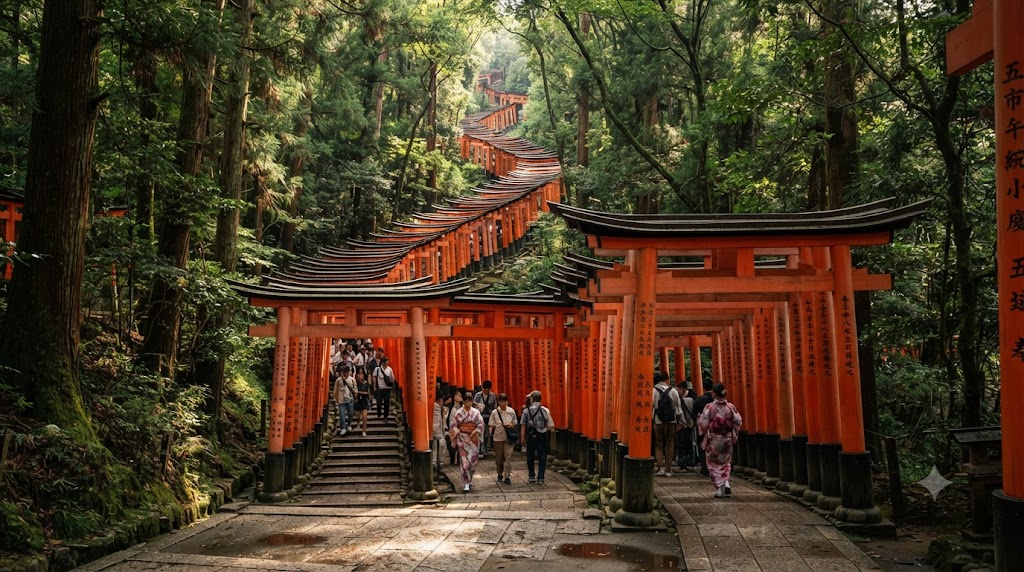
    Row of traditional red torii gates on a forested hillside path in Kyoto Japan
    The torii gate pathway at Fushimi Inari, one of Kyoto’s most photographed walks

    Getting There from Chandigarh

    There is no direct flight from Chandigarh to Japan, so the trip routes through a connection, most commonly Delhi, with onward service to Tokyo’s Narita or Haneda airport. Total travel time typically runs nine to twelve hours depending on the connection and layover. Build a buffer into your first day’s plan rather than scheduling activities right after landing, since the time difference (Japan is three and a half hours ahead of India) and the long flight both take a day to adjust to.

    The Classic Circuit: Tokyo, Kyoto, Osaka

    Most first-time visitors from India follow a version of the same route, often called the Golden Triangle, because it covers Japan’s modern capital, its historic former capital, and its food capital in one trip.

    • Tokyo (3-4 days): Shibuya and Shinjuku for the city’s energy, Asakusa’s Senso-ji temple for a quieter, older side of the city, a day trip to Hakone or Mount Fuji’s viewing points if weather allows
    • Kyoto (2-3 days): Fushimi Inari’s torii gates, Kinkaku-ji’s Golden Pavilion, the Arashiyama bamboo grove, and the Gion district for a chance to spot a geisha in the evening
    • Osaka (1-2 days): Dotonbori’s street food and neon, Osaka Castle, and a day trip to Nara to see the famous deer park if time allows

    Travel between these three cities runs on Japan’s bullet train network, the Shinkansen, which is fast, punctual, and genuinely one of the highlights of the trip rather than just transport.

    Should You Buy a JR Pass?

    The Japan Rail Pass covers unlimited travel on most JR trains, including the Shinkansen, for a fixed number of days. It makes sense if your itinerary involves several long-distance train journeys between cities, since buying individual tickets for the same routes usually costs more. If your trip stays mostly within one city or region, individual tickets or a regional pass may work out cheaper. We compare the actual cost against your planned route before recommending one or the other.

    A Sample Nine-Day Itinerary

    • Days 1-2: Fly in via Delhi, settle into Tokyo, recover from the journey with light sightseeing
    • Days 3-4: Full Tokyo exploration, a day trip to Hakone or the Mount Fuji area
    • Day 5: Shinkansen to Kyoto, evening in Gion
    • Days 6-7: Kyoto’s temples and the Arashiyama bamboo grove, a side trip to Nara
    • Day 8: Osaka for food and Dotonbori’s nightlife
    • Day 9: Fly home via your connecting city

    Japan for Couples and Honeymooners

    Japan has quietly become a popular honeymoon choice for Indian couples who want something genuinely different from the usual Bali or Maldives beach trip. Cherry blossom season adds an obvious romantic backdrop, but a well-paced winter trip with an onsen town stay works just as well. If you are still deciding between destinations, our honeymoon destination comparison looks at how Japan stacks up against the more traditional beach-honeymoon options.

    Budget Shape, Without Fixed Numbers

    We are not publishing fixed price tags, since the cost depends heavily on season, hotel category, and how much of the country you cover. What is worth knowing is that the yen has been weak against the rupee for a sustained period, which genuinely makes hotels, meals and shopping better value for Indian travellers right now than they were a few years ago, even though flights and the cherry blossom season premium remain the two biggest cost drivers. Share your dates and we will build an itemised quote within 24 hours.

    Who This Trip Suits

    • First-time Japan visitors, the Tokyo-Kyoto-Osaka circuit is the natural introduction and covers the country’s best-known highlights
    • Couples and honeymooners, especially for the cherry blossom or winter onsen seasons
    • Food-focused travellers, Osaka in particular is built around its street food culture
    • Families with older children, Japan’s public transport and general safety make independent exploration comfortable, and Tokyo Disneyland is an easy add-on

    Frequently Asked Questions

    Is there a direct flight from Chandigarh to Japan?

    No, the trip connects through a hub, most commonly Delhi, with onward service to Tokyo. Total travel time is usually nine to twelve hours depending on the connection.

    What is the best time to visit Japan from India?

    Late March to early April for cherry blossoms, or November for autumn colours, are the two most popular windows and need early booking. Winter offers a quieter, often better-value alternative.

    Do Indian citizens need a visa for Japan?

    Yes, a visa is required, applied for through an authorised visa application centre. Fee figures vary across sources right now, so confirm the current amount directly with the Embassy of Japan in India.

    Is Japan expensive for Indian travellers?

    It is a premium destination, but a sustained weak yen has made hotels, food and shopping meaningfully better value than they were a few years ago, even though international flights remain a significant cost.

    Should I buy a JR Pass?

    Only if your itinerary includes several long-distance train journeys between cities. For trips that stay mostly within one region, individual tickets often cost less. We check this against your actual route.

    How many days do I need for a first Japan trip?

    Nine to eleven days covers the classic Tokyo-Kyoto-Osaka circuit comfortably, including a settling-in day after the long flight. Shorter trips are possible but mean choosing between the three cities rather than covering all of them.

    Is Japan good for a honeymoon?

    Yes, particularly during cherry blossom season or a winter onsen-town stay, and it is a genuinely different option from the usual beach honeymoon destinations.

    Plan Your Japan Trip the Right Way

    Japan rewards a trip that is planned around the right season and a correctly handled visa far more than one booked in a hurry. Compare it against our other international tour packages from Chandigarh, or call us directly at +91 99143 10333 for an itinerary and visa checklist built around your dates. Flywings team since 2013.
  • Egypt Package from Chandigarh: The Letter of Guarantee Indians Need That Nobody Explains

    Egypt Package from Chandigarh: The Letter of Guarantee Indians Need That Nobody Explains

    Egypt’s visa process is advertised as simple, an online e-visa, done in minutes. For Indian passport holders specifically, there is one more step that a lot of generic guides either skip entirely or bury in a paragraph near the bottom, a Letter of Guarantee from an authorised Egyptian travel agent. At Flywings Tour & Packages Pvt Ltd, this is the single detail that has caused more confusion for our clients planning Egypt independently than anything else about the trip. This guide puts it first, because it is the thing most likely to derail an otherwise straightforward application.

    Quick context: Multiple independent sources confirm that Indian nationals need a Letter of Guarantee from an authorised Egyptian travel agent as part of their visa process, on top of the standard e-visa application. Some reports describe exemptions for shorter stays or specific age groups, but these are not consistently confirmed across sources, so verify directly before relying on one.

    The Letter of Guarantee, Explained

    This is a document issued by a travel agent licensed in Egypt, vouching for the traveller as part of the entry process. Several independent travel-advisory sources describe it as effectively mandatory for Indian nationals applying for an Egyptian visa, a requirement that does not apply to many other nationalities under the same e-visa system. The practical implication: booking through an operator who can actually arrange this letter, rather than attempting a fully independent e-visa application, removes a genuine point of failure from the process.

    Reported exemptions, for stays under a certain number of days, or for travellers under 15 or over 60, appear across some sources but are not confirmed by an official government page we could verify. Treat any such exemption as something to confirm directly with the Egyptian e-visa authority or the Indian Embassy in Cairo before assuming it applies to your specific trip, rather than relying on a single travel-agency claim.

    The Rest of the Visa Process

    • The e-visa itself is applied for online, through the official Egyptian e-visa portal, allowing stays of up to 30 days
    • Your passport needs at least six months of validity from your date of entry
    • Visa-on-arrival eligibility for Indians is inconsistently reported, some sources describe it as available, others as strictly limited, so the e-visa route, applied for in advance, is the more reliable plan
    • Fee figures vary by source and should be confirmed on the official portal rather than from a third-party estimate

    Getting There from Chandigarh

    There is no direct flight from Chandigarh to Cairo. Delhi has direct connectivity, reported across sources as a roughly six and a half to seven and a half hour flight, operated by Air India and EgyptAir. From Chandigarh, that means a short domestic hop to Delhi followed by one direct international leg, making Egypt a genuinely reachable long-haul-adjacent trip without needing a layover in a third country.

    The Nile Circuit: How Many Days You Actually Need

    Trip Length What It Covers
    5 to 6 days Cairo and the pyramids only, a fast-paced trip focused purely on the capital’s major sights
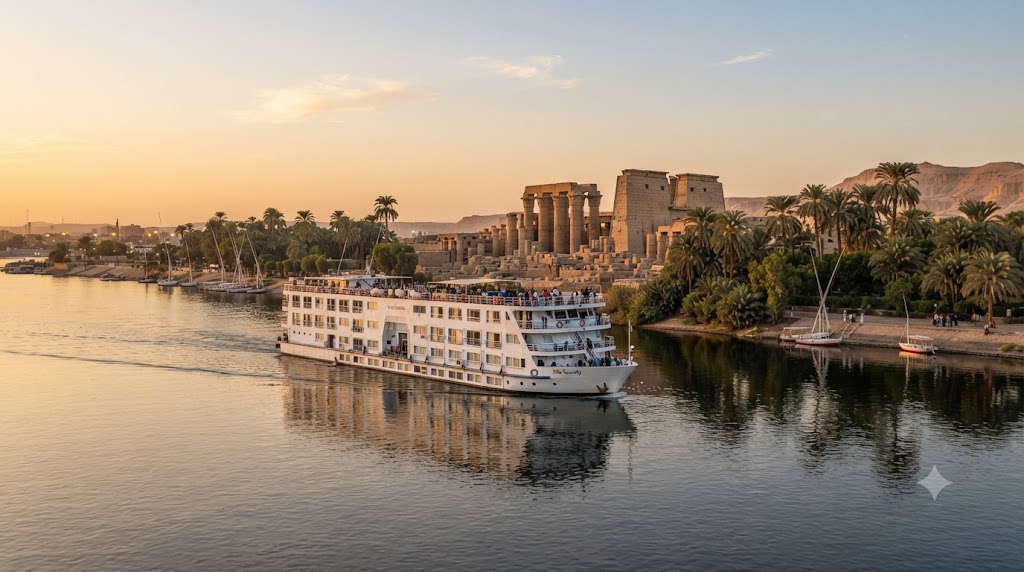
    7 to 10 days Cairo, plus a flight to Aswan, a Nile cruise sailing north through Kom Ombo, Edfu, and Esna, ending in Luxor, then a return to Cairo, the classic and most commonly recommended route
    10+ days The full circuit above plus a Red Sea extension, Hurghada, Sharm El Sheikh, or Dahab, for travellers wanting beach time alongside the historical circuit

    Our honest recommendation for a first visit: the 7 to 10 day version. Cairo alone undersells what Egypt actually offers, and the Nile cruise segment, sailing past ancient temples that are genuinely best appreciated from the water, is where most travellers say the trip actually becomes unforgettable.

    Traditional Nile cruise ship sailing past temple ruins and palm trees near Luxor Egypt
    A Nile cruise between Aswan and Luxor, the segment most travellers rate as the highlight of the trip

    What the Cairo Leg Covers

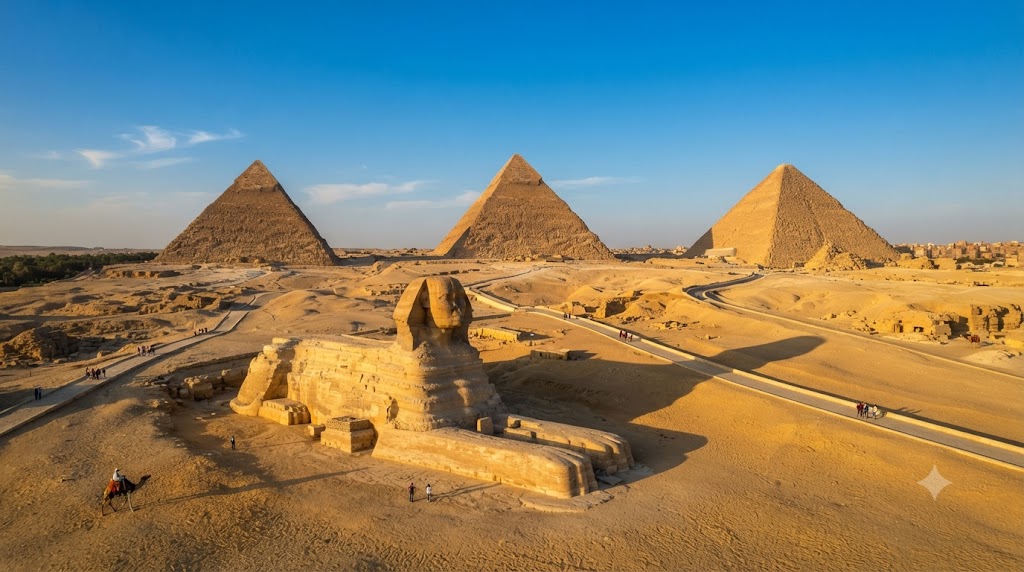
    The Great Pyramids of Giza and the Sphinx anchor any Cairo visit, genuinely worth a full morning rather than a rushed hour. The Egyptian Museum, or the newer Grand Egyptian Museum depending on what has opened by your travel dates, houses an extraordinary collection including Tutankhamun’s treasures. Old Cairo’s Coptic Christian quarter and the Khan el-Khalili bazaar round out a well-paced two to three days in the capital before heading south.

    What the Nile Cruise Leg Covers

    Most itineraries fly south to Aswan first, then cruise north toward Luxor, visiting temples along the way, Kom Ombo’s riverside temple complex, Edfu’s well-preserved Temple of Horus, and Esna, before arriving in Luxor. Luxor itself holds the Valley of the Kings, Karnak Temple, and Luxor Temple, widely considered among the most significant ancient sites anywhere in the world, genuinely worth the multi-day approach rather than a single rushed day trip.

    Best Time to Visit

    Window Conditions
    October to April The broadly agreed comfortable window, mild temperatures suited to both Cairo sightseeing and the Nile cruise
    November to January Often cited as the specific sweet spot for the Cairo-to-Luxor route
    May to September Genuinely hot, particularly in Upper Egypt around Luxor and Aswan, workable but considerably more demanding

    The Red Sea Extension

    For travellers with ten days or more, a Red Sea stop adds a genuinely different texture to the trip, beach and reef time after a history-heavy Cairo-and-Nile circuit. Hurghada and Sharm El Sheikh are the two most popular options, both offering strong snorkelling and diving given the Red Sea’s clear water and reef systems. Sharm El Sheikh pairs more naturally with Cairo by a short flight than with the Upper Egypt route specifically, worth factoring into your routing if this extension is part of the plan. Dahab, quieter and more backpacker-oriented, suits travellers wanting a more laid-back coastal stop than the larger resort towns.

    What to Eat

    Egyptian cuisine blends Middle Eastern, Mediterranean, and North African influences, built around legumes, bread, and grilled meats.

    • Koshari, Egypt’s unofficial national dish, a hearty mix of rice, lentils, pasta, and chickpeas topped with a spiced tomato sauce and fried onions, genuinely filling and widely available
    • Ful medames, slow-cooked fava beans, a breakfast staple found across the country
    • Falafel (ta’ameya), Egypt’s version uses fava beans rather than chickpeas, giving it a distinct flavour and colour compared to the falafel found elsewhere
    • Grilled kofta and kebab, widely available and a reliable, familiar option for most travellers
    • Hibiscus tea (karkade), served hot or cold, a genuinely refreshing local specialty worth trying

    Vegetarian travellers generally do well in Egypt, given koshari and ful medames’ central role in everyday eating, though it helps to confirm ingredients at smaller local eateries where English menus are not guaranteed.

    Etiquette and Practical Notes

    • Dress modestly, particularly at religious and historical sites, shoulders and knees covered is a sensible general rule even though Egypt’s tourist areas are generally relaxed about dress.
    • Negotiate prices at markets and with informal vendors, bargaining is a normal part of shopping at places like Khan el-Khalili, and an initial asking price is rarely the final one.
    • Carry small denominations of local currency for tipping, tipping (baksheesh) is a genuinely embedded part of service culture across guides, drivers, and hotel staff.
    • Stay hydrated and pace outdoor sightseeing carefully, particularly around the pyramids and temple complexes, where shade is limited and the midday sun is intense for much of the year.

    Egypt for Family and Group Trips

    The Cairo-and-Nile-cruise circuit works well for multi-generational families, the cruise itself offers a comfortable, low-exertion way to cover Upper Egypt’s temples without the physical demands of a packed day-trip schedule, and children generally respond well to the pyramids and the scale of the ancient sites. For groups specifically, the Letter of Guarantee requirement applies to each individual Indian traveller, so a group booking through one operator who can arrange all the letters together genuinely simplifies the process compared to each person applying independently.

    Cost Shape, Without Fixed Numbers

    We are not publishing fixed price tags, since cost depends heavily on Nile cruise category, whether you add the Red Sea extension, and the season, but the relative shape is worth knowing. A weaker Egyptian Pound in recent years has made Egypt a genuinely better-value long-haul destination than it was a few years ago for the same standard of hotels and cruise accommodation. Reach out and we will build a real, itemised quote for your dates within 24 hours, no obligation, including the Letter of Guarantee arranged as part of the process rather than left for you to sort out separately.

    Who This Trip Suits

    • History and archaeology enthusiasts, given the sheer concentration of significant ancient sites across the Cairo-Luxor-Aswan circuit
    • Couples and honeymooners, a Nile cruise in particular has a genuine romantic draw distinct from a standard beach honeymoon, worth comparing against our Bali vs Maldives vs Dubai honeymoon comparison if you are weighing options generally
    • Photography enthusiasts, the pyramids, temple complexes, and the Nile itself all offer genuinely distinctive subject matter
    • Travellers who have already covered the standard international circuit and want a destination with deeper historical weight than a typical beach or city break

    Frequently Asked Questions

    What is the Letter of Guarantee for Egypt?

    A document issued by an authorised Egyptian travel agent, effectively required for Indian nationals applying for an Egyptian visa. Booking through an operator who can arrange this directly removes a genuine point of confusion from an otherwise standard e-visa process.

    Is there a direct flight from Chandigarh to Egypt?

    Not from Chandigarh directly, but Delhi has direct Cairo connectivity on Air India and EgyptAir, at roughly six and a half to seven and a half hours, so the trip is a short domestic hop to Delhi followed by one direct international leg.

    How many days does an Egypt trip need?

    Seven to ten days covers Cairo and a proper Nile cruise between Aswan and Luxor comfortably, genuinely the recommended length for a first visit. Five to six days works for a Cairo-only trip.

    Is a Nile cruise worth the extra time and cost?

    Yes, for most travellers. The temples along the Aswan-Luxor stretch are considered among Egypt’s most significant sites, and seeing them from the river is widely described as the highlight of the entire trip rather than an optional add-on.

    Is visa-on-arrival available for Indians at Cairo airport?

    Reports are inconsistent across sources. Given the uncertainty, applying for the e-visa in advance, along with arranging the Letter of Guarantee, is the more reliable plan than counting on arrival processing.

    What is the best time to visit Egypt from India?

    October through April is the broadly agreed comfortable window, with November through January often cited as the specific sweet spot for the Cairo-to-Luxor route.

    Is Egypt safe for Indian tourists, including families and solo travellers?

    Egypt’s main tourist circuit, Cairo, the Nile cruise route, and the Red Sea resorts, sees a well-established tourist infrastructure and large annual visitor numbers. As with any international destination, check current travel advisories before finalising dates, and travel with a reputable operator for the Cairo and Nile cruise legs specifically.

    Should every traveller in a group apply for their own Letter of Guarantee?

    Yes, the requirement applies to each individual Indian passport holder, which is exactly why booking a group trip through one operator who coordinates all the letters together is considerably simpler than each person arranging theirs separately.

    Get the Letter of Guarantee Sorted First

    A trip this historically significant deserves planning that starts with the one document most guides skip over, not a rushed application that stalls once you discover it mid-process. Explore more international tour packages from Chandigarh, or call us directly at +91 99143 10333 for an itinerary with the Letter of Guarantee and the e-visa handled correctly from the start. Flywings team since 2005.

  • Azerbaijan Package from Chandigarh: Baku’s Two Completely Different Skylines

    Azerbaijan Package from Chandigarh: Baku’s Two Completely Different Skylines

    Stand in the right spot in Baku and you can see a medieval walled city and a trio of glass skyscrapers shaped like flames in the same frame. That contrast is not an accident, and it is the single thing every first-time visitor remembers most. At Flywings Tour & Packages Pvt Ltd, Azerbaijan has gone from a destination we occasionally fielded a question about to one we now plan for regularly, helped along by a new direct Delhi-Baku flight that makes this a genuinely short trip from the Tricity. This guide is built around Baku’s two skylines, since understanding both is the key to planning the trip properly.

    Quick context: Indian passport holders need a visa in advance for Azerbaijan, applied for online, visa-on-arrival is not available. Processing and fees are reported differently across sources, so confirm the current figure on the official e-visa portal before paying anyone.

    Baku’s Two Skylines

    Old City (Icherisheher), the UNESCO Side

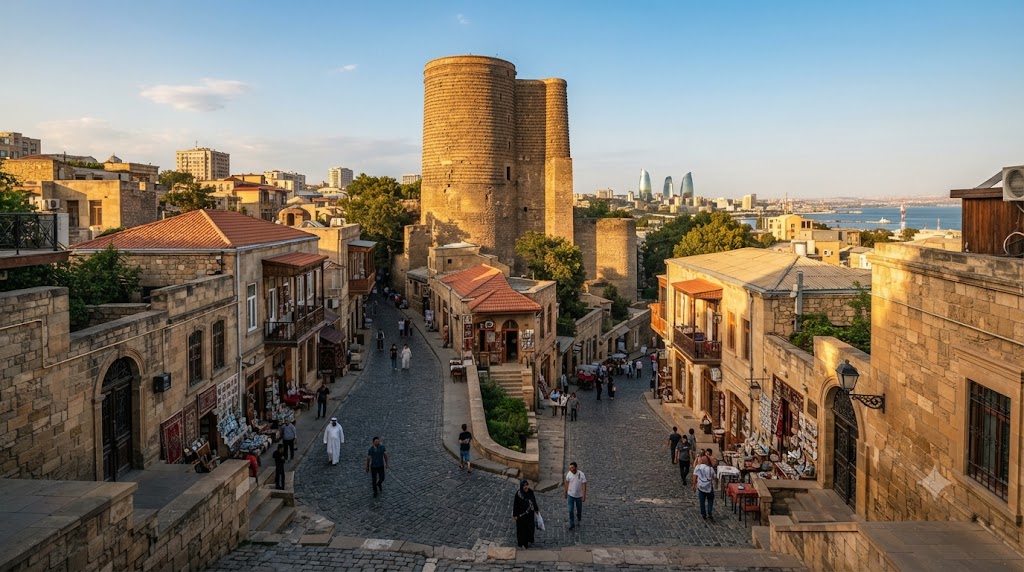
    A walled medieval core at the heart of modern Baku, and a UNESCO World Heritage Site in its own right. The Maiden Tower, a cylindrical stone structure with panoramic city views from the top, and the Shirvanshahs’ Palace, a well-preserved royal residence, anchor a neighbourhood of narrow cobblestone lanes that feels centuries removed from the rest of the city, despite sitting a short walk from it.

    Flame Towers and Modern Baku, the Futuristic Side

    Three curved glass towers shaped like flames, illuminated at night with a shifting light display, dominate Baku’s skyline from almost every angle in the city. The Heydar Aliyev Center, an architecturally striking cultural building with no straight lines in its design, reinforces the same theme, a country deliberately projecting a modern, forward-looking identity alongside its genuine historical core.

    Most first-time visitors expect one or the other to be the “real” Baku. In practice, the city’s appeal is precisely that both exist within walking distance of each other, and a well-paced itinerary gives real time to both rather than treating one as a quick photo stop on the way to the other.

    The E-Visa Process

    • Applied for entirely online, through the official ASAN e-visa portal, no embassy visit required for Indian nationals
    • No visa-on-arrival, the e-visa must be approved before you travel
    • Standard processing typically takes a few working days, with an expedited option available for a higher fee if you are booking closer to your travel date
    • Stays beyond roughly two weeks require registration with the local migration authority, worth confirming if your trip runs longer than a standard holiday

    Fee figures for both standard and expedited processing vary across sources we checked while researching this guide, so rather than quote a number that may already be outdated, we would recommend confirming the current fee directly on the official portal or with our visa desk before applying.

    Getting There from Chandigarh

    There is no direct flight from Chandigarh, but Delhi now has genuine direct connectivity to Baku, primarily on Azerbaijan Airlines, with a flight time of roughly four and a half to five hours, several times a week. From Chandigarh, that means a short domestic hop to Delhi followed by one direct international leg, a noticeably shorter total journey than most of the Central Asian and Caucasus destinations we cover.

    Maiden Tower and narrow cobblestone streets in the old city of Baku Azerbaijan
    Baku’s Old City, a UNESCO-listed medieval core standing a short walk from the city’s futuristic skyline

    Beyond the City: Gobustan and the Mud Volcanoes

    A genuinely strange and memorable day trip from Baku. Gobustan National Park, a UNESCO-listed site, holds rock carvings estimated at thousands of years old, a direct window into the region’s ancient human history. Nearby, Azerbaijan’s mud volcanoes, small cone-shaped formations that bubble and occasionally spit cool, thick grey mud, are a genuinely unusual sight found in very few places worldwide. The Ateshgah Fire Temple and Yanar Dag, a hillside where natural gas seeps constantly burn, round out a full-day excursion built around Azerbaijan’s long association with fire and flame, a theme that also explains the Flame Towers’ design back in the city.

    A Sample 4-Day Itinerary

    • Day 1: Arrive Baku, evening walk through the Old City, Maiden Tower at sunset
    • Day 2: Full Old City day, Shirvanshahs’ Palace, the Double Gates, local cafes
    • Day 3: Gobustan and mud volcanoes day trip, Ateshgah Fire Temple and Yanar Dag in the afternoon
    • Day 4: Flame Towers and the Heydar Aliyev Center, Baku Boulevard along the Caspian seafront, departure

    This pacing gives roughly equal weight to both of Baku’s identities rather than rushing through one to focus on the other.

    Best Time to Visit

    Window Conditions
    April to June Spring, mild and comfortable, generally considered one of the best windows
    September to October Autumn, similarly comfortable, the other strong shoulder-season window
    July to August Warm, can be intense in the afternoons, though the Caspian coastline offers some relief
    December to February Cold and often windy, Baku is known locally for strong winds year-round, but workable for travellers prioritising thinner crowds

    What to Eat

    Azerbaijani cuisine sits at a genuine crossroads of Turkish, Persian, and Caucasus influences, built around grilled meats, rice dishes, and fresh herbs.

    • Plov, Azerbaijan’s signature rice dish, saffron-infused and typically layered with meat, dried fruit, or herbs, with regional variations worth comparing across different restaurants
    • Kebabs, grilled meat skewers, a staple across the country and widely available from street vendors to proper restaurants
    • Dolma, grape leaves or vegetables stuffed with spiced rice and meat, a genuine local specialty rather than a borrowed dish
    • Azerbaijani tea culture, served in distinctive pear-shaped glasses, often with jam stirred in rather than sugar, a hospitality tradition worth experiencing properly rather than rushing
    • Baklava and local sweets, widely available and reflecting the same Turkish and Persian culinary crossover found throughout the cuisine

    Vegetarian travellers should plan ahead, meat features heavily in traditional Azerbaijani cooking, though Baku’s more cosmopolitan restaurants increasingly offer vegetarian options.

    Azerbaijan vs Georgia

    Since both are increasingly popular Caucasus picks for Indian travellers, often considered together, here is the honest comparison, and our Georgia guide covers the other side of this comparison in more depth.

    Factor Azerbaijan (Baku) Georgia
    Flight from Delhi Direct, roughly 4.5 to 5 hours Direct, roughly 6.5 hours
    Core appeal A single city with a striking old-vs-modern contrast, plus an unusual natural day trip Mountains, wine country, and old-town charm spread across a wider circuit
    Trip shape A compact, city-based short trip A multi-leg circuit covering mountains, a wine region, and the capital
    Best fit Travellers wanting a short, easy city break with genuine visual variety Travellers wanting a longer, more varied circuit including mountain scenery

    Our honest read: Baku wins on simplicity and flight time for a shorter trip, Georgia wins if you have the extra days for a fuller circuit beyond a single city.

    Packing and Practical Notes

    • Pack for wind regardless of season, Baku is genuinely one of the windier major cities in the region, and a light windbreaker is worth including even in summer.
    • Azerbaijani Manat is the local currency; cards are widely accepted in central Baku but carry cash for the Old City’s smaller shops and the Gobustan day trip.
    • Dress modestly for religious sites, though Baku itself is a modern, cosmopolitan city with no strict general dress code for everyday sightseeing.
    • English is reasonably well spoken in tourist areas of Baku, though Russian remains widely understood as a second language, useful if travelling with someone who speaks it.

    Azerbaijan for Family and Group Trips

    Baku’s compact, walkable Old City and the Gobustan day trip both suit family groups reasonably well, with manageable distances and a genuine mix of history and natural curiosity that tends to hold a wide range of ages’ interest. For couples and small groups, the city’s combination of romantic old-town streets and striking modern architecture makes it a popular pick for both honeymoons and milestone celebrations, and the relatively short flight time from Delhi keeps the trip manageable even on a long weekend basis for travellers with limited leave.

    Cost Shape, Without Fixed Numbers

    We are not publishing fixed price tags, since cost depends on season, hotel category, and how much of the Gobustan extension you add, but the relative shape is favourable. Azerbaijan generally runs comparable to or below a mid-range Dubai trip once the direct Delhi flight is factored in, and it offers a genuinely different mix of medieval heritage and modern architecture in a single short trip. Reach out and we will build a real, itemised quote for your dates within 24 hours, no obligation.

    Who This Trip Suits

    • Couples and honeymooners, Baku’s blend of romantic old-town streets and a striking modern skyline has made it an increasingly popular short honeymoon pick, worth comparing against our Georgia guide if you are weighing Caucasus destinations generally
    • Architecture and photography enthusiasts, given the genuine contrast between the Old City and the Flame Towers skyline
    • Travellers wanting a short, easy international trip, the direct Delhi flight and straightforward e-visa process make this one of the more accessible new destinations currently trending among Indian travellers
    • Anyone drawn to unusual natural phenomena, the Gobustan mud volcanoes and the Yanar Dag burning hillside are genuinely unlike anything else most Indian travellers will have seen

    Frequently Asked Questions

    Do Indians need a visa for Azerbaijan?

    Yes, a standard e-visa applied for online in advance through the official ASAN portal. Visa-on-arrival is not available for Indian passport holders.

    Is there a direct flight from Chandigarh to Baku?

    Not from Chandigarh directly, but Delhi has direct flights to Baku, primarily on Azerbaijan Airlines, at roughly four and a half to five hours, so the trip is a short domestic hop to Delhi followed by one direct international leg.

    How many days does a Baku trip need?

    Four days covers the Old City, the Flame Towers and modern Baku, and a Gobustan day trip comfortably. Three days works for a shorter version focused purely on the city itself.

    What makes Baku’s mud volcanoes worth visiting?

    They are a genuinely rare natural phenomenon, found in very few locations worldwide, and the Gobustan area combines them with ancient UNESCO-listed rock art in a single accessible day trip from the city.

    Is Azerbaijan good for a honeymoon?

    Yes, the combination of a romantic historic old town and a striking modern skyline, all within a short, direct flight from Delhi, has made it an increasingly popular short honeymoon destination for Indian couples.

    What is the best time to visit Baku?

    April to June and September to October are generally the most comfortable windows. Baku is known for strong winds year-round, worth packing for regardless of season.

    Is Baku safe for solo and women travellers?

    Yes, Baku is generally considered a safe, cosmopolitan city for tourism, with a well-established tourist infrastructure and a genuinely welcoming attitude toward visitors in the main tourist areas.

    Can this trip be combined with Georgia?

    Yes, given both sit in the wider Caucasus region, though the connectivity between Baku and Tbilisi involves either a flight or a long overland journey, worth planning carefully if combining both in one trip with limited days.

    Plan Both Sides of the City, Not Just One

    A rushed Baku itinerary tends to favour whichever skyline photographs better and shortchange the other, and both are genuinely worth the time. Explore more international tour packages from Chandigarh, or call us directly at +91 99143 10333 for an itinerary that gives both the Old City and modern Baku their proper due. Flywings team since 2005.

  • Rishikesh Rafting from Chandigarh: Pick the Right Stretch, Season, and Operator

    Rishikesh is the most popular rafting destination in India, and it is also the one where a poor choice of stretch or operator can turn a great weekend into a miserable one. At Flywings Tour & Packages Pvt Ltd, we send Tricity groups to Rishikesh regularly, and the two questions that decide whether the trip works are almost always the same, which stretch of river fits your group’s experience level, and which operator is properly licensed and safety-conscious. This guide answers both before getting into the logistics.

    Quick context: Rafting in Rishikesh runs from roughly mid-September to June 30, with the monsoon months closed for safety. Routes range from short day trips of a few kilometres to multi-day expeditions covering more than 80 kilometres, and the right choice depends far more on your group’s experience than on how adventurous the trip sounds.

    Choose Your Stretch by Experience Level

    Stretch Length Typical Format Best For
    Short stretches, roughly 9 to 16 km A half-day or single-day trip, gentler rapids, shorter paddling time First-time rafters, families with older children, anyone unsure about their comfort level in moving water
    Medium stretches, roughly 26 to 35 km A full-day trip with more sustained rapids and longer paddling Rafters with a little prior experience, groups wanting a more substantial day on the water
    Multi-day expeditions, 70 km and above Two or three days with overnight riverside camping, including the longer 84 km route Experienced or fit rafters, groups wanting a genuinely immersive river experience

    The honest rule: if you have never rafted before, start with a shorter stretch. Multi-day expeditions are a great experience, but attempting one as a first-time rafter, without the confidence built on a shorter day, is a common reason people find the trip harder than they expected.

    Choosing a Licensed Operator

    There are hundreds of operators in Rishikesh, and quality varies considerably. Check for a valid licence and clear safety standards before you book, not after. Ask specifically whether life jackets, helmets, and a trained guide are included for every rafter, not just the lead boat, whether the operator provides safety briefings before departure, and whether the river permits and forest entry fees are included in the quoted price or listed as extras.

    The honest read: the cheapest option on a booking site is not always the best value. A well-run operator with proper equipment, a clear briefing, and experienced guides is worth a modest premium, particularly on the medium and longer stretches where the river’s conditions demand more.

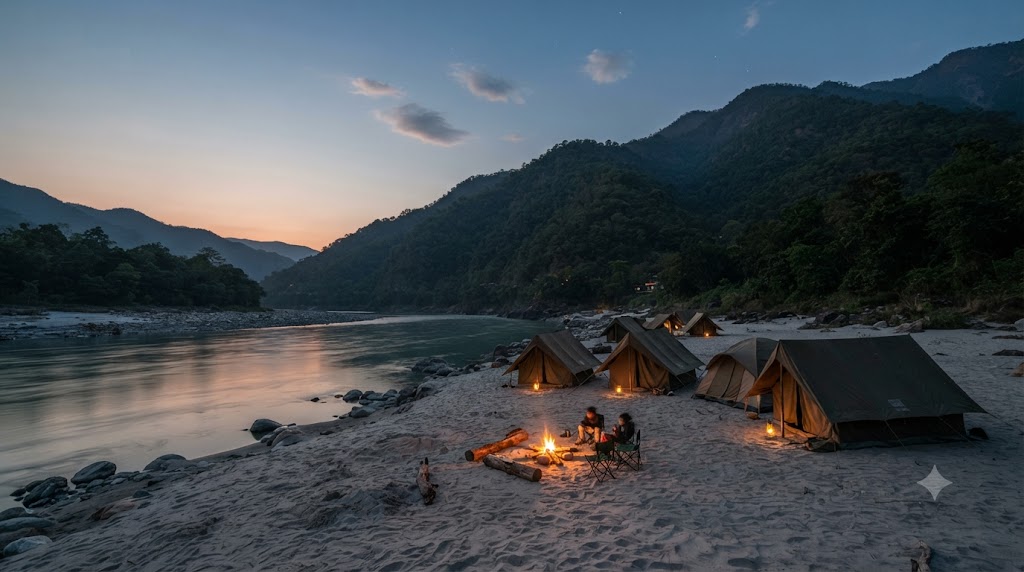
    Riverside camp on the sandy bank of the Ganga river in Rishikesh with tents and forested hills
    A riverside camp on the Ganga, the overnight base for the multi-day expedition routes

    Getting There from Chandigarh

    Rishikesh is roughly five to six hours from Chandigarh by road, through Haridwar, making it one of the easiest weekend adventure trips from the Tricity. There are no direct flights, the nearest airport is Dehradun’s Jolly Grant Airport, roughly an hour’s drive from Rishikesh, but most Chandigarh-based travellers drive directly, which also gives flexibility on departure time and luggage. Haridwar is a natural stop on the way up, with the Ganga Aarti at Har ki Pauri worth building into a first evening.

    A Sample Two-Day Weekend

    • Day 1: Drive from Chandigarh to Rishikesh via Haridwar, evening Ganga Aarti at Har ki Pauri if your timing allows, check in at a riverside hotel or campsite
    • Day 2: Morning safety briefing and rafting on your chosen stretch, lunch on the riverbank, drive back to Chandigarh in the afternoon

    A three-day version works well for a medium or multi-day stretch, adding a rest day or a second activity like a short cliff-jumping session, a riverside cafe afternoon, or a walk along the Lakshman Jhula suspension bridge.

    Best Time to Raft

    Window Conditions
    October to November Post-monsoon, clear skies, comfortable temperatures, the river is still full and the rapids are strong, a genuinely excellent window
    December to February Cooler, the river runs more gently in the coldest months, suited to beginners who prefer a calmer experience
    March to June Warm weather, the river is strong with snowmelt, popular with groups wanting a summer rafting trip before the monsoon closes the season
    Mid-June to mid-September Monsoon season, rafting is closed for safety, do not plan a trip in these months

    Always confirm current season status with your operator before travelling, since river conditions and closure dates can shift year to year.

    Safety Notes Every Rafter Should Know

    • Listen closely to the safety briefing, it covers paddling commands, what to do if you fall out, and how to position yourself in the raft, and skipping attention to it is one of the most common mistakes first-time rafters make.
    • Wear the life jacket and helmet at all times, even when the water looks calm, since conditions change quickly on the river.
    • Do not raft after heavy rain or on days the operator cancels, the river’s condition after rainfall can be significantly more dangerous, and a responsible operator will postpone rather than push ahead.
    • Tell your operator about any health conditions beforehand, including heart or back issues, so the guide can recommend a suitable stretch.

    What to Pack

    • Quick-dry clothing and a spare set in a dry bag, you will get wet, and cotton stays cold and heavy once soaked.
    • Sturdy sandals or water shoes with a heel strap, not flip-flops, which tend to come off in the rapids.
    • Sunscreen and a cap, the sun reflects strongly off the water.
    • A waterproof phone pouch, though most operators advise leaving valuables at the base camp rather than carrying them on the raft.

    Rishikesh vs Jim Corbett: Adventure or Wildlife

    Rishikesh and Jim Corbett are both within a reasonable drive from Chandigarh, and a combined Uttarakhand weekend is possible for groups with three or four days. Our Jim Corbett safari guide covers the wildlife side in detail. The honest split: Rishikesh is the better choice for a group wanting high-energy water adventure and a lively riverside atmosphere, while Corbett suits travellers wanting quieter forest time and a chance at wildlife sightings.

    Beyond the River: What Else Rishikesh Offers

    Rishikesh is more than a rafting base, and a weekend built around the river often benefits from a few non-water activities for rest days or for group members who are not paddling.

    • Lakshman Jhula and Ram Jhula, the two famous suspension bridges across the Ganga, walkable and photogenic, especially in the late afternoon
    • Parmarth Niketan and the riverside ashrams, a calmer side of Rishikesh, with evening aarti ceremonies open to visitors
    • Beatles Ashram, a deserted meditation complex that has become a genuinely popular visit, with its own history and street art
    • Cafe culture along the riverbank, a relaxed way to spend an afternoon between rafting sessions or after a multi-day expedition

    Rafting Gear and What Operators Usually Provide

    Most licensed operators include helmets, life jackets, paddles, and a trained guide in each boat within the rafting package itself, and it is worth confirming this is the case rather than assuming. Some operators offer optional add-ons such as wetsuits or specialised footwear, worth requesting if the weather is cool or the stretch is longer. Your own clothing and personal items remain your responsibility, which is why the packing list above matters more than most first-time rafters expect.

    Cost Shape, Without Fixed Numbers

    We are not publishing fixed price tags, since rafting costs depend on stretch length, operator tier, equipment and safety standards, and whether accommodation and meals are included. What is worth knowing is that a longer multi-day expedition carries a meaningfully higher cost than a short day trip, and the most common budget surprise is river permits and forest entry fees listed separately from a headline rafting price. Our quotes always itemise these, so the total is clear before you commit. Reach out and we will build a real, itemised quote for your dates within 24 hours, no obligation.

    Planning a Group Trip Without the Usual Headaches

    Group rafting trips from the Tricity tend to go smoothly when a few things are settled before the day itself. Confirm the exact headcount with the operator early, since raft sizes and guide allocation depend on it. Collect ID and any health information from every participant before departure, not on the morning of the activity. Agree on who is responsible for splitting costs and handling payments before you travel, since group arrangements are much simpler when money questions are settled in advance. Build in a relaxed evening rather than a packed agenda, since rafting is physically tiring and group energy tends to drop sharply after a long day on the water.

    Who This Trip Suits

    • Friend groups looking for an active weekend, rafting is a genuinely social activity, and the shared experience of paddling together is part of the appeal
    • Families with older children, the short stretches are manageable for a wide range of ages and fitness levels, with a qualified guide in every boat
    • Adventure-seeking couples, a shared rafting day followed by a riverside evening makes a memorable, low-pressure weekend
    • Corporate teams wanting a team-building outing, rafting works well for coordinated group activity, and our corporate travel services cover group logistics for teams travelling together

    Frequently Asked Questions

    When is the rafting season in Rishikesh?

    Roughly mid-September to June 30. The monsoon months, July and August in particular, are closed for safety.

    Is rafting safe for beginners?

    Yes, on shorter stretches with a licensed operator, a proper safety briefing, and a trained guide in every boat. Start with a shorter route and build up to longer stretches once you are comfortable.

    How long is the drive from Chandigarh?

    Roughly five to six hours by road, through Haridwar, making it a manageable weekend trip from the Tricity.

    What is the best stretch for a first-time rafter?

    A short stretch in the roughly 9 to 16 kilometre range, which gives a good introduction to the river without the sustained rapids of longer routes.

    Do I need to know how to swim?

    It helps, and operators typically recommend it, though life jackets are mandatory and a guide is in every boat. Tell your operator if you are not confident in the water so they can advise on the most suitable stretch.

    Is rafting in Rishikesh suitable for children?

    Short stretches are generally suitable for children old enough to follow the safety briefing and sit securely in the raft, with the minimum age and height requirements set by each operator. Confirm these with your operator before booking, since they vary.

    What happens if the river is too high on the day of my booking?

    A responsible operator will postpone or reschedule rather than run the route in unsafe conditions. Build a buffer day into your trip if you can, since weather-related changes are a normal part of river rafting.

    Can I combine rafting with other activities in the same trip?

    Yes, Haridwar’s Ganga Aarti, the Lakshman Jhula bridge, and short riverside activities like cliff jumping or a cafe afternoon all pair well with a rafting day.

    Book the Right Stretch, Then Enjoy the River

    Rishikesh rafting is one of the most rewarding weekend trips from the Tricity, and the planning is genuinely simple once you know which stretch and which operator to choose. Explore more weekend getaways from Chandigarh, or call us directly at +91 99143 10333 for a trip planned around your group’s experience level and dates. Flywings team since 2013.
  • Jim Corbett Safari from Chandigarh: How to Book the Official Way, Without the Middlemen

    Jim Corbett Safari from Chandigarh: How to Book the Official Way, Without the Middlemen

    Searching for a Jim Corbett safari booking is one of the more confusing experiences in Indian wildlife travel. Within a few minutes you will find half a dozen sites that look official, use the word “official” in their titles, and charge a markup for doing what the government booking system does directly. At Flywings Tour & Packages Pvt Ltd, we have helped Tricity families and friend groups plan this trip for years, and the most common problem we fix is not logistics, it is a booking made through the wrong channel at the wrong price. This guide walks through the actual system, what the zones mean, and how to avoid the middlemen.

    Quick context: Jim Corbett National Park is a protected tiger reserve, and safari entry is controlled through zone-based permits with limited vehicle numbers per day. The permit system, not the travel agent you choose, decides whether you get a seat, which is why understanding the zones and release windows matters more than any individual booking portal’s promises.

    How the Official Booking System Works

    • Choose your zone first, since each zone has its own permit pool and its own availability, a few popular zones fill far earlier than others.
    • Choose your safari type, jeep or canter, with the vehicle capacity and seating arrangement tied to that choice.
    • Choose morning or evening, each slot has its own permit allocation, so a sunrise slot and an evening slot in the same zone are effectively separate bookings.
    • Enter visitor details exactly as they appear on your ID, name, age, and ID proof, since mismatches are a common reason a booking is rejected at the gate.
    • Pay the fee online and keep the e-permit, printed or on your phone, and present it at the entry gate on the day.

    The official government booking channel is the one to use directly. Third-party sites can help with planning or bundling accommodation, but the safari permit itself is issued through the official system, and a reputable travel agent should be able to show you exactly what they are booking on your behalf rather than a vague bundled price.

    Understanding the Zones

    Zone Character Best For
    Dhikala The most famous zone, central to the park, large open grasslands and river views First-time visitors and anyone prioritising tiger sightings, but it fills earliest
    Bijrani Dense forest with high general wildlife activity Visitors wanting heavy wildlife density, a strong alternative when Dhikala is fully booked
    Jhirna Open for safaris throughout the year, generally less crowded than Dhikala and Bijrani Travellers with flexible dates who want a dependable option across the season
    Dhela Quieter and less crowded, a more peaceful, slower-paced drive Travellers who prefer fewer vehicles on the track
    Durga Devi Strong birdlife, quieter forest character Birdwatchers and photographers focused on birds rather than big cats

    The honest advice here: if tiger sighting is the single goal and you have fixed dates, the Dhikala and Bijrani slots are the ones to target the moment permits open, not after you have decided on the rest of your itinerary.

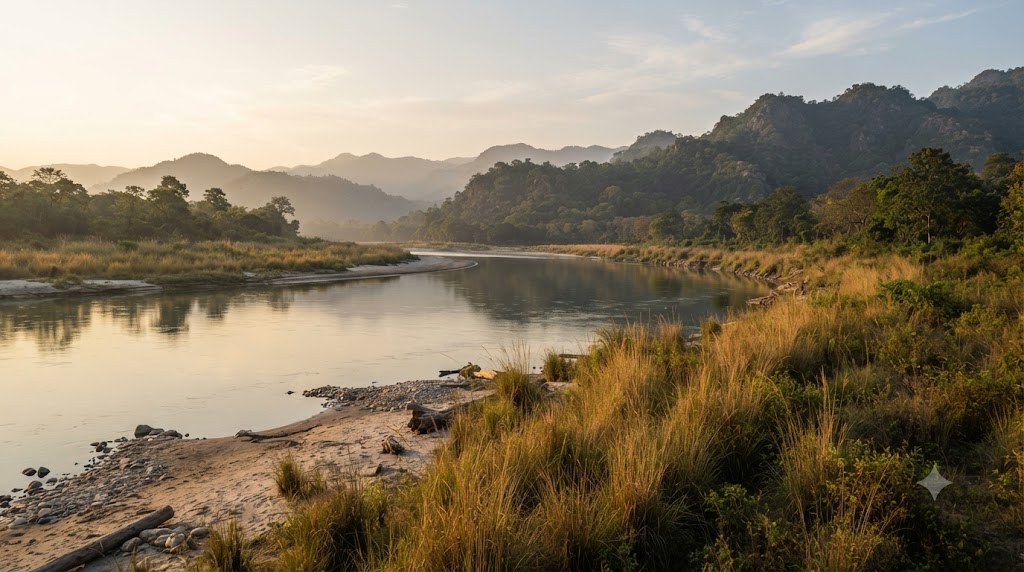
    Riverbank scene with a sandy shoreline and tall grass in Jim Corbett National Park Ramganga river
    The Ramganga riverside, one of the quieter, scenic stretches visible on the park’s outer edges

    When Permits Open, and Why the Window Matters

    Permits for the most popular zones open roughly 45 to 90 days ahead of the safari date, and the most sought-after slots, particularly for weekends and the winter peak season from roughly November to March, tend to sell out within hours of release. Planning around this window matters more than any other single decision in your trip. If you cannot secure a permit for your preferred zone and date, the honest recommendation is to shift your dates or your zone rather than accept a middleman’s markup for the same permit that the official system could have issued directly.

    Getting There from Chandigarh

    There is no direct flight to Jim Corbett. The nearest major airport is Dehradun’s Jolly Grant Airport, roughly two to three hours by road, and the more common approach for Chandigarh-based travellers is a road journey directly, roughly five to six hours depending on traffic and route. The drive passes through the Haridwar and Ramnagar corridor, and most visitors base themselves in Ramnagar, the gateway town, for the park’s entry points.

    A Practical Two-Day Itinerary

    • Day 1: Drive from Chandigarh to Ramnagar, check in, afternoon at leisure, confirm the next morning’s permit and gate timing
    • Day 2: Early morning safari in your booked zone, return to Ramnagar for lunch, optional evening departure or a second safari if booked

    A two-day trip is workable for a single safari, but three days gives genuine flexibility if your first sighting is a miss, and wildlife sightings are never fully guaranteed on any single drive.

    Best Time to Visit

    Window Conditions
    November to March Cool, clear, the most comfortable window for safaris, and the peak demand period, booking well ahead is essential
    April to June Hotter, drier, and tiger sightings are often considered more reliable near water sources, though the heat is intense in the afternoons
    July to October Monsoon season, the park is generally closed or heavily restricted during peak rains, so check current status before planning

    Note that park closures and zone availability change from year to year, so confirm current status on the official system or with your operator before committing to dates.

    Common Mistakes to Avoid

    • Booking through an unofficial middleman at a markup, the permit itself is government-issued, and a markup buys you nothing except the convenience of someone else clicking the button for you.
    • Assuming any zone will do, the zone you pick shapes what you see, Dhikala and Bijrani are not interchangeable with the quieter zones for a tiger-focused trip.
    • Missing the release window and then complaining the permits are gone, the release window is public information, and planning around it is the only reliable way to secure a preferred slot.
    • Ignoring the ID requirement, a name or ID mismatch at the gate can cost a booked slot entirely.

    Wildlife Etiquette on the Track

    • Stay inside the vehicle at all times, the single most important rule, and the one guides enforce most strictly.
    • Keep voices low and avoid sudden movements, wildlife responds to disturbance, and a quiet vehicle gives everyone a better chance of a clear sighting.
    • Do not use flash photography, it can startle animals and disturb other visitors, and most guides will ask you to stop if it is used.
    • Carry any litter back out with you, the park is protected, and visible waste detracts from the experience for the next group.

    What to Pack

    • Warm layers for early morning safaris, the pre-dawn drive can be genuinely cold in winter even though afternoons are mild.
    • Neutral-coloured clothing, bright colours and very loud patterns stand out against the forest backdrop.
    • Binoculars, wildlife is often seen at a distance, and a good pair genuinely improves the experience, particularly for birdwatchers.
    • A printed copy of your e-permit and ID, since the gate check requires the exact documents you booked against.
    • Sun protection and water for midday breaks, the afternoon heat can be intense even in winter.

    Food and Stay in Ramnagar

    Ramnagar, the gateway town, has a practical range of hotels and resorts, from budget guesthouses to riverside properties, and most visitors base themselves there rather than inside the park. Local food is simple and filling, dal, rice, roti, and vegetable preparations typical of the Kumaon region, a welcome change from the heavier restaurant menus of larger cities. Vegetarian options are plentiful throughout the town.

    Corbett vs Rajaji National Park

    Rajaji National Park, closer to Haridwar, is the other major wildlife option in the region, and travellers often weigh the two. Corbett offers the stronger reputation for tiger sightings and a larger, more established safari infrastructure. Rajaji is generally quieter, with fewer vehicles and a more relaxed pace, and suits travellers prioritising birdlife and a calmer forest experience over the chance of a big-cat sighting. For a first wildlife trip, Corbett is usually the better pick. For a second, more reflective visit to the region, Rajaji rewards the slower pace.

    Cost Shape, Without Fixed Numbers

    We are not publishing fixed price tags here, since park fees, vehicle category, and accommodation costs change, and quoting a number from a page that may be outdated in a month would be a disservice. What is worth knowing is that the official permit fee is a government-set amount, the same whether you book it yourself or through an agent, which is exactly why any significant markup on the permit itself is worth questioning. Our quotes always break the permit cost out separately from accommodation and transport, so there is no ambiguity about what the middle layer is actually charging for. Reach out and we will build a real, itemised quote for your dates within 24 hours, no obligation.

    Who This Trip Suits

    • Wildlife enthusiasts and photographers, particularly those prioritising tiger and birdlife sightings
    • Families with older children, the safari format works well for children old enough to sit through a multi-hour drive on uneven tracks
    • Friend groups looking for a weekend escape, a combined Corbett and Rishikesh trip works well for a longer weekend, and our Rishikesh rafting guide covers the adventure side of that combination
    • Travellers who have done the hill stations and want a genuinely different Uttarakhand experience, see also our weekend getaways from Chandigarh for other short trips from the Tricity

    Frequently Asked Questions

    Can I book a Jim Corbett safari directly through the official system?

    Yes. The official booking system lets you choose zone, safari type, and time slot, then pay and receive an e-permit, without any intermediary required.

    How far in advance should I book?

    Permits for popular zones open roughly 45 to 90 days before the safari date and sell out quickly, especially for winter weekends, so booking as soon as the window opens gives you the best chance at your preferred slot.

    Which zone is best for seeing tigers?

    Dhikala and Bijrani are generally considered the strongest zones for tiger sightings, though no zone guarantees a sighting, since wildlife movement is unpredictable.

    Is Jim Corbett safe for families?

    Yes, the safaris are conducted in vehicles with trained guides, and the main safari tracks are well-established. Follow the guide’s instructions at all times and stay inside the vehicle.

    How long is the drive from Chandigarh?

    Roughly five to six hours by road depending on traffic and route, with the drive passing through Haridwar and the Ramnagar corridor.

    Do I need a special permit beyond the safari booking?

    The safari permit itself is the key requirement, and it is issued through the official system. Your accommodation and transport are separate arrangements.

    Can I see tigers on every safari?

    No, and it is worth setting that expectation honestly. Tiger sightings are never guaranteed on any single drive. Visitors who plan for a multi-day stay, or who accept that a good sighting of birdlife and other wildlife is equally part of the experience, generally come away more satisfied than those expecting a guaranteed big-cat encounter.

    Is it worth paying a travel agent to handle the booking?

    Only for the planning side, not the permit itself. A good agent can help you choose the zone and dates, coordinate accommodation and transport, and watch the release window for you. The permit fee itself is a government-set amount, so any agent charging a noticeably higher figure for the same permit is worth questioning.

    What is the difference between jeep and canter safaris?

    Jeeps are smaller, open vehicles with a more intimate, closer-to-the-ground feel, while canters carry more people and suit larger groups. Both are conducted with guides, and the choice mostly depends on group size and how much you value the closer experience.

    Book the Permit Properly, Then Enjoy the Forest

    A Corbett safari is worth the planning, and the planning is mostly about understanding the permit system clearly enough to avoid the middlemen. Explore more India tour packages from Chandigarh, or call us directly at +91 99143 10333 for a planned trip with the permit timing built around your dates. Flywings team since 2013.
  • Nepal Package from Chandigarh: The One Document Mistake That Stops Indians at the Border

    Nepal Package from Chandigarh: The One Document Mistake That Stops Indians at the Border

    Nepal is visa-free for Indians, and that fact leads almost every article about travelling there, which is exactly why the actual document requirement catches people off guard. If you are planning a Nepal Package from Chandigarh, this is one detail you need to get right before booking your trip. At Flywings Tour & Packages Pvt Ltd, we have had more than one client assume their Aadhaar card would work for air travel to Kathmandu, the same way it works for a domestic flight, only to find out at check-in that it does not. This guide starts with that correction, since it is the single most avoidable way a simple, visa-free trip goes wrong.

    Quick context: For air travel to Nepal, Indian citizens need an original physical passport or Election Commission Voter ID, nothing else works. Aadhaar, PAN, and driving licences are not accepted, and photocopies or scanned images of any document are not accepted either.

    The Document Rule, Stated Plainly

    Travel Mode What You Actually Need
    Air travel (Chandigarh or Delhi to Kathmandu) An original, physical Indian passport or Election Commission Voter ID card. No visa required, but one of these two documents is mandatory.
    Overland border crossing The original Voter ID is accepted in place of a passport at land checkpoints, following the same physical-document-only rule.
    Not accepted, at any crossing Aadhaar card, PAN card, driving licence, and any photocopy, scan, or digital image of a passport or Voter ID

    This rule exists specifically because Nepal’s visa-free arrangement with India relies on verifying citizenship through one of these two documents in original form, not because of any general suspicion of other Indian ID types. Knowing this before you book flights, not at the airport counter, is the entire point of this section.

    Getting There for a Nepal Package from Chandigarh

    There is no direct flight from Chandigarh to Kathmandu. Delhi is the practical hub, with Air India running a substantial non-stop schedule, roughly 42 weekly flights, and a flight time of about an hour and a half. From Chandigarh, that means a short domestic hop to Delhi followed by one direct international leg, genuinely one of the shorter international connections available from this region.

    The Circuit

    A Nepal Package from Chandigarh works particularly well when you combine Kathmandu, Pokhara, and Chitwan into one itinerary rather than trying to cover Nepal through a single-city stay.

    Kathmandu, 2 to 3 Days

    The cultural core of most Nepal itineraries. The Boudhanath and Swayambhunath stupas, both major Buddhist pilgrimage sites, the Pashupatinath Temple, one of the most significant Shiva temples outside India, and Kathmandu Durbar Square’s palace and temple complex together anchor a proper two to three day stay. Pashupatinath specifically draws a large number of Indian pilgrims given its religious significance, worth building extra time around if that is part of your trip’s purpose.

    Pokhara, 2 to 3 Days

    A dramatically different pace from Kathmandu, set beside Phewa Lake with the Annapurna range as a backdrop. Boating on the lake, paragliding over the valley, and the Sarangkot viewpoint for sunrise over the mountains make Pokhara the adventure and relaxation counterpart to Kathmandu’s cultural focus. This is also where more serious trekkers base themselves before heading into the Annapurna region, though a standard leisure itinerary does not need to go beyond the town itself.

    Chitwan, 1 to 2 Days

    Nepal’s oldest national park, and a genuine wildlife draw, home to one of the last populations of single-horned rhinoceros alongside Bengal tigers and a wide range of bird species. A jungle safari here adds a completely different texture to the trip compared to Kathmandu’s temples and Pokhara’s lake, well suited to travellers who have already covered similar Himalayan cultural circuits and want something distinct.

    Phewa Lake in Pokhara Nepal with the Annapurna mountain range reflected in the calm water
    Phewa Lake in Pokhara, the adventure and relaxation counterpart to Kathmandu’s cultural circuit

    Nepal Package from Chandigarh: A Sample 7-Day Itinerary

    • Day 1: Arrive Kathmandu, settle in, evening at Thamel
    • Day 2: Boudhanath, Pashupatinath, Kathmandu Durbar Square
    • Day 3: Swayambhunath, Patan Durbar Square, drive or fly to Pokhara
    • Day 4: Phewa Lake boating, Sarangkot sunrise the following morning
    • Day 5: Pokhara at leisure, optional paragliding, drive to Chitwan
    • Day 6: Full Chitwan day, jungle safari, cultural programme in the evening
    • Day 7: Return to Kathmandu for departure

    This routing covers all three destinations without excessive backtracking, and works whether you drive between cities or use Nepal’s reasonably efficient domestic flight network to save time on the Kathmandu-Pokhara leg specifically.

    Best Time to Visit

    Window Conditions
    Mid-September to December Clear skies, comfortable temperatures, the best mountain visibility for Pokhara and Sarangkot specifically, generally considered the best overall window
    March to April Spring, warm days, rhododendrons in bloom in the hills, the other strong window
    June to August Monsoon season, workable in Kathmandu and Chitwan but genuinely disruptive for mountain visibility and Pokhara-area activities
    December to February Cold, particularly in the evenings and in Pokhara, but clear and considerably quieter than the autumn peak

    What to Eat

    Nepali food shares real common ground with North Indian cuisine while carrying its own distinct dishes, a comfortable food culture for most Indian travellers to adjust to immediately.

    • Momos, Nepal’s signature dish, steamed or fried dumplings filled with meat or vegetables, found everywhere from street stalls to proper restaurants and genuinely considered a Nepali specialty rather than a borrowed Tibetan snack at this point
    • Dal bhat, the everyday meal structure, lentil soup, rice, and vegetable curries, similar in spirit to a North Indian thali but with its own distinct spice profile
    • Newari cuisine, Kathmandu Valley’s indigenous food tradition, worth seeking out specifically in the old city areas for dishes rarely found outside the valley
    • Sel roti, a ring-shaped sweet rice bread, traditionally made for festivals but available year-round from local vendors

    Vegetarian travellers generally do well in both Kathmandu and Pokhara’s tourist areas, given the overlap with familiar North Indian vegetarian cooking traditions.

    Nepal vs Bhutan

    Since both are nearby Himalayan neighbours increasingly compared by Indian travellers weighing a culturally rich mountain trip, here is the honest distinction, and our Bhutan guide covers the other side of this comparison in more depth.

    Factor Nepal Bhutan
    Documentation Visa-free, but requires an original passport or Voter ID specifically No visa needed, but an entry permit plus a nightly Sustainable Development Fee applies
    Cost structure No mandatory daily fee, generally the more budget-friendly of the two A fixed nightly SDF (discounted for Indians) adds a predictable but real cost layer
    Trip character A broader mix of pilgrimage sites, adventure activities, and wildlife in one circuit A more deliberately structured, lower-volume cultural and monastery-focused trip
    Best fit Travellers wanting flexibility, a wider mix of activities, and a lower overall cost Travellers specifically drawn to Bhutan’s uncrowded, high-value tourism model

    Our honest read: Nepal wins on flexibility and cost, Bhutan wins on the deliberately uncrowded experience its tourism policy protects. Neither is the wrong choice, they suit genuinely different priorities.

    Why This Gap Exists

    We checked a dozen of the top-ranking results for “Nepal package from Chandigarh” while researching this guide, and nearly all of them are generic Nepal-based tour operator websites with no departure-city specificity at all, or agencies based in Gorakhpur and other border-adjacent Indian cities that make more geographic sense for their own audience than for a Chandigarh-based traveller. This is a genuinely underserved search compared to how large and fast-growing the actual Indian-to-Nepal travel market has become.

    Packing and Practical Notes

    • Nepali Rupee is the local currency, though Indian Rupees are widely accepted in tourist areas, though notes above a certain denomination sometimes face restrictions, worth carrying a mix of smaller denominations.
    • Carry your original passport or Voter ID at all times during the trip, not just at the airport, since it may be requested at hotels and certain checkpoints.
    • Layer for genuine temperature variation between Kathmandu, Pokhara, and Chitwan, the valley cities run cooler than Chitwan’s lower-altitude, warmer climate.
    • Domestic flights between Kathmandu and Pokhara are worth booking rather than the full road journey if your trip is on the shorter end, saving meaningful time versus the roughly six to seven hour drive.

    Nepal for Family and Group Trips

    The Kathmandu-Pokhara-Chitwan circuit suits family groups well, Kathmandu’s temples and Pokhara’s lake are both manageable for a wide age range, and Chitwan’s jungle safari format works for children old enough to sit through a multi-hour excursion. For pilgrimage-focused groups specifically, Pashupatinath draws large numbers of Indian visitors, and coordinating timing around less crowded hours, early morning specifically, matters more for a comfortable group experience than for an individual visit.

    Cost Shape, Without Fixed Numbers

    We are not publishing fixed price tags, since cost depends on trip length, hotel category, and whether you fly or drive between cities, but the relative shape is genuinely favourable. Nepal remains one of the more affordable international trips available to Indian travellers, no visa fee, a short flight, and daily costs generally lower than a comparable Southeast Asian itinerary. Reach out and we will build a real, itemised quote for your dates within 24 hours, no obligation.

    Who This Trip Suits

    • Pilgrims and spiritually motivated travellers, given Pashupatinath’s significance and the broader Buddhist heritage sites in Kathmandu, worth comparing against our Varanasi guide if a pilgrimage-focused trip is the priority
    • Adventure travellers, particularly for Pokhara’s paragliding and trekking access into the Annapurna region
    • Wildlife enthusiasts, given Chitwan’s rhino and tiger populations, a genuine alternative to a domestic safari circuit
    • First-time international travellers, given how low-friction the visa-free, short-flight, low-cost combination makes this compared to almost any other international option

    Frequently Asked Questions

    Do Indians need a visa for Nepal?

    No, entry is visa-free for Indian citizens for tourism, business, and pilgrimage, governed by the long-standing India-Nepal Treaty of Peace and Friendship.

    Can I travel to Nepal using my Aadhaar card?

    No. Aadhaar, PAN, and driving licences are not accepted for travel to Nepal. You need an original, physical Indian passport or Election Commission Voter ID card, and photocopies or digital scans of either are not accepted.

    Is there a direct flight from Chandigarh to Kathmandu?

    Not from Chandigarh directly, but Delhi has extensive direct connectivity to Kathmandu, roughly 42 weekly Air India flights alone, at about an hour and a half flight time, so the trip is a short domestic hop to Delhi followed by one direct international leg.

    How many days does a Nepal trip need?

    A Nepal Package from Chandigarh covering Kathmandu, Pokhara, and Chitwan can comfortably be planned for seven days. Four to five days works for a Kathmandu-and-Pokhara-only trip that skips the Chitwan wildlife extension.

    Is Nepal good for a pilgrimage trip specifically?

    Yes, particularly around Pashupatinath Temple in Kathmandu, one of Hinduism’s most significant Shiva temples, drawing a substantial number of Indian pilgrims each year alongside its role as a broader tourist destination.

    What is the biggest planning mistake people make with Nepal specifically?

    Assuming Aadhaar will work as identification the way it does for domestic Indian travel. It does not, and confirming you have an original passport or Voter ID ready well before your travel date avoids the single most common and entirely avoidable issue with an otherwise simple trip.

    Can children travel to Nepal without their own passport?

    Children also need their own original passport or Voter ID, the same identity document rule applies regardless of age, worth confirming well ahead of travel if a child in your group does not yet have either document.

    Is Nepal safe for solo and women travellers?

    Yes, Nepal is generally considered a safe and welcoming destination for tourism, including for solo and women travellers, with a well-established tourist infrastructure across the main Kathmandu-Pokhara-Chitwan circuit.

    Can this trip be combined with trekking in the Annapurna region?

    Yes, Pokhara is the standard base for Annapurna region treks, and travellers with additional days and genuine trekking experience can extend a standard leisure itinerary into a proper multi-day trek, though this needs separate planning and gear beyond a standard sightseeing trip.

    Get the Document Right, Then Enjoy the Easiest International Trip Available

    A visa-free destination should not be the trip where paperwork goes wrong, and the fix here is simple once you know the specific rule. Explore more international tour packages from Chandigarh, compare it against our Bhutan guide if you are weighing another nearby Himalayan destination, or call us directly at +91 99143 10333 for an itinerary with the document requirements confirmed before you book anything. Flywings team since 2013.
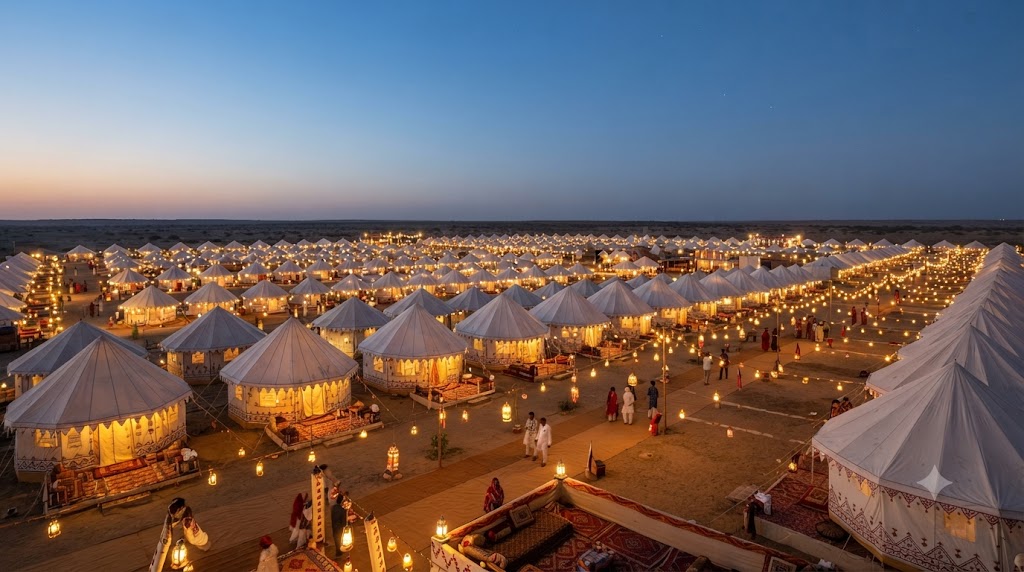
  • Rann of Kutch Package from Chandigarh: Which Week of a Four-Month Season Actually Matters

    Rann of Kutch Package from Chandigarh: Which Week of a Four-Month Season Actually Matters

    Rann Utsav is not a weekend event, it runs a full four months, November through early March, and that length is exactly what most planning advice gets wrong. At Flywings Tour & Packages Pvt Ltd, the question we actually get is not “when is the festival on,” everyone already knows it runs all winter, it is “which week should we actually go.” That is a genuinely different question, and this guide is built around answering it properly. We checked the top-ranking “Rann of Kutch package from Chandigarh” results while researching this piece, and every one of them treats the four-month season as a single undifferentiated block, listing the same generic “best time to visit” advice regardless of which specific week a reader actually has available.

    Why We Are Publishing This a Month Before the Season Opens

    The 2026-27 season starts November 1, and we are deliberately publishing this guide in late September, over a month ahead. Search interest for Rann Utsav planning content typically climbs sharply through October as the season approaches, and the tent categories and dates that fill first, particularly around the Christmas-New Year and Republic Day windows, are exactly the ones worth locking in before that demand curve peaks. This is the same early-publish logic behind our Diwali, Christmas, and skiing season guides.

    Quick context: The 2026-27 Rann Utsav season runs November 1, 2026 through March 7, 2027. Within that window, the salt desert is at its whitest from late December through February, and four confirmed full moon nights offer the festival’s single best visual experience. Picking the right week matters more than picking the right month.

    Why “Which Week” Is the Real Question

    A four-month season means the White Desert Festival is not one uniform experience stretched across winter. Early November feels different from late February, crowd levels shift around the major holiday overlaps, and the salt flat’s actual visual whiteness changes with the season’s dry-out progression. Treating the whole window as interchangeable is how a trip ends up timed around convenience rather than around what the destination is actually best at during that specific stretch.

    The Season Broken Down

    Window What to Expect
    Early November (season opening) The season has just started, salt whiteness still building, overlaps with Diwali week (November 8 to 14, 2026), good for travellers combining the festival with Diwali travel plans
    Mid-November to mid-December A genuine shoulder window, thinner crowds, comfortable weather, salt whiteness improving steadily
    Late December to early January (Christmas-New Year stretch) December 18, 2026 through January 2, 2027, the single busiest window of the season, salt at its whitest, book well ahead if these are your dates
    January (including the Kite Festival, January 14, 2027) Peak salt whiteness continues, the Kite Festival adds a specific cultural draw, still busy but slightly less than the New Year peak
    Late January (Republic Day, January 26, 2027) Another genuine crowd spike around the holiday, salt conditions still excellent
    February to early March (season closing) Salt whiteness begins tapering as the dry season progresses further, noticeably thinner crowds, a strong choice for travellers prioritising a quieter experience over the absolute peak visual

    The Full Moon Factor

    Beyond the calendar windows above, four confirmed full moon nights across the season deliver Rann Utsav’s single most distinctive experience, moonlight reflecting off the white salt desert, an effect photographs genuinely struggle to capture but that visitors consistently rate as the trip’s highlight. If a full moon night lines up with your available dates, it is worth planning the rest of the itinerary around that specific night rather than treating it as a bonus if it happens to align.

    Rann of Kutch Package from Chandigarh: Getting There

    There is no direct flight from Chandigarh to Bhuj, the nearest airport to the festival. A direct Chandigarh-Ahmedabad flight, roughly one hour forty minutes, is the most practical first leg, followed by either a connecting flight to Bhuj or a road journey of around five hours from Ahmedabad. From Bhuj, the Dhordo tent city sits roughly 80 kilometres away, about a ninety-minute to two-hour drive. For travellers with slightly more time, flying into Ahmedabad and driving the full stretch also allows a stop at other Kutch attractions along the way.

    Colourful traditional tent city with domed roofs lit up at night near the Rann of Kutch
    The Dhordo tent city at dusk, the festival’s base for exploring the white salt desert

    A Sample 4-Day Itinerary

    • Day 1: Fly to Ahmedabad, drive or connect to Bhuj, transfer to the Dhordo tent city
    • Day 2: Full day at the festival, cultural performances, handicraft stalls, camel and jeep safaris across the salt flat
    • Day 3: Sunset and, if timed to a full moon night, an evening walk on the illuminated salt desert, plus nearby Kutch sights like the Kalo Dungar (Black Hill) viewpoint
    • Day 4: Return drive to Bhuj or Ahmedabad, departure

    Add a day or two for Bhuj’s own attractions, the Aina Mahal palace and the handicraft villages around Bhuj, if the trip is not purely festival-focused.

    What There Is to Actually Do Beyond the Salt Desert

    • Cultural performances, nightly folk music and dance from Kutch’s various communities, a genuine showcase of Gujarati and Rajasthani-adjacent regional culture rather than a generic tourist show
    • Handicraft shopping, Kutch is renowned for embroidery, mirror work, leather crafts, and block printing, and the festival’s craft stalls sell directly from local artisans
    • Desert safaris, camel cart rides and jeep safaris across the white salt flat, best done close to sunset or sunrise when the light and temperature are both at their most comfortable
    • Kalo Dungar (Black Hill), the highest point in Kutch, a worthwhile half-day trip for panoramic views over the Rann and, on clear days, into Pakistan across the border
    • Adventure activities, paramotoring and ATV rides are increasingly available at the tent city for travellers wanting more than sightseeing

    What to Eat

    Kutchi cuisine reflects the region’s arid climate, built around dairy, millets, and preserved foods rather than the rice-heavy profile common elsewhere in Gujarat.

    • Bajra rotla, a millet flatbread, a genuine regional staple worth trying alongside the more familiar Gujarati thali offerings served at most tent city dining halls
    • Kutchi dabeli, a spiced potato filling in a bun, a popular regional street food snack
    • Gujarati thali, widely available at the festival’s dining areas, a mix of vegetable curries, dal, rice, and roti served with the characteristic Gujarati sweet-savoury balance
    • Chaas (buttermilk), a genuinely refreshing local drink given the desert climate’s dry heat during the day

    Rann Utsav vs Jaisalmer Desert Festival

    Since both are winter desert festivals often compared by travellers weighing a desert-themed trip generally, here is the honest distinction.

    Factor Rann Utsav Jaisalmer Desert Festival
    Duration A full four-month season, November through early March A shorter, fixed few-day festival window, typically in February
    Landscape A flat white salt desert, genuinely unique in India Sand dunes, the more classic desert imagery most people picture
    Flexibility High, since the long season allows picking a specific week around your own schedule Low, tied to specific festival dates that may not align with your available leave
    Best fit Travellers wanting flexibility in exactly when to go, or specifically chasing a full moon night Travellers specifically wanting the concentrated festival energy of a short, fixed event

    Packing for the Desert

    • Layer for a sharp day-night temperature swing, winter desert days can be warm while nights drop sharply, standard for this climate and season.
    • Comfortable closed footwear, the salt flat surface can be uneven and occasionally damp near the edges.
    • Sunglasses and sunscreen even in winter, the white salt surface reflects sunlight intensely during the day.
    • A light jacket or shawl for evening cultural programmes, desert evenings cool quickly once the sun sets.

    Rann of Kutch Package from Chandigarh for Family and Group Trips

    The tent city’s structured setup, organised activities, dining halls, and cultural programming, suits family groups comfortably, and children generally respond well to the camel rides and open desert space. For larger groups and friend circles, booking tents together as a coordinated block, rather than scattered individual reservations, matters more here than at a standard hotel destination, since the festival’s peak-season tent inventory genuinely sells out category by category rather than staying open-ended.

    Cost Shape, Without Fixed Numbers

    For a Rann of Kutch Package from Chandigarh, we are not publishing fixed price tags, since cost depends heavily on which week you travel, tent category (standard, deluxe, and premium tiers all exist at Dhordo), and how far ahead you book. The relative shape is worth knowing: the Christmas-New Year and Republic Day windows carry a genuine premium given demand, while the shoulder windows in November and February offer meaningfully better rates for essentially the same core experience, minus the absolute peak crowd energy. Reach out and we will build a real, itemised quote for your dates within 24 hours, no obligation.

    Who This Trip Suits

    • Photography enthusiasts, particularly for a full moon night visit, given how distinctive the moonlit salt desert looks compared to any other Indian landscape
    • Couples and honeymooners, the tent city’s romantic desert-camp atmosphere has made it an increasingly popular short honeymoon addition alongside a longer Rajasthan or Gujarat trip
    • Families wanting a genuinely different domestic winter trip, distinct from the hill-station and beach options most Indian winter travel defaults to
    • Travellers combining this with a broader Gujarat circuit, the Statue of Unity, Gir National Park, and Ahmedabad’s heritage core are all realistic add-ons given the shared Ahmedabad gateway

    Frequently Asked Questions

    When does the 2026-27 Rann Utsav season run?

    November 1, 2026 through March 7, 2027, a four-month window rather than a single fixed date.

    Which Week Is Best for a Rann of Kutch Package from Chandigarh?

    It depends on your priority. Late December through February delivers the whitest salt desert but the biggest crowds and highest rates. November and late February offer a quieter, more budget-friendly experience with slightly less peak whiteness. A full moon night, four of which fall across the season, delivers the single most visually distinctive experience regardless of month.

    Is there a direct flight from Chandigarh to the festival?

    Not fully direct. A direct Chandigarh-Ahmedabad flight is the practical first leg, followed by a connecting flight or road journey to Bhuj, then roughly 80 kilometres by road to the Dhordo tent city.

    How many days does a Rann Utsav trip need?

    Four days covers the festival and the Dhordo tent city experience comfortably. Add extra days for Bhuj’s own attractions or a wider Kutch and Gujarat circuit.

    Is Rann Utsav good for a honeymoon or couples’ trip?

    Yes, the tent city’s desert-camp setting and the moonlit salt desert on full moon nights specifically have made it an increasingly popular short romantic addition to a longer Gujarat or Rajasthan itinerary.

    Should I book well in advance for the Christmas-New Year or Republic Day windows?

    Yes, genuinely well ahead. These are the season’s two busiest stretches, and tent availability at Dhordo, particularly in the better categories, tightens noticeably as those specific dates approach.

    Can this trip be combined with the rest of Gujarat?

    Yes, given the shared Ahmedabad gateway, the Statue of Unity, Gir National Park, and Ahmedabad’s own heritage sites are all realistic additions for travellers with a week or more available.

    What makes the Rann of Kutch different from other Indian desert destinations?

    The flat white salt surface itself, unlike the sand dunes of Rajasthan’s Thar Desert, the Rann’s dried salt marsh creates a genuinely different, almost otherworldly landscape, especially under moonlight, which is why it draws a distinct kind of photography and honeymoon-focused traveller compared to a typical desert trip.

    Pick the Week, Not Just the Season

    A four-month festival window rewards planning around what specific week you actually want, not just confirming the dates are open. Explore more India tour packages from Chandigarh, read our 2027 long weekends guide if you are timing this around a specific holiday window, or call us directly at +91 99143 10333 for an itinerary matched to the exact week that fits what you actually want from this trip, whether that is a quiet November shoulder-season visit or a full moon night timed right into the peak of the season. Flywings team since 2013.