Most international trips are a series of decisions — which city, which day for which sight, how to get between them. A Maldives trip is different: there is really only one decision that shapes the entire holiday, and it’s the one most first-time visitors get least help with — which resort. Pick the right one for your group and budget, and every day of the trip runs itself; pick the wrong one, and no itinerary planning can fix a villa category or meal plan that doesn’t suit you. At Flywings Tour & Packages Pvt Ltd, resort selection is where we spend most of our time with every Maldives client, and this guide walks through exactly how we do it.
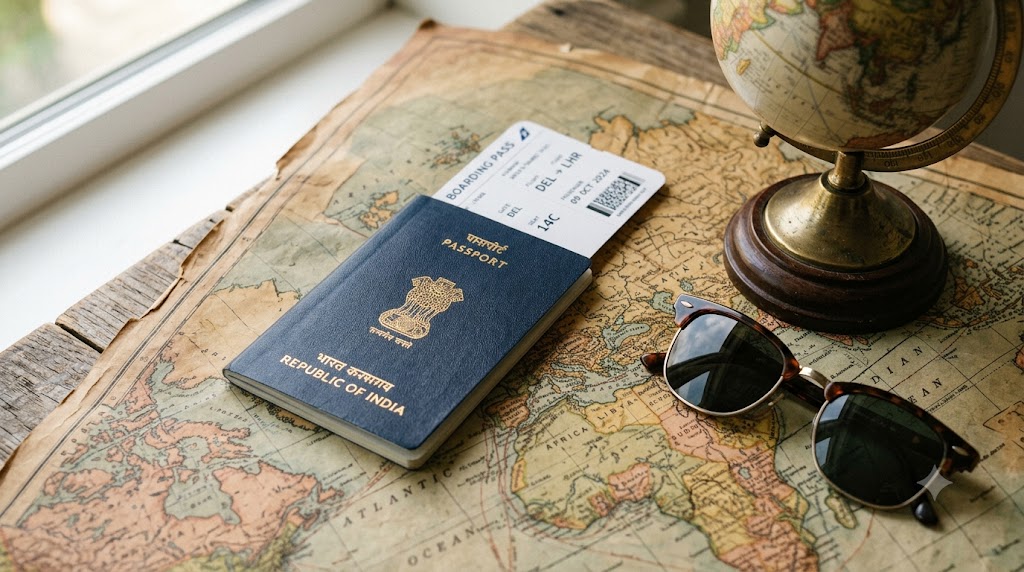
Quick facts before you plan: Indian passport holders get a free 30-day visa on arrival — no advance paperwork. Flight time from India runs roughly 4–5 hours, mostly via Delhi or Chennai, followed by a seaplane or speedboat transfer to your resort. Most trips run 4–6 days. May and September are the current sweet-spot months — dry-season weather at meaningfully better rates than the December–March peak.
Why the Resort Choice Matters More Here Than Anywhere Else
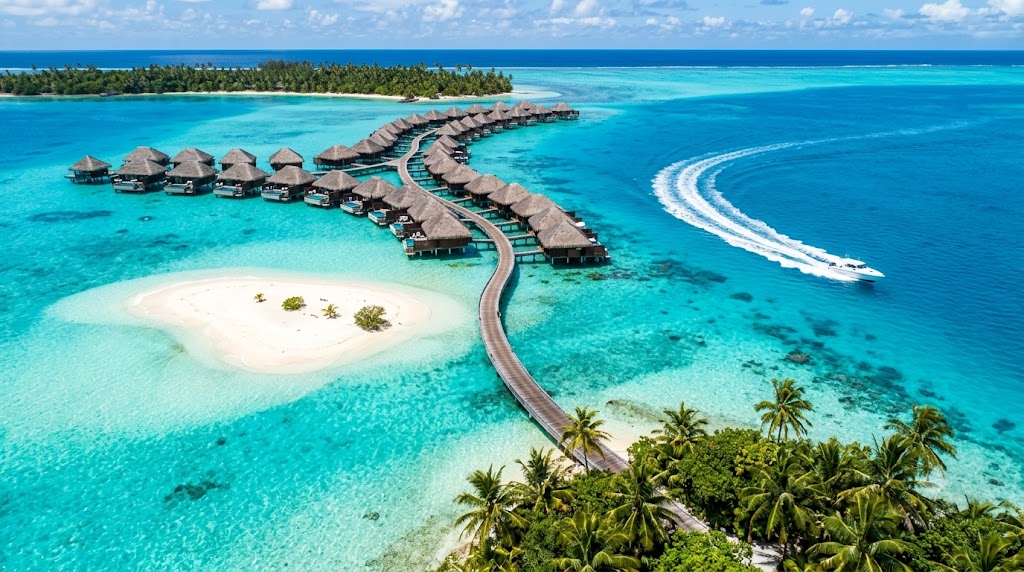
Unlike Bali or Thailand, where you can zone-hop if your first choice doesn’t suit you, the Maldives is built around single-resort, single-island stays — most resorts occupy their own private island, and moving between them mid-trip means another boat or seaplane transfer, which most travellers don’t do. That makes the initial choice unusually final: you’re not picking a hotel for a few nights, you’re picking your entire holiday’s environment, food, activities and mood for the whole stay. This is exactly why our conversations with Maldives clients spend far more time on “which resort” than on “what to do” — the second question mostly answers itself once the first is right, and a client who’s spent time getting the resort choice right rarely calls us mid-trip with a complaint.
Decision 1: Villa Type
| Villa Type | What You Get | Best For |
|---|---|---|
| Beach Villa | Directly on the sand, private beach access, typically the most affordable category | First-timers, families, travellers who want beach time over the overwater “moment” |
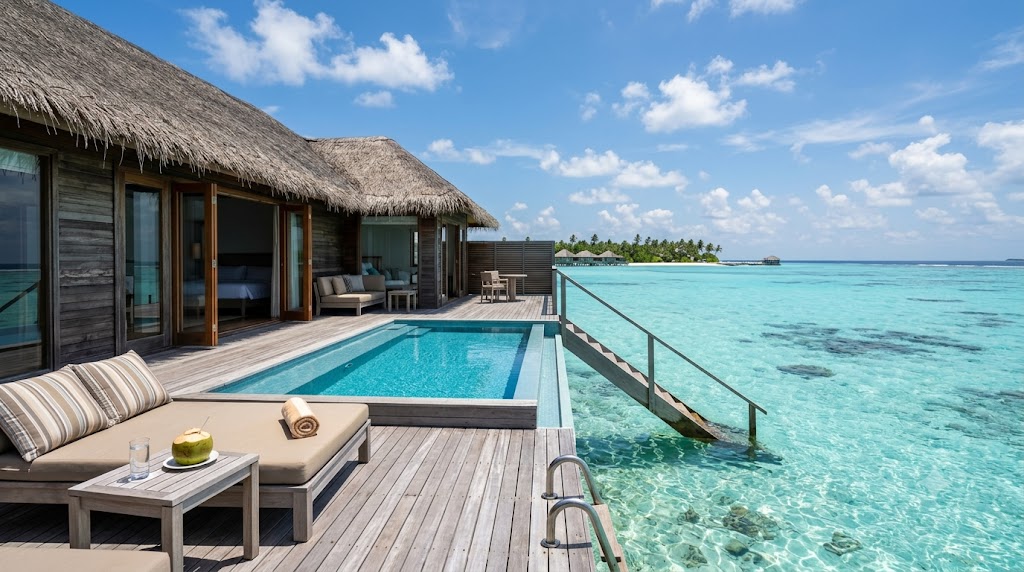
| Overwater (Water) Villa | Built on stilts over the lagoon, direct water access via steps or a ladder, often glass floor panels | Honeymooners, couples, the classic “Maldives photo” experience |
| Overwater Pool Villa | Everything above, plus a private plunge pool on the deck | Milestone trips, travellers wanting the fullest luxury version |
| Family/Two-Bedroom Villa | Larger beach or overwater units connecting two rooms | Families and multi-generational trips wanting togetherness with privacy |
Our honest advice: if budget forces a choice between a beach villa at a better resort or an overwater villa at a lesser one, we usually steer clients toward the better resort — service quality and island setting affect the whole trip more than the villa category alone. Photos of an overwater villa look similar across very different quality tiers of resort, and it’s the surrounding service, food and house reef that a photo can’t show you — exactly the details we walk clients through before they commit.
Decision 2: Which Atoll
The Maldives is a chain of atolls, and where your resort sits changes your transfer time, price, and even the diving/snorkelling quality:
- North and South Malé Atolls: closest to the airport, typically a 20–40 minute speedboat transfer — ideal for shorter trips or anyone who dislikes long transfers, usually at a range of price points.
- Ari Atoll: a short seaplane flight away, known for excellent snorkelling and whale shark/manta ray sightings, popular for slightly longer stays.
- Outer/further atolls (Baa, Lhaviyani, and beyond): longer seaplane transfers (30–45+ minutes), often quieter, more exclusive resorts with a stronger sense of remoteness — best for travellers who see the transfer itself as part of the adventure rather than a chore.
For a first Maldives trip, especially 4–5 days, we usually recommend North/South Malé or a short seaplane hop — it protects more of your limited days for actually being at the resort rather than in transit. Speedboat transfers also tend to be more schedule-flexible than seaplanes, which fly only in daylight hours and can bunch arrivals into a single afternoon window — worth knowing if your international flight lands late in the day.
Decision 3: Meal Plan
This decision affects your daily budget and freedom more than any other line item on a Maldives quote:
| Plan | What’s Included | Best For |
|---|---|---|
| Bed & Breakfast | Breakfast only | Travellers wanting to try different restaurants on the resort à la carte |
| Half Board | Breakfast + one more meal (usually dinner) | A balance of value and flexibility — our most commonly booked plan |
| Full Board | All three meals | Families and groups wanting cost predictability |
| All-Inclusive | Meals plus a range of drinks and sometimes activities | Travellers who want zero additional spending decisions once they land |
Since resort islands have no outside restaurants, the meal plan isn’t optional the way it might be on a city trip — it’s worth deciding deliberately rather than defaulting to whatever a quote first shows.

Decision 4: Budget Tier
Maldives resorts span an unusually wide range, and knowing roughly where you sit helps narrow the search fast:
- Value tier: beach villas, North/South Malé location, bed & breakfast or half board — the most accessible way into a genuine Maldives experience.
- Mid-luxury tier: overwater villas at well-regarded resorts, often with half or full board — where most first-time honeymooners land.
- Ultra-luxury tier: overwater pool villas at outer-atoll resorts with all-inclusive plans — the “bucket list” version, usually for milestone anniversaries or once-in-a-lifetime trips.
We ask every client for a rough budget range early specifically so we’re not showing beach-villa clients ultra-luxury resorts (or vice versa) — it wastes everyone’s time and usually means starting the search over. It’s worth being candid about budget on the first call rather than starting broad and narrowing down later; Maldives resort pricing varies widely enough that a vague brief tends to waste the first round of options entirely.
A Day at a Maldives Resort: What to Actually Expect
For travellers who’ve never done a single-resort holiday before, it helps to know what the days actually look like — because “just relaxing” undersells it:
- Morning: breakfast (often with a lagoon or ocean view), then a choice of snorkelling straight off your villa’s steps, a house-reef swim, or a resort-arranged excursion.
- Midday: most resorts offer optional activities — dolphin cruises, sandbank picnics, non-motorised water sports included in many packages, with diving and motorised sports usually at extra cost.
- Afternoon: genuinely unstructured time — a spa treatment, pool time, or simply the villa deck — this is where the “just relaxing” reputation comes from, and it’s earned.
- Evening: sunset from the jetty or an overwater bar, followed by dinner — either at your meal-plan restaurant or, for special occasions, a private beach or overwater dining setup many resorts offer.
The lack of a packed itinerary is the point — Maldives trips work precisely because there’s nowhere else to rush off to, which is either the best or most restless feeling of the whole holiday depending on the traveller. If you suspect your group will get restless without a packed schedule, say so when we’re choosing a resort — some properties run a much fuller activity calendar than others, and matching that to your group’s temperament matters as much as the villa category.
Honeymoon and Anniversary Touches Worth Arranging
- Floating breakfast: a tray set up in your villa’s private pool or lagoon steps — one of the most-photographed Maldives moments and simple to arrange in advance.
- Private beach or sandbank dinner: many resorts set up a candlelit table on an empty stretch of beach or a nearby sandbank for a genuinely private evening.
- Spa treatments for two: couples’ massage suites, often overwater, are a near-universal offering worth booking ahead during peak season.
- Room decoration and cake: like any honeymoon destination, telling the resort in advance (which we always do on your behalf) usually gets a decorated room and small surprises included at no extra cost.
Maldives Culture and Etiquette Notes
- Resort islands vs local islands: the Maldives is a Muslim country, and this shows up mainly on local (inhabited) islands — modest dress is expected there, while resort islands operate under separate rules allowing swimwear and alcohol.
- Alcohol is resort-only: it’s served freely on resort islands but not available (and importing it is prohibited) on local islands — relevant mainly if your itinerary includes a local-island excursion.
- Respect house reefs: reef-safe sunscreen and not touching coral are increasingly expected, with some resorts actively enforcing it as part of conservation efforts.
- Tipping: not obligatory but appreciated for exceptional service, especially for boat crews, butlers and spa staff — small notes in local currency or USD both work.
Putting It Together: A Decision Checklist
- Set your budget tier first — it narrows the resort list before anything else does.
- Choose villa type based on whether the overwater experience or beach access matters more to your group.
- Decide your atoll based on trip length — shorter trips favour closer atolls, longer trips can absorb a further transfer.
- Pick a meal plan that matches how much you want to think about food once you arrive.
- Confirm trip length — most one-resort stays work best at 4–5 nights; beyond that, some travellers split between two resorts instead.
Free Visa on Arrival: What Indian Travellers Need to Know
The Maldives offers Indian passport holders a free 30-day visa on arrival — no advance application, no fee, and no embassy visit required. Standard documents still apply: a passport valid for at least 6 months from your travel date, a confirmed return or onward ticket, and proof of your resort booking. Compared to visa processes for other honeymoon-tier destinations (see our Dubai visa guide), this is about as simple as international entry gets — one less thing to plan around on a trip where the resort decision already demands most of your attention.
Best Time to Visit the Maldives from India
| Months | Conditions | Verdict |
|---|---|---|
| December – March | Peak dry season, the most reliable weather | Best conditions, but rates run 10–30% higher — book 8–12 weeks ahead |
| May & September | Shoulder season with largely dry-season-quality weather | The 2026 sweet spot — similar conditions to peak season at meaningfully better rates |
| June – August | Southwest monsoon possible, generally milder in the Maldives than elsewhere in South Asia | Good value; short showers are common but rarely disruptive for a full day |
| April & October | Transitional months | Workable, with reasonable rates and decent weather odds |
May and September deserve more attention than they get — both sit close enough to the dry season that weather risk stays low, while resort rates soften noticeably compared to the December–March rush.
Getting to the Maldives from Chandigarh and Amritsar
Flight time from India runs roughly 4–5 hours to Malé, mainly via Delhi, followed by a seaplane or speedboat transfer to your specific resort — the transfer itself is arranged by the resort and included in most packages. Our ticketing desk prices the full Chandigarh–Delhi–Malé routing as one itinerary, applying the same booking-window principle from our cheap flights guide — 6–8 weeks ahead is typically the sweet spot for this longer international routing, especially around the December–March peak.
What to Pack for the Maldives
- Reef-safe sunscreen — increasingly required by resorts to protect house reefs, and simply the responsible choice.
- Light, breathable resort wear — evenings rarely need more than a light layer.
- A universal adapter — Maldives resorts commonly use UK-style three-pin sockets.
- Snorkelling gear if you have your own preferred set, though most resorts provide it.
- A dry bag or waterproof phone case for the seaplane and water activities.
- Cash in small denominations for tipping, though most on-resort spending runs through your room account.
Money-Saving Tips from Our Desk
- Target May or September for dry-season-quality weather without the December–March price premium.
- Choose North/South Malé atoll resorts to cut seaplane transfer costs, which can be a meaningful line item at further atolls.
- Book half board over all-inclusive if you don’t drink much alcohol — the price gap often isn’t worth it for light drinkers.
- Book 8–12 weeks ahead for December–March travel — overwater villas in peak season sell out well before the dates arrive.
- Consider a beach villa at a top-tier resort over an overwater villa at a mid-tier one — service and setting often matter more than the villa type alone.
Maldives vs Bali vs Dubai: The Honest Comparison
Since these three routinely compete for the same honeymoon or luxury-trip slot, here’s how the Maldives actually differs:
| Maldives | Bali | Dubai | |
|---|---|---|---|
| Trip structure | One resort, total relaxation | Multiple zones, varied experiences | City-based, activity-packed |
| Visa for Indians | Free visa on arrival, 30 days | Visa on arrival, 30 days | Pre-arranged visa (we handle it) |
| Ideal trip length | 4–5 days | 6–7 days | 4–6 days |
| Best for | Pure honeymoon luxury, zero-itinerary relaxation | Longer, varied romantic or wellness trips | Glamour, shortest flight, energetic couples |
Our rule of thumb: if “relaxation” is the honeymoon’s actual goal, the Maldives wins outright. If the couple wants variety and a longer trip, Bali edges ahead — see the full breakdown in our Bali vs Maldives vs Dubai comparison.
Common Maldives Myths We Correct Every Week
| What People Assume | The Reality |
|---|---|
| “You need a visa arranged before you fly.” | Indian passport holders get a free 30-day visa on arrival — no advance paperwork needed. |
| “Every resort is basically the same, just pick the cheapest.” | Atoll location, villa type and meal plan change the entire trip character — the resort choice matters more here than almost anywhere else. |
| “You can easily visit multiple islands during your stay.” | Most Maldives resorts occupy a single private island; island-hopping mid-trip is uncommon and usually not worth the transfer time on a short trip. |
| “Monsoon season means the trip is ruined.” | The Maldives’ wet season brings short showers rather than sustained rain, and shoulder months like May and September often deliver dry-season-quality weather at better rates. |
Who the Maldives Is Perfect For
- Honeymooners: the overwater villa experience remains the most requested honeymoon booking we handle — see how it compares in our Bali vs Maldives vs Dubai guide.
- Anniversary and milestone trips: the ultra-luxury tier’s outer-atoll resorts suit couples wanting a genuine once-in-a-lifetime splurge.
- Families wanting total relaxation: family/two-bedroom villas at value or mid-luxury resorts suit multi-generational trips wanting togetherness without a packed itinerary.
- Travellers who want zero planning once they land: the single-resort structure means once your resort is chosen well, the rest of the trip largely runs itself.
Booking a Package vs Planning the Maldives Yourself
| DIY | Flywings Maldives Package | |
|---|---|---|
| Resort selection | Photos vs reality gamble across hundreds of similar-looking listings | Matched to your budget, group and priorities from two decades of bookings |
| Atoll/transfer logistics | Easy to underestimate seaplane costs and timing | Priced and scheduled as part of one itemised quote |
| Meal plan decision | Often defaulted to whatever a portal shows first | Chosen deliberately based on how you actually want to holiday |
| Peak-season availability | Popular overwater villas sell out before you finish comparing | We track availability and book early on your behalf |
| When something goes wrong | A distant resort’s front desk and a long call queue | A human in Mohali, a phone call away |
Frequently Asked Questions
How many days are needed for a Maldives trip?
4–5 nights at one resort is the standard, comfortable length for most travellers — enough time to properly enjoy the villa, activities and relaxation without needing a second location. Milestone trips sometimes extend to a week or split between two resorts.
Do Indians need a visa for the Maldives?
No advance visa is needed — Indian passport holders receive a free 30-day visa on arrival, one of the simplest entry processes among honeymoon-tier destinations.
Beach villa or overwater villa — which should I choose?
Overwater villas deliver the classic “Maldives photo” experience and direct lagoon access, ideal for honeymoons; beach villas are typically more affordable and suit families or travellers who prioritise beach time. If budget is tight, a beach villa at a excellent resort often beats an overwater villa at a lesser one.
What is the cheapest time to visit the Maldives?
May and September currently offer the best combination of dry-season-quality weather and softer rates — genuinely worth considering over the pricier December–March peak if your dates are flexible.
Is half board or all-inclusive better value?
It depends on how much you’ll eat and drink on-resort — half board suits travellers happy with breakfast and one more meal who don’t drink much, while all-inclusive suits those wanting zero additional spending decisions once they arrive. We calculate this against your actual habits rather than assuming one is always better.
Which atoll should a first-time visitor choose?
North or South Malé Atoll, generally — the shortest transfer from the airport, which protects more of a shorter trip’s days for actually being at the resort. Longer trips (7+ days) can better absorb a further atoll’s longer seaplane transfer.
Can Flywings help choose the right resort for our budget?
Yes — this is the core of what we do for every Maldives client. Tell us your budget, group, and priorities (honeymoon romance, family space, ultra-luxury), and we’ll shortlist resorts that actually match rather than sending a generic list.
Is alcohol available in the Maldives?
Yes, but only on resort islands — the Maldives is a Muslim country, and alcohol is neither served nor permitted on local, inhabited islands. If your stay is entirely on a resort island, as most tourist trips are, this rarely comes up in practice.
Can we split our stay between two Maldives resorts?
Yes, particularly on trips of a week or longer — some couples pair a lively, activity-focused resort with a quieter, more remote one for contrast. It adds a transfer day, so we typically only recommend it for stays of 7+ nights.
Let Us Help You Choose the Right Resort
The Maldives rewards getting one decision right — and that’s exactly where we focus every client conversation. Tell us your budget, group, and what you want from the trip, and we’ll match you to the resort, atoll, villa type and meal plan that fits. Explore our Maldives Luxury 4N/5D package, browse more international tour packages from Chandigarh, or reach us directly:
- Call / WhatsApp: +91 99143 10333 · Landline: 0172-4736185
- Email: sales@flywingstour.co.in
- Visit us: SCF 29, First Floor, Phase 7, Mohali (Chandigarh Tricity) — get directions
Written by Sukhjinder Kaur, Senior Travel Content Writer at Flywings Tour & Packages Pvt Ltd — booking flights and holidays from Mohali, Punjab since 2005. Visa requirements and seasonal guidance verified as of July 2026; entry rules and resort offerings can change, so confirm current details when you enquire.