Tag: Uttarakhand

  • Rishikesh Rafting from Chandigarh: Pick the Right Stretch, Season, and Operator

    Rishikesh is the most popular rafting destination in India, and it is also the one where a poor choice of stretch or operator can turn a great weekend into a miserable one. At Flywings Tour & Packages Pvt Ltd, we send Tricity groups to Rishikesh regularly, and the two questions that decide whether the trip works are almost always the same, which stretch of river fits your group’s experience level, and which operator is properly licensed and safety-conscious. This guide answers both before getting into the logistics.

    Quick context: Rafting in Rishikesh runs from roughly mid-September to June 30, with the monsoon months closed for safety. Routes range from short day trips of a few kilometres to multi-day expeditions covering more than 80 kilometres, and the right choice depends far more on your group’s experience than on how adventurous the trip sounds.

    Choose Your Stretch by Experience Level

    Stretch Length Typical Format Best For
    Short stretches, roughly 9 to 16 km A half-day or single-day trip, gentler rapids, shorter paddling time First-time rafters, families with older children, anyone unsure about their comfort level in moving water
    Medium stretches, roughly 26 to 35 km A full-day trip with more sustained rapids and longer paddling Rafters with a little prior experience, groups wanting a more substantial day on the water
    Multi-day expeditions, 70 km and above Two or three days with overnight riverside camping, including the longer 84 km route Experienced or fit rafters, groups wanting a genuinely immersive river experience

    The honest rule: if you have never rafted before, start with a shorter stretch. Multi-day expeditions are a great experience, but attempting one as a first-time rafter, without the confidence built on a shorter day, is a common reason people find the trip harder than they expected.

    Choosing a Licensed Operator

    There are hundreds of operators in Rishikesh, and quality varies considerably. Check for a valid licence and clear safety standards before you book, not after. Ask specifically whether life jackets, helmets, and a trained guide are included for every rafter, not just the lead boat, whether the operator provides safety briefings before departure, and whether the river permits and forest entry fees are included in the quoted price or listed as extras.

    The honest read: the cheapest option on a booking site is not always the best value. A well-run operator with proper equipment, a clear briefing, and experienced guides is worth a modest premium, particularly on the medium and longer stretches where the river’s conditions demand more.
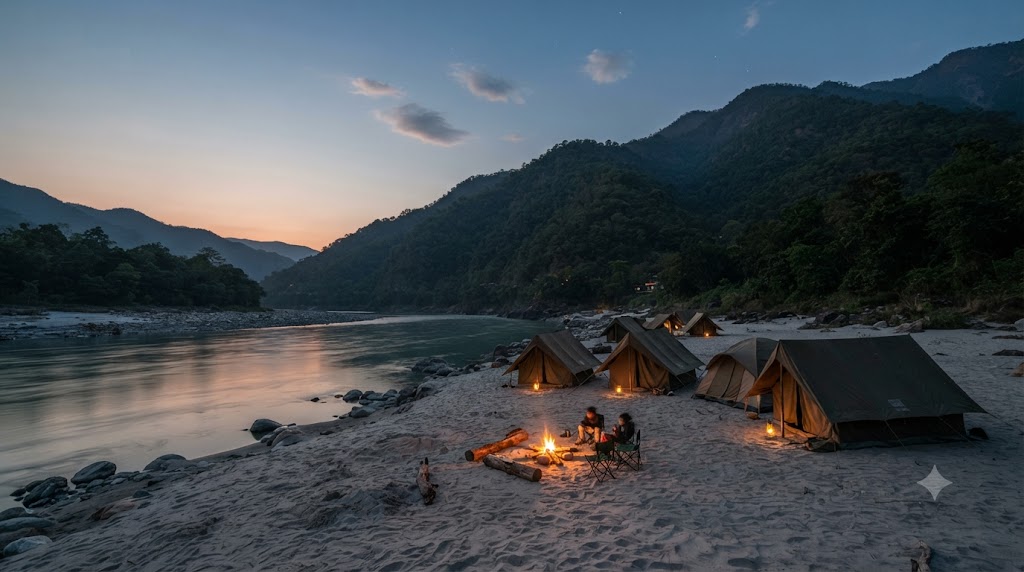
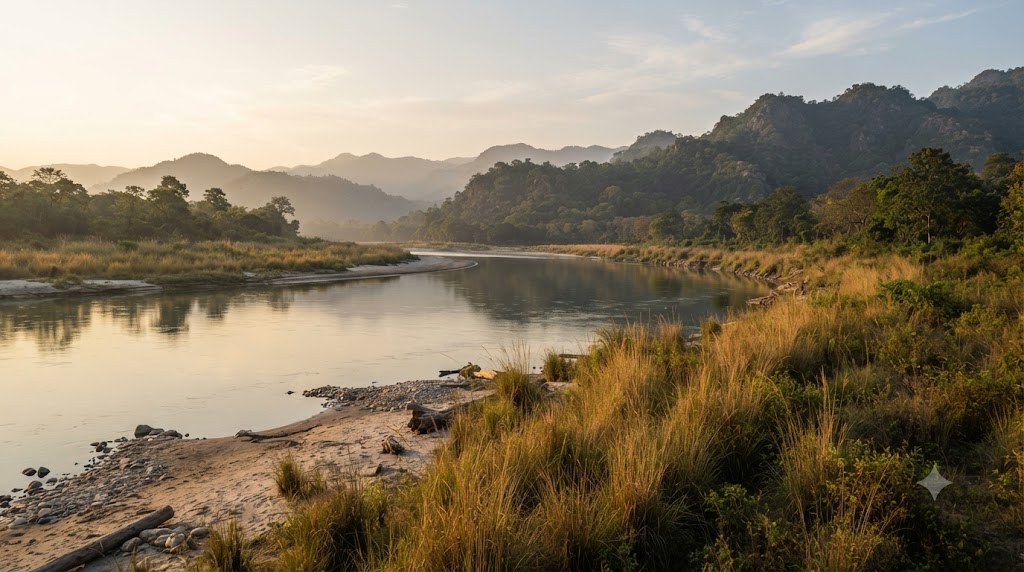
    Riverside camp on the sandy bank of the Ganga river in Rishikesh with tents and forested hills
    A riverside camp on the Ganga, the overnight base for the multi-day expedition routes

    Getting There from Chandigarh

    Rishikesh is roughly five to six hours from Chandigarh by road, through Haridwar, making it one of the easiest weekend adventure trips from the Tricity. There are no direct flights, the nearest airport is Dehradun’s Jolly Grant Airport, roughly an hour’s drive from Rishikesh, but most Chandigarh-based travellers drive directly, which also gives flexibility on departure time and luggage. Haridwar is a natural stop on the way up, with the Ganga Aarti at Har ki Pauri worth building into a first evening.

    A Sample Two-Day Weekend

    • Day 1: Drive from Chandigarh to Rishikesh via Haridwar, evening Ganga Aarti at Har ki Pauri if your timing allows, check in at a riverside hotel or campsite
    • Day 2: Morning safety briefing and rafting on your chosen stretch, lunch on the riverbank, drive back to Chandigarh in the afternoon

    A three-day version works well for a medium or multi-day stretch, adding a rest day or a second activity like a short cliff-jumping session, a riverside cafe afternoon, or a walk along the Lakshman Jhula suspension bridge.

    Best Time to Raft

    Window Conditions
    October to November Post-monsoon, clear skies, comfortable temperatures, the river is still full and the rapids are strong, a genuinely excellent window
    December to February Cooler, the river runs more gently in the coldest months, suited to beginners who prefer a calmer experience
    March to June Warm weather, the river is strong with snowmelt, popular with groups wanting a summer rafting trip before the monsoon closes the season
    Mid-June to mid-September Monsoon season, rafting is closed for safety, do not plan a trip in these months

    Always confirm current season status with your operator before travelling, since river conditions and closure dates can shift year to year.

    Safety Notes Every Rafter Should Know

    • Listen closely to the safety briefing, it covers paddling commands, what to do if you fall out, and how to position yourself in the raft, and skipping attention to it is one of the most common mistakes first-time rafters make.
    • Wear the life jacket and helmet at all times, even when the water looks calm, since conditions change quickly on the river.
    • Do not raft after heavy rain or on days the operator cancels, the river’s condition after rainfall can be significantly more dangerous, and a responsible operator will postpone rather than push ahead.
    • Tell your operator about any health conditions beforehand, including heart or back issues, so the guide can recommend a suitable stretch.

    What to Pack

    • Quick-dry clothing and a spare set in a dry bag, you will get wet, and cotton stays cold and heavy once soaked.
    • Sturdy sandals or water shoes with a heel strap, not flip-flops, which tend to come off in the rapids.
    • Sunscreen and a cap, the sun reflects strongly off the water.
    • A waterproof phone pouch, though most operators advise leaving valuables at the base camp rather than carrying them on the raft.

    Rishikesh vs Jim Corbett: Adventure or Wildlife

    Rishikesh and Jim Corbett are both within a reasonable drive from Chandigarh, and a combined Uttarakhand weekend is possible for groups with three or four days. Our Jim Corbett safari guide covers the wildlife side in detail. The honest split: Rishikesh is the better choice for a group wanting high-energy water adventure and a lively riverside atmosphere, while Corbett suits travellers wanting quieter forest time and a chance at wildlife sightings.

    Beyond the River: What Else Rishikesh Offers

    Rishikesh is more than a rafting base, and a weekend built around the river often benefits from a few non-water activities for rest days or for group members who are not paddling.

    • Lakshman Jhula and Ram Jhula, the two famous suspension bridges across the Ganga, walkable and photogenic, especially in the late afternoon
    • Parmarth Niketan and the riverside ashrams, a calmer side of Rishikesh, with evening aarti ceremonies open to visitors
    • Beatles Ashram, a deserted meditation complex that has become a genuinely popular visit, with its own history and street art
    • Cafe culture along the riverbank, a relaxed way to spend an afternoon between rafting sessions or after a multi-day expedition

    Rafting Gear and What Operators Usually Provide

    Most licensed operators include helmets, life jackets, paddles, and a trained guide in each boat within the rafting package itself, and it is worth confirming this is the case rather than assuming. Some operators offer optional add-ons such as wetsuits or specialised footwear, worth requesting if the weather is cool or the stretch is longer. Your own clothing and personal items remain your responsibility, which is why the packing list above matters more than most first-time rafters expect.

    Cost Shape, Without Fixed Numbers

    We are not publishing fixed price tags, since rafting costs depend on stretch length, operator tier, equipment and safety standards, and whether accommodation and meals are included. What is worth knowing is that a longer multi-day expedition carries a meaningfully higher cost than a short day trip, and the most common budget surprise is river permits and forest entry fees listed separately from a headline rafting price. Our quotes always itemise these, so the total is clear before you commit. Reach out and we will build a real, itemised quote for your dates within 24 hours, no obligation.

    Planning a Group Trip Without the Usual Headaches

    Group rafting trips from the Tricity tend to go smoothly when a few things are settled before the day itself. Confirm the exact headcount with the operator early, since raft sizes and guide allocation depend on it. Collect ID and any health information from every participant before departure, not on the morning of the activity. Agree on who is responsible for splitting costs and handling payments before you travel, since group arrangements are much simpler when money questions are settled in advance. Build in a relaxed evening rather than a packed agenda, since rafting is physically tiring and group energy tends to drop sharply after a long day on the water.

    Who This Trip Suits

    • Friend groups looking for an active weekend, rafting is a genuinely social activity, and the shared experience of paddling together is part of the appeal
    • Families with older children, the short stretches are manageable for a wide range of ages and fitness levels, with a qualified guide in every boat
    • Adventure-seeking couples, a shared rafting day followed by a riverside evening makes a memorable, low-pressure weekend
    • Corporate teams wanting a team-building outing, rafting works well for coordinated group activity, and our corporate travel services cover group logistics for teams travelling together

    Frequently Asked Questions

    When is the rafting season in Rishikesh?

    Roughly mid-September to June 30. The monsoon months, July and August in particular, are closed for safety.

    Is rafting safe for beginners?

    Yes, on shorter stretches with a licensed operator, a proper safety briefing, and a trained guide in every boat. Start with a shorter route and build up to longer stretches once you are comfortable.

    How long is the drive from Chandigarh?

    Roughly five to six hours by road, through Haridwar, making it a manageable weekend trip from the Tricity.

    What is the best stretch for a first-time rafter?

    A short stretch in the roughly 9 to 16 kilometre range, which gives a good introduction to the river without the sustained rapids of longer routes.

    Do I need to know how to swim?

    It helps, and operators typically recommend it, though life jackets are mandatory and a guide is in every boat. Tell your operator if you are not confident in the water so they can advise on the most suitable stretch.

    Is rafting in Rishikesh suitable for children?

    Short stretches are generally suitable for children old enough to follow the safety briefing and sit securely in the raft, with the minimum age and height requirements set by each operator. Confirm these with your operator before booking, since they vary.

    What happens if the river is too high on the day of my booking?

    A responsible operator will postpone or reschedule rather than run the route in unsafe conditions. Build a buffer day into your trip if you can, since weather-related changes are a normal part of river rafting.

    Can I combine rafting with other activities in the same trip?

    Yes, Haridwar’s Ganga Aarti, the Lakshman Jhula bridge, and short riverside activities like cliff jumping or a cafe afternoon all pair well with a rafting day.

    Book the Right Stretch, Then Enjoy the River

    Rishikesh rafting is one of the most rewarding weekend trips from the Tricity, and the planning is genuinely simple once you know which stretch and which operator to choose. Explore more weekend getaways from Chandigarh, or call us directly at +91 99143 10333 for a trip planned around your group’s experience level and dates. Flywings team since 2013.
  • Jim Corbett Safari from Chandigarh: How to Book the Official Way, Without the Middlemen

    Jim Corbett Safari from Chandigarh: How to Book the Official Way, Without the Middlemen

    Searching for a Jim Corbett safari booking is one of the more confusing experiences in Indian wildlife travel. Within a few minutes you will find half a dozen sites that look official, use the word “official” in their titles, and charge a markup for doing what the government booking system does directly. At Flywings Tour & Packages Pvt Ltd, we have helped Tricity families and friend groups plan this trip for years, and the most common problem we fix is not logistics, it is a booking made through the wrong channel at the wrong price. This guide walks through the actual system, what the zones mean, and how to avoid the middlemen.

    Quick context: Jim Corbett National Park is a protected tiger reserve, and safari entry is controlled through zone-based permits with limited vehicle numbers per day. The permit system, not the travel agent you choose, decides whether you get a seat, which is why understanding the zones and release windows matters more than any individual booking portal’s promises.

    How the Official Booking System Works

    • Choose your zone first, since each zone has its own permit pool and its own availability, a few popular zones fill far earlier than others.
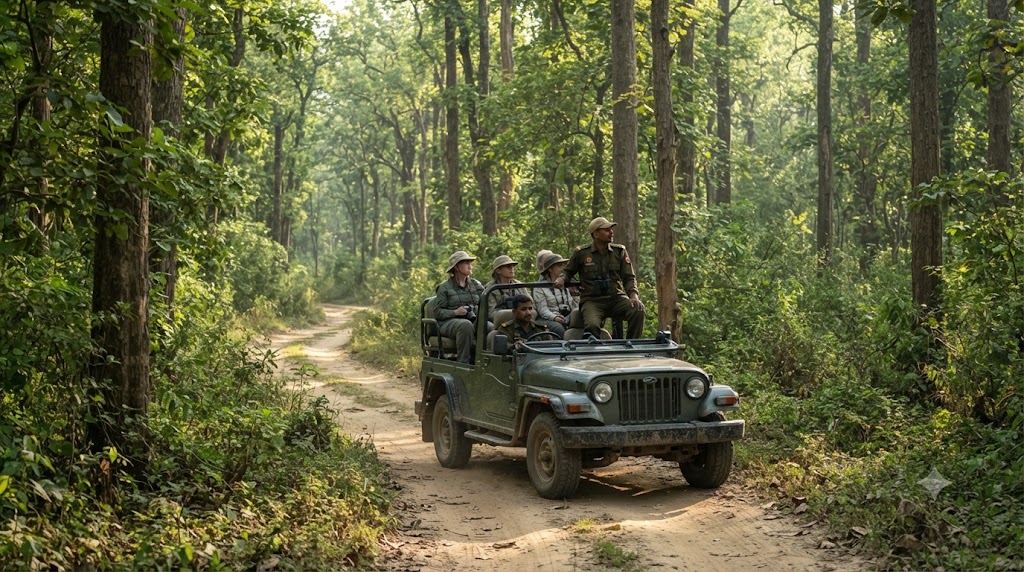
    • Choose your safari type, jeep or canter, with the vehicle capacity and seating arrangement tied to that choice.
    • Choose morning or evening, each slot has its own permit allocation, so a sunrise slot and an evening slot in the same zone are effectively separate bookings.
    • Enter visitor details exactly as they appear on your ID, name, age, and ID proof, since mismatches are a common reason a booking is rejected at the gate.
    • Pay the fee online and keep the e-permit, printed or on your phone, and present it at the entry gate on the day.

    The official government booking channel is the one to use directly. Third-party sites can help with planning or bundling accommodation, but the safari permit itself is issued through the official system, and a reputable travel agent should be able to show you exactly what they are booking on your behalf rather than a vague bundled price.

    Understanding the Zones

    Zone Character Best For
    Dhikala The most famous zone, central to the park, large open grasslands and river views First-time visitors and anyone prioritising tiger sightings, but it fills earliest
    Bijrani Dense forest with high general wildlife activity Visitors wanting heavy wildlife density, a strong alternative when Dhikala is fully booked
    Jhirna Open for safaris throughout the year, generally less crowded than Dhikala and Bijrani Travellers with flexible dates who want a dependable option across the season
    Dhela Quieter and less crowded, a more peaceful, slower-paced drive Travellers who prefer fewer vehicles on the track
    Durga Devi Strong birdlife, quieter forest character Birdwatchers and photographers focused on birds rather than big cats

    The honest advice here: if tiger sighting is the single goal and you have fixed dates, the Dhikala and Bijrani slots are the ones to target the moment permits open, not after you have decided on the rest of your itinerary.

    Riverbank scene with a sandy shoreline and tall grass in Jim Corbett National Park Ramganga river
    The Ramganga riverside, one of the quieter, scenic stretches visible on the park’s outer edges

    When Permits Open, and Why the Window Matters

    Permits for the most popular zones open roughly 45 to 90 days ahead of the safari date, and the most sought-after slots, particularly for weekends and the winter peak season from roughly November to March, tend to sell out within hours of release. Planning around this window matters more than any other single decision in your trip. If you cannot secure a permit for your preferred zone and date, the honest recommendation is to shift your dates or your zone rather than accept a middleman’s markup for the same permit that the official system could have issued directly.

    Getting There from Chandigarh

    There is no direct flight to Jim Corbett. The nearest major airport is Dehradun’s Jolly Grant Airport, roughly two to three hours by road, and the more common approach for Chandigarh-based travellers is a road journey directly, roughly five to six hours depending on traffic and route. The drive passes through the Haridwar and Ramnagar corridor, and most visitors base themselves in Ramnagar, the gateway town, for the park’s entry points.

    A Practical Two-Day Itinerary

    • Day 1: Drive from Chandigarh to Ramnagar, check in, afternoon at leisure, confirm the next morning’s permit and gate timing
    • Day 2: Early morning safari in your booked zone, return to Ramnagar for lunch, optional evening departure or a second safari if booked

    A two-day trip is workable for a single safari, but three days gives genuine flexibility if your first sighting is a miss, and wildlife sightings are never fully guaranteed on any single drive.

    Best Time to Visit

    Window Conditions
    November to March Cool, clear, the most comfortable window for safaris, and the peak demand period, booking well ahead is essential
    April to June Hotter, drier, and tiger sightings are often considered more reliable near water sources, though the heat is intense in the afternoons
    July to October Monsoon season, the park is generally closed or heavily restricted during peak rains, so check current status before planning

    Note that park closures and zone availability change from year to year, so confirm current status on the official system or with your operator before committing to dates.

    Common Mistakes to Avoid

    • Booking through an unofficial middleman at a markup, the permit itself is government-issued, and a markup buys you nothing except the convenience of someone else clicking the button for you.
    • Assuming any zone will do, the zone you pick shapes what you see, Dhikala and Bijrani are not interchangeable with the quieter zones for a tiger-focused trip.
    • Missing the release window and then complaining the permits are gone, the release window is public information, and planning around it is the only reliable way to secure a preferred slot.
    • Ignoring the ID requirement, a name or ID mismatch at the gate can cost a booked slot entirely.

    Wildlife Etiquette on the Track

    • Stay inside the vehicle at all times, the single most important rule, and the one guides enforce most strictly.
    • Keep voices low and avoid sudden movements, wildlife responds to disturbance, and a quiet vehicle gives everyone a better chance of a clear sighting.
    • Do not use flash photography, it can startle animals and disturb other visitors, and most guides will ask you to stop if it is used.
    • Carry any litter back out with you, the park is protected, and visible waste detracts from the experience for the next group.

    What to Pack

    • Warm layers for early morning safaris, the pre-dawn drive can be genuinely cold in winter even though afternoons are mild.
    • Neutral-coloured clothing, bright colours and very loud patterns stand out against the forest backdrop.
    • Binoculars, wildlife is often seen at a distance, and a good pair genuinely improves the experience, particularly for birdwatchers.
    • A printed copy of your e-permit and ID, since the gate check requires the exact documents you booked against.
    • Sun protection and water for midday breaks, the afternoon heat can be intense even in winter.

    Food and Stay in Ramnagar

    Ramnagar, the gateway town, has a practical range of hotels and resorts, from budget guesthouses to riverside properties, and most visitors base themselves there rather than inside the park. Local food is simple and filling, dal, rice, roti, and vegetable preparations typical of the Kumaon region, a welcome change from the heavier restaurant menus of larger cities. Vegetarian options are plentiful throughout the town.

    Corbett vs Rajaji National Park

    Rajaji National Park, closer to Haridwar, is the other major wildlife option in the region, and travellers often weigh the two. Corbett offers the stronger reputation for tiger sightings and a larger, more established safari infrastructure. Rajaji is generally quieter, with fewer vehicles and a more relaxed pace, and suits travellers prioritising birdlife and a calmer forest experience over the chance of a big-cat sighting. For a first wildlife trip, Corbett is usually the better pick. For a second, more reflective visit to the region, Rajaji rewards the slower pace.

    Cost Shape, Without Fixed Numbers

    We are not publishing fixed price tags here, since park fees, vehicle category, and accommodation costs change, and quoting a number from a page that may be outdated in a month would be a disservice. What is worth knowing is that the official permit fee is a government-set amount, the same whether you book it yourself or through an agent, which is exactly why any significant markup on the permit itself is worth questioning. Our quotes always break the permit cost out separately from accommodation and transport, so there is no ambiguity about what the middle layer is actually charging for. Reach out and we will build a real, itemised quote for your dates within 24 hours, no obligation.

    Who This Trip Suits

    • Wildlife enthusiasts and photographers, particularly those prioritising tiger and birdlife sightings
    • Families with older children, the safari format works well for children old enough to sit through a multi-hour drive on uneven tracks
    • Friend groups looking for a weekend escape, a combined Corbett and Rishikesh trip works well for a longer weekend, and our Rishikesh rafting guide covers the adventure side of that combination
    • Travellers who have done the hill stations and want a genuinely different Uttarakhand experience, see also our weekend getaways from Chandigarh for other short trips from the Tricity

    Frequently Asked Questions

    Can I book a Jim Corbett safari directly through the official system?

    Yes. The official booking system lets you choose zone, safari type, and time slot, then pay and receive an e-permit, without any intermediary required.

    How far in advance should I book?

    Permits for popular zones open roughly 45 to 90 days before the safari date and sell out quickly, especially for winter weekends, so booking as soon as the window opens gives you the best chance at your preferred slot.

    Which zone is best for seeing tigers?

    Dhikala and Bijrani are generally considered the strongest zones for tiger sightings, though no zone guarantees a sighting, since wildlife movement is unpredictable.

    Is Jim Corbett safe for families?

    Yes, the safaris are conducted in vehicles with trained guides, and the main safari tracks are well-established. Follow the guide’s instructions at all times and stay inside the vehicle.

    How long is the drive from Chandigarh?

    Roughly five to six hours by road depending on traffic and route, with the drive passing through Haridwar and the Ramnagar corridor.

    Do I need a special permit beyond the safari booking?

    The safari permit itself is the key requirement, and it is issued through the official system. Your accommodation and transport are separate arrangements.

    Can I see tigers on every safari?

    No, and it is worth setting that expectation honestly. Tiger sightings are never guaranteed on any single drive. Visitors who plan for a multi-day stay, or who accept that a good sighting of birdlife and other wildlife is equally part of the experience, generally come away more satisfied than those expecting a guaranteed big-cat encounter.

    Is it worth paying a travel agent to handle the booking?

    Only for the planning side, not the permit itself. A good agent can help you choose the zone and dates, coordinate accommodation and transport, and watch the release window for you. The permit fee itself is a government-set amount, so any agent charging a noticeably higher figure for the same permit is worth questioning.

    What is the difference between jeep and canter safaris?

    Jeeps are smaller, open vehicles with a more intimate, closer-to-the-ground feel, while canters carry more people and suit larger groups. Both are conducted with guides, and the choice mostly depends on group size and how much you value the closer experience.

    Book the Permit Properly, Then Enjoy the Forest

    A Corbett safari is worth the planning, and the planning is mostly about understanding the permit system clearly enough to avoid the middlemen. Explore more India tour packages from Chandigarh, or call us directly at +91 99143 10333 for a planned trip with the permit timing built around your dates. Flywings team since 2013.

  • Gulmarg vs Auli Skiing from Chandigarh: Which One Actually Fits Your Trip

    Gulmarg vs Auli Skiing from Chandigarh: Which One Actually Fits Your Trip

    Every winter, travellers from the Tricity ask us the same question: Gulmarg vs Auli from Chandigarh which one is better for a skiing trip? The answer depends on factors that generic ski-package listings often overlook, including snow quality, skiing experience, accessibility, and how much of the trip is actually about skiing versus simply enjoying the snow. At Flywings Tour & Packages Pvt Ltd, we have booked winter trips to both destinations for years, so this guide compares Gulmarg and Auli specifically for travellers planning their winter trip from Chandigarh. If you are also planning other winter travel, you can explore our Christmas and New Year travel guide.

    Why This Comparison Rarely Gets Written Honestly

    Most content about either destination is written by someone with a reason to prefer one over the other, a Kashmir-based operator promoting Gulmarg, an Uttarakhand-based one promoting Auli. We book both regularly and genuinely do not have a stake in steering you toward either, which is why this comparison leads with the trade-offs rather than a sales pitch for whichever destination happens to be easier for us to package.

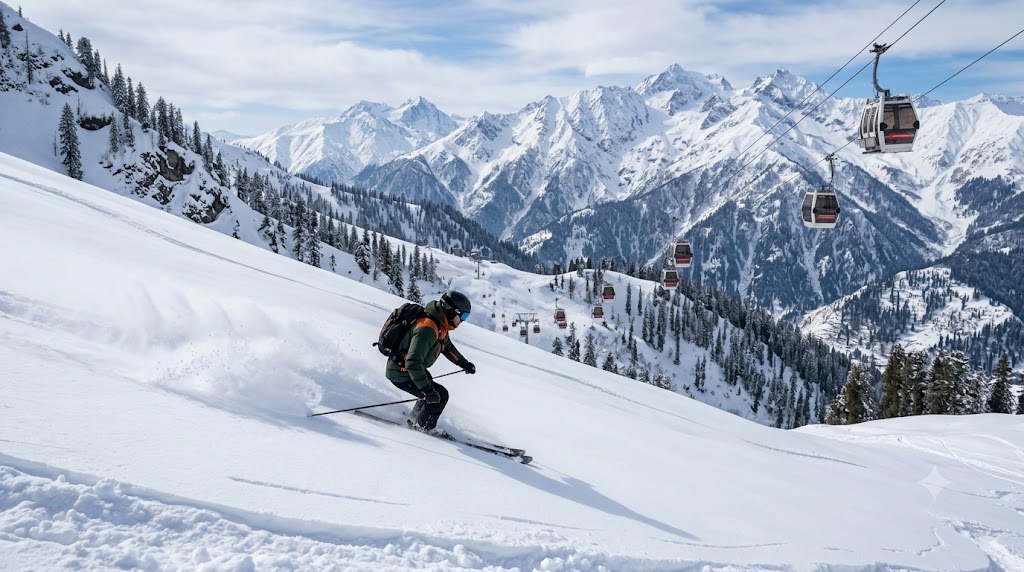
    Quick context: Gulmarg has more terrain, better natural snowfall, and a more developed ski culture. Auli is smaller, gentler, and considerably easier to reach from Chandigarh. Which one wins depends entirely on what kind of winter trip you actually want.

    The Direct Comparison

    Factor Gulmarg Auli
    Terrain Roughly 25 km of slopes across six lifts, elevation 2,650 to 3,980 metres Roughly 3 km of slopes across three lifts, elevation 2,702 to 3,069 metres
    Snow quality Heavier, more reliable natural snowfall from December through March, genuinely excellent powder in a good January Lighter natural snowfall, more variable season to season
    Ski season Late November through late February, with mid-December to late February as the prime window Broadly similar window, though shorter and more weather-dependent given lighter natural snow
    Skill level fit Strong for intermediate and advanced skiers given the terrain variety, still workable for beginners on designated slopes Better suited to beginners and families given the gentler, more compact terrain
    Ski culture and infrastructure More developed, established ski schools, heli-skiing options for advanced skiers, a genuine winter sports destination in its own right Smaller scale, fewer specialised options, more of a scenic winter getaway with skiing included than a dedicated ski destination

    Getting There from Chandigarh

    Gulmarg

    For travellers comparing Gulmarg vs Auli from Chandigarh, Gulmarg is relatively convenient to reach by air. Fly from Chandigarh to Srinagar, roughly 414 kilometres by air, then take a road transfer of about 50 kilometres to Gulmarg itself, usually taking around one to one-and-a-half hours depending on road conditions. Winter flight schedules into Srinagar can shift with weather, with morning arrivals occasionally reshuffled during specific wind patterns, so it is worth building a little schedule flexibility into your travel days.

    Auli

    Auli has no airport of its own. The route runs through Dehradun’s Jolly Grant Airport, followed by a road journey to Auli, or a cable car ropeway from nearby Joshimath for the final stretch. Chandigarh to Auli by road runs roughly 495 kilometres, a genuinely long drive if you choose that route directly rather than flying to Dehradun first.

    Our honest read on connectivity: Gulmarg vs Auli from Chandigarh is an important comparison when planning your journey, and Gulmarg is the easier trip logistically from Chandigarh specifically. It involves a single flight plus a short transfer, while Auli requires either a longer combined flight-and-road journey or a full road trip.

    Gulmarg vs Auli from Chandigarh: Who Should Pick Gulmarg?

    • Intermediate to advanced skiers who want genuine terrain variety and the option to progress across a full week rather than exhausting the slopes in a day or two
    • Anyone specifically chasing powder conditions, Gulmarg’s natural snowfall in a good season is among the best in Asia for recreational skiing
    • Groups wanting a broader Kashmir trip alongside the skiing, Srinagar’s Dal Lake and Gulmarg’s own gondola rides work well as non-ski activities on rest days, and our full Kashmir tour package guide covers the wider circuit if skiing is only part of your plan
    • Travellers comfortable with a slightly longer, more structured booking process given Gulmarg’s higher demand and more established tourist infrastructure

    Who Should Pick Auli

    • First-time skiers and families with children, given the gentler, more compact terrain and a generally calmer overall atmosphere
    • Travellers who want skiing as one part of a broader scenic trip rather than the entire focus, Auli’s Himalayan views and the Joshimath cable car ride are worth the visit even for non-skiers in the group
    • Anyone prioritising a quieter, less crowded winter destination over the more developed, busier Gulmarg experience during peak weeks
    • Groups already planning a Char Dham-adjacent Uttarakhand circuit who want to add a winter sports stop without a separate trip to Kashmir
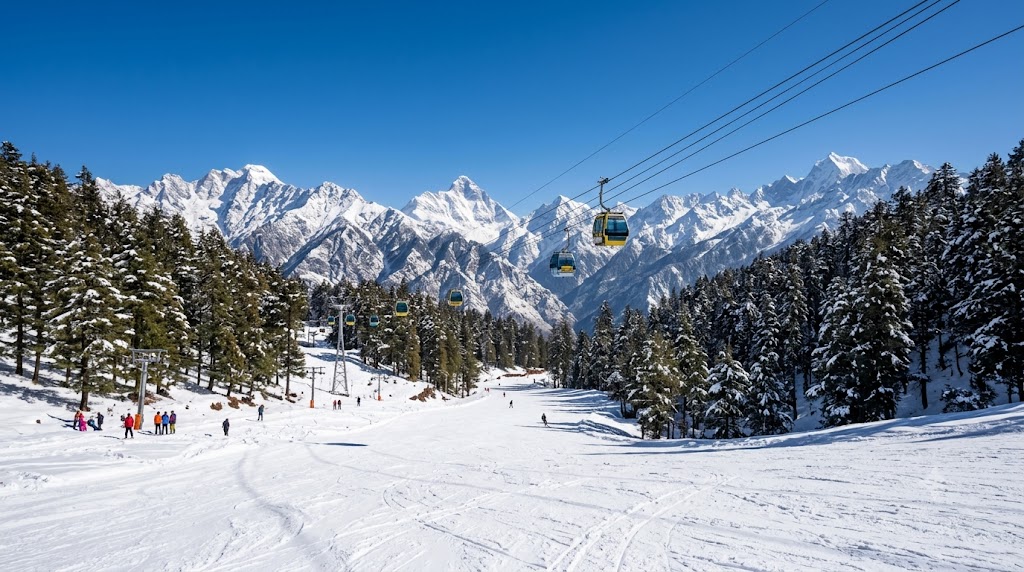
    Snow covered slopes of Auli with a cable car ropeway and Himalayan peaks in the background
    Auli’s gentler slopes and Asia’s longest cable car ropeway, a calmer alternative to Gulmarg’s bigger terrain

    A Sample 5-Day Gulmarg Itinerary

    • Day 1: Arrive Srinagar, transfer to Gulmarg, settle in
    • Day 2: Beginner slope orientation or ski school enrolment, gondola ride to Phase 1
    • Day 3: Full skiing day, progressing to Phase 2 for more experienced skiers
    • Day 4: Continued skiing or a rest day exploring Gulmarg’s meadows and viewpoints
    • Day 5: Transfer back to Srinagar for departure, or extend into a broader Kashmir circuit

    A Sample 4-Day Auli Itinerary

    • Day 1: Fly to Dehradun, drive to Joshimath, overnight
    • Day 2: Cable car up to Auli, ski school session, slope orientation
    • Day 3: Full skiing day, plus the Auli artificial lake viewpoint if weather allows
    • Day 4: Return to Joshimath and Dehradun for departure

    Beyond Skiing: What Else Each Destination Offers

    Worth knowing if your group is not entirely made up of skiers, since neither destination requires everyone to be on the slopes to enjoy the trip.

    Gulmarg’s Non-Ski Options

    The Gulmarg Gondola, one of the highest cable cars in the world, is a genuine attraction on its own, offering panoramic Himalayan views for anyone happy to ride up and simply take in the scenery rather than ski down. Snow-shoeing, sledging, and simply walking through Gulmarg’s meadows under fresh snow are all realistic non-ski activities for a rest day or for travelling companions who are not skiing at all.

    Auli’s Non-Ski Options

    The Auli-Joshimath ropeway, one of the longest cable car rides in Asia, is worth the trip alone for the views, and the Auli artificial lake, built originally to support snowmaking, offers a striking frozen or snow-rimmed viewpoint depending on conditions. Auli’s slower overall pace makes it a genuinely relaxed base for non-skiers compared to Gulmarg’s busier peak-season atmosphere.

    Gear and Packing

    • Rental equipment is available at both destinations, skis, boots, and poles, so bringing your own gear is optional unless you have specific fit or performance preferences.
    • Layer aggressively regardless of destination, thermal base layers, a mid-layer fleece, and a waterproof outer shell handle the temperature swing between exertion on the slopes and standing around at the lift queue.
    • Good sunglasses or ski goggles are not optional, snow glare at altitude causes genuine eye strain and, in bad cases, snow blindness without proper eye protection.
    • Waterproof gloves and boots matter more than most first-time winter travellers expect, wet hands and feet end a ski day faster than cold alone.

    Safety Notes for First-Time Skiers

    Both destinations offer certified instructors and designated beginner slopes, and starting there rather than attempting an intermediate run on day one is worth the ego cost. Altitude is a secondary factor at both, Gulmarg’s higher elevation runs in particular, so pacing yourself on the first day rather than pushing straight to full-day skiing helps avoid both altitude fatigue and the physical strain of a sport most first-timers are not conditioned for. Weather can close lifts or restrict runs on short notice at either destination, worth building a buffer day into a short trip rather than assuming every planned ski day will go ahead as scheduled.

    Gulmarg and Auli for Family and Group Trips

    Auli’s gentler terrain and generally calmer atmosphere make it the more straightforward pick for families with young children or mixed-experience groups where not everyone skis at an advanced level. Gulmarg works well for families too, particularly with its dedicated beginner areas, but the broader terrain and busier peak-season crowds suit a more independent, experienced group slightly better. For friend groups specifically, Gulmarg’s heli-skiing options and bigger terrain give more experienced skiers room to push themselves while beginners in the same group stick to the lower slopes, a genuine advantage of scale that Auli’s more compact terrain cannot quite match.

    Cost Shape, Without Fixed Numbers

    We are not publishing fixed price tags, since cost depends on ski equipment rental level, lesson duration, and hotel category, but the relative shape is worth knowing. Gulmarg’s more developed infrastructure and higher demand generally push costs somewhat above Auli’s for a comparable trip length, though Auli’s harder-to-reach location can offset some of that difference through transfer costs. Equipment rental and lift passes are the main variable line items at both destinations, worth confirming exactly what a quoted package includes, full-day lift access versus a limited number of runs makes a genuine difference to the actual skiing time you get. Reach out and we will build a real, itemised quote for your dates within 24 hours, no obligation.

    Best Time to Book For

    Window Conditions
    Late November to mid-December Early season, snow cover building, fewer crowds, a good window for experienced skiers comfortable with variable conditions
    Mid-December to late February Prime season for both destinations, most reliable snow cover, also the busiest and priciest window
    Late February to March Late season, snow conditions softening, generally the least crowded and most budget-friendly window if reliable powder is not the top priority

    Can You Do Both in One Winter?

    Genuinely, yes, and a fair number of committed skiers from the Tricity do exactly this, Gulmarg for a proper powder-focused trip in peak January conditions, Auli later in the season as a calmer, shorter follow-up trip, often combined with an Uttarakhand hill-station stop. The two destinations are different enough in character that visiting both in the same winter does not feel repetitive, and it gives a genuine basis for comparison beyond what any single guide, including this one, can fully convey secondhand.

    Frequently Asked Questions

    Which is better for beginners, Gulmarg or Auli?

    Auli generally suits first-time skiers and families better, given its gentler, more compact terrain. Gulmarg is also workable for beginners on its designated slopes, but its broader terrain and higher-altitude runs are more geared toward intermediate and advanced skiers.

    Which has better snow, Gulmarg or Auli?

    Gulmarg, clearly. Kashmir’s weather patterns deliver heavier, more reliable natural snowfall than Uttarakhand’s, and Gulmarg’s powder skiing in a good January is considered among the best in Asia.

    Is Gulmarg or Auli easier to reach from Chandigarh?

    For travellers comparing Gulmarg vs Auli from Chandigarh, Gulmarg is easier to reach by a meaningful margin. A single flight to Srinagar followed by a short road transfer is generally more convenient than Auli’s combination of a flight to Dehradun plus a longer road journey, or the alternative of a full 495-kilometre drive.

    When does the 2026-27 ski season start?

    Both destinations typically open as early as late November, with mid-December through late February as the prime window for reliable snow at both resorts.

    Can complete beginners learn to ski at either destination?

    Yes, both Gulmarg and Auli have ski schools offering lessons for complete beginners, with designated learner slopes separate from the more advanced terrain.

    Is one destination significantly cheaper than the other?

    Gulmarg’s more developed infrastructure tends to push costs somewhat higher for a comparable trip, though Auli’s longer, more complex transfer from Chandigarh can narrow that gap once total trip cost is factored in.

    Is heli-skiing available, and at which destination?

    Heli-skiing is a genuine, growing option at Gulmarg specifically, aimed at advanced skiers wanting access to terrain beyond the standard lift-served slopes. Auli does not currently offer a comparable heli-skiing programme.

    What happens if there is not enough snow when we arrive?

    Both destinations can see variable snow conditions, particularly in the early and late parts of the season, which is part of why the mid-December to late-February window is considered the safer bet for reliable snow cover, and why building a flexible itinerary with non-ski activities as a backup is worth doing regardless of which destination you choose.

    Book the One That Actually Fits Your Group

    Picking based on which destination is more photogenic on social media is how a lot of ski trips end up mismatched to the group actually taking them. Explore more India tour packages from Chandigarh, read our seasonal travel planning guide if you are timing this alongside other winter trips, or call us directly at +91 99143 10333 for an honest recommendation based on your group’s actual skiing experience and dates, whether that lands you on Gulmarg’s bigger terrain, Auli’s gentler slopes, or a combined trip covering both this winter. Flywings team since 2013.