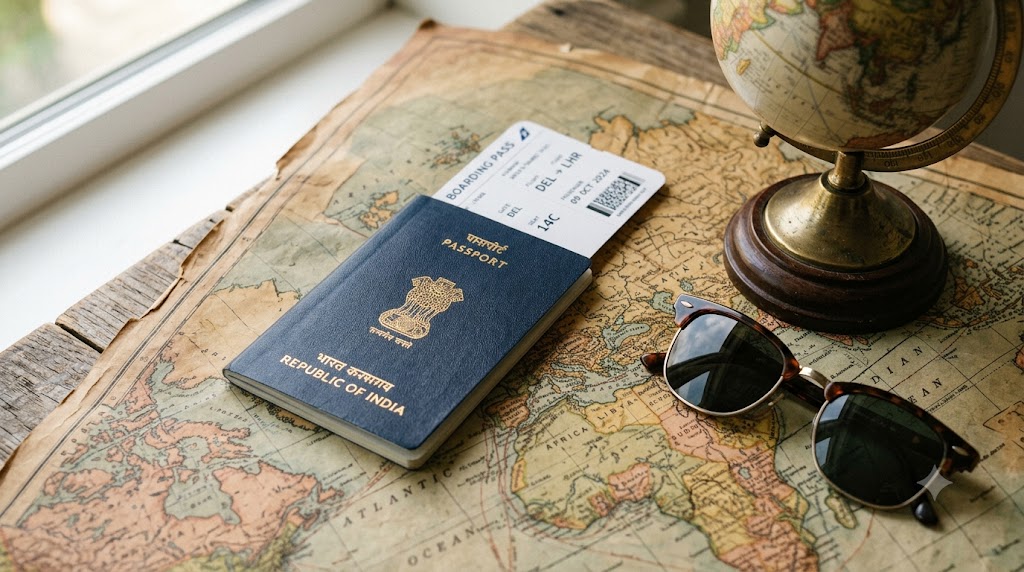
Tag: Travel Tips

  • Visa-Free Countries for Indians in 2026: The Complete List (Visa-Free, Visa-on-Arrival & e-Visa)

    Visa-Free Countries for Indians in 2026: The Complete List (Visa-Free, Visa-on-Arrival & e-Visa)

    One of the best-kept secrets of the Indian passport is how much of the world it already opens up — no embassy visit, no stack of documents, sometimes not even an online form. In the latest 2026 passport rankings, Indian passport holders have visa-free, visa-on-arrival or e-visa access to roughly 55 to 57 destinations worldwide. At Flywings Tour & Packages Pvt Ltd, our Mohali visa desk fields this question every week — “where can we go without the visa hassle?” — and the honest answer is: more places than most travellers realise. This guide breaks down exactly which countries fall into which category, what documents you still need even when there’s “no visa”, and how to turn this list into an actual trip from Chandigarh or Amritsar.

    Key Takeaways

    • ~55–57 destinations are open to Indian passport holders via visa-free entry, visa-on-arrival (VOA), or electronic visa (e-Visa) as of 2026 — no embassy appointment needed for any of them.
    • Three different categories, three different processes: true visa-free (just show your passport), VOA (a stamp or sticker paid for at the airport), and e-Visa (apply online before you fly, approval usually in days).
    • “No visa” does not mean “no documents” — return tickets, hotel proof, sufficient funds and 6-month passport validity are still checked at every one of these destinations.
    • Best short-haul picks from Chandigarh/Amritsar: Thailand, Malaysia, Maldives, Indonesia and Sri Lanka cover most of what Indian leisure travellers want, with minimal paperwork.
    • Rules change without much notice — a country visa-free today can add conditions next year. Always confirm the current requirement before booking non-refundable flights.
    • Our visa desk checks live requirements and files any e-Visa needed as part of every Flywings package — get a free travel consultation.

    The Three Categories, Explained Simply

    “Visa-free” gets used loosely online, but for a traveller it makes a real difference which of these three you’re dealing with:

    Category What It Actually Means When You Deal With It
    Visa-Free No visa, no fee, no pre-approval — immigration simply stamps your passport on arrival Nothing before you fly; just carry the standard documents (see below)
    Visa on Arrival (VOA) A visa is issued at the airport itself, usually against a fee and a passport photo At the immigration counter after landing — budget extra queue time
    e-Visa An online application approved before departure, then shown (printed/digital) at check-in and arrival Before you fly — apply at least a few days to a couple of weeks ahead

    Visa-Free Countries for Indians: Popular Picks by Region

    These destinations require no visa application and no on-arrival fee for Indian passport holders — just your passport and the standard entry documents:

    Region Popular Visa-Free Destinations Typical Stay
    South Asia Nepal, Bhutan (permit-based, no visa fee) Nepal: effectively unlimited; Bhutan: permit duration
    Africa Mauritius, Seychelles, Rwanda, Senegal, Gambia, Angola Mauritius & Seychelles: up to 90 days
    Caribbean & Americas Barbados, Jamaica, Dominica, Grenada, Trinidad & Tobago, Haiti, St. Vincent & the Grenadines Typically 14–90 days depending on the island
    Oceania & Pacific Fiji, Vanuatu, Micronesia, Kiribati, Cook Islands Typically 30–120 days

    Visa-on-Arrival Countries: The Traveller Favourites

    These are the destinations our clients book most often — the visa itself is a formality handled at the airport, and several are practically next door from Chandigarh via Delhi or Dubai:

    Country Typical Stay on VOA Why Travellers Love It
    Maldives Free 30-day visa on arrival The easiest entry of any luxury honeymoon destination — see our Bali vs Maldives vs Dubai guide
    Indonesia (Bali) Visa on arrival, roughly 30 days (extendable) Private-pool villas and Ubud’s jungle calm, paperwork-light
    Thailand Extended stay windows for Indian passport holders in recent years Bangkok’s energy plus island time — always confirm the current entry scheme before booking
    Madagascar, Comoros, Mozambique, Tanzania, Kenya Varies by country, generally 30–90 days Emerging safari and beach circuits with minimal red tape
    Jordan Visa on arrival for most tourist visits Petra and the Dead Sea without an embassy visit
    Tropical overwater bungalows and turquoise lagoon — visa-on-arrival island destinations for Indians
    Free visa on arrival is one of the reasons the Maldives remains the easiest luxury escape to book from India — land, stamp, and you’re on the jetty.

    e-Visa Countries: Apply Before You Fly

    A little more planning than visa-free or VOA, but still far simpler than an embassy visit — apply online, get an approval in your inbox, and travel:

    Country Typical Processing Good to Know
    Sri Lanka Usually a few days An easy weekend-scale beach and heritage trip — confirm the current ETA scheme, as it has changed more than once
    Vietnam 3–5 working days typically Halong Bay and Hanoi’s old quarter on relatively simple paperwork
    Cambodia A few working days Angkor Wat, often paired with a Vietnam or Thailand itinerary
    Kazakhstan (Almaty) A few working days Central Asia’s rising star — see our new Almaty destination guide
    Azerbaijan, Uzbekistan A few working days Silk Road cities gaining fast popularity with Indian travellers
    Turkey Typically issued within 24–48 hours Istanbul and Cappadocia — one of the quickest e-Visas on this list

    A quick honesty note: the UAE (Dubai) is not on any of these lists — it needs a pre-arranged tourist visa, which we process in 3–4 working days as part of every Dubai booking. See our Dubai visa guide for the full process.

    Documents You Still Need — Even Without a Visa

    “Visa-free” trips up more travellers at the airport than expected, because immigration officers everywhere check the same basics regardless of visa category:

    • Passport valid for at least 6 months from your travel date — the single most common reason for denied boarding, visa or no visa.
    • A confirmed return or onward ticket — airlines and immigration both ask for this before letting you board or enter.
    • Proof of accommodation — a hotel booking or invitation letter, even for a “no visa” country.
    • Proof of sufficient funds — a bank statement or cash/card access sized to your trip length.
    • Travel insurance — not always checked, but mandatory on paper for several visa-free and VOA destinations, and simply sensible everywhere.

    We prepare this exact checklist for every client regardless of destination, precisely because “no visa” leads people to under-pack paperwork.

    Pick by Trip Length: What Fits Your Leave Balance

    The paperwork-light list above is most useful once you match it to how many days you actually have — this is the shortlist our desk runs through on every enquiry:

    • Long weekend (3–4 days): Sri Lanka (e-Visa in days) or the Maldives (free VOA) both work as a genuine short-haul escape without burning much leave.
    • Standard break (5–7 days): Thailand, Bali (Indonesia), Malaysia and Vietnam all suit a week comfortably, with visa-on-arrival or a quick e-Visa clearing the paperwork fast.
    • Bigger trip (8+ days): Combine two visa-light destinations on one routing — Bali + Singapore, or Sri Lanka + Maldives — since neither leg adds real visa complexity to the plan.
    • Offbeat/first-mover trips: Kazakhstan (Almaty), Uzbekistan and Azerbaijan reward travellers who want something different from the usual circuit, all on manageable e-Visas.

    Visa-Free Doesn’t Mean One-Size-Fits-All

    The right visa-light destination also depends on who’s travelling — the paperwork may be simple everywhere on this list, but the experience is not the same:

    • Honeymooners: Maldives (free VOA, ultimate privacy) or Bali (visa on arrival, villa culture) — both covered in depth in our honeymoon comparison guide.
    • Families with kids: Thailand and Malaysia balance easy entry with kid-friendly theme parks, beaches and short flight times.
    • Friends’ groups: Vietnam and Sri Lanka combine visa-light entry with budget-friendly stays and adventure activities.
    • First-time international travellers: Nepal is about as low-friction as international travel gets — no visa, a short flight, and a gentle introduction to travelling abroad.
    • Repeat/offbeat travellers: Kazakhstan, Uzbekistan and Azerbaijan offer a fresh circuit once the usual visa-free favourites are done.

    Why the List Keeps Changing

    Visa-free access is a moving target — it shifts with bilateral diplomacy, tourism policy and reciprocity, not just once a year. Countries have added Indians to visa-free lists, removed them, switched from visa-on-arrival to e-Visa-only, or extended stay durations, sometimes with only weeks of notice. The India passport ranking itself moves year to year as new agreements are signed. Our practical rule: treat every list — including this one — as a starting shortlist, and let our visa desk confirm the live requirement for your exact passport and travel dates before you book non-refundable flights.

    Turning This List Into an Actual Trip

    A list of countries is a start; a booked trip is the point. Here’s how we usually help travellers move from “we could go anywhere” to a confirmed itinerary:

    1. Match the list to your calendar. A long weekend suits Sri Lanka or the Maldives; a proper break suits Bali or Vietnam. Our weekend getaways guide covers the domestic side of this same logic.
    2. Check the live requirement together. One call confirms whether your destination is genuinely visa-free this month, or needs a quick e-Visa.
    3. Book flights from the right airport. Chandigarh, Amritsar or Delhi — see our international flights guide for what flies direct from Punjab.
    4. Let us handle any e-Visa filing. Even “simple” e-Visas have form fields that trip up first-timers — we file it correctly the first time.
    5. Pack the standard documents anyway. Return ticket, hotel proof, funds, insurance — regardless of category.

    Frequently Asked Questions

    How many countries can Indians visit without a visa in 2026?

    Roughly 55 to 57 destinations are accessible via visa-free entry, visa-on-arrival, or e-Visa combined, per the latest 2026 passport ranking data. The exact count varies slightly by source depending on how VOA and e-Visa are classified — the practical number for planning purposes is “just under 60.”

    What is the easiest visa-free country for Indians to visit from Chandigarh?

    The Maldives is usually the easiest — a free 30-day visa on arrival, and reachable via Delhi with straightforward connections. For something closer to a city break, Nepal is visa-free with essentially unlimited stay and a short flight from North India.

    Is Thailand visa-free for Indians right now?

    Thailand’s entry scheme for Indian passport holders has extended and changed more than once in recent years, so “visa-free” today is not a permanent guarantee. Always confirm the live rule for your travel dates before booking — our desk checks this in minutes.

    Do I need travel insurance for visa-free countries?

    It varies by destination, but several visa-free and visa-on-arrival countries require proof of travel insurance on paper, and immigration can ask for it. We recommend it for every international trip regardless of what’s checked at the border — the cost is small next to what it covers.

    What happens if my passport has less than 6 months validity?

    Most countries — visa-free or not — will deny boarding or entry if your passport has less than 6 months’ validity from the travel date. If yours is close to that window, renew before booking; our visa desk can guide you on renewal timelines too.

    What’s the difference between visa-on-arrival and an e-Visa?

    Visa on arrival is issued at the destination airport — you queue, pay and get stamped in after landing. An e-Visa is applied for and approved online before you fly, so there’s no paperwork queue on arrival, just a stamp check. e-Visas are generally the smoother experience since the approval risk is resolved before you’ve even packed.

    Can Flywings help even if a country doesn’t need a visa?

    Yes — “no visa” still means flights, hotels, transfers and the document checklist need to be right, and for e-Visa destinations we file the application itself. Tell us your shortlist and travel window and we’ll build the itinerary and confirm entry requirements together.

    Your Next Trip Might Need Less Paperwork Than You Think

    Between visa-free, visa-on-arrival and e-Visa destinations, a genuinely large part of the world is closer than the embassy-queue reputation suggests. Tell us your dates and the kind of trip you want — beach, mountains, city, honeymoon — and our desk will shortlist destinations that match your calendar and your appetite for paperwork. Explore our visa assistance desk, browse tour packages, or reach us directly:

    Written by Sukhjinder Kaur, Senior Travel Content Writer at Flywings Tour & Packages Pvt Ltd — booking flights, visas and holidays from Mohali, Punjab since 2005. Visa categories and country lists reflect published rankings and entry rules as of July 2026; these change frequently and without much notice, so always confirm current requirements for your passport and dates before booking.

  • How to Book Cheap Flights from Chandigarh (IXC): 12 Ticketing-Desk Secrets for 2026

    How to Book Cheap Flights from Chandigarh (IXC): 12 Ticketing-Desk Secrets for 2026

    Everyone in the Tricity knows someone who paid nearly double for the same seat on the same flight. Finding cheap flights from Chandigarh is not luck — it is pattern recognition, and after two decades of issuing tickets from our Mohali desk, the patterns are very clear to us. At Flywings Tour & Packages Pvt Ltd, air ticketing is our core business: domestic and international, individual and group, every single day since 2005. In this guide we are opening the playbook — when fares actually drop, how far ahead to book, when flying from Chandigarh (IXC) beats driving to Delhi, which “hacks” are myths, and the 12 rules our own ticketing team follows. Nothing here needs special tools — just better timing and a little flexibility.

    Key Takeaways

    • The booking window is the biggest lever: roughly 4–6 weeks ahead for domestic and 6–10 weeks for international is where fares sit lowest; last-week bookings routinely cost 25–35% more.
    • Fares refresh early in the week: Indian carriers typically adjust inventory Tuesday–Wednesday mornings — search then, not on weekend evenings when demand (and prices) peak.
    • Fly mid-week, odd hours: Tuesday/Wednesday departures and early-morning or late-night slots consistently price 12–25% below Friday–Sunday prime-time flights.
    • Cheapest months from Chandigarh: February–March and August–September (shoulder seasons); December and May–June run hottest.
    • IXC first, Delhi second: count the taxi, tolls, meals and 5+ hours before assuming a Delhi departure is “cheaper” — the gap usually vanishes.
    • Incognito mode is a myth — fares move on demand buckets, not your cookies. Flexibility beats browser tricks every time.

    Why Chandigarh (IXC) Is a Smarter Departure Than You Think

    Chandigarh International Airport has quietly become North India’s most convenient mid-size airport: non-stop flights connect major Indian metros — Mumbai, Bengaluru, Hyderabad and more — plus the direct international hop to Dubai that we covered in our Dubai guide, and seasonal mountain routes like Srinagar from our Kashmir guide. Schedules do shift season to season — which is exactly why a ticketing desk that checks live inventory daily beats a screenshot of last year’s route map. The rule we give every client: price the IXC option first. A fare that looks slightly higher than Delhi’s usually wins the moment you add the ~250 km road journey, tolls, food stops, parking and the buffer hotel night that an early Delhi departure often forces.

    The Booking Window: When to Book for the Lowest Fare

    Industry fare analyses and our own booking data agree on the shape of the curve — fares form a “U”: high when schedules open, lowest in the middle window, then climbing steeply near departure:

    Trip Type Sweet Spot What Happens If You Wait
    Domestic (metro routes) 4–6 weeks before departure Inside 3 weeks fares climb 15–30%; inside 7 days they average ~34% higher
    Domestic (leisure/seasonal routes) 5–8 weeks — inventory is thinner Peak-season seats simply sell out, not just get pricier
    International (Gulf, Southeast Asia) 6–10 weeks Best fare buckets close early on popular holiday windows
    Festive travel (Diwali, Christmas, summer break) 8–12 weeks — book the moment plans firm up These weeks break every discount rule; waiting never wins

    When to Search, When to Fly

    Two different clocks matter — the day you book and the day you fly:

    Lever The Pattern Our Desk’s Practice
    Day you book Carriers typically refresh fare inventory Tuesday–Wednesday mornings IST We run fare checks for waitlisted clients early in the week, before noon
    Day you fly Tuesday/Wednesday departures price ~12–18% below Friday–Sunday Shift travel by one day; the saving often pays for a hotel night
    Time you fly Before 7 AM or after 9 PM runs ~18–25% cheaper than prime slots Early IXC departures also mean lighter security queues
    Month you fly Feb–Mar and Aug–Sep are the year’s value windows; Dec and May–Jun the priciest Flexible leave? We move whole itineraries into shoulder months
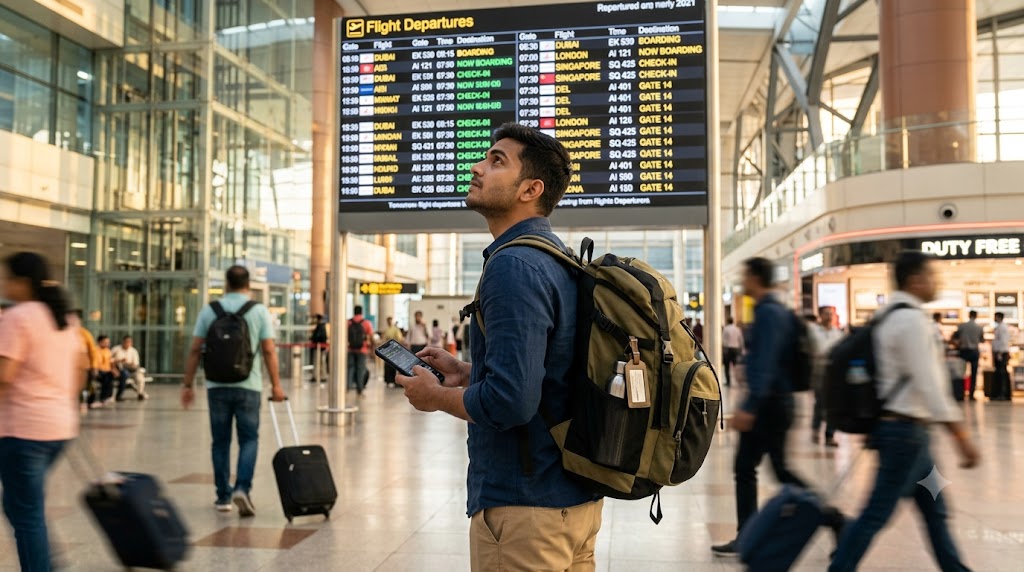
    Traveller checking flight departures board at a modern airport — flight booking tips Chandigarh
    Timing is the cheapest upgrade there is — the same seat can vary sharply between a weekend-evening search and a Tuesday-morning booking.

    How Airline Pricing Actually Works (Once You See It, You Can’t Unsee It)

    Every flight’s seats are split into invisible fare buckets — think of them as price shelves. The bottom shelf might hold a handful of seats at the lowest fare, the next shelf a few more at a higher fare, and so on up to the flexible full fares at the top. When you search, you are shown the cheapest shelf that still has stock. As seats sell, shelves empty from the bottom up — which is why the fare you saw at breakfast is gone by dinner, and why it feels like the airline is watching you. It is not; other travellers simply bought the bottom shelf while you were deciding.

    Everything in this guide follows from that one mechanism. Book in the 4–6 week window because that is when the bottom shelves are stocked and demand is still quiet. Fly mid-week and at odd hours because those flights’ bottom shelves empty slowest. Decide fast when a fare is genuinely good, because shelves never refill on demand. And when a route is selling hot — festive weeks, long weekends — accept that waiting only moves you up the shelves, never down.

    5 Booking Mistakes We Fix Every Week

    1. Searching for weeks, then booking in a panic — watching fares without a decision rule. Set your “good fare” number on day one; book the moment you see it.
    2. Comparing bare fares, not final prices — one portal’s “cheaper” fare loses after seat, baggage and convenience fees. Always compare the checkout total.
    3. Booking the family on separate PNRs — split bookings can get split across reschedules. Keep one group, one PNR, one point of control.
    4. Ignoring the return leg’s day pattern — travellers optimise the outbound and accept a peak-Sunday return. Shift the return to Monday and the round trip often drops noticeably.
    5. Treating the airport run as free — a “saving” that costs a 5-hour drive to Delhi, tolls and a hotel night is not a saving. Total cost or it does not count.

    12 Ticketing-Desk Secrets for Cheap Flights from Chandigarh

    1. Set the alert before you need it. The moment a trip becomes “probable”, start tracking the route — 6–8 weeks out. You cannot recognise a good fare without watching the normal one.
    2. Stay flexible by ±2 days. The single most powerful discount lever in Indian aviation. If your dates can slide, your fare almost always drops.
    3. Price one-ways separately on domestic. Indian low-cost carriers price each leg independently — mixing two airlines across the round trip is often cheaper than one airline’s return fare. (International is the opposite: round trips usually win.)
    4. Do the IXC vs Delhi math honestly. Add cab both ways, tolls, meals, parking and your time before crowning Delhi “cheaper”. For most Tricity families the direct IXC flight wins on total cost — and always on energy.
    5. Remember Amritsar for international. For Gulf and some long-haul routings, ATQ occasionally beats both IXC and Delhi — we quote all three airports on every international enquiry.
    6. Ride the sale calendars — carefully. Airline festive sales are real but front-load the cheapest buckets; the advertised fares vanish in hours. We keep waitlists ready before big sales open.
    7. Book the fare, then add extras deliberately. Seats, meals and baggage bought at booking cost less than at the airport — but only add what you will use; add-ons are where “cheap” fares quietly stop being cheap.
    8. Ten or more travellers? Go group block. Airlines file separate group fares with holds and name-change flexibility that portals cannot touch — weddings and corporate offsites save meaningfully here. This is agent-only territory.
    9. Buy connection buffers, not misery. The cheapest two-airline connection with a 55-minute layover is not cheap when you miss it. We build self-transfer itineraries with realistic buffers — the fare stays low and the trip stays intact.
    10. Match the fare type to the plan’s certainty. Non-refundable basic fares suit locked plans; for tentative dates, the slightly higher flexi fare is the cheaper option in expectation. Choosing this correctly is half our job.
    11. Ignore the incognito myth. Fares are driven by demand buckets emptying, not your cookies. The fare that “jumped when you searched again” was a bucket closing — which is an argument for deciding faster, not clearing cache.
    12. Let a human desk race the portals. We see the same inventory plus group fares, corporate deals and airline-office contacts — at the same price you see online, with an actual person answering when a flight cancels. That safety net is free; use it.

    Chandigarh vs Delhi Departure: The Honest Comparison

    Flying from IXC Driving to Delhi (DEL)
    Getting to the airport 20–40 minutes from most of the Tricity ~250 km / 4.5–5.5 hours each way, plus tolls and fatigue
    Route choice Direct metros + Dubai; seasonal mountain routes Everything, everywhere — unbeatable network
    Early departures Sleep at home, leave at 5 AM Usually forces a hotel night or an overnight drive
    True total cost Fare + short cab Fare + cab/fuel + tolls + meals + parking + your day
    When it wins Any route IXC serves directly Long-haul international and routes IXC doesn’t fly

    Our standing rule: IXC if it flies there, Delhi only when the network demands it — and when Delhi wins, we book the IXC–DEL connection or a comfortable cab as part of the same itinerary, so the journey is one plan, not two gambles.

    Frequently Asked Questions

    How many days before should I book a domestic flight from Chandigarh?

    Aim for the 4–6 week window for metro routes and 5–8 weeks for leisure or seasonal routes. Inside three weeks fares climb steadily, and the final week averages roughly a third higher. For Diwali, Christmas or summer-break travel, book the moment your dates firm up — 8–12 weeks out.

    Which are the cheapest months to fly from Chandigarh?

    February–March and August–September are the consistent value windows — post-winter and monsoon shoulder seasons when demand dips but weather at most destinations stays workable. December and May–June are the year’s most expensive, driven by weddings and school holidays.

    Does booking on a Tuesday really make flights cheaper?

    There is a real pattern behind the folklore: Indian carriers typically refresh fare inventory early in the week, so Tuesday–Wednesday morning searches often catch newly opened discount buckets. But it is a tendency, not a law — the booking window and date flexibility matter far more than the day of the week.

    Does incognito mode or clearing cookies lower fares?

    No. Fares are set by demand-based fare buckets, not by tracking your searches. When a fare rises between searches, a cheaper bucket sold out — someone else bought those seats. The lesson is to decide quickly when a fare is good, not to browse in disguise.

    Which cities have direct flights from Chandigarh airport?

    IXC connects non-stop to major Indian metros — Mumbai, Bengaluru and Hyderabad among them — plus the daily international flight to Dubai, with seasonal routes (like Srinagar) joining in their season. Exact schedules change with airline seasons, so call +91 99143 10333 and we will check live options for your dates in minutes.

    How early should I reach Chandigarh airport before a flight?

    For domestic departures from IXC, 90 minutes before departure is comfortable — the airport’s compact size is half its charm. For the international Dubai flight, keep 3 hours: immigration and security are efficient here, but international check-in counters close 60 minutes before departure and that deadline is unforgiving.

    Is it cheaper to book flights through a travel agent than online?

    For a single traveller on a metro route, the fare is usually identical — agents and portals sell from the same inventory. The agent advantage shows up everywhere else: group fares for 10+ travellers, corporate deals, mixed-airline routings a portal won’t assemble, honest wait-or-book advice, and a human to fix things when a flight cancels. Same price, more protection — which is why our ticketing desk has outlived every “agents are finished” prediction since 2005.

    Can Flywings really match online portal prices?

    We see the same fares the portals show — and on top of that, group blocks, corporate deals and airline-office contacts that portals do not have. You pay the same or less, and when something goes wrong at 11 PM, you call a human in Mohali instead of a chatbot. Send us your route and compare our quote yourself — it is free.

    Stop Overpaying for the Same Seat

    Cheap flights are not found; they are timed. Send us your route and rough dates, and our ticketing desk will tell you honestly — book now or wait, IXC or Delhi, one-way mix or return. That advice costs nothing and has saved our clients from twenty years of overpriced tickets. Explore our flight booking services, browse holiday packages where flights come bundled smartly, or reach us directly:

    Written by Sukhjinder Kaur, Senior Travel Content Writer at Flywings Tour & Packages Pvt Ltd — booking flights from Mohali, Punjab since 2005. Fare patterns and booking-window figures reflect industry analyses and our desk’s experience as of July 2026; airline schedules and pricing behaviour change, so treat every number as a planning guide, not a guarantee.