Tag: Southeast Asia

  • Vietnam Tour Package from Chandigarh: North, Central, or South, and How to Pick

    Vietnam Tour Package from Chandigarh: North, Central, or South, and How to Pick

    Vietnam is having a genuine moment among Indian travellers, arrivals are up roughly seventy percent this year alone, and Vietnam’s own tourism board has started talking openly about challenging Thailand for the Indian outbound market. What most of the coverage does not tell you, and what we get asked constantly once someone actually starts planning, is that Vietnam is not one trip. It is three distinct ones stitched into a single narrow country, and picking the wrong region for the days you have is the single biggest reason first-time visitors come back saying they only scratched the surface. This guide is built around that decision. Most pan-India Vietnam content either lists all three regions in a single generic itinerary without acknowledging the trade-off, or focuses on Delhi and Mumbai departure logistics that do not directly apply to a Chandigarh-based traveller routing through Delhi anyway. This version starts from the actual decision point, how many days do you have and which of the three feels right, then builds the flight routing, visa steps, and cost expectations around that answer.

    Quick context: Vietnam runs roughly 1,650 kilometres north to south, and its north, centre, and south regions feel like genuinely different countries in climate, food, and pace. A week is enough for one region done properly. Ten to fourteen days is what it takes to see two or three without rushing.

    Why the Timing Is Good Right Now

    Vietnam’s Indian arrivals surge is recent enough that the destination still has the feel of a discovery rather than a well-trodden circuit, unlike Thailand or Bali where the main tourist areas have long since adjusted their pricing and pace around large-scale Indian tourism. That window narrows every quarter as more airlines add capacity and more Indian travellers follow the same search trend driving this guide. Booking now, while flight frequency is still growing rather than fully mature, means better availability on the Halong Bay cruise categories and Hoi An heritage hotels that tend to book out fastest once a destination fully arrives on the mainstream Indian travel radar.

    Why “Vietnam” Is Really Three Trips

    Unlike a compact destination such as Bali or Singapore, where a single itinerary can reasonably cover most of the highlights, Vietnam’s length works against that. The north around Hanoi and Halong Bay, the centre around Hoi An and Da Nang, and the south around Ho Chi Minh City and the Mekong Delta each have their own personality, and flying between them eats a meaningful chunk of a short trip. The honest advice we give every first-time client: pick a region and do it properly rather than trying to skim all three on a seven-day trip.

    What’s Driving the Surge

    The seventy percent jump in Indian arrivals is not a single-cause story. Vietnam’s tourism board has run targeted marketing at the Indian market for the past two years, direct flight capacity between Delhi and both Hanoi and Ho Chi Minh City has expanded meaningfully, and the e-visa overhaul cut approval time from over a week to under two days. Layer on genuine word-of-mouth from Indian honeymooners and content creators who have visited over the past year or two, and Vietnam has crossed from a niche pick into a destination most first-time Southeast Asia travellers now actively consider alongside Thailand and Bali rather than after them.

    Getting There from Chandigarh

    There is no direct flight from Chandigarh, but the routing has genuinely improved this year. Delhi is now well connected to both Hanoi and Ho Chi Minh City with direct international legs, IndiGo, Vietnam Airlines, and VietJet all fly Delhi-Hanoi direct, while Air India, VietJet, and EVA Air connect Delhi to Ho Chi Minh City. That means a short Chandigarh-Delhi domestic hop followed by one direct international leg into whichever region you are starting from, with Air India also launching direct Delhi-Hanoi service from May 2026, adding further capacity and competition on the route.

    The E-Visa: Simpler Than Most Assume

    Vietnam’s e-visa process for Indians is genuinely one of the easier ones on offer right now, and this has been a real driver of the recent surge in Indian arrivals.

    • Entirely online application, no embassy visit required for a standard tourist e-visa.
    • Approval typically within 24 to 48 hours, a dramatic improvement from the seven-to-ten business day standard that applied only a couple of years ago.
    • Multi-entry validity of up to 90 days, useful if your itinerary includes a side trip to Cambodia or Laos within the same visit.
    • Modest fee, paid entirely online, with no separate identity verification step or unusual add-on requirement at the time of writing.

    Compared to a Schengen visa or even some Southeast Asian neighbours’ processes, this is about as low-friction as international travel documentation gets, and it is a large part of why Vietnam has become such an easy sell against destinations that require more planning lead time.

    Pick Your Region

    North: Hanoi and Halong Bay, 4 to 5 Days

    Hanoi’s Old Quarter, with its chaotic scooter traffic and centuries-old shophouses, is the cultural and culinary heart of the trip, and this is genuinely one of the best street food cities in Asia. The unmissable add-on is Halong Bay, a UNESCO World Heritage Site where towering limestone karsts rise straight out of emerald water, best experienced on an overnight cruise rather than a rushed day trip. Ninh Binh, sometimes called Halong Bay on land for its similar karst scenery set among rice paddies, is a strong optional third stop if you have a full week rather than a long weekend.

    Central: Hoi An and Da Nang, 3 to 4 Days

    This is the region most likely to surprise people who only researched Hanoi and Ho Chi Minh City before booking. Hoi An’s ancient town, a UNESCO site of yellow heritage buildings strung with colourful lanterns, is one of the most photogenic places in Southeast Asia, especially at dusk. Da Nang, a short drive away, adds modern beach resorts and the dramatic Golden Bridge, held up by giant stone hands, at Ba Na Hills. This region works particularly well for couples and honeymooners wanting a slower pace than the two big cities offer.

    South: Ho Chi Minh City and the Mekong Delta, 3 to 4 Days

    Ho Chi Minh City, still commonly called Saigon by locals, is Vietnam’s commercial engine, faster-paced and more modern-feeling than Hanoi, with a genuinely moving War Remnants Museum and Cu Chi Tunnels day trip for anyone interested in the country’s twentieth-century history. A Mekong Delta boat excursion, floating markets and riverside villages, is the natural add-on and a strong contrast to the city itself.
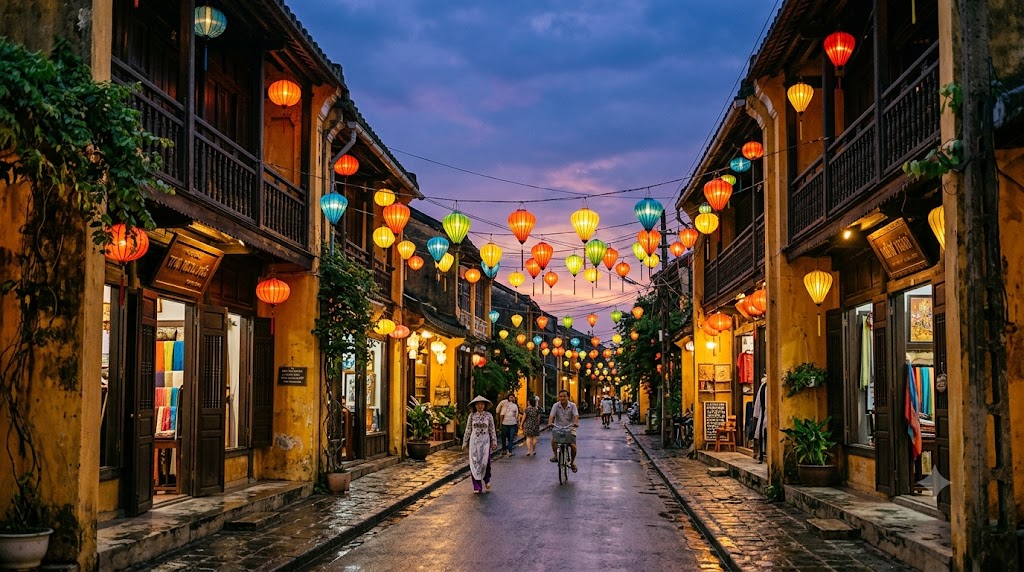
    Colourful lanterns hanging over an old street in Hoi An ancient town Vietnam at dusk
    Hoi An’s lantern-lit old town, the standout stop on Vietnam’s central region circuit

    How Many Days Do You Actually Need

    Trip Length Recommended Shape
    5 to 6 days One region done properly, North (Hanoi plus Halong Bay) is the most popular first-timer choice
    8 to 10 days Two regions, most commonly North plus Central, connected by a short domestic flight
    12 to 14 days All three regions, the classic north-to-south or south-to-north route, genuinely enough time to see the country’s range without feeling rushed

    The domestic flights between regions are frequent, cheap by Indian standards, and short, typically under two hours, so combining two regions is far more realistic in Vietnam than it would be trying to combine two similarly distant regions in a country with weaker internal connectivity.

    Vietnam vs Thailand vs Bali

    This is the comparison we get asked about most, since all three sit in a similar price and flight-time bracket from North India.

    Factor Vietnam Thailand Bali
    Visa process Fast e-visa, 24 to 48 hours Visa-free for up to 60 days for Indians Visa on arrival, straightforward
    Best for Culture, dramatic landscapes, history, still relatively under-the-radar for Indian travellers A tested first-timer mix of beaches, nightlife, and city energy Beaches plus a strong wellness and honeymoon culture
    Crowds (Indian travellers specifically) Growing fast but still noticeably thinner than Thailand or Bali The most established, can feel touristy in peak season Well established, particularly busy in the Seminyak and Canggu belt
    Food Distinct and lighter, built around fresh herbs and broths Familiar spice profile for Indian palates, widely loved More Western-leaning in tourist areas, though local warungs offer genuine Indonesian food

    Our honest read: if this is someone’s first Southeast Asia trip and they want the safest, most tested option, Thailand still wins. If they have already done Thailand or Bali and want something that feels genuinely different without stepping up to a harder visa process, Vietnam is currently the strongest pick, and it is why we are seeing repeat Southeast Asia travellers choose it specifically.

    Best Time to Visit

    Window Conditions
    December to May (North) Cool and dry, the best window for Hanoi and Halong Bay specifically
    February to May (Central) Warm and dry, ideal for Hoi An and Da Nang before the summer humidity builds
    December to April (South) Dry season, most comfortable for Ho Chi Minh City and the Mekong Delta
    June to August Hot and humid nationwide, with the north also seeing its wettest months; workable but not the peak experience

    Because the three regions have slightly different ideal windows, a trip covering all three is best planned for the December-to-April overlap, which works reasonably well across the whole country.

    A Sample 10-Day Itinerary: North Plus Central

    This is the combination we build most often for Chandigarh clients with ten days available, since it pairs Vietnam’s most iconic natural sight with its most photogenic old town without the trip feeling rushed.

    • Day 1: Arrive Hanoi, settle in, evening walk through the Old Quarter, street food dinner
    • Day 2: Full Hanoi day, Hoan Kiem Lake, Temple of Literature, Ho Chi Minh Mausoleum complex
    • Day 3-4: Overnight Halong Bay cruise, kayaking among the limestone karsts, cave visits, sunrise on the water
    • Day 5: Return to Hanoi, optional Ninh Binh day trip if energy allows, or a rest day
    • Day 6: Fly Hanoi to Da Nang, transfer to Hoi An, evening in the lantern-lit ancient town
    • Day 7: Full Hoi An day, tailoring shops, cooking class, My Son ruins as an optional half-day add-on
    • Day 8: Da Nang day, Ba Na Hills and the Golden Bridge, or beach time at Da Nang’s own coastline
    • Day 9: Slower final day, markets and cafes, or a Marble Mountains visit near Da Nang
    • Day 10: Departure from Da Nang

    This routing avoids doubling back, flying into Hanoi and out of Da Nang rather than returning to the same city twice, which most airlines and travel agents can arrange as an open-jaw ticket without a significant cost penalty.

    What to Eat

    Vietnamese food is a genuine highlight of the trip and worth planning around rather than treating as an afterthought.

    • Pho, the beef or chicken noodle soup most people already know, but noticeably different and generally better in Hanoi, its city of origin, than anywhere else in the world
    • Banh mi, a baguette sandwich left over from French colonial influence, filled with grilled meat, pickled vegetables, and fresh herbs, sold everywhere from street carts to sit-down cafes
    • Bun cha, grilled pork patties served with rice noodles and a tangy dipping broth, a Hanoi speciality worth seeking out specifically
    • Cao lau, a Hoi An speciality noodle dish found almost nowhere else in the country, made with water drawn from a specific local well according to tradition
    • Vietnamese coffee, strong and served with condensed milk, either hot or over ice, distinct enough from Indian filter coffee to be worth trying rather than skipping in favour of a familiar cafe chain

    Vegetarian travellers do reasonably well in tourist areas, particularly in Hoi An, though it helps to know a few key phrases or carry a translation app for smaller local eateries where English menus are not guaranteed.

    Who Vietnam Genuinely Is Not For

    Worth saying plainly rather than oversimplifying. If beach resort infrastructure at a Bali or Maldives level is the priority, Vietnam’s beaches, while genuinely pleasant around Da Nang and further south in Phu Quoc, are not the country’s strongest card and would be a secondary reason to visit rather than the main one. If a traveller wants everything pre-packaged with minimal on-the-ground decision-making, the three-region structure does require some upfront planning choices that a single-resort Maldives trip simply does not. And Hanoi’s traffic, while navigable, is genuinely chaotic by Indian metro standards in a way that catches some first-time visitors off guard for the first day or two. For travellers drawn to culture, food, and dramatic natural scenery who are comfortable with a bit more on-the-ground movement than a beach-resort trip requires, it delivers exactly what the recent surge in Indian interest suggests.

    Practical Notes

    • Vietnamese Dong is the local currency; cards are widely accepted in cities but carry cash for street food stalls and smaller towns like Hoi An.
    • Domestic flights between regions should be booked alongside your international ticket, not left to arrange locally, since peak-season seats on the Hanoi-Da Nang and Da Nang-Ho Chi Minh City routes do sell out.
    • Pack for humidity even in the cooler December-to-May window, particularly in the south, where temperatures stay warm year-round regardless of season.
    • Hoi An’s tailoring shops are a genuine highlight for many visitors, custom clothing made and fitted within 24 to 48 hours, but build at least one extra day into that leg specifically if this is on your list.

    Cost Shape, Without Fixed Numbers

    We are not publishing fixed price tags, since cost varies with season, hotel category, and number of regions covered, but the relative shape is worth knowing.

    • Generally comparable to or slightly below Thailand for an equivalent standard of hotels and guided tours, and meaningfully cheaper than a comparable Bali honeymoon package once flight costs are factored in.
    • Domestic flights between regions are inexpensive relative to what a similar internal hop would cost in many other international destinations, which is part of why covering two or three regions in one trip stays realistic on a mid-range budget.
    • Halong Bay overnight cruises vary widely by boat category, from simple shared cruises to premium private-cabin junks, and this is usually where a Vietnam budget has the most flexibility to flex up or down.

    Reach out and we will put together a real, region-specific itemised quote for your dates within 24 hours, no obligation.

    Vietnam for Families and Groups

    Beyond the honeymoon and repeat-Southeast-Asia-traveller crowd currently driving the search growth, Vietnam works well for family trips and larger groups too. Halong Bay cruises come in family cabin configurations, Hoi An’s flat, walkable old town suits older travellers and young children alike far better than a hilly or beach-scattered destination would, and the food, while distinct, tends to be mild enough that fussy eaters generally adjust within a day or two. For larger friend groups, the country’s affordability relative to Bali or a Western beach destination means splitting costs across a bigger group stretches further without sacrificing the quality of hotels or guided experiences. The one planning note for families specifically: keep domestic flight connections to a minimum, one region done well beats three regions rushed, especially with young children or older relatives in the group.

    Frequently Asked Questions

    Do Indians need a visa for Vietnam?

    Yes, a standard e-visa, applied for entirely online with approval typically within 24 to 48 hours and multi-entry validity of up to 90 days.

    Is there a direct flight from Chandigarh to Vietnam?

    Not from Chandigarh directly, but Delhi has direct flights to both Hanoi and Ho Chi Minh City on multiple airlines, so the trip is a short domestic hop to Delhi followed by one direct international leg.

    How many days does a first Vietnam trip need?

    Five to six days is enough to properly cover one region, most commonly the north with Hanoi and Halong Bay. Ten or more days is worth planning if you want to cover two or three regions in a single trip.

    Is Vietnam better than Thailand or Bali?

    Not strictly better, but genuinely different. Thailand remains the safer first-timer choice, while Vietnam suits travellers who have already done a Thailand or Bali trip and want a destination that feels distinctly different in food, culture, and pace, without the visa complexity of a Western European alternative.

    Is Vietnam good for a honeymoon?

    Yes, particularly the central region around Hoi An and Da Nang, which offers a slower, more romantic pace than the two larger cities and has become an increasingly popular honeymoon pick among Indian travellers over the past two years.

    Is Vietnamese food suitable for Indian travellers?

    Generally yes, though it is a different flavour profile from Thai food, lighter, herb-forward, and less spice-heavy. Vegetarian options are widely available in tourist areas, particularly in Hoi An and Ho Chi Minh City, though it helps to learn a few key phrases or carry a translation app for smaller local eateries.

    Which region should a first-time visitor choose if only doing one?

    The north, specifically Hanoi combined with a Halong Bay cruise, is the most commonly recommended first-timer choice, since it delivers both a strong cultural city experience and Vietnam’s single most iconic natural landmark within a manageable four-to-five day trip.

    Can Vietnam be combined with Cambodia or Laos in one trip?

    Yes, and the 90-day multi-entry e-visa validity makes this genuinely convenient for travellers with two or more weeks available. Siem Reap in Cambodia, home to Angkor Wat, is the most common add-on, reachable by a short flight from Ho Chi Minh City or Hanoi.

    Plan the Right Region for Your Days, Not a Generic Template

    A copy-pasted “Vietnam in 7 days” itinerary pulled off an OTA listing page will try to cram all three regions into a week and leave you exhausted rather than genuinely seeing any of them properly. That is the real value of talking to someone before booking rather than clicking through a generic package. Explore more international tour packages from Chandigarh, compare it against our Singapore guide or Bali guide if you are weighing Southeast Asia options generally, or call us directly at +91 99143 10333 for a region-matched itinerary built around your actual leave and budget, whether that is a five-day north-only trip or the full fourteen-day north-to-south route. Flywings team since 2005.
  • Malaysia Tour Package from India: Kuala Lumpur + Genting Highlands, Two Cities in One Trip (2026)

    Malaysia Tour Package from India: Kuala Lumpur + Genting Highlands, Two Cities in One Trip (2026)

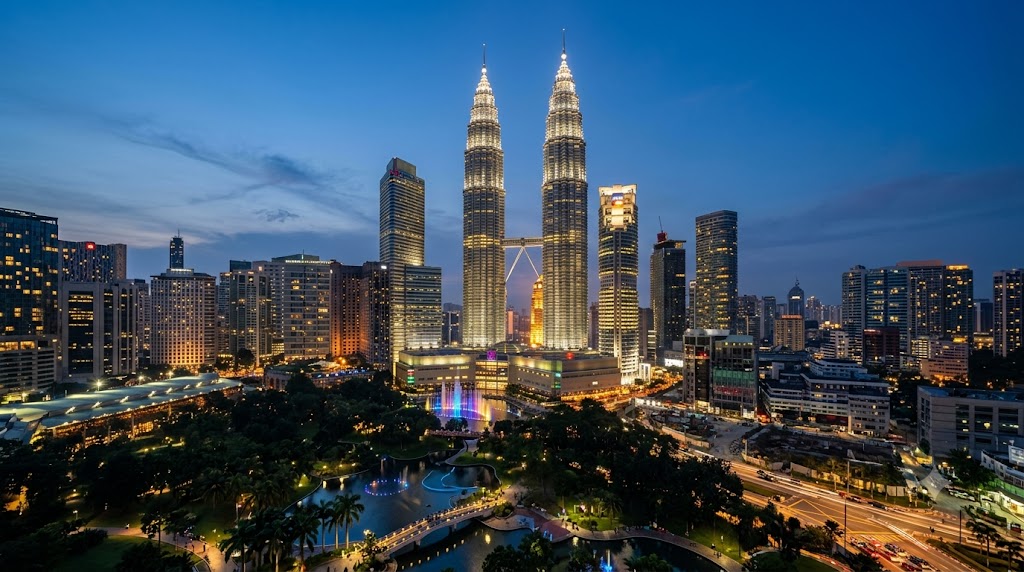
    No other short-haul trip from India packs in a contrast quite like Malaysia does. You can spend a morning sweating gently under the Petronas Twin Towers in tropical Kuala Lumpur, and by evening be reaching for a light jacket in the cool hill air of Genting Highlands, 51 km and one cable car ride away. It’s this whiplash — city heat to hill-station cool, skyscrapers to jungle canopy — that makes a Malaysia tour package from India feel like two very different holidays for the effort of one flight. At Flywings Tour & Packages Pvt Ltd, we’ve been building this exact two-city combination for Punjab travellers, and with Malaysia’s visa-free entry for Indians extended through 2026 as part of Visit Malaysia Year, there’s genuinely never been an easier time to go.

    Quick facts before you plan: Malaysia is visa-free for Indian passport holders, stays up to 30 days, as part of an entry policy extended through 2026. Flight time from India runs roughly 5–6 hours, mostly via Delhi or Chennai with some direct options. Best months are December–February. A 4–5 day trip comfortably covers both Kuala Lumpur and Genting Highlands.

    The Core Idea: Two Cities, One Trip

    Most Malaysia itineraries from India make the same smart split: three-ish nights in Kuala Lumpur, one or two nights up in Genting Highlands. It works because the cities genuinely complement rather than repeat each other — KL gives you skyline, shopping, food and culture; Genting gives you cool air, theme parks and a hill-station reset, all without the multi-hour drive a comparable India hill trip would need. Below is what each city actually offers, so you can decide how to split your days.

    City One: Kuala Lumpur — Skyline, Shopping and Street Food

    KL is Southeast Asia’s most underrated big city for first-time visitors — modern, easy to navigate, English-friendly, and built around a genuinely striking skyline.

    • Petronas Twin Towers: the city’s defining landmark — the Skybridge and observation deck tickets sell out early in the day, so book ahead or go first thing.
    • KLCC Park: the green space at the foot of the towers, best for the classic sunset photo with the towers lit up behind the fountain show.
    • Batu Caves: limestone temple caves just outside the city, marked by a towering golden statue of Lord Murugan and a steep flight of colourful stairs — a half-day trip that works well early morning before the heat builds.
    • Bukit Bintang: KL’s shopping-and-nightlife district, from malls to street-level hawker stalls, busiest and most atmospheric after dark.
    • Merdeka Square and the old colonial quarter: for a change of pace from the modern skyline, KL’s historic administrative buildings and Central Market sit within easy walking distance of each other.
    • Aquaria KLCC and KL Bird Park: two easy, air-conditioned-or-shaded options that work particularly well for families with younger children.

    City Two: Genting Highlands — Malaysia’s Hill Station in the Clouds

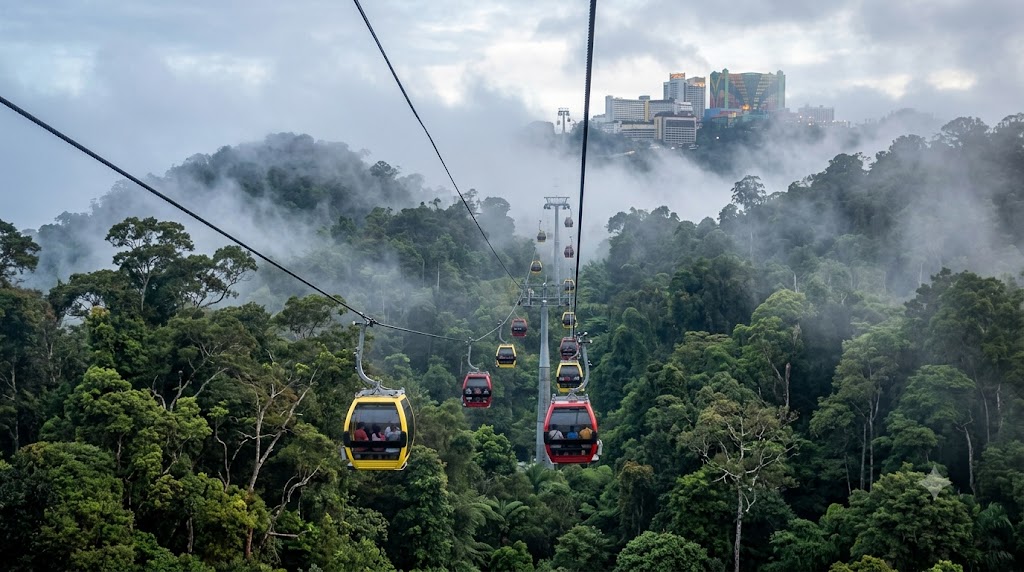
    Sitting at roughly 1,800 metres above sea level, Genting Highlands keeps a steady 15–25°C year-round — a genuine hill-station climate barely an hour from tropical KL, reached via the Genting Skyway, one of Southeast Asia’s longest cable car systems.

    • The Genting Skyway itself: the cable car ride up is an attraction in its own right, gliding over jungle canopy with the temperature dropping as you climb.
    • Genting SkyWorlds: a large-scale theme park with rides across multiple zones, Malaysia’s answer to a proper theme-park day.
    • Casino and entertainment complex: Genting is home to Malaysia’s best-known casino resort, alongside shopping and dining built for the cooler climate.
    • Simply the weather: after a few sweaty days in KL, many travellers say the cool air itself is Genting’s best feature — walkable outdoor spaces without the tropical heat.
    Genting Highlands Skyway cable car rising through cool misty hills above Kuala Lumpur — Genting Highlands day trip
    The Genting Skyway cable car — the moment Malaysia’s trip contrast becomes physical, as tropical KL heat gives way to hill-station cool over a single ride.

    What to Eat: Malaysia’s Food Is Half the Trip

    Malaysia’s multicultural mix of Malay, Chinese and Indian influences makes it one of Southeast Asia’s most rewarding food destinations — and refreshingly easy for Indian palates, since spice and familiar flavours run through much of the local cuisine:

    • Nasi lemak: Malaysia’s unofficial national dish — coconut rice, sambal, fried anchovies, peanuts and egg, eaten any time of day.
    • Roti canai and teh tarik: a breakfast staple with clear South Indian roots — flaky flatbread with dhal or curry, alongside “pulled” milk tea.
    • Satay: grilled skewered meat with peanut sauce, found at hawker stalls across both KL and Genting.
    • Bak kut teh: a fragrant herbal pork-rib soup representing Malaysia’s strong Chinese culinary influence, for travellers open to trying it.
    • Little India, Brickfields (KL): for a familiar anchor amid new flavours, this neighbourhood serves excellent South Indian food alongside spice and textile shopping.

    Jalan Alor in Bukit Bintang is KL’s best-known night food street — a long strip of open-air stalls and restaurants that turns into the city’s liveliest dinner scene after dark.

    Shopping in Kuala Lumpur

    • Bukit Bintang malls: from luxury flagship stores to accessible fashion, this is KL’s dense central shopping district.
    • Central Market: a heritage building turned crafts-and-souvenir market — batik, pewter and local handicrafts under one roof.
    • Petaling Street (KL’s Chinatown): a busy market strip for bargain shopping, alongside some of the city’s best-known street food.
    • Mid Valley Megamall and Pavilion KL: two of the city’s largest, most modern malls, popular for a full air-conditioned shopping day when the heat outside gets intense.

    Worth the Detour: Melaka and Penang

    For trips of 7 days or more, two UNESCO World Heritage cities extend the Malaysia story beyond KL and Genting:

    • Melaka (Malacca): roughly two hours from KL by road, a colourful historic port city with Dutch and Portuguese colonial architecture, best known for Jonker Street’s night market and river cruise.
    • Penang (Georgetown): a short domestic flight or longer drive from KL, famous for street art, colonial heritage, and widely considered Malaysia’s food capital — even more food-focused than KL itself.

    Neither is essential for a first Malaysia trip, but both are natural additions once KL and Genting are familiar territory.

    How to Split Your Days: Sample Itineraries

    Trip Length Kuala Lumpur Genting Highlands
    4 days / 3 nights 2 nights — Petronas, Bukit Bintang, Batu Caves 1 night — Skyway, SkyWorlds, cool-air reset
    5 days / 4 nights 3 nights — full city coverage plus a leisure day 1 night — focused theme-park and Skyway day
    7 days / 6 nights 3–4 nights — add Melaka or Penang as a side trip 2 nights — unhurried, with an extra SkyWorlds day

    Our general rule: KL gets the larger share of nights since it holds more variety, while Genting works best as a shorter, high-impact stay — one full day is usually enough to feel the contrast and hit the main attractions without needing to fill extra time at altitude. Groups travelling with elderly parents sometimes flip this ratio, extending the Genting leg for its cooler, calmer pace and trimming a day of KL’s heat and walking instead — tell us who’s travelling and we’ll weight the split accordingly.

    Malaysia’s Visa-Free Entry for Indians: What to Know for 2026

    Malaysia offers Indian passport holders visa-free entry for stays of up to 30 days, and this policy has been extended through 2026 as part of Visit Malaysia Year — one of the more traveller-friendly entry arrangements in Southeast Asia right now. As always with visa-free entry, “no visa” doesn’t mean “no documents”: carry a passport valid for at least 6 months from your travel date, a return or onward flight ticket, proof of accommodation, and evidence of sufficient funds for your stay. Given how entry policies have shifted elsewhere in the region this year (see our Thailand visa rules explainer), we still recommend confirming the live rule with our desk close to your travel date rather than assuming it’s permanently fixed.

    Best Time to Visit Malaysia from India

    Months Conditions Verdict
    December – February Drier, slightly cooler, peak tourist season Best time to visit — comfortable weather in both KL and Genting
    March – June Warm with occasional showers Good value shoulder season, still pleasant overall
    July – September Warm and humid, brief afternoon showers common Workable, especially since Genting’s altitude offers natural relief from KL’s heat
    October – November Monsoon season, heavier and more frequent rain The least ideal window; if travelling, lean on Genting’s covered attractions

    One quiet advantage of the KL + Genting combination: even in warmer or wetter months, a day or two at Genting’s cooler altitude breaks up the tropical heat in a way a single-city Malaysia trip can’t.

    Getting to Malaysia from Chandigarh and Amritsar

    Kuala Lumpur is well connected from India, with flight time running roughly 5–6 hours on routes mainly via Delhi, alongside some direct options from other Indian metros. Chandigarh and Amritsar travellers connect through Delhi, and our ticketing desk prices the combined routing as one itinerary — following the same booking-window principle from our cheap flights guide, aiming for the 4–6 week booking window for the best combined fare.

    Getting Between KL and Genting Highlands

    • Genting Skyway cable car: the classic, scenic route — most Malaysia packages build the transfer around this, combining transport with the trip’s most memorable ride.
    • Private transfer by road: roughly an hour’s drive, useful with heavy luggage or when the cable car has long queues on weekends and public holidays.
    • Shuttle coach services: a budget-friendly option connecting KL Sentral and other hubs directly to Genting, with the Skyway or road transfer for the final stretch.

    What to Pack for a KL + Genting Trip

    • Light, breathable clothing for Kuala Lumpur’s tropical heat and humidity.
    • A jacket or warm layer for Genting — easy to forget when you’re sweating in KL the same morning, but genuinely needed at altitude.
    • Comfortable walking shoes — both cities involve a fair amount of walking, and Batu Caves has a steep staircase.
    • A universal power adapter — Malaysia uses UK-style three-pin sockets.
    • A light rain jacket or umbrella, especially outside the December–February peak window.

    Money-Saving Tips from Our Desk

    1. Book Petronas Towers tickets in advance. Same-day slots sell out early, and pre-booking avoids losing a morning to a sold-out ticket counter.
    2. Eat where the hawker stalls are busiest. Bukit Bintang’s street-level food is excellent and a fraction of the cost of mall food courts.
    3. Use the Skyway for the KL–Genting transfer rather than a private cab — it’s often cheaper and undeniably more memorable.
    4. Travel in the shoulder months (March–June) for softer hotel rates with still-workable weather.
    5. Bundle Genting SkyWorlds tickets with your package rather than buying separately at the gate, where queues and walk-up prices both run higher.

    Malaysia Culture and Etiquette Notes

    • Multicultural and multi-faith: Malaysia’s Malay-Muslim majority coexists with large Chinese and Indian communities — mosques, Buddhist and Taoist temples, and Hindu temples all sit within the same city, often streets apart.
    • Modest dress at religious sites: shoulders and knees covered at mosques and temples; robes are often provided for visitors at major sites.
    • Friday prayers: some businesses and government offices adjust hours around midday Friday prayers — worth building light buffer time into that day’s plans.
    • Halal food is the default in most restaurants, which works well for large groups with mixed dietary preferences.
    • English is widely spoken alongside Bahasa Malaysia, making Malaysia one of the more language-easy Southeast Asian destinations for Indian travellers.

    What’s Genuinely Worth the Splurge

    A few upgrades consistently earn their keep on this trip, based on client feedback over the years:

    • Petronas Towers Skybridge + observation deck combo ticket, booked well ahead — the single most-requested “don’t miss it” experience in KL.
    • A KLCC-facing hotel room for at least one night — waking up to the towers is worth the small premium for most first-time visitors.
    • Genting SkyWorlds express-access tickets on weekends or school holidays, when queues otherwise eat into a short highland stay.
    • The Skyway cable car over a road transfer, purely for the experience — it’s often similarly priced but far more memorable.

    Common Malaysia Myths We Correct Every Week

    What People Assume The Reality
    “Malaysia needs a visa like most of Southeast Asia.” Indian passport holders get visa-free entry for up to 30 days, extended through 2026 under Visit Malaysia Year.
    “Genting Highlands is just a casino town.” The casino is one part of a much larger complex — theme parks, cool-climate walking, and the Skyway ride itself are the bigger draw for most Indian family travellers.
    “KL and Genting are basically the same trip.” They’re a genuine climate and character contrast — tropical skyline city versus cool hill-station altitude, barely an hour apart.
    “You need a week to do Malaysia properly.” 4–5 days comfortably covers both cities without feeling rushed — this is very much a short-haul, high-impact trip.

    Malaysia vs Thailand vs Singapore: An Honest Comparison

    Since these three routinely compete for the same short-haul travel slot from India, here’s how Malaysia actually stacks up:

    Malaysia Thailand Singapore
    Visa for Indians Visa-free, 30 days Visa-free, 30 days e-Visa, mandatory in advance
    Signature contrast Tropical city + cool hill station in one trip City + beach/island combinations Ultra-modern, highly compact city-state
    Best for First-timers, families, short 4-5 day trips Beach-and-city groups, value-conscious travellers Food lovers, families, efficient short trips
    Flight time from India ~5–6 hours ~4–5 hours via Delhi ~5–6 hours

    Malaysia’s edge is specifically the KL–Genting contrast delivered without inter-city flights or long transfers — Thailand’s contrast (city to island) usually needs a domestic flight, and Singapore, while compact and efficient, doesn’t have Malaysia’s hill-station cooling-off option built in. Many experienced travellers eventually do all three; for a first Southeast Asia trip, Malaysia’s visa-free simplicity and short internal transfer make it one of the easiest starting points.

    Who This Trip Is Perfect For

    • First-time international travellers: Malaysia’s visa-free entry, English-friendly signage and short flight time make it one of the easiest first international trips from India.
    • Families with kids: Genting’s theme parks alongside KL’s Aquaria and Bird Park give children plenty to do without long transfer times.
    • Weekend-scale international trips: at 4–5 days total, Malaysia fits inside a long weekend plus a couple of leave days more easily than most international destinations.
    • Travellers wanting variety without complexity: the two-city contrast delivers a genuinely varied trip without the multi-country visa juggling that variety usually requires.
    • Honeymooners on a shorter timeline: Genting’s cool-climate resorts offer a romantic change of pace from KL’s city energy, without needing the longer trip length Bali or the Maldives typically ask for.
    • Groups mixing interests: shoppers and foodies can stay content in KL while thrill-seekers head up to Genting’s rides — a rare itinerary that keeps a mixed-interest group happy without splitting up entirely.

    Booking a Package vs Planning Malaysia Yourself

    DIY Flywings Malaysia Package
    City split Guesswork on how many nights each city deserves Balanced based on years of client feedback
    Petronas & SkyWorlds tickets Risk of sold-out same-day slots Pre-booked as part of the itinerary
    KL–Genting transfer Booked separately, sometimes at inflated rates Bundled into one seamless itinerary
    Hotel locations Easy to book somewhere inconvenient for sightseeing Matched to your planned attractions in each city
    When something goes wrong App support queues A human in Mohali, a phone call away

    Frequently Asked Questions

    Do Indians need a visa for Malaysia?

    No — Malaysia offers visa-free entry to Indian passport holders for stays up to 30 days, a policy extended through 2026 as part of Visit Malaysia Year. Standard travel documents (valid passport, return ticket, accommodation proof, sufficient funds) are still required at entry.

    How many days are needed for Kuala Lumpur and Genting Highlands?

    4–5 days comfortably covers both cities — roughly 2–3 nights in KL and 1–2 nights in Genting. Shorter trips can compress this to a single overnight in Genting; longer trips (7 days) can add a side trip to Melaka or Penang.

    What is the distance between Kuala Lumpur and Genting Highlands?

    About 51 km, typically covered by the Genting Skyway cable car (the scenic, popular option) or a roughly one-hour road transfer.

    Is Malaysia good for a family trip?

    Yes — Genting’s theme parks and cool climate, combined with KL’s Aquaria, Bird Park and easy-to-navigate city, make Malaysia one of the more family-friendly short-haul international trips from India.

    What’s the weather like in Genting Highlands?

    A steady 15–25°C year-round thanks to its 1,800-metre altitude — genuinely cool compared to tropical Kuala Lumpur, and one of the main reasons travellers build it into a Malaysia itinerary.

    Is there a direct flight from India to Kuala Lumpur?

    Some direct options exist from major Indian cities, though most Chandigarh and Amritsar travellers connect via Delhi. Total flight time runs roughly 5–6 hours; our desk prices the full combined routing for the best fare.

    Can Flywings arrange the full KL + Genting itinerary as one package?

    Yes — flights, hotels in both cities, the Skyway or road transfer between them, and key attraction tickets (Petronas, SkyWorlds) are all bundled into one itemised quote. Tell us your dates and group size to get started.

    Should I add Melaka or Penang to my Malaysia trip?

    Only if you have 7+ days — for a first trip, KL and Genting alone deliver a complete, well-paced experience. Melaka (a 2-hour drive) and Penang (a short flight or longer drive) are excellent additions once you’re ready for a longer, deeper Malaysia trip.

    Is Malaysian food suitable for Indian travellers?

    Very much so — Malaysia’s large Indian community means South Indian food (roti canai, teh tarik, banana leaf meals) is widely available alongside Malay and Chinese cuisine, and halal food is the default in most restaurants, easing mixed-group dining.

    What currency does Malaysia use, and should I carry cash?

    Malaysia uses the Malaysian Ringgit (MYR). Cards are widely accepted in KL’s malls, hotels and larger restaurants, but carrying some cash is useful for hawker stalls, local markets and smaller Genting Highlands vendors, where card acceptance is less consistent.

    Is Genting Highlands worth visiting if I don’t want to gamble?

    Completely — the casino is only one part of the complex. Genting SkyWorlds theme park, the Skyway cable car ride, cool-climate walking, shopping and dining are the bigger draw for most Indian family and leisure travellers, with the casino barely factoring into a typical itinerary.

    Two Very Different Cities, One Easy Trip

    Malaysia’s KL-and-Genting combination is one of the best-value, most varied short-haul trips available from India right now — and with visa-free entry extended through 2026, the paperwork has never been simpler. Explore our Malaysia package, browse more international tour packages from Chandigarh, or reach us directly:

    Written by Sukhjinder Kaur, Senior Travel Content Writer at Flywings Tour & Packages Pvt Ltd — booking flights and holidays from Mohali, Punjab since 2005. Visa requirements and seasonal guidance verified as of July 2026; entry rules can change, so confirm current details when you enquire.

  • Singapore Tour Package from Chandigarh: 5 Itinerary Tracks for Every Kind of Traveller (2026)

    Singapore Tour Package from Chandigarh: 5 Itinerary Tracks for Every Kind of Traveller (2026)

    Singapore is the rare international destination that genuinely works for every kind of traveller — first-time flyers, food-obsessed friend groups, families with young kids, couples wanting a skyline dinner, and even travellers who just want quiet green space between meetings. The reason is simple: Singapore is compact, spotlessly organised, and built almost entirely around modular attractions you can mix and match. At Flywings Tour & Packages Pvt Ltd, we stopped giving every Singapore client the same generic day-by-day itinerary years ago — instead, we plan by track: pick the traveller type that matches your trip, and build from there. This guide lays out all five.

    Quick facts before you plan: Singapore requires an e-Visa for Indian passport holders — there is no visa-on-arrival, so this must be arranged before you fly. Direct flights from Delhi run 5–6 hours; Chandigarh and Amritsar travellers connect via Delhi. Best weather window is February–April. Most first-time trips run 4–5 days.

    Why “Tracks” Work Better Than a Generic Day-by-Day Plan

    Most Singapore itineraries online read identically — Gardens by the Bay, Sentosa, Chinatown, Orchard Road, in some order, regardless of who’s travelling. But a honeymoon couple and a family with two kids under ten shouldn’t be doing the same evening in Singapore, and a first-timer’s priorities look nothing like a repeat visitor’s. Below are five tracks; most travellers combine two or three of them into a single 4–5 day trip.

    Track 1: The First 48 Hours (Essential Singapore)

    If this is your first Singapore trip and you have limited time, this track covers the icons — everything that makes Singapore instantly recognisable in photos:

    • Marina Bay Sands and the SkyPark: the infinity pool is for hotel guests only, but the observation deck is open to all visitors for the same panoramic skyline view.
    • Gardens by the Bay: the Supertree Grove’s nightly light-and-sound show is free to watch from ground level; the Cloud Forest and Flower Dome domes are ticketed and worth the entry.
    • Merlion Park: Singapore’s iconic half-lion, half-fish statue, best photographed early morning or blue hour to avoid both crowds and harsh midday light.
    • Helix Bridge and the Marina Bay waterfront: a scenic evening walk connecting the bay’s major landmarks, especially striking after dark.
    • A river cruise or Singapore Flyer ride: an easy way to see the skyline from a different angle without much walking.

    Two focused days can realistically cover this entire track, making it the natural anchor for any Singapore itinerary regardless of what else you add.

    Track 2: The Family Track

    Singapore consistently ranks among Asia’s most family-friendly cities — clean, safe, English-speaking, and genuinely built with kids in mind:

    • Singapore Zoo and Night Safari: widely regarded as among the world’s best zoos, with the Night Safari offering a completely different (and popular with kids) after-dark experience.
    • River Wonders: a river-and-boat-themed section adjoining the zoo, home to giant pandas and a manatee habitat.
    • Universal Studios Singapore (Sentosa): a full-day theme park with rides scaled for various ages, plus character meet-and-greets younger kids love.
    • S.E.A. Aquarium (Sentosa): one of the world’s largest aquariums, an easy, air-conditioned half-day that pairs naturally with a Sentosa beach afternoon.
    • Science Centre Singapore: hands-on exhibits that work well as a rainy-day backup or a change of pace from theme parks.
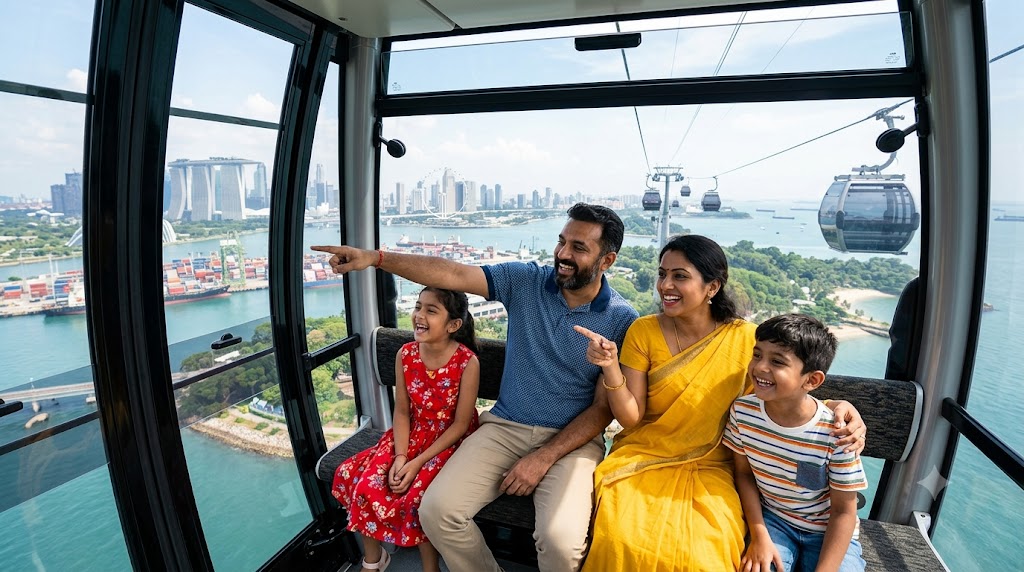
    Family riding the Sentosa cable car with Singapore skyline views — Sentosa Island Singapore family itinerary
    The Sentosa cable car turns a routine island transfer into one of the trip’s best views — a small detail that makes a big difference for families.

    Sentosa Island alone can anchor 1.5–2 days of a family trip, connected to the mainland by cable car, monorail or a short causeway walk/drive — we typically recommend the cable car at least once for the views alone.

    Track 3: The Foodie Track

    Singapore’s food scene is a genuine attraction in its own right, built around hawker centres — government-regulated food courts where some stalls have held Michelin recognition while still charging hawker prices:

    • Maxwell Food Centre and Lau Pa Sat: two of the most famous hawker centres, central and easy to combine with sightseeing.
    • Chinatown: beyond temples and shophouses, a dense cluster of both hawker stalls and Michelin-recognised local eateries.
    • Little India: for travellers wanting familiar flavours or a cultural contrast, with excellent South Indian and North Indian food alongside the neighbourhood’s temples and spice shops.
    • Newton Food Centre: a popular evening hawker spot for satay and seafood, especially atmospheric after dark.
    • Dishes to seek out: chilli crab, Hainanese chicken rice, laksa, char kway teow and kaya toast with soft-boiled eggs for breakfast.

    A half-day “hawker crawl” across two or three centres, spaced between sightseeing, is one of the most consistently loved additions we build into Singapore itineraries.

    Track 4: The Shopping and Nightlife Track

    For couples, friend groups, or anyone wanting Singapore’s more grown-up evening side:

    • Orchard Road: Singapore’s main shopping boulevard, from luxury flagship stores to accessible malls, at its best lit up in the evening.
    • Clarke Quay and Boat Quay: riverside dining and nightlife districts, with everything from casual bars to late-night clubs.
    • Rooftop bars: Marina Bay Sands and several nearby hotels offer skyline rooftop bars — not the infinity pool itself, but the view comes close.
    • Haji Lane and Kampong Glam: a compact, colourful district of independent boutiques, street art and café culture around the Sultan Mosque.

    Track 5: The Nature and Offbeat Track

    For repeat visitors or anyone wanting to see a quieter side of Singapore beyond the obvious icons:

    • Singapore Botanic Gardens: a UNESCO World Heritage Site and genuinely peaceful escape, including the National Orchid Garden.
    • Southern Ridges: a series of connected parks and elevated walkways (including the striking Henderson Waves bridge) offering some of the city’s best skyline views without the crowds.
    • Pulau Ubin: a short bumboat ride away, this rustic island feels like stepping back decades — kampong villages, mangroves and cycling trails, a sharp contrast to mainland Singapore.
    • Tiong Bahru: a heritage residential neighbourhood turned café-and-bookshop district, popular with locals rather than tour groups.

    Don’t Skip Jewel Changi — Even on a Layover

    Changi Airport is, by a wide margin, the most attraction-worthy airport most travellers will ever pass through — and if your flight to Bali, Australia or elsewhere connects through Singapore, it’s worth knowing what’s here even without a full trip. Jewel Changi’s centrepiece is the Rain Vortex, the world’s tallest indoor waterfall, surrounded by a multi-level indoor forest, walking trails and a canopy park with a bouncing net and mazes. Butterfly gardens, a rooftop pool (for transit passengers with day-use hotel access), and an enormous range of dining sit within the same terminal complex. Travellers with a layover of 5+ hours can genuinely step out, explore Jewel, and return airside without needing a full visa-run mindset — though the e-Visa requirement above still applies if you plan to properly exit and re-enter Singapore, so check your layover’s transit rules with us first.

    Singapore Etiquette and Culture Notes

    • Cleanliness is taken seriously: littering, jaywalking and eating on the MRT carry real, enforced fines — not just guidebook warnings.
    • Multicultural by design: Chinese, Malay, Indian and Peranakan cultures are all visibly present — Chinatown, Kampong Glam and Little India are living neighbourhoods, not recreations.
    • Tipping isn’t expected: most restaurants include a service charge; additional tipping is appreciated but not the norm.
    • Escalator etiquette: stand on the left, walk on the right — Singaporeans notice, even if visitors don’t.
    • English is the working language, alongside Mandarin, Malay and Tamil — signage and service are almost entirely English-friendly for Indian travellers.

    Combining Tracks: Sample 4-Day and 6-Day Itineraries

    Days 4-Day Trip (First-Timer + Family blend) 6-Day Trip (Adds Foodie + Nightlife)
    1 Arrival, Marina Bay evening walk Arrival, Marina Bay evening walk
    2 Gardens by the Bay, Merlion Park, river cruise Gardens by the Bay, Merlion Park, hawker lunch at Lau Pa Sat
    3 Full day Sentosa (Universal Studios or S.E.A. Aquarium) Full day Sentosa, cable car, beach time
    4 Zoo/Night Safari or Orchard Road shopping, departure Chinatown + Little India food crawl
    5 Zoo and Night Safari
    6 Botanic Gardens morning, Clarke Quay evening, departure

    Singapore e-Visa: What Indian Travellers Must Arrange in Advance

    Unlike Thailand or Bali, Singapore does not offer visa-on-arrival for Indian passport holders — an e-Visa must be obtained before you fly, and this is the single most common planning mistake we catch for first-time Singapore travellers. The requirements are straightforward: a passport valid for at least 6 months, a recent passport photograph, a completed application form, proof of a return flight, proof of accommodation, and a bank statement showing sufficient funds. Processing typically takes 3–5 working days, so we recommend starting this at least two to three weeks before departure to build in a comfortable buffer. We file this application as part of every Singapore package we book.

    Best Time to Visit Singapore from India

    Months Conditions Verdict
    February – April The most pleasant window — drier, slightly cooler Best time to visit for comfortable outdoor sightseeing
    May – September Hot and humid with regular short showers Fine if you balance outdoor and indoor/air-conditioned attractions
    November – December Wetter monsoon season, but mild temperatures Festive season energy (Christmas light-ups) offsets the rain

    Singapore sits near the equator, so temperatures stay warm year-round — the real variable is rainfall, not heat, and even wet months bring short afternoon showers rather than all-day rain.

    Getting to Singapore from Chandigarh and Amritsar

    Direct Delhi–Singapore flights run 5–6 hours on carriers including Singapore Airlines, IndiGo and Air India, making Delhi the obvious connection point for Chandigarh and Amritsar travellers. Our ticketing desk prices the Chandigarh–Delhi–Singapore routing as one combined itinerary, applying the same booking-window principles from our cheap flights guide — 4–6 weeks ahead typically secures the best combined fare.

    Getting Around Once You’re There

    • MRT (metro): clean, frequent, and covers almost every attraction on this list — the default way to move around for most visitors.
    • EZ-Link or contactless card: tap-and-go on the MRT and buses; most international debit/credit cards now work directly on Singapore’s transit gates too.
    • Grab (ride-hailing): widely used and reliable for late nights or when travelling with young kids and stroller/luggage.
    • Walking: central Singapore is highly walkable and covered, with sheltered walkways connecting many MRT stations to malls and attractions — genuinely useful in both heat and rain.

    What to Pack

    • Light, breathable clothing — Singapore is hot and humid nearly year-round.
    • A light jacket for indoors — malls, the MRT and restaurants are often heavily air-conditioned.
    • A compact umbrella — short showers are common even outside the wet season.
    • Comfortable walking shoes — most tracks above involve a fair amount of walking, even with excellent transit.
    • A reusable water bottle — Singapore’s tap water is safe to drink, refill stations are common.

    Money-Saving Tips from Our Desk

    1. Eat at hawker centres, not hotel restaurants. The food is often better, and the price difference is significant — save hotel dining for one special evening.
    2. Book Sentosa attraction combos (Universal Studios + Aquarium, for example) rather than separate single tickets.
    3. Use the MRT day pass if you’re moving around frequently — it usually beats paying per trip.
    4. Book your e-Visa and flights together, early. Late e-Visa applications sometimes force last-minute (pricier) flight changes if processing runs long.
    5. Visit paid Gardens by the Bay domes on a weekday morning — shorter queues and occasionally better rates than weekend evening slots.

    What’s Genuinely Worth the Splurge

    Based on years of client feedback, a handful of upgrades consistently earn their keep in Singapore:

    • One night at or near Marina Bay Sands, even if the rest of the stay is elsewhere — the location and view are simply unmatched for a Singapore trip’s centrepiece night.
    • A proper Chinese or Peranakan fine-dining meal, booked ahead — Singapore’s food scene at the top end genuinely rivals its hawker-centre reputation.
    • Skip-the-line tickets for Universal Studios on weekends or school holidays, where queue times otherwise eat hours of a short trip.
    • A river cruise at dusk rather than daytime — the skyline lighting up around you is worth the small timing premium.

    Where to save instead: hawker centres genuinely rival restaurant quality at a fraction of the price, and Singapore’s public transport is efficient enough that private transfers are rarely necessary beyond airport pickup.

    Singapore vs Its Southeast Asia Neighbours

    Since Singapore, Bali and Thailand often compete for the same travel slot, here’s an honest comparison for travellers deciding between them:

    Singapore Bali Thailand
    Vibe Ultra-modern city-state, spotless and efficient Tropical island, nature and culture-forward Mix of cities, beaches and temples
    Visa for Indians e-Visa, mandatory in advance Visa on arrival Visa-free, 30 days
    Best for First-timers, families, food lovers, short trips Honeymoons, wellness, longer relaxed trips Value-conscious groups, beach-and-city combos
    Trip length 4–5 days 6–7 days 5–7 days

    Many of our clients don’t actually have to choose — Singapore’s position as a flight hub makes it an easy stopover addition to a Bali or Australia-bound trip, covered above in the Jewel Changi section.

    Common Singapore Myths We Correct Every Week

    What People Assume The Reality
    “Singapore has visa-on-arrival like Thailand or Bali.” No — Indian passport holders need an e-Visa arranged before departure. This is the most common Singapore planning mistake we see.
    “It’s too expensive for a family trip.” Singapore can be pricey at the top end, but hawker food, free attractions (Merlion Park, Supertree light show, Southern Ridges) and efficient transit keep a family trip very manageable.
    “You need a week to see everything.” 4–5 days comfortably covers two or three tracks — Singapore’s compactness is exactly what makes shorter trips work well here.
    “Chewing gum will get you arrested.” An exaggeration — importing/selling gum is restricted, but carrying a small personal pack isn’t the dramatic offence internet lists suggest. Littering and vandalism fines, on the other hand, are real and strictly enforced.

    Who Each Track Is Perfect For

    • First-time visitors: Track 1 (Essential Singapore) plus a half-day from Track 3 (Foodie) covers the trip’s greatest hits efficiently.
    • Families with kids: Track 2 anchors the trip, with Track 1’s Marina Bay evening as a natural bookend.
    • Couples and honeymooners: Track 1 plus Track 4 — skyline views by day, rooftop bars and riverside dinners by night. Compare it against our other honeymoon options in the Bali vs Maldives vs Dubai guide.
    • Friend groups: Track 3 and Track 4 combined make for a food-and-nightlife-forward trip with Sentosa as a beach-day break.
    • Repeat visitors: Track 5 is where Singapore surprises people who think they’ve “done” it already.

    Booking a Package vs Planning Singapore Yourself

    DIY Flywings Singapore Package
    e-Visa filing Self-navigated, easy to submit incomplete documents Filed correctly the first time, timed to your travel dates
    Track planning Generic day-by-day templates found online Built around who’s actually travelling
    Sentosa logistics Separate tickets, cable car, and transfers booked individually Bundled as one seamless day
    Hotel location Easy to book somewhere inconvenient for your chosen tracks Matched to the attractions you actually plan to visit
    When something goes wrong App support queues A human in Mohali, a phone call away

    Frequently Asked Questions

    Do Indians need a visa for Singapore?

    Yes — an e-Visa is mandatory and must be arranged before you travel; there is no visa-on-arrival option for Indian passport holders. Processing typically takes 3–5 working days, so apply at least two to three weeks ahead of your trip.

    How many days are enough for a Singapore trip?

    4–5 days covers Singapore comfortably for most travellers, combining two or three of the tracks above. First-timers on a tighter schedule can see the essentials in 3 days, though Sentosa alone benefits from a full day.

    Is Singapore expensive for Indian travellers?

    It can be, at the top end — but hawker centre food, free attractions like the Supertree light show and Southern Ridges, and an efficient, affordable metro system mean a well-planned trip stays reasonable. We build cost-conscious itineraries without cutting the experiences that matter.

    What is the best itinerary for a family with young children?

    The Family Track — Singapore Zoo, Night Safari, Sentosa’s Universal Studios and S.E.A. Aquarium — anchored by 1.5–2 days on Sentosa Island, with a Marina Bay evening added as an easy, low-effort bookend.

    Sentosa or Gardens by the Bay — which is better?

    They’re not competing for the same time slot — Gardens by the Bay is a half-day (or an evening for the light show) best paired with central sightseeing, while Sentosa is a destination in itself worth a full day, especially with kids. Most itineraries should include both rather than choosing one.

    What is the best time of year to visit Singapore?

    February to April offers the most comfortable weather with lower humidity and less rain. Singapore is warm year-round, so the real planning factor is rainfall rather than temperature — even wetter months bring short afternoon showers rather than days of rain.

    Can Flywings arrange the Singapore e-Visa as part of the package?

    Yes — visa filing, hotel booking matched to your chosen tracks, Sentosa logistics and airport transfers are all handled as one itemised package. Tell us your travel dates and who’s coming, and we’ll build the itinerary around it.

    Is Jewel Changi worth visiting even without a full Singapore trip?

    Yes — if you have a layover of several hours connecting through Changi Airport, Jewel’s indoor waterfall, forest trails and canopy park are accessible without a full city visit. Just confirm your transit visa situation with us first, since rules differ between staying airside and formally exiting the airport.

    Is Singapore good for solo travellers?

    Very much so — it’s one of Asia’s safest cities for solo travel, with excellent public transport, English widely spoken, and enough compact, walkable neighbourhoods (Track 5’s offbeat spots especially) to fill a comfortable few days without needing a group.

    Should I choose Singapore or Bali for my trip?

    They suit different moods more than they compete directly — Singapore for a polished, efficient, food-and-family-friendly city trip in 4–5 days; Bali for a longer, slower, nature-and-honeymoon-oriented island trip. If you have 10+ days, combining both via Singapore’s convenient stopover position is increasingly popular among our clients.

    Pick Your Tracks, We’ll Build the Trip

    Singapore rewards a plan that matches who’s actually travelling — and that’s exactly what these five tracks are built for. Tell us your dates, group, and which tracks appeal most, and we’ll turn it into an itemised itinerary within 24 hours. Explore our Singapore Escape 4N/5D package, browse more international tour packages from Chandigarh, or reach us directly:

    Written by Sukhjinder Kaur, Senior Travel Content Writer at Flywings Tour & Packages Pvt Ltd — booking flights and holidays from Mohali, Punjab since 2005. Visa requirements and seasonal guidance verified as of July 2026; entry rules can change, so confirm current details when you enquire.

  • Bali Tour Package from India: The Complete Zone-by-Zone Guide (Ubud, Seminyak, Uluwatu, Nusa Penida) — 2026

    Bali Tour Package from India: The Complete Zone-by-Zone Guide (Ubud, Seminyak, Uluwatu, Nusa Penida) — 2026

    Ask five different travellers what makes a great Bali trip and you’ll get five different answers — because Bali isn’t one destination, it’s four or five very different ones squeezed onto a single island. Jungle mornings in Ubud feel nothing like beach-club sunsets in Seminyak, and both feel nothing like the cliff-edge drama of Uluwatu. Most Bali disappointments we hear about at our Mohali desk trace back to one mistake: picking one hotel and trying to see everything from it. This guide plans your Bali tour package from India the way it should be planned — zone by zone — so you actually get the version of Bali you came for. At Flywings Tour & Packages Pvt Ltd, we’ve been building these itineraries since 2005, and this is the exact framework our desk uses with every Bali client.

    Quick facts before you plan: Bali is visa-on-arrival for Indian passport holders, valid up to 30 days. Flight time from India runs roughly 8–9 hours via Delhi or Kuala Lumpur, with no direct India–Bali route. The best months are April–October (dry season); November–March is Bali’s monsoon. Most first-time trips run 6–7 days across two or three zones.

    Why Zones, Not Days, Should Drive Your Bali Plan

    Bali’s traffic is famously slow, and its best areas are genuinely different in character — so hopping back and forth between Ubud and Seminyak every day wastes hours you’d rather spend at a rice terrace or a beach club. The smarter approach, and the one every good Bali itinerary uses, is to base yourself in each zone for two to three nights and let the sightseeing radiate outward from wherever you’re staying. Below is every zone worth knowing, what it’s actually like, and who it suits.

    Zone 1: Ubud — Jungle, Rice Terraces and Slow Mornings

    Ubud is Bali’s cultural and spiritual heart, set inland among rice terraces and dense jungle rather than on the coast. It’s the Bali of private pool villas with a jungle view, sunrise yoga, and mornings that start slow.

    • Tegalalang Rice Terraces: the postcard shot of Bali — layered emerald paddy fields best visited early morning before tour groups arrive.
    • Sacred Monkey Forest Sanctuary: a jungle temple complex home to hundreds of long-tailed macaques — genuinely fun, but keep sunglasses and loose items secured.
    • Tirta Empul Temple: a working Hindu water temple where locals and visitors alike take part in a purification ritual under the spring-fed pools.
    • Campuhan Ridge Walk: an easy, scenic morning walk along a grassy ridge — a favourite for travellers wanting nature without a big excursion.
    • Ubud’s café and wellness scene: the origin of Bali’s “healthy café” reputation — smoothie bowls, yoga studios, and spas built into jungle settings.

    Stay here if: you want the classic private-pool-villa Bali experience, are travelling for a honeymoon or a wellness-focused trip, or simply want two slow, green days before the coast.

    Zone 2: Seminyak — Beach Clubs, Shopping and Sunset Culture

    Seminyak is Bali’s polished beach-and-lifestyle zone — wide sandy beaches, sophisticated beach clubs, boutique shopping, and some of the island’s best restaurants, all built around the ritual of watching the sunset with a drink in hand.

    • Beach clubs: daybeds, infinity pools facing the ocean, and a full day’s entertainment built around sunset — the quintessential Seminyak afternoon.
    • Seminyak Beach itself: wide, walkable, and lined with warungs (local eateries) serving fresh seafood as the sun goes down.
    • Boutique shopping on Jalan Kayu Aya (Eat Street): Balinese design boutiques, jewellery and homeware alongside excellent cafés.
    • Fine dining: Seminyak punches well above its weight for restaurants, from beachfront fine dining to hidden speakeasy-style bars.

    Stay here if: you want a more polished, resort-and-restaurant Bali, are travelling as a couple or with friends, or want easy beach access without Uluwatu’s dramatic (and less swimmable) cliffs.

    Zone 3: Uluwatu — Clifftop Drama and Surf Culture

    Uluwatu occupies Bali’s southern peninsula, where the island’s coastline turns into sheer limestone cliffs dropping straight into the Indian Ocean. It’s the most visually dramatic part of Bali, and increasingly one of its most fashionable.

    • Uluwatu Temple: perched directly on a cliff edge, with a sunset Kecak fire dance performance that’s become a Bali must-do.
    • Clifftop beach clubs: Uluwatu’s newer beach clubs are built directly into the cliffside, with infinity pools that appear to merge with the ocean below.
    • Surf beaches: Padang Padang, Bingin and Uluwatu itself are among Southeast Asia’s best-known surf breaks, with beginner lessons widely available.
    • Hidden coves: a short walk or scooter ride finds small, dramatic beaches accessible only by narrow cliff staircases.
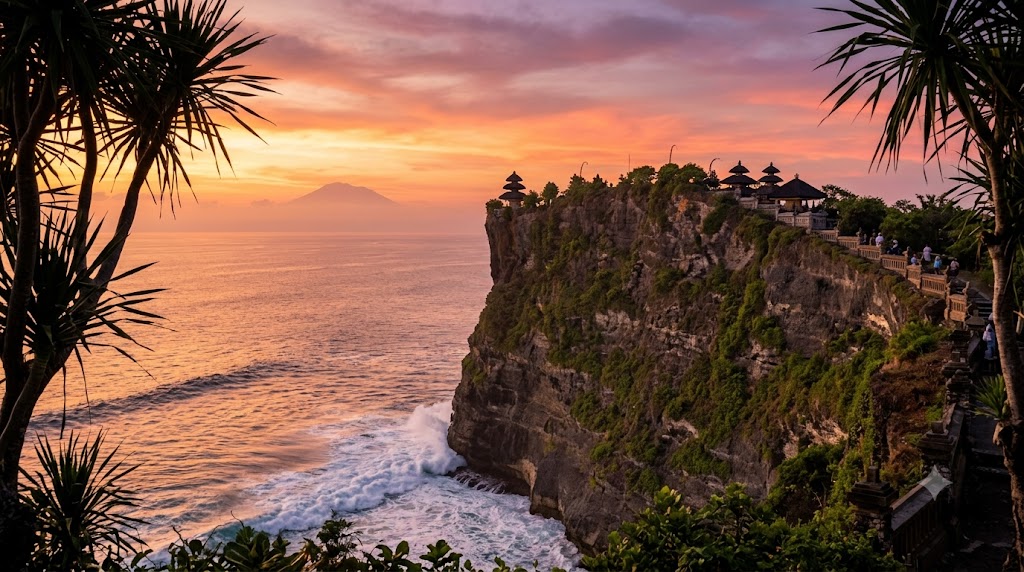
    Uluwatu Temple perched on a dramatic clifftop above crashing waves at sunset — Bali Uluwatu zone guide
    Uluwatu Temple’s sunset Kecak fire dance, performed with the Indian Ocean crashing against the cliffs below, is one of Bali’s most photographed evenings.

    Stay here if: you want dramatic scenery and a slightly more youthful, surf-and-café energy, don’t mind cliffside stairs to reach the beach, or are combining Bali with a honeymoon that wants a “wow” sunset moment.

    Zone 4 (Day Trip): Nusa Penida and the Nusa Islands

    Technically separate islands a fast boat ride from Bali’s mainland, the Nusa islands have become one of the most-photographed day trips in Southeast Asia — Kelingking Beach’s dinosaur-shaped cliff, Angel’s Billabong’s natural infinity pool, and Crystal Bay’s snorkelling are all here. A full-day organised trip (boat plus a private driver on the island, since roads are rough) is the standard way to see it — we build this in as a day trip from Uluwatu or Seminyak rather than an overnight stay, since accommodation on Nusa Penida itself is far more basic.

    Bonus Zone: Canggu — Bali’s Newest Cool

    If you have an extra couple of days, Canggu has emerged as Bali’s digital-nomad, surf-and-café district — black sand beaches, a dense cluster of excellent coffee shops and co-working cafés, and a slightly more local, less polished feel than Seminyak. It’s an easy add-on for younger groups or a “one more day” extension rather than a primary base for a first trip.

    Bali Culture and Etiquette: What Travellers Should Know

    Bali is a Hindu-majority island within Muslim-majority Indonesia, with its own distinct religious and cultural practices that shape daily life more visibly than in most tourist destinations:

    • Small offerings (canang sari): you’ll see tiny woven-leaf baskets of flowers and rice placed on pavements, doorsteps and shrines every morning — step around them, never on them.
    • Temple dress code: shoulders and knees covered, and a sarong plus sash (often provided at the entrance) tied around the waist is required at most temples, regardless of gender.
    • Ceremony days (Nyepi and others): Bali’s Day of Silence, Nyepi, shuts the entire island down for 24 hours — no flights, no lights, no leaving your hotel. If your dates land near it, we flag this well in advance since it affects the whole itinerary.
    • Left hand and head etiquette: as across much of Asia, avoid using your left hand for giving/receiving, and avoid touching anyone’s head, including children’s.
    • Bargaining: expected and normal at markets, not at fixed-price shops, cafés or beach clubs.

    Photo Spots Worth Building Your Schedule Around

    If a great photograph matters to your trip, timing beats luck — these are the shots worth planning around rather than hoping to catch:

    • Tegalalang rice terraces (Ubud): arrive at opening time, before 8 AM, for empty frames and soft light — by mid-morning, tour buses fill every angle.
    • Uluwatu Temple at sunset: arrive at least an hour before sunset to walk the clifftop path in daylight, then stay for the Kecak dance as the sky turns orange.
    • Kelingking Beach, Nusa Penida: the famous “dinosaur” cliff viewpoint is busiest late morning with day-trippers — an early boat departure buys a quieter window.
    • Handara Gate: the iconic split archway near Bedugul, best photographed early morning before crowds and with soft mountain light.
    • Tirta Empul’s purification pools: a genuinely moving photo opportunity if you participate respectfully, best in early morning light before it gets crowded and hot.

    Sequencing Your Zones: A Sample 7-Day Itinerary

    Days Zone Focus
    1 Arrival, transfer to Ubud Settle in, evening at leisure
    2–3 Ubud Rice terraces, Monkey Forest, temples, spa/wellness time
    4–5 Seminyak or Uluwatu Beach clubs, sunset dining, shopping
    6 Nusa Penida day trip Boat excursion from your coastal base
    7 Departure Last-minute shopping, airport transfer

    Couples on a honeymoon often swap Day 6 for a private villa day instead of the Nusa Penida trip, which involves a fair amount of travel time. Families with younger kids sometimes drop Uluwatu’s cliff stairs in favour of more Seminyak beach time. We adjust this template to your group every time.

    Visa on Arrival: What Indian Travellers Need to Know

    Bali (Indonesia) offers Indian passport holders a straightforward Visa on Arrival, valid for stays of up to 30 days, obtainable at the airport on landing. Alongside this, Indonesia collects a separate international tourist levy from all foreign visitors, introduced to help manage the island’s tourism impact — this is a small, fixed charge, distinct from the visa fee itself, and is usually easiest to pay online in advance to skip the airport queue. Documents to carry regardless: passport valid 6+ months from travel date, a return or onward ticket, and proof of accommodation. We handle the online tourist-levy payment and brief every client on the current visa-on-arrival process as part of every Bali booking.

    Best Time to Visit Bali from India

    Months Conditions Verdict
    April – June Dry season begins, lush and green, fewer crowds than peak One of the best windows — great weather, easier bookings
    July – August Peak dry season, busiest and priciest Best weather, but book well ahead — villas and flights sell out
    September – October Dry, shoulder season Excellent value with dry-season weather still holding
    November – March Wet season — short, heavy afternoon showers, humid Cheaper and quieter; mornings are often still clear, so trips work with flexibility

    Getting to Bali from Chandigarh, Amritsar or Delhi

    There is no direct flight from India to Bali, so every trip routes through a connecting hub — most commonly Delhi to Denpasar via Singapore or Kuala Lumpur, or via Jakarta with a domestic carrier. For Chandigarh and Amritsar travellers, that means an internal connection to Delhi first; our ticketing desk prices the full multi-leg journey together and books the routing with the shortest total travel time and best fare for your dates, following the same booking-window logic covered in our cheap flights guide — 6–8 weeks out is typically the sweet spot for this longer international routing.

    What to Pack for Bali

    • Light, breathable clothing — Bali is tropical and humid year-round; cottons and linens work best.
    • A light rain jacket or umbrella — even dry season sees the odd afternoon shower.
    • Modest cover-up clothing for temple visits — sarongs are often provided or rentable at temple entrances, but carrying your own is easier.
    • Reef-safe sunscreen — Bali’s beaches and reefs benefit from it, and some properties now require it.
    • A universal power adapter — Indonesia uses European-style two-pin sockets.
    • Cash in small denominations for warungs and local markets, alongside cards for hotels and restaurants.

    Money-Saving Tips from Our Desk

    1. Book the flight-heavy routing early. Since there’s no direct India–Bali flight, the connecting-flight fare is the single biggest cost lever — 6–8 weeks out matters even more here than on shorter routes.
    2. Mix warungs with special-occasion dining. Local warungs serve excellent food at a fraction of beach-club restaurant prices — save the splurges for one or two standout evenings.
    3. Travel in the shoulder months (April–June or September–October) for dry-season weather at softer rates than the July–August peak.
    4. Book beach club access, not just entry. Many clubs waive the entry fee against a minimum spend — worth checking before you pay a separate cover charge.
    5. Use a private driver for full days, not per-trip taxis — a day-rate driver for temple-hopping or the Nusa Penida trip usually costs less than stacking individual rides.

    What’s Genuinely Worth the Splurge

    Not every upgrade in Bali is worth it — but a few consistently are, based on years of client feedback:

    • One night in a private-pool villa, even if the rest of your stay is a standard hotel room — it’s the single most-photographed, most-remembered upgrade travellers mention afterward.
    • A sunset dinner reservation at a clifftop restaurant in Uluwatu, booked ahead rather than walked into — the good tables sell out on weekends.
    • A private driver for the day over stacking individual rides — the time saved and flexibility gained is worth far more than the cost difference.
    • Skip-the-queue or early-entry options at Tegalalang and Nusa Penida’s viewpoints, where crowds genuinely change the experience.

    Where we’d tell you to save instead: mid-range warungs are excellent across Bali, and a “5-star” label on a hotel matters less here than location within your chosen zone.

    Common Bali Myths We Correct Every Week

    What People Assume The Reality
    “Bali is one compact area you can see from one hotel.” Bali’s zones are genuinely spread out with slow traffic between them — basing in two or three zones works far better than one.
    “You need a visa arranged before you fly.” Indian passport holders get visa on arrival — no embassy visit needed, though the separate tourist levy is best paid online in advance.
    “Nusa Penida is an easy add-on to any day.” It’s a boat ride away with rough island roads — genuinely needs a full day, not a half-day stop.
    “Rainy season means the trip is ruined.” Bali’s wet season brings short, heavy afternoon showers, not all-day rain — mornings are often clear, and rates drop meaningfully.

    Who Bali Is Perfect For

    • Honeymooners: Ubud’s private pool villas plus Uluwatu’s clifftop sunsets make one of the most romantic combinations in Southeast Asia — see how it compares in our Bali vs Maldives vs Dubai guide.
    • Friends’ groups: Canggu and Seminyak’s beach-club-and-nightlife scene, plus Uluwatu’s surf culture, suit an active group trip well.
    • Families: Seminyak’s calmer beaches and Ubud’s cultural sites (with easier terrain than Uluwatu’s cliff stairs) make a comfortable base for kids.
    • Wellness travellers: Ubud alone can anchor an entire trip — yoga, spas, healthy cafés and jungle quiet.

    Booking a Package vs Planning Bali Yourself

    DIY Flywings Bali Package
    Multi-city routing You piece together the connecting flights yourself One booking, priced for the shortest total journey and best fare
    Zone sequencing Trial and error on where to stay and for how long Built around your priorities from two decades of Bali bookings
    Villa/hotel quality Photos vs reality gamble Properties we’ve vetted through client feedback and our own stays
    Nusa Penida logistics Booking boats and island transport separately Arranged as one seamless day trip
    Tourist levy & visa You navigate the process solo Pre-payment and process handled for you

    Frequently Asked Questions

    How many days are needed for a Bali trip from India?

    6–7 days is the sweet spot for a first trip — enough to cover two or three zones without rushing. Given the long connecting-flight journey, we don’t recommend less than 5 days, since travel time alone eats into a short trip disproportionately.

    Do Indians need a visa for Bali?

    Yes, but it’s straightforward — a Visa on Arrival is issued at the airport for stays up to 30 days. Alongside it, Indonesia’s separate international tourist levy applies to all foreign visitors and is best paid online before you fly to avoid an airport queue.

    Ubud, Seminyak or Uluwatu — where should I stay?

    If you can only pick one, Ubud suits culture-and-wellness travellers, Seminyak suits those wanting polished beach-club Bali, and Uluwatu suits couples and groups chasing dramatic clifftop scenery. Most trips of 6+ days should combine at least two of the three rather than picking only one.

    What is the best time to visit Bali from India?

    April–October is Bali’s dry season and the most reliable window for weather. July–August is peak season with the best conditions but highest prices; April–June and September–October offer similar dry-season weather at better value.

    Is there a direct flight from India to Bali?

    No — every route connects through a hub, most commonly Delhi via Singapore or Kuala Lumpur. Total journey time runs roughly 8–9 hours of flying, and our desk books the routing with the shortest layover and best combined fare.

    Is Bali good for a family trip, or mainly for couples?

    Both — Bali’s reputation as a honeymoon destination sometimes overshadows how well it works for families too, particularly basing in Seminyak with its calmer beaches and easy access to kid-friendly attractions, combined with a couple of cultural days in Ubud.

    Can Flywings arrange the Nusa Penida day trip as part of the package?

    Yes — boat transfers and a private driver for the island’s rough roads are arranged as one seamless day trip within your Bali package, timed from whichever coastal zone you’re based in.

    Is Bali expensive compared to Thailand or Vietnam?

    Bali sits roughly in the middle of Southeast Asia’s price range — costlier than budget circuits in Vietnam, broadly comparable to Thailand, and noticeably cheaper than the Maldives for a similar length of stay, especially once you factor in Bali’s wide range of accommodation styles from simple guesthouses to private-pool villas.

    What should I know about Bali’s culture before I go?

    Bali is a Hindu-majority island with visible daily religious practice — small offerings on pavements, temple dress codes requiring a sarong, and occasional ceremony days that can affect travel plans (Nyepi, the Day of Silence, shuts the island down entirely for 24 hours). None of this needs advance study; a little awareness and respect goes a long way, and we brief every client before departure.

    Can I combine Bali with Singapore or another Southeast Asia stop?

    Yes — Bali pairs naturally with Singapore or Kuala Lumpur since your connecting flight already routes through one of them; adding 2–3 days at the stopover city is a popular way to see two destinations without a separate booking. Ask us to price a combined Bali + Singapore itinerary alongside our Singapore Escape package.

    Plan Your Zone-by-Zone Bali Trip

    The difference between an average Bali trip and a great one usually comes down to exactly what this guide covers — the right zones, in the right order, for the right number of nights. Tell us your travel dates and what you want from the trip, and we’ll build the itinerary around it. Explore our Bali Romance 6N/7D package, browse more international tour packages from Chandigarh, or reach us directly:

    Written by Sukhjinder Kaur, Senior Travel Content Writer at Flywings Tour & Packages Pvt Ltd — booking flights and holidays from Mohali, Punjab since 2005. Visa processes and seasonal guidance verified as of July 2026; entry rules and levies can change, so confirm current details when you enquire.

  • Thailand Visa Rules for Indians in 2026: What Actually Changed (May Panic → July U-Turn, Explained)

    Thailand Visa Rules for Indians in 2026: What Actually Changed (May Panic → July U-Turn, Explained)

    Quick answer: Yes — Thailand is visa-free for Indian passport holders in 2026, for stays of up to 30 days. A May 2026 proposal to scrap visa-free entry entirely caused weeks of panic and a real dip in bookings, but Thailand’s Cabinet reversed course on 14 July 2026 and made the 30-day visa-free arrangement permanent. If you searched this because of the May headlines, you’re reading slightly old news — here’s the full story.

    Few visa stories have confused Indian travellers as much as Thailand’s in 2026. In the space of two months, Indians went from a 60-day visa-free arrangement, to headlines announcing it was being scrapped for a 15-day paid visa-on-arrival, to a Cabinet U-turn that landed on a permanent 30-day visa-free entry. At our Mohali desk, Flywings Tour & Packages Pvt Ltd fields dozens of “wait, do I need a Thailand visa now or not?” calls a week — so here is the complete, dated timeline of what happened, exactly what the rules are today, and what it means for your next Bangkok or Phuket trip.

    The Timeline: How We Got Here

    • Before May 2026: Indian passport holders enjoyed visa-free entry to Thailand for stays of up to 60 days — one of the most generous arrangements Thailand offered any nationality, and a major reason Thailand became a top short-haul destination for Indian travellers.
    • 19 May 2026 — the announcement that caused panic: Thailand’s Cabinet approved a restructuring of its immigration framework that would have removed India from the visa-free list entirely, replacing it with a 15-day visa-on-arrival requiring a fee of roughly 2,000 THB (about ₹5,000) paid at the airport.
    • Late May – June 2026 — the fallout: The proposal triggered real confusion among Indian travellers — many assumed Thailand had become visa-required overnight — and bookings from one of Thailand’s most important source markets measurably declined in the following weeks.
    • 14 July 2026 — the reversal: Facing the drop in Indian arrivals, Thailand’s Cabinet reversed the May decision. Instead of reverting to the old 60-day scheme, it went further: India was added to Thailand’s 30-day visa-free list on a permanent basis — a lasting entry, not a temporary extension.

    What the Rules Actually Are Today

    This table is the one to bookmark — it settles the “60 days, 15 days, or 30 days?” confusion in one look:

    Before May 2026 The Scrapped May Proposal The Rule Today (Since 14 July 2026)
    Visa requirement Visa-free Visa-on-arrival required Visa-free
    Maximum stay 60 days 15 days 30 days
    Cost at the border None ~2,000 THB (~₹5,000) None
    Status Was in effect Never actually implemented Permanent, current rule

    In short: the scary version — a paid 15-day visa-on-arrival — never actually came into force. What did come into force is better than most travellers realise: visa-free entry, permanently, for a full month.

    Bangkok's Wat Arun temple at golden hour on the Chao Phraya river — Thailand travel for Indians 2026
    Wat Arun on the Chao Phraya River — one of the reasons Bangkok remains one of the most-booked short-haul trips for Indian travellers, visa-free rules or not.

    Why Did Thailand Almost Scrap Visa-Free Entry?

    The May proposal was framed around tightening Thailand’s broader immigration and tourism-visa framework — addressing concerns about long-stay visitors overstaying tourist terms and, in some cases, working informally while on a tourist entry. India was one of several nationalities caught in a wider policy tightening, not singled out specifically. The reversal in July reflects something Thailand’s tourism economy takes very seriously: Indian travellers are one of its largest and fastest-growing inbound markets, and the dip in bookings after the May announcement made the economic cost of the stricter rule clear within weeks.

    Setting the Record Straight: Myths vs Facts

    What People Are Saying The Actual Fact
    “Thailand needs a visa for Indians now.” False. Entry is visa-free for stays up to 30 days, as of the 14 July 2026 ruling.
    “You have to pay 2,000 THB at the airport.” False for the current rule. That fee applied only to the May proposal, which was reversed before it took effect.
    “The old 60-day stay is still available.” Not currently — the permanent arrangement from July 2026 is 30 days visa-free, not the earlier 60.
    “This could change again.” True, and worth planning around — Thailand’s rules for Indian travellers have shifted twice in two months in 2026. Confirm live rules close to your travel date.

    Real Scenarios: Three Calls We’ve Actually Taken

    Numbers and rulings are one thing — here’s what the confusion has actually looked like across our counter since May:

    • “I already paid for flights in June — do I need to cancel?” A Mohali family had booked a Bangkok trip for August right after the May headlines broke, convinced they’d now need a paid visa-on-arrival they hadn’t budgeted for. They didn’t need to change a thing — by the time they travelled, the July reversal was already in effect and entry was visa-free.
    • “My travel agent app still shows the old 60-day rule.” Several clients found outdated visa information on booking apps and blogs that hadn’t been updated since before May. This is exactly why we verify live rules per booking rather than trusting a cached FAQ page — including our own, which we keep current.
    • “We’re planning a 45-day trip — is that still possible visa-free?” Not under the current 30-day rule. For this client, we mapped out a simple visa-run to Cambodia at the 28-day mark, resetting a fresh 30-day window for the second half of their trip — a common workaround for travellers used to the old 60-day allowance.

    How Thailand’s Rules Compare to Its Neighbours in 2026

    Since Thailand’s visa status has been genuinely volatile this year, it’s worth seeing where it stands next to the other Southeast Asian destinations Indian travellers routinely compare it with — all covered in more depth in our visa-free countries guide:

    Destination Entry Type for Indians (2026) Typical Stay
    Thailand Visa-free 30 days
    Malaysia Visa-free Up to 30 days
    Indonesia (Bali) Visa on arrival ~30 days, extendable
    Singapore e-Visa Per approval, typically 30 days
    Vietnam e-Visa Per approval, typically 30–90 days
    Cambodia e-Visa Per approval, typically 30 days

    Thailand and Malaysia are now the two genuinely visa-free options on this list for Indian passport holders — which is part of why Thailand’s near-miss in May mattered so much to travellers who’d built entire multi-country itineraries around not needing paperwork for it.

    Best Time to Visit Thailand Now That the Rules Have Settled

    With the visa question resolved, the only planning variable left is weather — and Thailand’s calendar rewards getting this right:

    Months Conditions Verdict
    November – February Cool, dry, 20–32°C Peak season. The best weather nationwide; book flights and island resorts 6–8 weeks out.
    March – May Hot, up to 35–40°C, especially in Bangkok Good for island beach time; city sightseeing is more comfortable early morning or evening.
    June – October Southwest monsoon, humid with regular showers Lower rates and fewer crowds; the Andaman coast (Phuket, Krabi) sees more rain than the Gulf side.

    What This Means If You’re Planning a Trip

    For most travellers booking a standard Thailand holiday — Bangkok’s temples and markets, Phuket or Krabi’s beaches, a Phi Phi Islands day trip — 30 days visa-free is more than enough runway, and nothing practically changes versus what you may have assumed. Where it matters more:

    • Longer stays: if you were planning 45 or 60 days (a common pattern for retirees or long workations), you now need to either exit and re-enter to reset the 30-day clock, or look at a formal longer-stay visa category — our desk can walk you through both options.
    • Multi-country Southeast Asia trips: a Thailand + Vietnam + Cambodia route, for instance, is easier to sequence now that Thailand’s window is a known, permanent 30 days rather than a moving target.
    • Booking confidence: because this was reversed rather than left ambiguous, you can book Thailand flights and hotels without worrying about a surprise visa fee appearing at check-in — but as always, we verify the live rule before you fly, since it has moved twice already this year.

    Documents to Carry Regardless of Visa-Free Status

    “Visa-free” is not “document-free” — Thai immigration, like most countries, still checks the following on every visa-free entry:

    • Passport valid for at least 6 months from your travel date
    • A confirmed return or onward flight ticket
    • Proof of accommodation for your stay (hotel booking or address)
    • Evidence of sufficient funds for the trip, if asked

    These are exactly the documents we prepare as a checklist for every Thailand booking — visa-free entry removes the application, not the paperwork discipline.

    Where to Go in Thailand: A Quick Route Map

    With entry sorted, the actual trip-planning question is which of Thailand’s very different regions to prioritise:

    • Bangkok: temples (Wat Arun, Wat Pho, the Grand Palace), floating markets, rooftop bars and some of Asia’s best street food — 2–3 days is the usual anchor for any Thailand itinerary.
    • Phuket: Thailand’s biggest beach resort island, with nightlife in Patong and quieter bays further south — the easiest beach add-on for a first Thailand trip.
    • Phi Phi Islands: a day-trip staple from Phuket or Krabi — limestone cliffs, Maya Bay, and some of the clearest water in the Andaman Sea.
    • Krabi: a calmer alternative to Phuket, with Railay Beach’s dramatic cliffs and easier access to island-hopping.
    • Chiang Mai: the north’s cultural capital — temples, night markets, and cooler hill weather, best paired with Bangkok on a longer trip.

    Our Thailand tour packages combine two or three of these into a single itinerary, timed to make the most of your visa-free 30 days without feeling rushed.

    Who This News Actually Matters Most For

    Not every Thailand traveller experienced this the same way. Here’s how the 2026 back-and-forth lands for different kinds of trips:

    • First-time short-haul travellers: the least affected group in practice — a standard 5–7 day Bangkok-and-beach trip fits comfortably inside 30 days visa-free, exactly as it always would have. The May scare was mostly noise for this group, but understandably alarming noise.
    • Honeymooners and couples: Thailand remains a strong value pick against Bali or the Maldives for a 6–8 day trip — see our Bali vs Maldives vs Dubai comparison for how it stacks up, and ask us to slot Thailand into that same comparison for your dates.
    • Families with school-holiday timing: since bookings are often made months ahead for summer or winter breaks, this group is exactly who got caught mid-plan by the May announcement — and exactly who benefits most from a desk that tracks the rule rather than assuming a booking made in April is still accurate in July.
    • Long-stay and repeat visitors: the group genuinely affected by the drop from 60 to 30 days. If you previously treated Thailand as a 45–60 day workation base, this is the one real, lasting change worth re-planning around.
    • Multi-country backpacker itineraries: Thailand’s new permanent 30-day window is actually easier to plan around than the old uncertainty — pairing it with Vietnam or Cambodia’s e-Visas (see our visa-free countries guide) now has one less moving variable.

    Getting There from Chandigarh, Amritsar or Delhi

    Thailand doesn’t yet have a direct flight from Chandigarh or Amritsar, so every Thailand trip from Punjab routes through Delhi — the good news is that connection is short and frequent. Bangkok sees multiple daily departures from Delhi across full-service and low-cost carriers, keeping total journey time (including the Chandigarh–Delhi leg) to well under half a day gate to gate. Our ticketing desk prices the Chandigarh–Delhi–Bangkok routing against a Chandigarh–Delhi road transfer plus flight, and books whichever combination gives you the best total fare and the least airport waiting — the same booking-window logic we cover in our cheap flights guide applies here too: booking 4–6 weeks out typically beats a last-week fare by a wide margin.

    Five-Minute Pre-Departure Checklist

    1. Confirm the live visa rule for your exact travel date — call us or check Thailand’s immigration site directly, since 2026 has already shown the rule can move.
    2. Check your passport validity — 6 months from your travel date, non-negotiable at check-in.
    3. Have your return ticket ready to show — immigration and airline staff both ask for this on visa-free entries.
    4. Carry proof of your hotel booking, printed or on your phone with offline access in case of patchy airport Wi-Fi.
    5. Keep a card or cash buffer accessible in case of a funds check — rare, but worth being ready for.

    The Bigger Picture: Why This Story Matters Beyond Thailand

    The Thailand episode is a useful reminder for every international trip, not just this one destination: visa rules are policy decisions, and policy decisions can change with very little warning — in either direction. The safest habit for any traveller is the one our desk practises by default: verify the live entry requirement close to your travel date, from a source that’s actually checking in real time, rather than trusting a headline (or a blog post, including this one) as a permanent fact. We update this page and our internal guidance the moment official rules shift again.

    How Flywings Handles This for You

    Because Thailand’s rule has changed twice within one travel season, we don’t rely on a static checklist for Thailand bookings — our desk confirms the live entry requirement for your exact travel dates before we finalise flights or hotels, and we brief you on exactly what to carry at the airport. If Thailand’s rules move again before your trip, we update your booking guidance directly rather than leaving you to find out at immigration. This is the same live-verification approach we use for every visa question, whether it’s Thailand’s evolving rules or the standard UAE visa process for Dubai.

    Frequently Asked Questions

    Do Indians need a visa for Thailand in 2026?

    No — as of the 14 July 2026 ruling, Indian passport holders can enter Thailand visa-free for stays of up to 30 days. The stricter 15-day paid visa-on-arrival proposed in May 2026 was withdrawn before it ever took effect.

    Why did people think Thailand ended visa-free entry for Indians?

    Because it briefly, officially planned to. Thailand’s Cabinet approved a shift to a 15-day paid visa-on-arrival on 19 May 2026, which made headlines and caused real confusion. That decision was reversed on 14 July 2026, before it was implemented, in favour of a permanent 30-day visa-free arrangement — better than what almost happened, though shorter than the original 60-day scheme.

    How long can Indians stay in Thailand without a visa now?

    Up to 30 days per entry, visa-free, under the current permanent rule. This is down from the earlier 60-day visa-free arrangement but well clear of the 15-day paid entry that was proposed and scrapped.

    Is the 30-day visa-free rule permanent or could it change again?

    Thailand’s Cabinet has framed the July 2026 decision as a permanent arrangement, not a temporary extension. That said, given two policy shifts inside two months earlier this year, we recommend confirming the live rule with our desk shortly before you travel — it costs nothing and takes minutes.

    What if I need to stay in Thailand longer than 30 days?

    You have two practical options: exit to a neighbouring country and re-enter to start a fresh 30-day visa-free period, or apply for a formal Thai visa category suited to longer stays before you travel. Tell us your planned duration and we’ll advise the cleaner route for your situation.

    Does this affect Thailand tour package prices?

    Not directly — since the paid visa-on-arrival proposal never took effect, there’s no new visa fee to factor into your Thailand trip cost. As always, we quote every Thailand package individually based on your dates, hotel category and season.

    Is there a direct flight from Chandigarh to Thailand?

    Not currently — Thailand trips from Punjab route via Delhi, which has frequent daily Bangkok departures. Total journey time stays well under half a day, and our desk books the combined Chandigarh–Delhi–Bangkok routing at the best available fare for your dates.

    Where can I check the official, current Thailand visa rule myself?

    Thailand’s Ministry of Foreign Affairs and immigration authorities publish official updates, and Indian embassy advisories mirror them. Given how quickly this has changed in 2026, we’d still recommend confirming with a desk that checks live, like ours — a two-minute call beats relying on a search result that may already be outdated by the time you read it.

    Book Thailand With Confidence — We Track the Rules So You Don’t Have To

    Thailand remains one of the best-value, best-connected short-haul holidays for Indian travellers — the 2026 visa back-and-forth doesn’t change that, it just means the rules are worth double-checking before you fly. Our desk verifies live entry requirements on every Thailand booking, files any paperwork you do need, and keeps you updated if anything shifts again. Explore our international tour packages from Chandigarh, browse the Thailand destination guide, or get a free quote:

    Written by Sukhjinder Kaur, Senior Travel Content Writer at Flywings Tour & Packages Pvt Ltd — booking flights and visas from Mohali, Punjab since 2005. This timeline reflects official announcements as of 14 July 2026; visa policy can change again with little notice, so always confirm the live rule for your travel dates before booking.