Tag: Punjab

  • Why Visa Applications Get Rejected, and the Extra Scrutiny Punjab Applicants Specifically Face

    Why Visa Applications Get Rejected, and the Extra Scrutiny Punjab Applicants Specifically Face

    We are going to say something most visa-assistance content avoids saying directly: if you are applying from Punjab for a Canadian, Australian, or several other visa categories, you are statistically facing more scrutiny than an identical application from Mumbai or Bangalore. This is not a guess, and it is not us being alarmist. It is a documented pattern, tracked in Indian and international press, tied to a history of the student and tourist visa route being misused for immigration purposes from this specific region. Pretending this does not exist would not help you. Understanding exactly what it means for your application, and what is genuinely within your control, will. This is not a comfortable topic for a travel agency to lead with, most visa-assistance marketing prefers a vaguer, more reassuring tone. We think a Chandigarh and Mohali audience, many of whom already know this pattern from a relative’s or friend’s experience, is better served by a direct, factual explanation than another generic checklist that avoids the actual reason so many otherwise-qualified applications from this region get turned down.

    Why We Are Addressing This Directly

    Most visa-assistance content online is written to be broadly reassuring rather than specifically useful, generic tips that apply everywhere and therefore help no one in particular. For an audience based in Punjab specifically, that generic approach skips the single most relevant fact, that the region carries a documented scrutiny pattern that changes what a strong application actually needs to look like here compared to elsewhere in India. We would rather tell you this plainly, with the sources behind it, than let you discover it only after an unexpected rejection, the same direct-over-reassuring approach we take in our guide on how to choose the right travel agency.

    Quick context: No agency, including us, can guarantee a visa will be approved. That decision belongs entirely to the consulate or embassy. What a proper documentation review can do is remove the preventable, self-inflicted reasons for rejection, which account for the large majority of refusals in the first place.

    The Punjab Factor, Explained Honestly

    Reporting on this has been consistent for several years, applicants from Punjab, Gujarat, and Haryana face documented higher rejection rates for Canadian and Australian visas specifically, tied to consular concerns that the student and tourist visa route has been used by some applicants from these states as a path to immigration rather than genuine short-term travel or study. Canada in particular has tightened requirements around proof of intent to return and financial stability specifically in response to this pattern.

    What this means practically: a Punjab-based applicant needs to demonstrate ties to India, employment, property, family responsibilities, ongoing business, more thoroughly and more convincingly than an identical applicant from a state without this scrutiny history. This is not fair in an individual sense, a genuine tourist from Mohali is not responsible for someone else’s prior misuse of the system, but it is the reality of how these applications are currently assessed, and pretending otherwise sets an applicant up for a preventable rejection.

    The Reasons That Have Nothing to Do With Region

    Beyond the Punjab-specific scrutiny, the majority of visa rejections, for any applicant, from any state, come down to a small, well-documented set of preventable errors.

    Rejection Reason What Actually Happens
    Weak ties to India The single most common reason cited across nearly every visa category, the consulate is not convinced the applicant will return
    Documentation mismatches A spelling difference, wrong date format, or name-order inconsistency between passport and application form, small enough to seem trivial, large enough to fail automated and manual checks alike
    Weak financial documentation Bank statements with unexplained large recent deposits, insufficient balance, or unclear income sources
    Generic or copied application content A statement of purpose or travel itinerary that reads like a template rather than a genuine, specific plan
    Incomplete or inconsistent forms Fields left blank, or answers that contradict something stated elsewhere in the same application

    Every one of these is preventable with a careful review before submission, which is exactly the gap between a rejected application and an approved one in most cases that have nothing to do with genuine eligibility.

    Rejection Rates by Destination, Roughly

    Worth knowing before you apply, since it sets realistic expectations and tells you where extra preparation matters most.

    Destination Approximate Rejection Rate for Indian Applicants
    United States (B1/B2 visitor visa) Roughly 27 to 30 percent, notably higher than the global average, with young, unmarried, first-time applicants facing the steepest odds
    United Kingdom (visitor visa) Roughly 9 percent, one of the more favourable rates for Indian applicants among major Western destinations
    Canada, Australia, Schengen countries Among the destinations with the highest documented rejection rates for Indian applicants generally, and specifically elevated for Punjab, Gujarat, and Haryana applicants

    These figures are approximate and shift over time as policy changes, but the relative ranking, UK generally most favourable, US and Canada/Australia/Schengen generally toughest, has held consistently enough to be worth planning around.

    Visa consultant reviewing an application file with a client across a desk in a travel office
    A proper documentation review before submission catches the preventable errors that cause most rejections

    What Actually Strengthens an Application

    • Clean, explainable bank statements built up over months, not days. A large unexplained deposit two weeks before applying is one of the fastest ways to trigger financial-documentation doubt, regardless of destination.
    • Concrete, specific proof of ties to India, employment letters with real detail, property documents, family responsibility evidence, rather than generic templates.
    • A specific, genuine travel itinerary, not a copied template, matched to actual booked or realistically planned activities and dates.
    • Total consistency across every document, the passport, the application form, supporting letters, and any prior visa history, since even minor discrepancies raise doubt disproportionate to their actual significance.
    • Honest answers about travel history, a clean record of returning from prior trips on time is one of the strongest pieces of evidence an applicant can offer, and any prior overstay or violation should be disclosed and addressed directly rather than hidden.

    Destination-Specific Notes Worth Knowing

    Canada

    The destination where the Punjab-specific scrutiny is most documented and most publicly discussed. Canadian visa officers have specifically tightened requirements around proof of intent to return and financial stability for applicants from this region, responding directly to a documented pattern of visa-route misuse. A strong application here leans heavily on verifiable employment, property, or business ties, and a financial profile built over months rather than assembled quickly before applying.

    Australia

    Similar scrutiny pattern to Canada, with particular attention on the credibility of a Statement of Purpose for student-adjacent applications and consistency between stated intent and actual financial and employment evidence. Generic or templated supporting statements are flagged more readily here than a first-time applicant might expect.

    Schengen (Europe)

    Among the more document-intensive processes generally, inconsistent paperwork, mismatched dates, and incomplete forms are cited as leading rejection triggers specifically for Schengen applications from Indian travellers, independent of the regional scrutiny question. A meticulous, cross-checked application matters more here than almost anywhere else.

    United States

    The B1/B2 visitor visa rejection rate for Indian applicants runs notably high, and the interview itself carries real weight here in a way it does not for several other destinations, a confident, consistent, well-prepared answer to the consular officer’s questions matters as much as the paperwork itself.

    United Kingdom

    Comparatively the most favourable major Western destination for Indian applicants by approval rate, though the same fundamentals, clean documentation and clear ties to India, still apply and still matter.

    Tourist Visa vs Student Visa: Why the Distinction Matters Here

    Much of the Punjab-specific scrutiny reporting centres on the student visa route being used as a path to immigration, but the resulting caution has genuinely spilled over into tourist visa assessment for applicants from this region too. A consular officer reviewing a tourist visa application from Punjab is, fairly or not, doing so with awareness of this broader pattern. This makes it even more important for a genuine tourist applicant to clearly and specifically demonstrate that the trip is exactly what it claims to be, a defined, time-bound visit with a real return plan, rather than leaving any ambiguity that could be read against the wider pattern.

    Group and Family Visa Applications

    Worth its own mention since a meaningful share of our Chandigarh clients apply as a family or group rather than individually, for a destination wedding, a family reunion abroad, or a group pilgrimage circuit. Group applications carry an added wrinkle: if one application in the group is weak or inconsistent, it can raise questions about the others submitted alongside it, even when each individual’s documentation is otherwise sound. Reviewing every application in a group together, checking for consistency across the whole set rather than just within each individual file, catches this specific risk before submission rather than after a partial rejection splits a travelling group.

    What a Proper Documentation Review Actually Does

    This is where a dedicated visa desk earns its value, and it is worth being specific about what that actually means rather than a vague promise. A proper review checks every document against every other document for consistency before submission, flags a financial profile that looks weak or recently manipulated before a consular officer sees it, helps build a genuine, specific itinerary rather than a generic one, and knows the destination-specific documentation standards that shift country by country and change periodically. None of this guarantees approval, and any agency claiming otherwise is not being honest with you. What it does is remove the preventable, self-inflicted causes of rejection, which by most documented accounts account for the majority of refusals that have nothing to do with genuine eligibility.

    If You Have Already Been Rejected Once

    A prior rejection is not automatically fatal to a future application, but it does need to be addressed directly rather than ignored. Most application forms ask whether you have previously been refused a visa, and answering this dishonestly is itself a serious risk, far more damaging than the original rejection. The better approach: understand exactly why the previous application was refused, if the refusal letter or communication gave a reason, and directly strengthen that specific weakness before reapplying rather than resubmitting an identical application and hoping for a different outcome.

    Steps to Take After a Rejection

    1. Read the refusal communication carefully. Some consulates provide a specific reason, others give only a general refusal code, but any detail provided is worth building your reapplication around directly.
    2. Do not reapply immediately with the same documents. Resubmitting an unchanged application virtually guarantees the same outcome, since nothing about the underlying concern has been addressed.
    3. Identify the specific weakness, whether that is financial documentation, inconsistent paperwork, or an unconvincing itinerary, and rebuild that specific element rather than assuming the whole application needs a redo.
    4. Allow genuine time before reapplying, particularly for financial documentation, since a bank statement that looks rushed or newly assembled raises the same doubt that may have contributed to the original rejection.
    5. Disclose the prior rejection honestly on the new application, since most forms ask directly and a dishonest answer, if discovered, causes far more damage than the original refusal.

    A Genuine Tourist’s Documentation Checklist

    For a straightforward leisure tourist application, regardless of destination, this is the core set of documents worth having in strong shape before applying.

    • A specific, bookable itinerary, not a vague description, actual dates, actual cities, ideally with at least a tentative hotel booking or confirmation to show real planning.
    • Bank statements covering at least the preceding six months, showing a stable, explainable pattern rather than a sudden recent balance increase.
    • Employment or business documentation, a leave-approval letter, a business registration, or equivalent proof that ties the applicant to an ongoing responsibility in India.
    • Property or family-responsibility evidence where relevant, ownership documents, dependents, or other concrete ties that support genuine intent to return.
    • A clean, consistent passport and application form, every name, date, and detail matching exactly across every document submitted.

    None of this is unusual or excessive by international visa standards, it is simply what a thorough, well-prepared application looks like, and the difference between having it ready in advance versus assembling it hastily right before a deadline is often the difference between approval and a preventable rejection.

    Frequently Asked Questions

    Why do Punjab applicants face more visa scrutiny?

    Reporting has documented that Canada and Australia specifically have tightened scrutiny for applicants from Punjab, Gujarat, and Haryana, tied to concerns that the student and tourist visa route has been used by some applicants from these states for immigration purposes rather than genuine short-term travel. This means demonstrating strong, well-documented ties to India matters even more for applicants from this region.

    Can a travel agency guarantee my visa will be approved?

    No, and any agency claiming otherwise is not being honest. Visa decisions rest entirely with the consulate or embassy. What a proper documentation review can do is remove preventable, self-inflicted errors that cause the majority of rejections that have nothing to do with genuine eligibility.

    What is the single most common reason for visa rejection?

    Weak or unconvincing ties to the home country, the consulate is not persuaded the applicant genuinely intends to return, cited across nearly every visa category and every applicant nationality.

    Does a prior visa rejection hurt future applications?

    It can if not addressed directly. Most application forms ask about prior refusals, and answering honestly while directly addressing the specific weakness that caused the earlier rejection is far more effective than resubmitting an unchanged application.

    Which countries have the toughest visa approval odds for Indian applicants?

    The United States, Canada, Australia, and Schengen countries currently show the highest documented rejection rates for Indian applicants, with the UK generally showing a more favourable approval rate by comparison.

    How far in advance should I start preparing my visa documentation?

    At least a few months for financial documentation specifically, since a clean, unexplained-deposit-free bank statement history needs time to build, and rushed, last-minute financial documentation is one of the most common preventable triggers for rejection.

    Is it harder for young, unmarried applicants specifically?

    Yes, for several destinations, particularly the United States, young and unmarried first-time applicants statistically face steeper odds, since demonstrating strong ties, family responsibility, property, established career, is genuinely harder without the evidence that typically comes with age and life stage. This does not mean approval is impossible, but it does mean the supporting documentation needs to work harder to make the case.

    Does applying through a travel agency reduce scrutiny compared to applying myself?

    Not in the sense of receiving preferential treatment, consulates assess the application itself, not who submitted it. What a proper agency review does is catch the preventable errors and weak points before submission, the same application quality any careful, well-informed individual applicant could achieve alone with enough research and time.

    What if my occupation or income is genuinely modest, does that guarantee rejection?

    No. Consulates are assessing the credibility and consistency of the whole picture, not a minimum income threshold in isolation. A modest but clearly explained income with consistent, honest documentation is generally viewed more favourably than a larger but inconsistent or recently manipulated financial profile.

    Prepare the Application Properly, Not Just Quickly

    A rejected visa costs more than the fee, it costs the trip, the time, and often a harder path on the next attempt. Our visa desk in Phase 7, Mohali has processed tourist and business visa documentation since 2013, specifically for the scrutiny patterns this region’s applicants actually face. Explore our visa assistance service, or call us directly at +91 99143 10333 for an honest documentation review before you apply, not after a rejection. Flywings team since 2013.

  • Golden Temple Amritsar: The Complete Visitor Guide — Perfect Your Day, Hour by Hour (2026)

    Golden Temple Amritsar: The Complete Visitor Guide — Perfect Your Day, Hour by Hour (2026)

    Amritsar rewards a well-planned single day better than almost any other city in India — the Golden Temple works on any schedule you give it (it never closes), the Wagah Border ceremony runs on a fixed clock 30 km away, and the gap between them is exactly enough time for the food this city is famous for. At Flywings Tour & Packages Pvt Ltd, we’ve sent Chandigarh and Punjab families here for a day trip, a weekend, and everything in between since 2013. Here is the whole visit mapped hour by hour, so you leave with the full experience and not the rushed version.

    6:00 AM — Sunrise at the Golden Temple

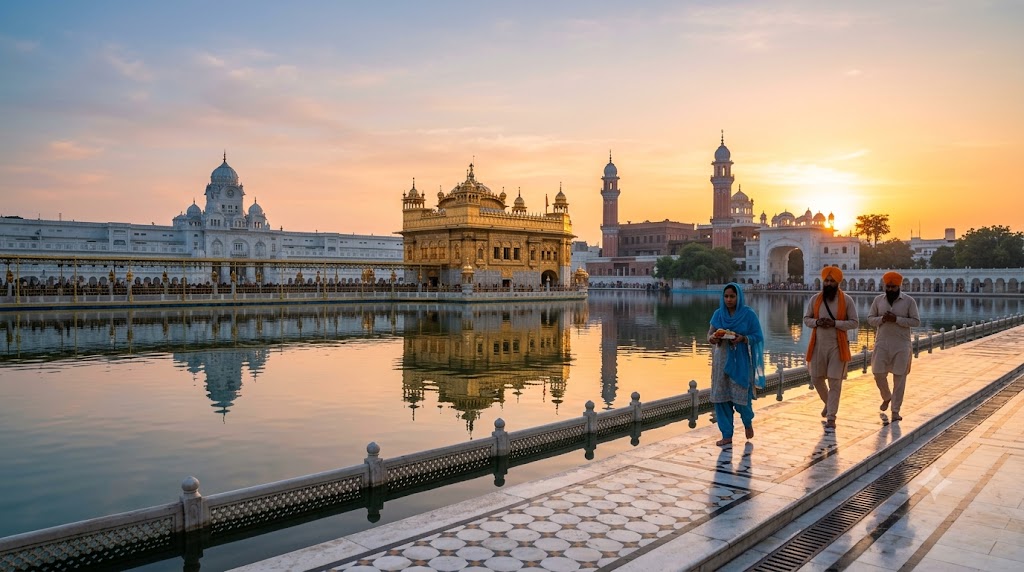
    The single best hour to arrive. The Golden Temple (Harmandir Sahib) is open 24 hours a day, every day, with free entry and no religious qualification to enter — but sunrise is when the marble parkarma is calmest, the light on the gilded dome is softest, and the crowds of the day haven’t arrived yet. Enter via the causeway, and before anything else, follow the three rules every visitor observes: remove your shoes at the entrance (free counters hold them), cover your head (scarves are provided if you don’t have one), and wash your feet in the shallow water channel at the entrance. Modest dress — shoulders and knees covered — applies to everyone, regardless of gender.

    Budget a minimum of 2–3 hours for a proper visit: the walk around the parkarma, the causeway queue into the inner sanctum for darshan, and simply sitting by the sarovar (the sacred pool) taking it in. If you want the complete experience including a langar meal and time to reflect, plan for closer to 5–6 hours across the day rather than a single rushed pass.

    9:00 AM — Langar: The World’s Largest Free Kitchen

    Somewhere around mid-morning, once you’ve done a first circuit of the temple, sit for langar — the free community meal that has run continuously at the Golden Temple for centuries. It serves around 100,000 meals a day, free, to anyone regardless of faith, caste or nationality, prepared and served largely by volunteers. Queues move fast even when they look long; join the line, sit on the floor in the communal hall, and eat what’s served. It’s not just a meal — it’s the single clearest expression of the Golden Temple’s core philosophy, and skipping it is the most common regret we hear from first-time visitors.

    11:00 AM — Jallianwala Bagh and the Partition Museum

    Both sit within walking distance of the Golden Temple along Heritage Street, and both add historical weight to the trip:

    • Jallianwala Bagh: the walled garden and site of the 1919 massacre, now a memorial with a small museum — a sober, important stop, best given 30–45 minutes.
    • Partition Museum: the world’s first museum dedicated to the 1947 Partition, telling the story through oral histories, refugee artifacts, letters and photographs. It’s open 10 AM–6 PM, Tuesday to Sunday (closed Monday), with a modest entry fee for tourists. Give it at least an hour if you’re interested in history — photography isn’t permitted inside, so be present rather than filming.

    1:00 PM — Amritsari Food Break

    This is non-negotiable in Amritsar. Hall Bazaar and the lanes around the Golden Temple complex serve some of the best food in North India — kulchas stuffed and griddled to order, lassi thick enough to stand a spoon in, and tandoori everything. Locals have their favourite decades-old spots; ask your driver or hotel, since the best kulcha stall in Amritsar rarely has a sign worth photographing.

    1:45 PM — A Quick Heritage Street Shopping Stop

    If you have twenty minutes before heading to Wagah, Heritage Street between the Golden Temple and Town Hall is worth a walk-through: Punjabi phulkari embroidery, juttis (traditional footwear), and Amritsari papad and wadiyan make honest, packable souvenirs. Save the bigger shopping session for the evening when you’re back from Wagah and not racing a ceremony start time — Hall Bazaar stays lively well into the night.

    2:30 PM — Depart for Wagah Border

    The Wagah Border sits roughly 30 km from central Amritsar, and this is the one fixed appointment of the day — the Beating Retreat ceremony has a set start time and fills up fast, so leave with a real buffer. Most hotels and drivers recommend departing by 2:30–3 PM to account for security queues and seating, especially in peak season or around national holidays.

    BSF soldiers performing the high-energy Wagah Border retreat ceremony at sunset — Wagah Border ceremony Amritsar
    The Wagah Border Beating Retreat — 45 minutes of high-kick marching, flag lowering and crowd energy between India’s BSF and Pakistan’s Rangers, completely free to watch.

    4:30–5:30 PM — The Wagah Border Ceremony

    The ceremony’s start time shifts with the season — around 4:30 PM in winter, closer to 5:30 PM in summer — so confirm the current timing for your travel date. What follows is genuinely one of India’s most electric 45 minutes: BSF and Pakistan Rangers soldiers perform a high-energy display of precision marching, high kicks and flag lowering, with packed stands cheering on both sides of the border. It’s free, but arrive early for a decent seat — the stands fill completely around Independence Day (15 August) and other national occasions, when the atmosphere reaches its peak patriotic energy. If you’re travelling around mid-August, this is worth building your whole Amritsar day around.

    7:00 PM — Back to the Golden Temple, Lit Up

    The Golden Temple at night is a different experience entirely from the morning — the dome and surrounding buildings are lit, reflected in the sarovar, and the atmosphere turns quieter and more contemplative as the day-trip crowds thin out. This is also, for many visitors, the most photogenic hour of the whole day.

    9:45 PM — The Palki Sahib Ceremony

    If you can stay this late, this is the single most moving ritual at the Golden Temple: the Guru Granth Sahib (the Sikh holy scripture) is ceremonially carried in a golden palanquin from the main sanctum back to the Akal Takht for the night, accompanied by singing and devotees lining the causeway. It runs around 9:45 PM (closer to 10 PM in summer). Staying for this turns a good day trip into a genuinely memorable one — but it does mean a later drive back if you’re returning to Chandigarh same-day.

    One Day or Two? Planning the Logistics

    One-Day Trip from Chandigarh Overnight in Amritsar
    Best for Time-limited visitors, a focused Golden Temple + Wagah day Families wanting the full hour-by-hour experience above, including Palki Sahib
    Departure from Chandigarh Early morning, ideally by 5–6 AM to maximise the day Flexible — arrive the evening before
    Return Late night after Wagah or an early Palki Sahib viewing Next morning, unhurried
    Getting there ~230 km road (4–4.5 hours) or a short flight to Amritsar (ATQ) Same options, less time pressure

    Our honest recommendation: if you can spare one night, do — the Palki Sahib ceremony and a relaxed, non-rushed morning darshan are worth it. If time is genuinely tight, the one-day version above still delivers the Golden Temple, langar, Wagah Border and Amritsari food in a single, well-paced day.

    Where to Stay, If You’re Staying the Night

    • Walking distance from the Golden Temple: the most convenient tier — you can dip back in for the night view or Palki Sahib without a taxi, though rooms here vary widely in comfort and book up fast around Independence Day and Sikh festival dates.
    • Near the Mall Road / Ranjit Avenue area: more modern hotel options with easier parking, a short cab ride from the temple complex.
    • Highway-adjacent properties: useful if you’re arriving late by road or continuing on toward Jammu the next morning, trading a bit of walkability for convenience on a longer itinerary.

    We book the tier that matches your plan — temple-adjacent for a Palki Sahib-focused evening, or highway-side if Amritsar is a stopover on a longer Vaishno Devi or Kashmir trip.

    Getting to Amritsar from Chandigarh

    Amritsar is one of the most convenient short trips from the Tricity — road, rail and air all work well, and Amritsar’s own international airport (ATQ) means many travellers also combine a Golden Temple visit with an onward or inbound international flight, as we cover in our international flights from Chandigarh and Amritsar guide. It also sits directly on the route north toward Jammu, making it a natural add-on to a Vaishno Devi yatra or a Kashmir trip.

    Practical Tips We Give Every Client

    • Head covering: carry your own scarf or bandana if you’d rather not use the temple’s shared ones, especially for larger groups.
    • Photography: generally allowed around the Golden Temple complex, but strictly prohibited inside the Partition Museum — check signage at each site.
    • Footwear: shoe-check counters at the Golden Temple are free and well-organised, but keep your token safe.
    • Wagah Border seating: gender-segregated stands are standard; arrive early for a clear view, and expect security screening similar to an airport.
    • Mobility considerations: the Golden Temple parkarma is flat marble and wheelchair-manageable; Wagah’s stand seating is less accommodating — let us know in advance if this matters for your group.
    • Weather: October–March offers the most comfortable temperatures for a full day of walking; summer visits should front-load outdoor time to the morning and evening.

    Frequently Asked Questions

    What are the Golden Temple’s timings?

    The Golden Temple is open 24 hours a day, every day of the year, with free entry at any time. There’s no official closing time — the complex, langar and parkarma are accessible round the clock, though the most peaceful hours are early morning and late evening.

    How do I combine the Golden Temple and Wagah Border in one day?

    Start at the Golden Temple at sunrise, cover langar and the Heritage Street sites (Jallianwala Bagh, Partition Museum) by early afternoon, have lunch, then depart for Wagah Border by 2:30–3 PM to reach in time for the ceremony (4:30 PM in winter, 5:30 PM in summer). Return to the Golden Temple in the evening for the lit-up night view and, if time allows, the 9:45 PM Palki Sahib ceremony.

    What time is the Wagah Border ceremony?

    Around 4:30 PM in winter months and closer to 5:30 PM in summer — always confirm the current schedule for your travel date, and plan to arrive at least 1.5–2 hours early, especially around Independence Day (15 August) when stands fill to capacity.

    Is the Golden Temple free to visit?

    Yes, entirely — there’s no entry fee, and langar (the community meal) is also free for every visitor regardless of faith or nationality. The Partition Museum, a separate attraction nearby, does charge a modest entry fee for tourists.

    Can I visit Amritsar as a day trip from Chandigarh?

    Yes — it’s roughly a 4–4.5 hour drive each way (about 230 km), which comfortably supports a well-planned one-day visit if you leave early. For the full hour-by-hour experience including the night-time Palki Sahib ceremony, an overnight stay is more relaxed.

    Can Flywings arrange a private Amritsar day trip from Chandigarh?

    Yes — private cab, a paced itinerary matched to the hour-by-hour plan above, and Wagah Border seating guidance are all part of our Amritsar day-trip and overnight packages. Tell us your dates and group size for a quote.

    Plan Your Perfect Amritsar Day

    Amritsar is one of the easiest, most rewarding trips from the Tricity — but the difference between a rushed visit and a genuinely memorable one comes down to timing it right. Let us plan the day (or the overnight) around you. Explore more of our India tour packages from Chandigarh, or reach us directly:

    Written by Sukhjinder Kaur, Senior Travel Content Writer at Flywings Tour & Packages Pvt Ltd — planning trips from Mohali, Punjab since 2013. Timings verified as of July 2026; ceremony schedules and museum hours can shift seasonally, so confirm current timings when you enquire.

  • International Flights from Chandigarh & Amritsar (2026): Every Direct Route + the Smart Connections

    International Flights from Chandigarh & Amritsar (2026): Every Direct Route + the Smart Connections

    Punjab is one of the few Indian states with two international gateways of its own — and if you live in the Tricity or anywhere across Punjab, knowing what actually flies from each one changes how you plan every foreign trip. Between Chandigarh (IXC) and Amritsar (ATQ), you can today board direct flights to the Gulf, the UK, Europe, Southeast Asia, Central Asia and — in season — even Canada, without touching Delhi at all. At Flywings Tour & Packages Pvt Ltd, our ticketing desk in Mohali books these routes every single day, for holidaymakers, students and the huge Punjabi diaspora flying between home and the world. This guide maps every direct international route from both airports as of mid-2026, the smart one-stop connections for everywhere else, and the booking rules that matter most in NRI season.

    Key Takeaways

    • Chandigarh (IXC): the daily non-stop to Dubai (~3h 40m) is the Tricity’s international workhorse — and Dubai’s mega-hub opens one-stop connections to most of the planet.
    • Amritsar (ATQ): Punjab’s true long-haul gateway — direct flights to London and Birmingham, Milan and Rome, Doha, Dubai, Sharjah, Singapore, Kuala Lumpur, Tashkent, and seasonal non-stops to Toronto.
    • Schedules are seasonal: airlines add and trim these routes through the year — always confirm live schedules for your dates before locking plans.
    • NRI peak windows — Baisakhi, summer holidays and Diwali–wedding season — sell out first; book 8–12 weeks ahead for these, as fares booked 4+ weeks early typically run 20–25% cheaper.
    • Pick the airport by route, not habit: London/Europe/Canada favour ATQ, Dubai favours IXC from the Tricity, and Delhi remains the fallback for everything neither flies.
    • Our desk quotes all three airports on every international enquiry — send your route for a free fare check.

    Chandigarh (IXC): The Tricity’s International Doorstep

    Chandigarh International Airport’s marquee international route is the one we have written about in detail before — the daily non-stop to Dubai, roughly 3 hours 40 minutes gate to gate. For Tricity travellers this flight is far more than a Dubai holiday shuttle:

    • Dubai as a springboard: from DXB’s mega-hub you connect onward to Europe, the UK, Africa, the USA and the Gulf on one ticket — often cheaper than driving to Delhi for a direct, once you count the ~250 km road journey.
    • Gulf workforce travel: for the Tricity’s large workforce in the UAE, the direct flight means leaving home after breakfast and reaching the job site the same day.
    • Seasonal additions: IXC’s international map has seen Sharjah and other Gulf services come and go by season — our desk checks live schedules for your dates, because a route that paused last quarter may be flying again this one.

    For everything IXC does not fly internationally, the choice becomes ATQ versus Delhi — and that is where most travellers leave money on the table by defaulting to Delhi without checking Amritsar first.

    Amritsar (ATQ): Punjab’s Long-Haul Gateway

    Sri Guru Ram Das Ji International Airport is the most underrated long-haul airport in North India. As of mid-2026, around ten airlines connect Amritsar to dozens of destinations, and the international spread is remarkable for a non-metro airport — built on the back of Punjab’s global diaspora:

    Region Direct Destinations from ATQ Good to Know
    UK London (Gatwick/Heathrow services), Birmingham Air India’s year-round non-stops — the pride of Punjabi UK travel; ~8.5 hours to London
    Europe Milan, Rome Neos’ Italy non-stops serve Punjab’s fast-growing Italian diaspora
    Gulf Dubai, Sharjah, Doha Multiple weekly frequencies; Doha (Qatar Airways) opens one-stop connections worldwide
    Southeast Asia Singapore, Kuala Lumpur Scoot and AirAsia keep fares aggressive; both are strong onward hubs for Australia & Bali
    Central Asia Tashkent Uzbekistan Airways — also a budget-friendly one-stop route toward Europe
    Canada Toronto (seasonal) Seasonal non-stops timed around Baisakhi, summer and Diwali — the fastest Punjab-to-Canada option when operating

    Schedules on every route above shift with airline seasons — treat this as the mid-2026 map, and confirm live availability for your travel dates with our desk before you plan around any single flight.

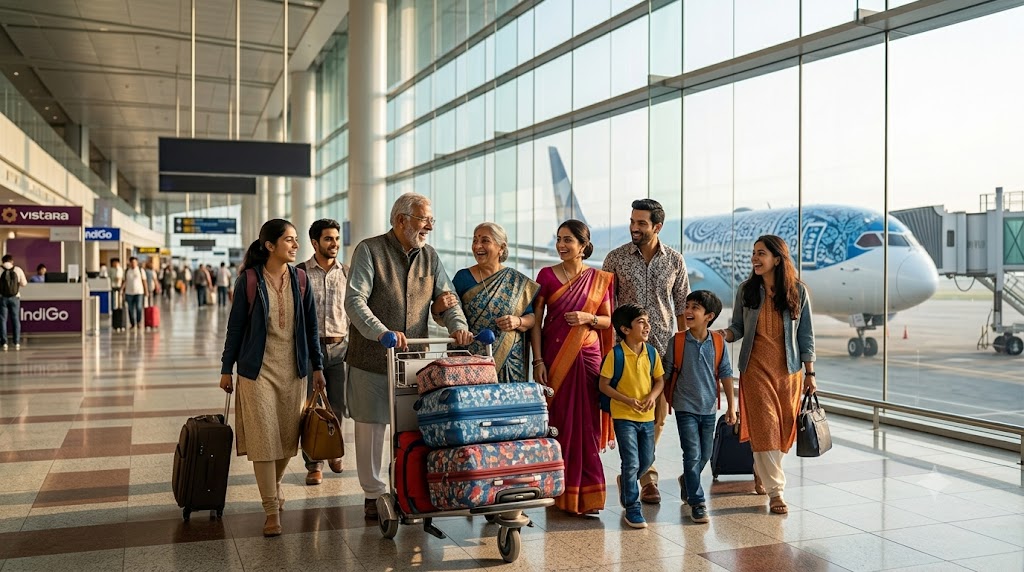
    Indian family with luggage at an international departure gate — NRI travel from Punjab airports
    Two airports, one state: between IXC and ATQ, Punjab’s travellers can reach four continents without touching Delhi.

    Which Airport for Which Trip? The Decision Table

    This is the exact logic our ticketing desk runs on every international enquiry from the Tricity and Punjab:

    Where You’re Going First Check Why
    Dubai / UAE IXC direct (Tricity) or ATQ (Majha/Doaba) Both fly non-stop — pick the nearer airport and the better fare that week
    London / Birmingham ATQ direct Non-stop beats any Delhi connection on total time — often on price too
    Italy / Schengen Europe ATQ (Milan/Rome), else one-stop via Gulf Direct where it exists; Doha/Dubai connections cover the rest of Europe
    Singapore / Malaysia / Bali / Australia ATQ (SIN/KUL) or via Delhi Scoot/AirAsia fares from ATQ are frequently the value winners
    Canada (Toronto) ATQ seasonal direct, else one-stop via Delhi/Europe/Gulf When the seasonal non-stop operates, nothing beats it for Punjab families
    USA One-stop via Dubai/Doha from IXC/ATQ, or Delhi non-stops No direct from Punjab — the Gulf one-stops from home airports are very competitive
    Thailand / Vietnam Via Delhi or via KL/Singapore from ATQ We price both routings — the winner changes with season

    The Smart-Connection Playbook

    Direct routes are only half the story — the other half is using the right hub so the rest of the world stays one stop away from home:

    1. Dubai (from IXC or ATQ): the world’s busiest international hub — Europe, UK, USA, Africa and the Gulf on a single stop, with the IXC departure saving the Delhi road trip entirely.
    2. Doha (from ATQ): Qatar Airways’ network quality makes ATQ–DOH the quiet star for Europe and the Americas — often with the shortest total journey times.
    3. Singapore / Kuala Lumpur (from ATQ): the gateway pair for Australia, New Zealand, Bali and Vietnam — and both cities deserve a stopover day themselves.
    4. Delhi (fallback): unbeatable network, but be honest about the true cost — ~5 hours by road each way from the Tricity, tolls, meals and often a hotel night. We include the IXC–DEL connecting flight or a comfortable cab in the same booking when Delhi genuinely wins.

    Booking Rules for NRI Season (Learn These Before December)

    Punjab’s international travel runs on a diaspora calendar, and it bends every fare rule in the book:

    1. Book peak windows 8–12 weeks out. Baisakhi (April), summer holidays (June–August) and the Diwali-to-wedding stretch (October–December) sell out first on UK, Canada and Gulf routes — waiting never wins in these windows.
    2. Fly mid-week where possible. The Friday–Sunday premium applies double on diaspora routes; a Tuesday departure often funds an extra suitcase.
    3. Watch the seasonal routes early. Toronto non-stops and Italy frequencies are announced by season — we maintain waitlists and book the day schedules open.
    4. Family groups: use group fares. Ten or more travellers unlock airline group blocks with held seats and name flexibility — the biggest saving in wedding-season travel. Our group travel desk handles these end to end.
    5. Check baggage rules per airline, not per habit. Low-cost carriers on SIN/KUL routes price bags separately; UK/Canada legacy fares usually include generous allowances — compare checkout totals, not headline fares.
    6. Keep passports 6+ months valid and check transit-visa rules for your connection point — our visa desk confirms both before you pay for a ticket.
    7. Price all three airports every time. IXC, ATQ and DEL swap the crown week by week — one enquiry to our desk quotes all three, free.

    Students Flying Out of Punjab: A Special Word

    Every intake season, a huge share of our international ticketing is students leaving for the UK, Canada and Australia — and student travel has its own rules worth knowing. One-way international fares are priced very differently from return halves, and the cheapest one-way is not always the airline with the best student baggage allowance — several carriers offer student fare types with extra checked baggage and free date changes, which matter enormously when a visa or accommodation date shifts. From Punjab, the ATQ London non-stops and Gulf one-stops carry the bulk of UK-bound students, Canada intakes swing between the seasonal Toronto non-stop and Delhi/Gulf routings, and Australia flows through Singapore or Kuala Lumpur from ATQ. Our desk books student fare types specifically, checks the two-piece baggage rules against your university city, and times the booking against your visa decision so a delay doesn’t burn the ticket. One honest tip that saves families money every season: do not book a rigid cheap fare before the visa is stamped — the flexi student fare is almost always cheaper in expectation.

    First International Flight from IXC or ATQ? Quick Checklist

    • Reach 3 hours before departure — international check-in counters typically close 60 minutes before the flight, and that cutoff is unforgiving.
    • Passport 6+ months valid from the travel date, plus printed visa/approval where required — soft copies are not always accepted at check-in.
    • Match the name on the ticket to the passport exactly — spelling mismatches are the most common (and most avoidable) airport disaster we fix.
    • Know your transit rules: most Dubai/Doha/Singapore connections on one ticket need no transit visa, but self-transfer bookings on separate tickets can — we verify this before you pay.
    • Web check-in the night before and keep boarding passes offline; airport Wi-Fi has ruined more departures than fog has.

    Frequently Asked Questions

    Which international flights operate directly from Chandigarh airport?

    The flagship is the daily IndiGo non-stop to Dubai (~3h 40m). Other international services from IXC have operated seasonally over the years, so the honest answer for your dates comes from a live schedule check — call +91 99143 10333 and we will confirm in minutes, along with one-stop options via Dubai for onward destinations.

    Does Amritsar have direct flights to London and Canada?

    Yes to London — Air India flies non-stop from Amritsar to the UK (London and Birmingham services) year-round, at roughly 8.5 hours. Toronto operates as a seasonal non-stop timed around peak diaspora windows; outside those months we route via Delhi, the Gulf or Europe on one stop.

    What is the cheapest way to fly to Europe from Punjab?

    It changes by season: ATQ’s direct Milan/Rome and London flights are often surprisingly competitive, while one-stops via Doha, Dubai or Tashkent can undercut them in off-peak months. The reliable rule is booking 6–10 weeks ahead and letting us price the direct against the one-stops for your exact dates.

    Should I fly from Chandigarh, Amritsar or Delhi?

    Route first, then geography: if a direct exists from your nearer Punjab airport, it almost always wins once you count Delhi’s ~5-hour road journey, tolls and hotel-night risk. Delhi earns the trip only for routes neither IXC nor ATQ serves — and even then, we often connect you from IXC by air in the same booking.

    When should I book flights for Diwali or wedding-season travel?

    Eight to twelve weeks ahead, minimum — these are the weeks that break every discount rule, and NRI-heavy routes (UK, Canada, Gulf) fill from the back of the aircraft first. If your dates are fixed by a wedding card, book the moment the card is printed.

    Do I need a transit visa for connections via Dubai, Doha or Singapore?

    On a single ticket with a normal layover, generally no — you stay airside and transit visa-free at these hubs. The exceptions are long layovers where you want to exit the airport, and self-transfer bookings on two separate tickets, where you may need to clear immigration to re-check bags. We confirm the transit rules for your exact routing and passport before issuing any ticket.

    Are there special fares for students flying abroad?

    Yes — several airlines file student fare types on UK, Canada and Australia routes with extra baggage and flexible date changes. They occasionally look slightly costlier than the cheapest promo fare, but with visa timelines in play, the flexibility almost always wins. Share your university city and intake month and we will quote the student options side by side.

    Can Flywings book group travel for a family function abroad?

    Yes — this is a Punjab speciality of ours. Groups of 10+ get airline group blocks with held seats and later name submission, plus coordinated hotels and visas. One WhatsApp with your headcount and dates starts the quote.

    Fly International from Your Own Backyard

    The days when every foreign trip from Punjab began with a taxi to Delhi are over. Between IXC’s Dubai doorway and ATQ’s long-haul network, most of the world is now one flight — or one smart stop — from home. Send us your route and dates, and our ticketing desk will quote Chandigarh, Amritsar and Delhi side by side, with honest advice on which wins. Explore our flight booking desk, read the cheap-flights playbook, or reach us directly:

    Written by Sukhjinder Kaur, Senior Travel Content Writer at Flywings Tour & Packages Pvt Ltd — booking flights from Mohali, Punjab since 2013. Route information reflects published schedules as of July 2026; airlines revise international schedules seasonally, so confirm live options for your dates when you enquire.