Every few years, a destination sits exactly where Bali or Georgia sat before everyone else found them — genuinely stunning, still affordable, and nowhere near as crowded as it will be in five years. Right now, for Indian travellers, that destination is Almaty, Kazakhstan. A green, mountain-ringed city at the foot of the Tian Shan range, with a direct flight from Delhi under five hours, visa-free entry, and landscapes that genuinely surprise first-time visitors who expected something closer to a Soviet-era stereotype than an alpine lake district. At Flywings Tour & Packages Pvt Ltd, Almaty has become one of our fastest-growing enquiries — this guide makes the case for going now, and covers everything you need to plan the trip.
Quick facts before you plan: Kazakhstan is visa-free for Indian passport holders, up to 14 days per visit (maximum 42 days within any rolling 180-day period). Direct flights from Delhi with Air Astana take under 5 hours. Best months are April–June and September–October for sightseeing, December–March for skiing. Most trips run 4–6 days.
Why Almaty, Why Now
Three things line up for Almaty right now in a way they won’t stay lined up forever:
- Visa-free entry that most travellers don’t know about. Unlike the e-Visa processes many Central Asian destinations require, Kazakhstan offers genuine visa-free entry for Indians — no advance paperwork, no waiting on approval.
- A direct flight that makes it genuinely convenient. Under 5 hours from Delhi puts Almaty closer, time-wise, than several Southeast Asian destinations Indian travellers already treat as routine.
- Still-affordable, still-uncrowded. Almaty’s tourism infrastructure is developing quickly, but it hasn’t yet seen the price inflation or crowding that follows once a destination becomes mainstream — the window where “we went before it got popular” is genuinely open today.
What Almaty Actually Feels Like
Set aside any assumption built on Kazakhstan’s Soviet-era reputation — Almaty today is a green, leafy city with wide boulevards, a backdrop of snow-capped peaks visible from most central streets, and a noticeably relaxed pace. It reads more like a Central European alpine city than anything the word “Kazakhstan” might suggest to a first-time visitor, which is precisely the reaction we hear most often from clients returning from their trip. Almaty served as Kazakhstan’s capital until 1997, and the decades as a national capital left it with a scale and infrastructure — museums, theatres, a genuine café culture — that many newer “emerging destination” cities simply haven’t had time to develop yet.
Things to Do in Almaty: The First-Timer’s Shortlist
- Kok-Tobe Hill: a cable car ride to a hilltop park with panoramic city and mountain views — Almaty’s easiest, most reliable “wow” moment, especially near sunset.
- Medeu: the world’s highest-altitude speed skating rink, set at nearly 1,700 metres in a dramatic mountain valley just outside the city — worth visiting even if you don’t skate, purely for the setting.
- Shymbulak: Kazakhstan’s premier ski resort, reachable by cable car from Medeu — a ski destination in winter, and a scenic high-altitude walk in summer.
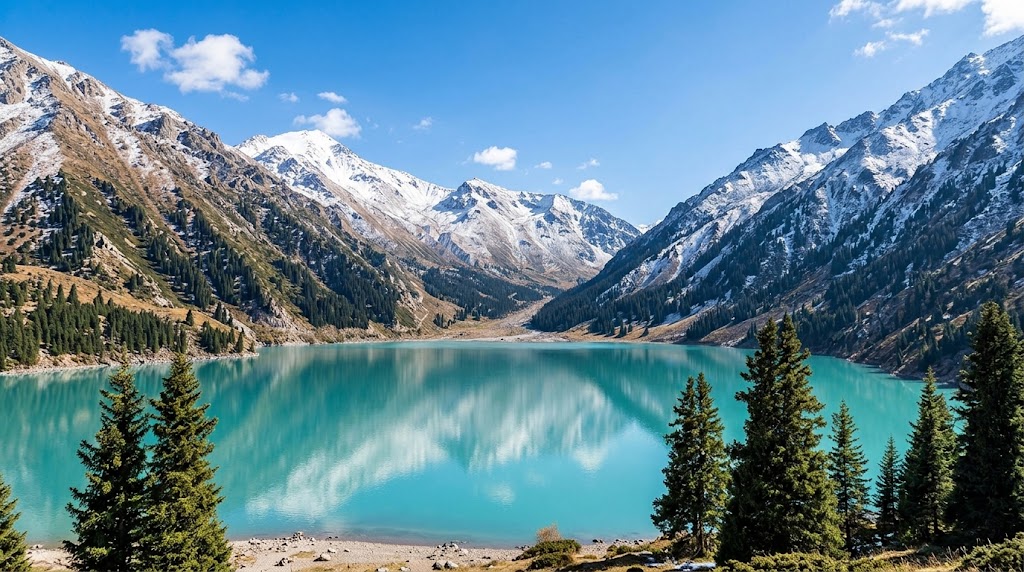
- Big Almaty Lake: a turquoise alpine lake roughly an hour from the city, ringed by snow-dusted peaks — one of the most photographed spots in the region and a genuinely easy half-day trip.
- Green Bazaar: a lively covered market for local produce, dried fruits, nuts and Kazakh specialities — an easy, atmospheric way to spend an hour between bigger excursions.
- Zenkov Cathedral: one of the world’s tallest wooden buildings, built without a single nail, sitting inside the leafy Panfilov Park.
The Signature Day Trip: Charyn Canyon
Often called the “Grand Canyon of Kazakhstan,” Charyn Canyon is roughly a 3-hour drive from Almaty and, for most visitors, the single most dramatic day trip in the region — layered red-rock formations stretching for kilometres, dramatically different from anything else on a typical Almaty itinerary. It’s a full-day excursion, usually arranged with a private driver, and one we build into almost every Almaty package regardless of trip length, since it delivers a genuinely different landscape from the city’s alpine scenery.

What to Eat in Almaty
Kazakh cuisine reflects the country’s nomadic history — hearty, meat-forward, and built for cold climates, with plenty of variety for adventurous eaters:
- Beshbarmak: Kazakhstan’s national dish — boiled meat (usually horse or lamb) served over wide pasta sheets with onion sauce, traditionally eaten by hand.
- Plov: a rice pilaf with meat, carrots and spices, shared across much of Central Asia with regional variations.
- Kazy: horse-meat sausage, a delicacy at celebrations and a genuine local speciality worth trying at least once.
- Baursak: small fried dough pieces, often served with tea or honey — a common breakfast or snack item.
- Shubat and kumis: fermented camel and mare’s milk respectively — an acquired taste, but a genuinely unique local experience for curious travellers.
Almaty’s restaurant scene also includes plenty of international and Russian-influenced options for travellers who want a break from local specialities, and the Green Bazaar remains the easiest place to sample several items in one visit.
Almaty vs Other Emerging Destinations
Since Almaty is often mentioned alongside other under-the-radar picks, here’s an honest comparison for travellers weighing options:
| Almaty | Georgia (Tbilisi) | Uzbekistan (Tashkent/Samarkand) | |
|---|---|---|---|
| Visa for Indians | Visa-free, 14 days | Visa-free, 1 year | e-Visa required |
| Direct flight from India | Yes, Delhi, under 5 hours | Limited direct options | Limited direct options |
| Signature landscape | Alpine mountains, canyons, lakes | Wine country, mountains, coastline | Silk Road architecture, desert cities |
| Best for | Nature and mountain scenery, quick trips | Longer, varied trips mixing nature and city | History and architecture-focused travellers |
Almaty’s edge is specifically the combination of a direct flight and visa-free entry with genuinely dramatic scenery — several other emerging Central Asian and Caucasus destinations ask for more effort (longer routing, e-Visa applications) to reach a comparable “wow” factor. For a first offbeat international trip, that lower-friction entry point often matters as much as the scenery itself in deciding whether the trip actually gets booked rather than staying on a someday list.
Almaty Culture and Etiquette Notes
- A secular, multicultural country: Kazakhstan is majority Muslim but constitutionally secular, with a notably relaxed, cosmopolitan atmosphere in Almaty compared to what “Central Asia” might suggest.
- Russian is widely spoken alongside Kazakh, and English is increasingly common in hotels and tourist-facing businesses, though a translation app is still genuinely useful for markets and local eateries.
- Hospitality runs deep: Kazakh culture places a strong emphasis on hospitality, especially around food and tea — accepting an offered meal or tea graciously is culturally significant.
- Dress code is relaxed in the city itself, though modest dress remains sensible at religious sites and in more rural areas visited on excursions.
- Tipping is appreciated in restaurants and for guides/drivers but not rigidly expected — 10% is a reasonable norm where service charge isn’t already included.
Sample 5-Day Itinerary
- Day 1 — Arrival: Land in Almaty, transfer to hotel, evening at leisure — Panfilov Park and Zenkov Cathedral work well for a gentle first walk.
- Day 2 — City Highlights: Kok-Tobe Hill cable car, Green Bazaar, and central Almaty’s boulevards and cafés.
- Day 3 — Mountains: Medeu ice rink and the Shymbulak cable car — a full day at altitude with some of the trip’s best views.
- Day 4 — Charyn Canyon: A full-day excursion to the canyon, returning to Almaty in the evening.
- Day 5 — Big Almaty Lake and Departure: A morning trip to the lake before an afternoon departure, or extend a day if your schedule allows.
Travellers with an extra day or two often add Kaindy and Kolsay Lakes — a further pair of alpine lakes slightly beyond Charyn Canyon’s route — for a deeper nature-focused extension.
Visa-Free Entry: The Detail Most Travellers Get Wrong
Kazakhstan offers Indian passport holders genuine visa-free entry — up to 14 consecutive days per visit, with multiple visits permitted within a rolling 180-day period up to a combined 42 days. This is a meaningfully simpler process than many travellers assume, and simpler than several other emerging destinations that require e-Visa applications. For stays longer than the visa-free window, an e-Visa is available — relevant mainly for extended trips rather than a standard holiday. As always, carry the standard documents: passport valid 6+ months from your travel date, a return or onward ticket, and proof of accommodation.
Best Time to Visit Almaty from India
| Months | Conditions | Verdict |
|---|---|---|
| April – June | Mild spring weather, mountains turning green, lower crowds | Excellent for city + nature sightseeing |
| July – August | Warm summer, best access to high-altitude lakes and canyons | Good for full outdoor itineraries, including Charyn Canyon |
| September – October | Clear autumn skies, comfortable temperatures | Arguably the best window — photography-friendly light and thinning crowds |
| December – March | Cold, snowy, ski season at Shymbulak | The pick for skiers; city sightseeing needs serious winter layers |
Getting to Almaty from Chandigarh, Amritsar and Delhi
Air Astana operates a direct Delhi–Almaty route, with flight time under 5 hours — genuinely convenient by international standards. Chandigarh and Amritsar travellers connect through Delhi, and our ticketing desk prices the combined routing as one itinerary, applying the same booking-window logic from our cheap flights guide to secure the best combined fare.
What to Pack for Almaty
- Layered clothing year-round — Almaty’s continental climate swings meaningfully between day and night even in summer.
- Proper winter layers for December–March — genuinely cold, especially at altitude around Shymbulak.
- Comfortable walking shoes — the city is walkable, and excursions to the lake and canyon involve some uneven terrain.
- Sunscreen and sunglasses — UV exposure at altitude around Medeu and Shymbulak is stronger than it feels.
- A universal power adapter — Kazakhstan uses European-style two-pin sockets.
- Cash in Kazakhstani Tenge for markets and smaller vendors, alongside cards for hotels and restaurants.
Money-Saving Tips from Our Desk
- Book the direct Delhi–Almaty flight early. As the route grows in popularity, fares on this still-emerging corridor are likely to firm up — early booking protects today’s more accessible pricing.
- Visit in shoulder season (April–June or September–October) for lower rates than peak summer or ski season.
- Combine Charyn Canyon with Kaindy/Kolsay Lakes in one longer excursion day rather than two separate trips, saving on transport costs.
- Eat where locals eat. Kazakh cuisine at neighbourhood spots costs a fraction of hotel restaurant prices and is often better.
- Travel as a small group if possible — private driver costs for day trips like Charyn Canyon split favourably across 3–4 travellers.
Beyond Almaty: Worth the Extension
- Kaindy and Kolsay Lakes: a further pair of alpine lakes beyond Charyn Canyon’s route — Kaindy is famous for its sunken forest, tree trunks rising from the lake’s surface, submerged after a landslide-triggered flood over a century ago.
- Astana (Nur-Sultan): Kazakhstan’s futuristic capital, a domestic flight away, offering a striking architectural contrast to Almaty’s green, mountain-backed setting — worth considering for trips of a week or more.
- Turkistan: a historic Silk Road city further afield, home to the Mausoleum of Khoja Ahmed Yasawi, for travellers wanting to extend into Kazakhstan’s deeper history.
None of these are necessary for a first, focused Almaty trip — but they’re worth knowing about for travellers who fall for the region and want to return, or who have the extra days to extend a first visit. We treat these as a second-trip conversation with most clients, since a first Almaty visit is already full without stretching into a second city.
What’s Genuinely Worth the Splurge
- A private driver for the full Charyn Canyon day, rather than a shared group tour — the extra flexibility on timing and stops is worth it for the canyon’s remote setting.
- A mountain-view hotel room in Almaty — many properties offer genuine Tian Shan views, a small upgrade that meaningfully changes the stay.
- A proper Kazakh meal at a traditional restaurant, rather than sticking only to international options — one of the most-remembered parts of the trip according to client feedback.
Common Almaty Myths We Correct Every Week
| What People Assume | The Reality |
|---|---|
| “Kazakhstan needs a complicated visa process.” | Indian passport holders get genuine visa-free entry for up to 14 days per visit — one of the simpler entry processes in the region. |
| “It’s all flat steppe, nothing scenic.” | Almaty sits directly at the foot of the Tian Shan mountains, with alpine lakes, canyons and ski resorts all within day-trip distance. |
| “There’s no direct flight, it’s a hassle to reach.” | Air Astana flies direct from Delhi in under 5 hours — genuinely convenient compared to many longer-haul “offbeat” destinations. |
| “It’s not really set up for tourists yet.” | Almaty’s tourism infrastructure — hotels, English-speaking guides, organised day trips — is well-developed for a city its size, without yet feeling overrun. |
The Two Faces of a Single Trip: City and Mountains
What makes Almaty’s itinerary work so cleanly is that the city and its surrounding mountains genuinely feel like two different trips compressed into one short flight — no multi-city routing or extra visas required, unlike similar contrasts elsewhere in the world. A morning at the Green Bazaar or Panfilov Park feels like a European city break; an afternoon at Big Almaty Lake or Shymbulak feels like a Himalayan mountain trip. Few destinations this accessible from India offer that specific combination without asking travellers to add a second flight or a second visa application to get it.
Planning Around Almaty’s Growing Popularity
Part of the case for going now is straightforward: destinations that combine a direct flight, visa-free entry and genuinely photogenic landscapes rarely stay quiet for long. Almaty’s tourism numbers from India are climbing, hotel inventory is still catching up in peak months, and the direct Delhi route is a relatively recent, still-maturing addition to the network. None of this is urgent in a way that should rush a booking decision — but travellers weighing “this year or next” should know the early-mover pricing and availability advantage is a real, if narrowing, one, much like Bali or Georgia’s own early years before wider popularity reshaped what a trip there cost.
Who Almaty Is Perfect For
- Repeat international travellers who’ve done the standard Southeast Asia and Gulf circuit and want somewhere genuinely different.
- Nature and mountain lovers who want alpine scenery without the altitude-sickness planning a Himalayan trip like Spiti Valley requires.
- Photography-focused travellers drawn to Charyn Canyon’s dramatic light and Big Almaty Lake’s turquoise water.
- Families wanting an easy first Central Asia trip — the direct flight and visa-free entry remove most of the friction that usually comes with “offbeat” destinations.
- Winter sports travellers — Shymbulak offers a genuine ski destination well outside India’s usual winter-holiday circuit.
Booking a Package vs Planning Almaty Yourself
| DIY | Flywings Almaty Package | |
|---|---|---|
| Destination research | Limited English-language content compared to established destinations | Built from our own growing experience booking this route |
| Day trip logistics | Arranging Charyn Canyon transport independently | Pre-arranged private driver as part of the itinerary |
| Seasonal planning | Easy to underestimate how cold winter gets | Packing and itinerary advice matched to your travel month |
| Flight routing | Direct flight availability and fares tracked independently | Priced as part of one combined Chandigarh/Delhi–Almaty itinerary |
| When something goes wrong | Limited local support network for a newer destination | A human in Mohali, a phone call away |
Frequently Asked Questions
Do Indians need a visa for Kazakhstan?
No — Kazakhstan offers Indian passport holders visa-free entry for up to 14 consecutive days per visit, with a combined maximum of 42 days within any rolling 180-day period. An e-Visa is available for longer stays beyond this window.
Is there a direct flight from India to Almaty?
Yes — Air Astana operates a direct Delhi–Almaty route, with flight time under 5 hours. Chandigarh and Amritsar travellers connect through Delhi as part of one combined itinerary.
How many days are needed for an Almaty trip?
4–6 days comfortably covers the city highlights, Medeu/Shymbulak, and a full-day Charyn Canyon excursion. Travellers with more time often extend to include Kaindy and Kolsay Lakes.
Is Almaty good for families?
Yes — the direct flight, visa-free entry, and manageable city size make it an easier “offbeat” first trip for families than many alternatives, though winter travel needs serious cold-weather preparation for young children.
What is the best time to visit Almaty?
April–June and September–October offer the best sightseeing conditions — mild weather and good access to mountain excursions. December–March suits skiers heading to Shymbulak, with proper winter gear essential.
Is Charyn Canyon worth the day trip?
Almost universally, yes — it’s the single most dramatic landscape near Almaty and looks nothing like the city’s alpine surroundings, giving the trip genuine visual variety. We include it in nearly every Almaty itinerary we book.
Can Flywings arrange the full Almaty itinerary as one package?
Yes — flights, hotels, the Charyn Canyon excursion, and city/mountain sightseeing are all bundled into one itemised quote. Tell us your travel dates and group size to get started.
Is Almaty safe for Indian travellers?
Yes — Almaty is generally considered a safe, well-organised city for tourists, with a visible, cosmopolitan atmosphere and well-developed hotel and guide infrastructure for its size. Standard travel precautions apply, as with any international trip.
What language do people speak in Almaty — will English work?
Kazakh and Russian are the primary languages, with English increasingly common in hotels, airports and tourist-facing businesses. A translation app is genuinely useful for markets and smaller local restaurants, similar to travelling in much of Central and Eastern Europe.
Can I extend an Almaty trip to see more of Kazakhstan?
Yes — Astana (the capital) is a domestic flight away and offers a striking architectural contrast, while Kaindy and Kolsay Lakes extend the nature-focused side of a trip. Neither is essential for a first visit, but both suit travellers with a week or more.
Go Before Everyone Else Discovers It
Almaty has the rare combination of genuine scenic drama, real convenience (direct flight, visa-free entry) and a still-early window before wider popularity changes the pricing and crowds. Explore more of our international tour packages from Chandigarh, or reach us directly to start planning:
- Call / WhatsApp: +91 99143 10333 · Landline: 0172-4736185
- Email: sales@flywingstour.co.in
- Visit us: SCF 29, First Floor, Phase 7, Mohali (Chandigarh Tricity) — get directions
Written by Sukhjinder Kaur, Senior Travel Content Writer at Flywings Tour & Packages Pvt Ltd — booking flights and holidays from Mohali, Punjab since 2005. Visa requirements and seasonal guidance verified as of July 2026; entry rules and flight schedules can change, so confirm current details when you enquire.