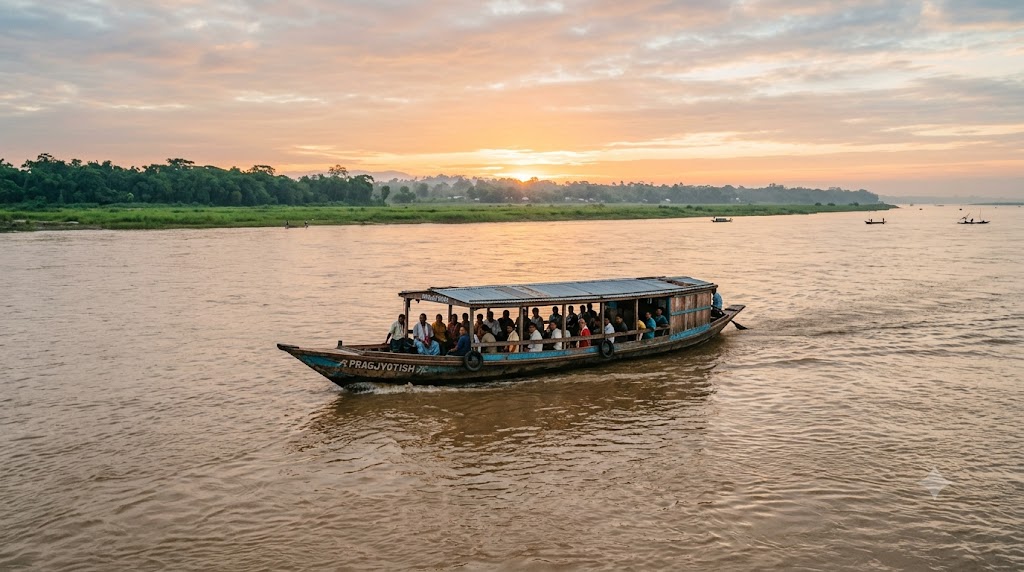
Tag: Northeast India

  • Jorhat and Majuli Tour Package from Chandigarh: Assam’s 493 Percent Destination

    Jorhat and Majuli Tour Package from Chandigarh: Assam’s 493 Percent Destination

    Jorhat posted a 493 percent jump in traveller searches this year, the sharpest rise of any Indian destination we found while researching this year’s content calendar, and yet we could not find a single “Jorhat package from Chandigarh” or “Majuli package from Chandigarh” guide anywhere. What exists is a handful of generic pan-India Majuli write-ups and local Assam travel-agent listing pages, nothing built for someone actually planning this trip from Punjab. That gap is exactly what this guide fills, tea-estate culture in Jorhat, a river-island spiritual retreat in Majuli, and the ferry logistics that tie the two together. Search spikes this dramatic tend to precede a wave of generic content, thin listicles copying each other’s bullet points once a destination trends, and right now that wave has not arrived yet, which is exactly why a genuinely useful planning guide has real value while the window is still open.

    Why This Surge Is Different From a Typical Trend Spike

    Most sudden destination search spikes fade as quickly as they arrive, driven by a single viral photo or a short news cycle. Jorhat and Majuli’s rise looks more structural. The no-permit accessibility genuinely differentiates it from most of the rest of Northeast India, where Inner Line Permits add friction for anyone planning on short notice, Majuli’s mask-making GI tag in 2024 gave the island a fresh, concrete news hook beyond generic scenery appeal, and the broader domestic shift toward “offbeat, culturally rich” travel, the same pattern driving interest in Varanasi and Sikkim this year, gives this destination tailwind that a single viral moment would not.

    Quick context: Unlike Tawang or parts of Nagaland, Majuli and Jorhat need no Inner Line Permit for Indian tourists at all, just a valid photo ID. That, combined with the search surge, is a big part of why this destination is moving from unknown to mainstream so quickly.

    Two Places, One Genuinely Different Trip

    Jorhat and Majuli sit close together geographically, a short ferry ride apart, but they deliver almost entirely different experiences, which is why we are treating them as a paired trip rather than one destination with two names.

    • Jorhat is Assam’s tea capital, colonial-era planter bungalows, working tea estates open to visitors, and a genuine window into the industry behind the cup of Assam tea most Indian households drink daily.
    • Majuli is the world’s largest river island, formed by the Brahmaputra, and the spiritual heart of Assamese Vaishnavism, home to living monasteries called Satras that have preserved centuries-old dance, music, and mask-making traditions.

    Most first-time visitors expect one or the other to be the “main” destination and the second an add-on. In practice, they earn roughly equal time, and skipping either one leaves a real gap in the trip.

    Getting There from Chandigarh

    There is no direct flight from Chandigarh, but the routing is more straightforward than it looks. Delhi to Guwahati runs on multiple daily non-stop flights across several airlines, and Guwahati to Chandigarh is itself well served with around 20 daily flights on the return leg, meaning Guwahati functions as a genuine two-way hub rather than a one-directional stopover. From Guwahati, Jorhat is reachable either by a short domestic flight into Jorhat’s own Rowriah Airport, connected by non-stop flights from Guwahati and Kolkata, or by a scenic road journey of around five to six hours if you would rather see the Brahmaputra valley on the way in.

    The Ferry: The Detail That Makes or Breaks This Trip

    This is the single most important practical detail in this entire guide, more than flights, more than hotels. Majuli is reached from Jorhat via a ferry from Nimati Ghat, and getting this timing wrong is the most common way a well-planned Jorhat-Majuli trip goes sideways.

    Detail What to Know
    Crossing time Roughly 1.5 hours from Nimati Ghat to Majuli
    Typical operating window Ferries generally run between 8 AM and 4 PM, with the first departure from Majuli around 7:30 AM and the last around 3:15 PM
    Fare Modest, typically in the range of 15 to 30 rupees per person for a standard passenger ferry
    Schedule reliability Genuinely inconsistent. Most ferries do not run on a fixed published timetable the way a city bus does, and timings shift with river conditions
    Monsoon risk July to September sees frequent flooding-related disruption, with services occasionally suspended entirely for days at a time

    The practical takeaway: never plan a same-day return crossing as your only option, and never schedule your Majuli visit for the July-to-September window if you can avoid it. Build in a buffer day, confirm the day’s ferry schedule locally the morning of travel rather than trusting an online timetable, and treat any Majuli itinerary as needing at least one overnight stay on the island rather than a rushed day trip.

    What to Do in Jorhat

    • Tea estate visits, several working estates around Jorhat welcome visitors for guided walks through the plantation, a tour of the processing factory, and a proper tasting session, a genuinely different experience from simply drinking tea at home
    • Colonial planter bungalow stays, a number of heritage tea-estate bungalows now operate as boutique accommodation, offering a level of old-world charm that is hard to find outside this specific region
    • Kaziranga National Park, roughly a two-hour drive away, home to the one-horned rhinoceros and a natural extension for anyone with an extra day or two, though it deserves its own dedicated write-up rather than a rushed add-on

    What to Do in Majuli

    • Satra visits, the island’s monasteries are living institutions, not museum pieces, and visitors can observe monks practising traditional dance and music forms that trace back to the 15th-century Vaishnavite reformer Srimanta Sankardev
    • Mask-making workshops, Majuli’s mukha shilpa tradition received a Geographical Indication tag in March 2024, a formal recognition of a craft found essentially nowhere else in India, and several Satras welcome visitors to watch the process
    • Cycling the island, Majuli is flat, rural, and genuinely rewarding to explore by bicycle, rice paddies, small villages, and river views without the need for a vehicle
    • Sunset at the riverbank, simple, unstructured, and consistently rated by visitors as one of the most memorable parts of the trip
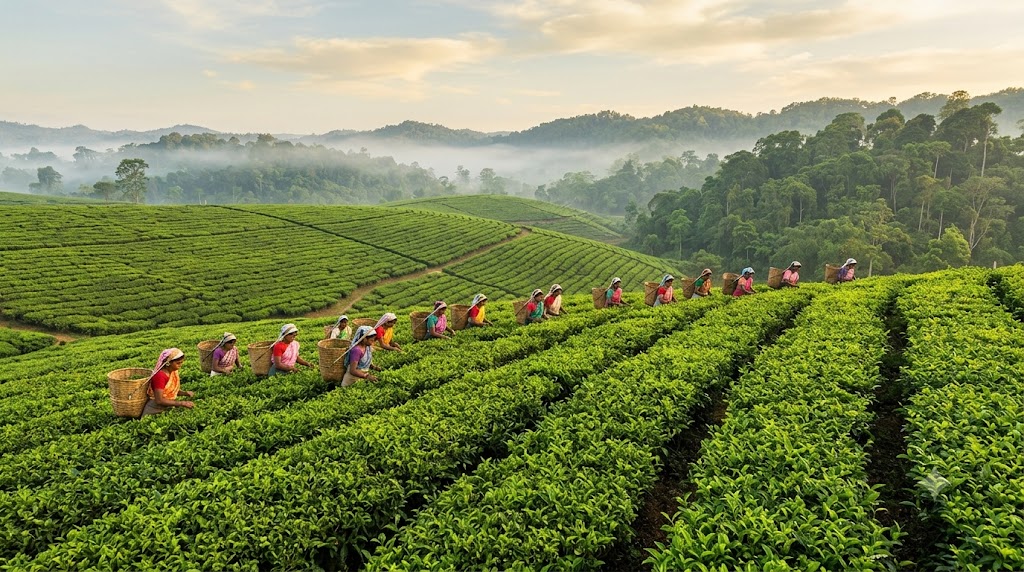
    Green tea plantation rows stretching to the horizon with workers picking leaves near Jorhat Assam
    A working tea estate near Jorhat, the industry behind the cup of Assam tea most Indian households drink daily

    A Sample 6-Day Itinerary

    • Day 1: Arrive Guwahati, connect to Jorhat by flight or road, evening at leisure
    • Day 2: Full Jorhat day, tea estate tour and tasting, planter bungalow stay
    • Day 3: Morning ferry to Majuli, check in, first Satra visit
    • Day 4: Full Majuli day, mask-making workshop, cycling the island, sunset at the riverbank
    • Day 5: Morning ferry back to Jorhat, optional half-day Kaziranga detour if time allows, or a relaxed final Jorhat morning
    • Day 6: Return to Guwahati for departure

    This pacing gives both halves of the trip proper time and builds in the ferry-schedule flexibility this route genuinely needs rather than assuming a tight same-day crossing will work as planned.

    Best Time to Visit

    Window Conditions
    October to March The clear recommended window, dry weather, reliable ferry schedules, and comfortable temperatures for both the tea estates and the island
    April to June Warmer and more humid but still workable, with fewer crowds than the peak winter months
    July to September Monsoon season, avoid if possible, since Brahmaputra flooding routinely disrupts ferry schedules and can cut off parts of Majuli entirely

    What to Eat

    Assamese food is distinct from both mainland Indian and the rest of Northeast Indian cuisine, built around simplicity, fresh river fish, and a lighter use of oil and spice than most Indian regional cooking.

    • Assamese thali, typically rice, dal, a fish curry, and a mix of seasonal vegetable preparations, often finished with khar, a distinctive alkaline preparation unique to the region
    • Fish curry (masor tenga), a tangy, light fish preparation, often made with tomato or elephant apple, a genuine regional speciality worth seeking out over a generic hotel menu
    • Pitha, rice-based sweet and savoury cakes, particularly associated with Assamese festivals but available year-round in local eateries
    • Assam tea itself, obviously, and a proper tasting session at a working estate in Jorhat is a genuinely different experience from a teabag at home
    • Betel nut and paan, offered as a customary gesture of hospitality in many Assamese homes and at Satras, worth trying at least once if offered

    Vegetarian travellers are reasonably well catered for in Jorhat’s hotels and restaurants, though Majuli’s food options are simpler and more limited given the island’s smaller scale, worth flagging dietary needs to your homestay or guide in advance.

    Practical and Packing Notes

    • Carry cash, particularly for Majuli, where card acceptance is limited outside the larger guesthouses, and small ferry and local transport fares are cash-only.
    • Book Majuli accommodation in advance during the October-to-March peak, since the island’s homestay and guesthouse capacity is genuinely limited compared to a mainstream hill-station destination.
    • Dress modestly when visiting Satras, and be mindful that some monastery areas restrict photography during active prayer or practice sessions, worth checking with your guide before assuming it is allowed.
    • Mobile network coverage on Majuli is patchy, genuinely part of the island’s appeal for anyone wanting to properly disconnect, but worth planning around if you need to stay reachable.

    Who This Trip Is Not For

    Worth saying honestly. If a fixed, predictable schedule matters more than anything else, the ferry’s informal timing will be a genuine source of frustration rather than charm. If five-star resort infrastructure is the expectation, Majuli in particular operates at a homestay-and-guesthouse level of comfort, clean and welcoming but simple, not luxurious. And travellers wanting a well-trodden, Instagram-familiar circuit may find the lack of established tourist infrastructure here more effort than reward. For travellers drawn to genuine cultural depth, living traditions rather than staged performances, and a destination that still feels like an actual discovery, this delivers exactly what the search surge suggests it does.

    Jorhat-Majuli vs Sikkim vs Meghalaya

    Since a lot of our Chandigarh clients are comparing Northeast India options generally rather than this route specifically, here is the honest positioning.

    Factor Jorhat-Majuli Sikkim Meghalaya
    Terrain Flat river-island and plains, very different from a typical Northeast hill trip High-altitude Himalayan, mountains and passes Rolling hills and living root bridges, moderate altitude
    Permits None needed for the core circuit Needed for Nathula and North Sikkim specifically None needed for the standard circuit
    Signature experience Living monastery culture, tea estates, mask-making craft Alpine valleys, Buddhist monasteries, high mountain passes Living root bridges, waterfalls, caving
    Tourist infrastructure maturity Still developing, genuinely offbeat Well established Moderately established, particularly around Shillong and Cherrapunji

    Our honest read: if you have already done Sikkim or Meghalaya and want something that still feels like a discovery, Jorhat and Majuli deliver that in a way neither of the more established Northeast circuits can right now, precisely because so few people have been yet.

    Jorhat-Majuli for Family and Group Trips

    This route suits culturally curious families reasonably well, Jorhat’s tea estates in particular offer an easy, low-exertion day that works for a wide age range, and cycling Majuli is manageable for most fitness levels. The ferry crossing itself is calm and generally comfortable, though families with very young children should factor in the crossing’s informal timing when planning the rest of the day around it. For groups of friends specifically, the combination of genuine novelty, affordability, and a destination few people in their circle will have already visited makes this an increasingly appealing pick for a trip that stands out from the usual rotation.

    Cost Shape, Without Fixed Numbers

    We are not publishing fixed price tags, since cost depends on season, whether you choose a heritage tea-estate bungalow or a standard hotel, and how many days you add for Kaziranga, but the relative shape is favourable. This remains a genuinely affordable domestic trip compared to most hill-station or beach alternatives, the Majuli ferry crossing itself costs next to nothing, and Assam’s overall cost of accommodation and food runs noticeably below what a comparable Himachal or Uttarakhand trip would. Reach out and we will build a real, itemised quote for your dates within 24 hours, no obligation.

    Who This Trip Suits

    • Culture and heritage-focused travellers drawn to Majuli’s living monastery traditions and craft heritage rather than a checklist of viewpoints
    • Photography enthusiasts, given the combination of tea-estate landscapes, river light, and genuinely distinct cultural subject matter
    • Travellers who have already done the well-worn Northeast circuit (Shillong, Gangtok) and want something that still feels like a real discovery
    • Anyone comfortable with a bit of logistical flexibility, given the ferry schedule’s informal nature, this is not a trip for travellers who need every hour planned to the minute

    Booking Timing

    Two things are worth acting on given how recent this search surge is. First, Majuli’s homestay and guesthouse capacity is genuinely limited, nothing close to the room inventory a mainstream hill station carries, so peak-season (October to March) accommodation is worth booking well ahead rather than assuming last-minute availability the way you might for a larger destination. Second, flight pricing on the Delhi-Guwahati and Guwahati-Jorhat legs tends to firm up as demand grows, and given the scale of this year’s search increase, earlier booking captures pricing from before that demand fully materialises in fares.

    Frequently Asked Questions

    Is a permit needed to visit Jorhat or Majuli?

    No, Indian tourists need no Inner Line Permit for either destination, just a valid photo ID, unlike Tawang or parts of Nagaland where permits are required.

    Is there a direct flight from Chandigarh to Jorhat?

    Not from Chandigarh directly. The trip routes through Guwahati, which has strong flight connectivity in both directions, followed by a short domestic flight or a five-to-six-hour road journey to Jorhat.

    How many days does a Jorhat-Majuli trip need?

    Six days covers both destinations comfortably, including at least one overnight stay on Majuli itself rather than a rushed day trip. Four days works for a shorter version that skips the Kaziranga extension.

    Is the Majuli ferry safe and reliable?

    Generally safe, but not reliable in the way a scheduled city service is. Timings shift with river conditions and are not always published accurately in advance, which is why we recommend confirming the day’s schedule locally rather than trusting an online timetable, and avoiding the July-to-September monsoon window entirely.

    What is Majuli’s mask-making tradition?

    Known as mukha shilpa, it is a centuries-old craft practised in the island’s Satras, used to create elaborate masks for traditional dance and drama performances tracing back to the 15th-century Vaishnavite reformer Srimanta Sankardev. The craft received a Geographical Indication tag in March 2024.

    Can this trip be combined with Kaziranga National Park?

    Yes, and it is a natural extension for wildlife enthusiasts, roughly a two-hour drive from Jorhat. Add at least one extra day if including it, since the park deserves proper time rather than a rushed half-day stop.

    Is Jorhat-Majuli safe for solo and women travellers?

    Yes, Assam is generally considered a safe state for tourism, and the Jorhat-Majuli circuit specifically sees a warm, welcoming reception given how genuinely pleased locals are that visitors are discovering the region. As with any offbeat destination, sticking to established homestays and guides rather than fully improvised arrangements is the sensible approach.

    What should first-time visitors know that generic guides miss?

    That the ferry schedule genuinely is not fixed the way most travel content implies. Build slack into the itinerary around the crossing rather than treating the published timetable as reliable, and this becomes a smooth, memorable trip rather than a stressful one.

    Get Ahead of the Search Curve

    A 493 percent search jump this sharp does not stay under-the-radar for long, and booking now, while genuine planning content and competitive pricing both still exist for this route, is worth doing before the rest of the market catches up. Explore more India tour packages from Chandigarh, compare it against our Sikkim guide if you are weighing Northeast India trips generally, or call us directly at +91 99143 10333 for an itinerary with the ferry logistics planned properly from the start, whether that is a focused four-day trip or the fuller six-day version with a Kaziranga extension built in. Flywings team since 2005.
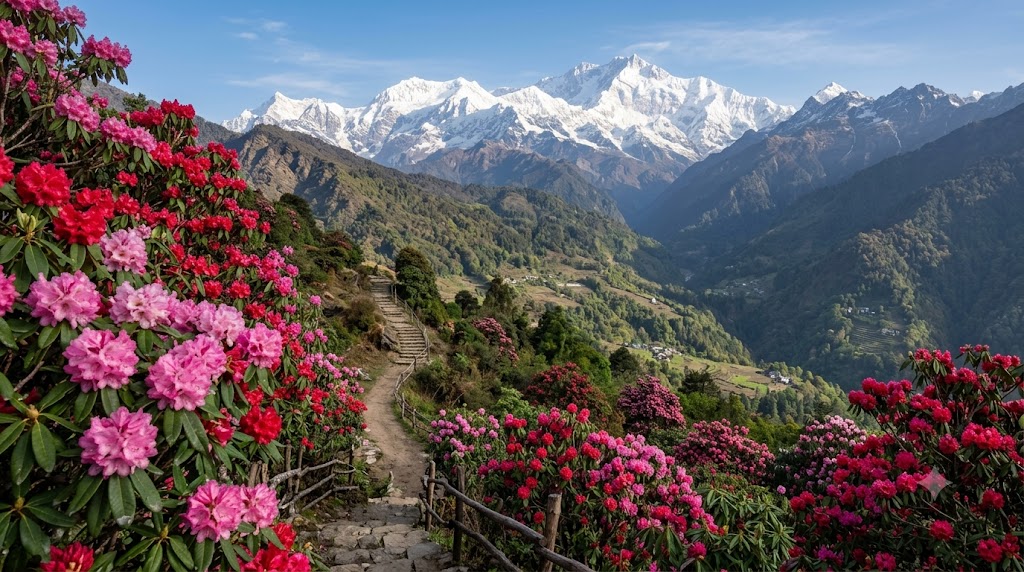
  • Sikkim Tour Package from Chandigarh: The Permit-Free Half and the Permit-Required Half

    Sikkim Tour Package from Chandigarh: The Permit-Free Half and the Permit-Required Half

    Sikkim confuses first-time visitors in one specific way, and it is not the altitude or the weather. It is the permits. Half the state needs nothing beyond a standard photo ID, and the other half needs a specific document arranged in advance, and almost no generic package page draws that line clearly. Sikkim crossed 1.2 million visitors by October 2025 alone and is on a genuine upward trend, but the “Sikkim package from Chandigarh” results we checked while researching this guide mostly gloss over the one detail that actually determines whether your itinerary works as planned. This guide starts there, then walks through the route. Most of the top-ranking “Sikkim package from Chandigarh” pages we checked list Nathula, Yumthang, and Gangtok side by side as if they carry identical planning requirements, which is exactly the kind of oversimplification that leaves a first-time visitor either under-planning the permit leg or avoiding it entirely out of unnecessary caution. We are structuring this whole guide around that permit line deliberately, since it is the single detail that most often turns a well-planned Sikkim trip into a frustrating one, either a group that skips North Sikkim entirely because they assumed the paperwork would be too complicated, or a group that shows up expecting to drive straight to Yumthang Valley without realising a permit needs to be arranged first.

    Why the Permit Confusion Happens

    Sikkim’s border with China and its history as a former independent kingdom that merged with India only in 1975 both feed into a general sense that the whole state operates under special rules, which is only half true. The Inner Line Permit system that applies broadly across several Northeast Indian states does not apply to Sikkim’s main tourist circuit for Indian citizens at all. What does apply is a narrower, destination-specific Protected Area Permit for the border-adjacent and high-security zones, Nathula Pass sits right at the India-China border, and North Sikkim’s Lachen and Lachung valleys sit close enough to sensitive areas that the same logic applies. Once you separate “permit needed because of proximity to the border” from “permit needed because it is Sikkim,” the whole system becomes far less confusing.

    Shorter and Longer Variants

    Trip Length What to Include
    4 days Gangtok and Pelling only, the permit-free half, no PAP paperwork needed at all
    5 to 6 days Add Nathula and Tsomgo Lake as a single day-trip PAP addition to the 4-day base
    7 to 8 days The full route described above, Gangtok, Nathula-Tsomgo, North Sikkim, and Pelling
    10+ days Extend into Darjeeling given the shared Bagdogra gateway, or add Gurudongmar Lake as a further North Sikkim extension for travellers comfortable with the additional altitude

    Quick context: Indian citizens need no permit at all for Gangtok, Pelling, or Ravangla. A Protected Area Permit is required for Nathula Pass, Tsomgo Lake, and all of North Sikkim beyond Chungthang, including the Yumthang Valley. Both halves are worth visiting, but they need different planning.

    The Permit-Free Half

    Indian nationals travelling to Gangtok, Pelling, Ravangla, and most of the popular tourist circuit in East and West Sikkim need no Inner Line Permit or Protected Area Permit at all, just a valid government photo ID, the same as any other domestic Indian trip. This surprises a lot of first-time visitors who assume, because Sikkim borders China and shares that reputation with other Northeast states, that some kind of permit applies everywhere in the state. It does not, for this half.

    • Gangtok, the capital, with the MG Marg promenade, the Ropeway cable car, and Rumtek Monastery, one of the largest and most significant Buddhist monasteries in Sikkim
    • Pelling, known for its Kanchenjunga sunrise views and the Pemayangtse and Khecheopalri lake circuit
    • Ravangla, home to the large Buddha Park statue and quieter mountain views than the more crowded Gangtok viewpoints

    This half alone is enough for a solid four to five day trip and needs zero advance paperwork beyond your normal ID.

    The Permit-Required Half

    A Protected Area Permit, commonly shortened to PAP, is required for Nathula Pass, Tsomgo (Changu) Lake, Baba Mandir, and everything in North Sikkim beyond the town of Chungthang, including Lachen, Lachung, the Yumthang Valley, and Gurudongmar Lake. This is the half most people are actually chasing when they picture Sikkim from photos, snow passes, high-altitude lakes, and valleys carpeted in wildflowers, and it is also the half that needs planning ahead rather than a walk-in visit.

    Destination Permit Needed Typical Duration
    Nathula Pass PAP, Indian nationals only, issued for a single-day excursion 1 day trip from Gangtok
    Tsomgo (Changu) Lake PAP Usually combined with Nathula as a single day trip
    North Sikkim (Lachen, Lachung, Yumthang, Gurudongmar) PAP, issued for a minimum of 3 and up to 5 days 3 to 5 day loop out of Gangtok

    Permits are usually arranged by your tour operator through the Sikkim Tourism Department or a local police checkpost, typically a day or so ahead of travel, and carry only a nominal government fee. Bring a Voter ID, Passport, or Driving License specifically, since Aadhaar and PAN cards are not always accepted for this particular permit, a detail that catches travellers off guard more often than any other part of the process.

    Getting There from Chandigarh

    There is no direct flight from Chandigarh, and Sikkim’s own Pakyong Airport, while technically operational, sees frequent weather-related cancellations given its high-altitude, visual-flight-rules-only runway. Bagdogra Airport in West Bengal is the reliable gateway almost every well-planned Sikkim trip actually uses, connected to Delhi, Kolkata, Mumbai, and other major hubs with multiple daily flights. From Chandigarh, that means a domestic hop to Delhi followed by a Delhi-Bagdogra flight, then roughly a four-hour scenic drive up to Gangtok. Do not book a Pakyong-routed itinerary expecting certainty, treat Bagdogra as the dependable plan and Pakyong as a bonus if it happens to work on your travel day. This is a genuinely different routing reality from most of the international destinations we cover, where a single missed connection is the main risk, here the entire final flight leg itself carries a real chance of weather diversion, which is exactly why building the itinerary around the more reliable Bagdogra option from the start, rather than hoping Pakyong cooperates, saves a lot of last-minute stress.

    The drive itself from Bagdogra to Gangtok, winding up through the hills via Rangpo, is scenic enough to function as the first real sight of the trip rather than dead travel time, and most operators build in a lunch or tea stop along the way that doubles as a first taste of the region’s mountain air after the flight.

    A Sample 7-Day Itinerary

    • Day 1: Arrive Bagdogra, drive to Gangtok, evening at MG Marg
    • Day 2: Gangtok sightseeing, Ropeway, Rumtek Monastery, Ganesh Tok and Hanuman Tok viewpoints
    • Day 3: Nathula Pass and Tsomgo Lake day trip (PAP required, weather-dependent, roads occasionally close on short notice)
    • Day 4: Drive to Lachung in North Sikkim (PAP required), overnight stay
    • Day 5: Early morning Yumthang Valley and Zero Point, drive back toward Gangtok
    • Day 6: Drive to Pelling, Kanchenjunga viewpoint, Pemayangtse Monastery
    • Day 7: Drive back to Bagdogra for departure

    This pacing gives both halves of the state their due without over-packing any single day, and it builds in the North Sikkim permit lead time by placing that leg after the Gangtok arrival days rather than immediately on landing.

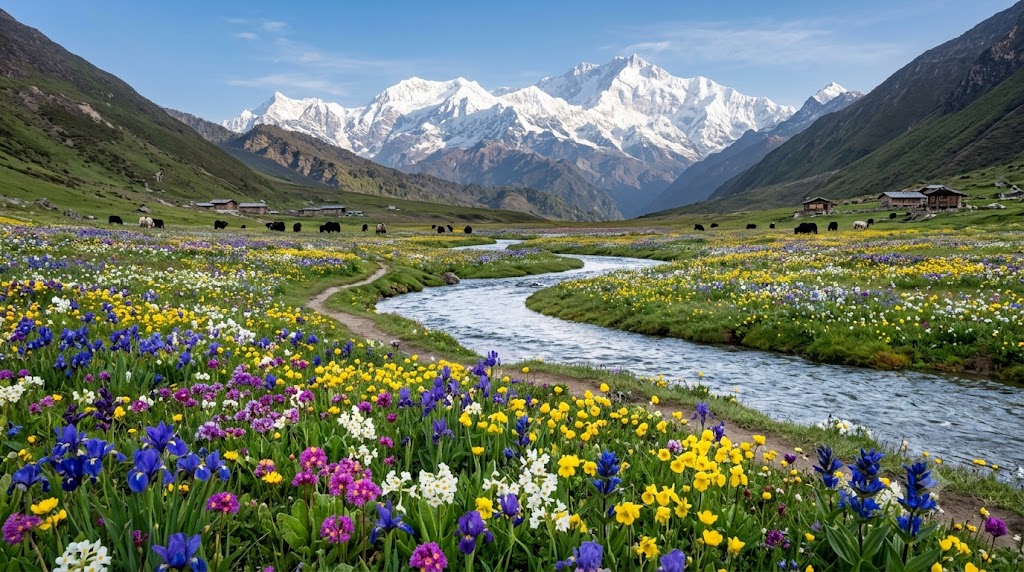
    Colourful yellow and pink flowers covering the wide open landscape of Yumthang Valley in North Sikkim
    Yumthang Valley in bloom, the highlight of the permit-required North Sikkim leg

    Best Time to Visit

    Window Conditions
    March to May Rhododendron and orchid bloom season, Sikkim’s standout spring window, still with some snow at higher elevations
    October to December Clear skies and the best Kanchenjunga visibility, cooler but generally dry
    June to September Monsoon season, landslides and road closures are genuinely common, particularly on the North Sikkim route, best avoided
    December to February Cold, snow possible in Gangtok itself and heavy snow in North Sikkim, a different but genuinely beautiful version of the trip for cold-weather travellers

    Altitude and Health Notes

    North Sikkim’s key stops sit at genuine altitude, Yumthang Valley at around 3,564 metres and Gurudongmar Lake close to 5,183 metres, high enough that altitude adjustment matters for some travellers. A few practical points worth building into the itinerary rather than discovering on the road.

    • Spend at least one night in Gangtok (around 1,650 metres) before heading to North Sikkim, giving your body a partial acclimatisation step rather than jumping straight from the plains to high altitude.
    • Stay hydrated and avoid alcohol the night before a high-altitude day, standard altitude-sickness advice that applies here as much as anywhere in the Himalayas.
    • Travellers with heart or respiratory conditions should consult a doctor before the Gurudongmar Lake extension specifically, given its elevation, and mention this to your tour operator when booking so the itinerary can be adjusted if needed.
    • Warm layered clothing is essential even outside winter, since North Sikkim’s temperature swings are sharp regardless of season, and Nathula Pass itself sits above 4,300 metres with snow possible even in warmer months.

    Monastery Culture and What to Expect

    Sikkim’s Buddhist monastery heritage is a genuine part of the trip, not a side note. Rumtek Monastery near Gangtok is one of the most significant Kagyu lineage monasteries outside Tibet, and Pemayangtse Monastery near Pelling, one of the oldest in Sikkim, offers both religious significance and some of the best Kanchenjunga views in the region from its grounds. Visitors are generally welcome to observe prayer sessions respectfully, dress modestly, remove footwear before entering prayer halls, and photography rules vary by monastery and are worth confirming with your guide rather than assuming.

    What to Eat

    Sikkim’s food reflects its Nepali, Tibetan, and Lepcha influences, distinct from both mainland Indian and typical Northeast Indian cuisine.

    • Momos, Tibetan-style dumplings, steamed or fried, filled with vegetables, chicken, or pork, sold everywhere from street stalls to proper restaurants and genuinely better here than most versions found elsewhere in India
    • Thukpa, a warming noodle soup, particularly welcome after a cold day in North Sikkim
    • Gundruk, a fermented leafy green dish with a distinctive tangy flavour, a genuine taste of local Sikkimese and Nepali home cooking
    • Sikkimese tea and local millet-based drinks, including tongba, a warm millet beer served in a traditional wooden vessel, worth trying at least once in Gangtok

    Vegetarian travellers are well catered for throughout the state, and MG Marg in Gangtok in particular has a wide enough restaurant spread to suit most dietary preferences without difficulty.

    Sikkim vs Darjeeling

    Since a lot of Chandigarh clients weigh a Sikkim trip against a Darjeeling one, given their geographic proximity, here is the honest comparison.

    Factor Sikkim Darjeeling
    Signature experience High-altitude passes, alpine valleys, Buddhist monastery culture Tea estates, the Darjeeling Himalayan Railway, colonial hill-station charm
    Permits Required for Nathula, Tsomgo, and North Sikkim specifically None required for Indian tourists
    Pace More driving-intensive, particularly the North Sikkim leg More compact and walkable within the town itself
    Best combined Often paired with Darjeeling for travellers with 10+ days, since both share the Bagdogra gateway Often paired with Sikkim for the same reason

    Given both share the same Bagdogra gateway, a combined Sikkim-plus-Darjeeling itinerary is genuinely practical for travellers with ten days or more, and it is a combination we build often for Chandigarh clients wanting to make the most of the long flight-plus-drive routing to reach this part of the country.

    Sikkim for Family and Group Trips

    The permit-free Gangtok-Pelling half of the state suits family groups comfortably, with reasonable road conditions and well-established tourist infrastructure. The North Sikkim leg is more physically demanding given the altitude and longer drive days, worth weighing against the ages and fitness levels within a mixed-generation group, and it is entirely reasonable to build an itinerary that includes only the permit-free half if that better suits the group. For groups of friends specifically, sharing a jeep for the North Sikkim leg is both the most affordable and often the most enjoyable way to do it, rather than each smaller group booking a private vehicle separately.

    Cost Shape, Without Fixed Numbers

    We are not publishing fixed price tags, since cost depends on season, vehicle category for the North Sikkim leg, and hotel standard, but the relative shape is worth knowing. Sikkim’s North Sikkim leg specifically requires a shared or private jeep rather than a standard car, since the roads and altitude demand it, and this is usually the single largest line item after flights. Booking a shared jeep rather than a private one meaningfully reduces this cost for smaller groups willing to travel with other tourists on the same dates. Reach out and we will build a real, itemised quote for your dates within 24 hours, no obligation.

    Who This Trip Suits

    • First-time Northeast India visitors wanting a well-established circuit with reliable tourist infrastructure rather than a fully offbeat trip
    • Photography and nature enthusiasts, given the rhododendron season and the Yumthang Valley’s wildflower carpets specifically
    • Families comfortable with some altitude and winding mountain roads, since North Sikkim in particular involves genuine high-altitude travel
    • Honeymooners wanting mountain scenery distinctly different from Himachal or Kashmir, given Sikkim’s Buddhist monastery culture and its own distinct Himalayan character

    Booking Timing

    Two windows are worth planning around specifically. The March-to-May rhododendron season is Sikkim’s most photographed window and books out well ahead, both for hotels in Gangtok and Yumthang-route vehicles, so a spring trip is worth locking in two to three months out rather than a few weeks. The October-to-December clear-sky window is the second peak, particularly popular with photography-focused travellers chasing unobstructed Kanchenjunga views, and sees a similar advance-booking pattern. Outside these two windows, availability is considerably easier to secure closer to your travel date.

    How Sikkim Compares on Safety and Infrastructure

    Worth noting for travellers weighing Sikkim against a first Northeast India trip generally: Sikkim is consistently ranked among the cleanest and best-organised states in India for tourism infrastructure, was the first fully organic farming state in the country, and its main tourist towns have well-developed hotel and road networks compared to some of its neighbouring Northeast states. This is part of why it functions well as an entry point into the wider Northeast region for a first-time visitor, established enough to feel manageable, distinctive enough to feel like a genuinely different trip from anywhere else on a typical Indian traveller’s list.

    Frequently Asked Questions

    Do Indian tourists need a permit for Sikkim?

    Not for Gangtok, Pelling, Ravangla, or most of the standard tourist circuit, a valid photo ID is enough. A Protected Area Permit is required specifically for Nathula Pass, Tsomgo Lake, and North Sikkim beyond Chungthang, including Lachen, Lachung, and the Yumthang Valley.

    Is there a direct flight from Chandigarh to Sikkim?

    Not from Chandigarh directly, and Sikkim’s own Pakyong Airport is unreliable due to frequent weather cancellations. Bagdogra Airport in West Bengal, reached via a Delhi connection from Chandigarh, is the dependable gateway, followed by a roughly four-hour drive to Gangtok.

    How many days does a Sikkim trip need?

    Seven days covers both the permit-free Gangtok-Pelling circuit and a proper North Sikkim loop including the Yumthang Valley comfortably. Four to five days works if you skip North Sikkim and stay within the permit-free half.

    What documents does the North Sikkim permit require?

    A Voter ID, Passport, or Driving License specifically. Aadhaar and PAN cards are not consistently accepted for this particular permit, worth confirming with your tour operator well before travel.

    Is Sikkim safe during the monsoon season?

    The core Gangtok-Pelling circuit remains generally accessible, but the North Sikkim route to Lachen and Lachung sees genuine landslide and road-closure risk during June to September, which is why we would steer most clients away from that leg specifically during monsoon months.

    What is the single best experience in Sikkim for a first visit?

    The Yumthang Valley, particularly during the March to May bloom season, consistently rates as the highlight for first-time visitors, a wide alpine valley carpeted in wildflowers with snow-dusted peaks framing the view, genuinely different from anything in Himachal or Kashmir.

    Can foreign nationals visit Sikkim too?

    Yes, though the rules differ from Indian nationals. Foreigners need an Inner Line Permit even for the otherwise permit-free half of the state, and shorter validity windows apply for the North Sikkim Protected Area Permit compared to what Indian tourists receive.

    Is Sikkim expensive compared to Himachal or Uttarakhand?

    Broadly comparable for the Gangtok-Pelling half, though the North Sikkim leg’s mandatory jeep transport and higher-altitude hotel logistics do add a real cost premium compared to a typical Himachal hill-station trip, worth factoring into the budget if North Sikkim is on your list.

    Plan Both Halves, Not Just the Photogenic One

    A generic Sikkim itinerary built from a photo feed alone tends to overweight the North Sikkim permit leg and underweight the planning it actually needs, or it skips North Sikkim entirely without realising it is genuinely reachable with a bit of lead time. Explore more India tour packages from Chandigarh, compare it against our Spiti Valley guide if you are weighing high-altitude Himalayan trips generally, or call us directly at +91 99143 10333 for an itinerary with the permit timeline built in from day one, whether that means a straightforward four-day Gangtok-Pelling trip or the full North Sikkim loop with the paperwork already sorted before you land in Bagdogra. Flywings team since 2005.