Tag: Mohali

  • How to Choose the Best Travel Agent in Chandigarh, Mohali and Panchkula

    How to Choose the Best Travel Agent in Chandigarh, Mohali and Panchkula

    Search “best travel agent in Chandigarh” and you will get a stack of listicles, ranked lists of five or ten agencies with star ratings and short blurbs, most of them reading suspiciously similar to each other. We are not going to add another one. What we are giving you instead is the actual checklist we think you should run any agency through before booking, including us, because the honest answer to “who is the best travel agent” depends entirely on what you need, not on a generic ranking that cannot know your specific trip. Most “top 10 travel agencies” articles for this exact search are written by content farms with no real relationship to any of the agencies listed, ranking them by SEO convenience rather than genuine service quality. We would rather give you the tools to evaluate this yourself than pretend a ranked list could ever substitute for that.

    Quick context: The Chandigarh Tricity has a genuinely competitive travel agency market, Teji Travels, Shipra Travels, Grand Travel Planners, and Evergreen Travels among others all have real track records. This guide is not about ranking them, it is about what to actually check before you commit to any of them.

    The Checklist

    1. How Long Have They Actually Operated in the Tricity?

    Longevity in this specific business matters more than in most, because the advantages that make an agency worth using, consolidator fare access, airline relationships, embassy documentation familiarity, genuinely take years to build. An agency that opened last year cannot have the same depth of relationships as one that has been booking Chandigarh-Delhi-Dubai routes since 2005. Ask directly, and be specific about whether they mean the agency or just the current owner’s tenure, since agencies do change hands.

    2. Do They Have a Physical Office You Can Walk Into?

    Not because online-only agencies are automatically untrustworthy, but because a real office in Phase 7 Mohali, Sector 17 Chandigarh, or wherever they operate from signals a level of accountability that a purely digital storefront does not. If something goes wrong with your booking, being able to walk in and speak to someone in person is worth knowing you have as an option, even if you never need to use it.

    3. Do They Handle Your Specific Trip Type Regularly?

    A generalist agency and one that regularly handles group bookings, corporate travel, or visa-heavy international trips are not the same thing, even if both technically offer all three. Ask specifically, “how many group bookings of this size have you handled in the last year,” or “how many Schengen visa applications have you processed,” rather than accepting a general “yes, we do that” answer.

    4. Can They Explain Their Pricing, Not Just State It?

    A trustworthy agency will break a quote down by component, flights, hotels, transfers, visa fees, and explain why a particular routing or hotel category was chosen. An agency that only offers a single bundled number and gets defensive when asked to break it down is a fair reason to keep comparing.

    5. Is There a Single Accountable Contact, or a Rotating Queue?

    Ask who specifically will handle your booking from start to finish, and whether that is the same person you will reach if something needs fixing mid-trip. Agencies large enough to have multiple desks sometimes lose the single-point-of-contact advantage that is a big part of why people choose an agent over an OTA in the first place.

    6. Do They Handle Visa Documentation In-House?

    Some agencies outsource visa processing entirely to a third party, which adds a layer of communication delay and reduces accountability if something is filled out incorrectly. An agency with its own visa desk, rather than a pass-through arrangement, generally catches documentation issues earlier and follows up more reliably.
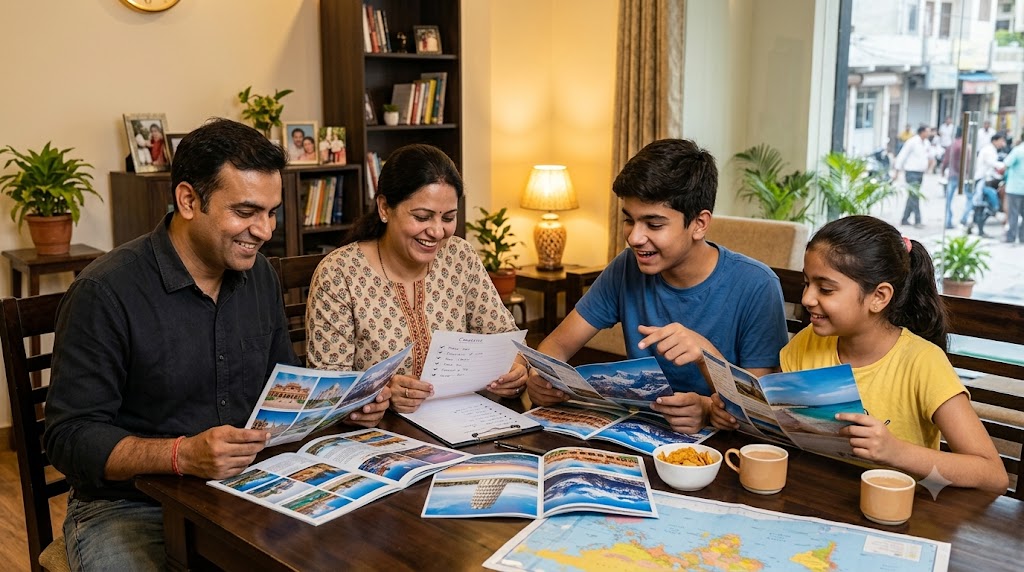
    Family sitting together discussing a travel itinerary with a printed checklist and brochures on a table
    Running any agency, including ours, through a real checklist beats trusting a generic star rating

    7. How Do Their Online Reviews Actually Read?

    Star ratings alone tell you very little, a 4.5 built on eight reviews means something different from a 4.5 built on three hundred. Read a sample of the actual written reviews rather than just the number, specifically looking for mentions of group bookings, visa handling, or how the agency responded when something went wrong, since those are the exact scenarios this checklist cares about. A pattern of reviews praising responsiveness during a problem is worth more than a pattern of reviews only mentioning a smooth, uneventful booking, since the latter tells you nothing about how the agency handles the harder cases.

    8. Do They Offer Genuinely Customised Itineraries, or Only Fixed Packages?

    Some agencies operate almost entirely off a catalogue of pre-built packages with minimal flexibility. Others will build an itinerary around your specific dates, budget, and interests from scratch. Neither approach is automatically wrong, a well-priced fixed package can be excellent value for a standard trip, but know which one you are getting, and ask directly whether changes to a package’s hotel category, duration, or included activities are genuinely possible or just a marketing claim.

    Red Flags Worth Knowing

    • Reluctance to put anything in writing, a quote, a cancellation policy, an itinerary, that only exists verbally is a real risk, regardless of how confident the conversation sounds.
    • Pressure to book immediately without time to compare, a legitimate deal with genuine time pressure (a specific fare closing) is different from generic urgency tactics used regardless of actual availability.
    • Vague answers about who handles a problem after booking, if the agency cannot clearly explain what happens if your flight is cancelled, that gap will matter exactly when you need it least.
    • No verifiable physical address or years of operation, a legitimate, established agency will not hesitate to confirm both clearly.

    Where Flywings Fits Against This Checklist

    Since we built this checklist to be genuinely useful rather than just a lead-in to a sales pitch, it is only fair to tell you honestly where we stand against it rather than let you assume.

    Checklist Item Flywings Tour & Packages Pvt Ltd
    Years operating in the Tricity Since 2005, from our Phase 7, Mohali office
    Physical office Yes, Phase 7, Mohali, open for walk-in consultations
    Group and corporate booking experience A core part of our business since inception, families, wedding parties, and corporate teams alike
    Pricing transparency Itemised quotes broken down by component on request, always
    Single accountable contact Yes, one desk handles your booking from quote through to return
    In-house visa processing Yes, our own visa desk for 50+ countries, not outsourced

    We would rather you verify this against the checklist yourself, ask us the same questions you would ask any agency, than take our word for it. Where we know we are not the right fit, a client wanting only a single, simple domestic flight booked with no group and no visa involved, we will tell you honestly to book it yourself through an OTA rather than take a transaction that does not need our involvement, the same principle we laid out in our companion piece on when a travel agent is actually worth using.

    Matching the Agency to the Occasion

    Beyond the general checklist, certain trip occasions benefit from an agency that specifically specialises in them, worth asking about directly rather than assuming general competence covers it.

    • Honeymoons benefit from an agency that understands the difference between a generic beach package and a genuinely romantic itinerary pacing, private transfers, well-chosen hotel categories, activities that suit a couple rather than a family group.
    • Destination weddings need an agency comfortable coordinating dozens or hundreds of guest bookings, room blocks, and often multiple vendor relationships at the destination itself, a meaningfully different skill set from booking a single family’s holiday.
    • Pilgrimage and yatra travel benefits from an agency with specific route knowledge, altitude and health considerations for high-altitude yatras in particular, and established relationships with local operators at the destination.
    • Corporate travel needs policy compliance tracking and reporting most leisure-focused agencies are not set up to handle well, worth confirming an agency has genuine B2B experience rather than treating a corporate booking like an oversized leisure trip.

    Ask any agency you are considering directly how many bookings of your specific occasion type they have handled recently, rather than accepting a general “we do everything” answer at face value.

    How We Built This Checklist

    We built this list from the questions clients have actually asked us over two decades in this business, and from the complaints we have heard about other agencies when clients switched to us after a bad experience elsewhere. It is not a theoretical framework, it reflects the specific things that go wrong when an agency falls short on any one of these points, a split group booking, a rejected visa application that could have been caught earlier, an unreachable contact after a flight got cancelled. We would rather hand you the actual diagnostic questions than ask you to trust a marketing claim.

    Questions Worth Asking Before You Book, With Anyone

    1. “How long has this specific agency been operating in Chandigarh or Mohali?”
    2. “Can you break this quote down by component rather than one bundled number?”
    3. “Who is my specific point of contact if something changes after I book?”
    4. “Do you process visa documentation yourselves or send it to a third party?”
    5. “What happens, step by step, if my flight is cancelled or delayed?”
    6. “Can I see this itinerary and cancellation policy in writing before I pay?”

    A confident, established agency will answer all six without hesitation. Treat any noticeable evasiveness as useful information, not an inconvenience.

    What a Good First Phone Call Actually Sounds Like

    Beyond the checklist itself, the tone of an initial conversation tells you a lot. A good first call spends more time asking questions than pitching, who is travelling, what the occasion is, what has gone wrong on past trips if any, before recommending anything specific. It should end with you having a clear next step, a quote by a specific time, a document to send over for a visa assessment, not a vague “we’ll be in touch.” And it should not feel like the agent is reading from a script regardless of what you actually said, a genuine conversation adjusts to your specific answers rather than following the same pitch for every caller. If a first call feels rushed or generic, that is a reasonable preview of what the rest of the relationship will feel like.

    A Note on Registered Business Details

    Beyond the checklist above, a legitimate travel agency in India should be able to provide its registered business name and GST registration on request for any significant booking, particularly for corporate travel where an invoice needs to match company records. This is a small, practical detail rarely mentioned in generic “best of” lists but genuinely worth confirming before a large payment, since a legitimate registered business has nothing to hesitate about here and an unregistered or informal operation may.

    Coverage Across the Wider Tricity

    Worth clarifying since search intent for “best travel agent Chandigarh” often actually means the wider region rather than the city proper. A genuinely useful Tricity-based agency should comfortably serve clients across Chandigarh, Mohali, Panchkula, and Zirakpur without treating any of them as an afterthought, since the practical difference in serving these areas is minor given how closely integrated the region is. If an agency’s service noticeably favours one part of the Tricity over another, particularly around in-person meetings or document drop-off, that is worth factoring in if you are based outside the city centre specifically.

    Why “Best” Genuinely Depends on Your Trip

    An agency that excels at solo backpacker itineraries is not automatically the right fit for a fifty-guest destination wedding. One built around leisure travel may not have the corporate account management a business needs for recurring employee travel. Rather than trusting a generic “best of” list to have already done this matching for you, apply the checklist above to two or three agencies whose specialty genuinely matches your trip type, and let the answers, not the star rating, make the decision.

    Frequently Asked Questions

    Is a bigger, more well-known agency always better?

    Not necessarily. Size sometimes trades off against the single-point-of-contact advantage that makes a travel agent worth using over an OTA in the first place. A mid-sized, established local agency often delivers more personal accountability than a large national chain’s local branch.

    How do I verify how long a travel agency has actually operated?

    Ask directly, and cross-check against their registered business address and any online reviews dated further back than a year or two, which is a reasonable signal of genuine longevity rather than a recently rebranded operation.

    Should I choose an agency based on price alone?

    No. The cheapest quote is not useful if it comes from an agency that cannot handle a problem mid-trip, or that outsources visa processing with no accountability if something is filed incorrectly. Weigh price against the checklist items above, not in isolation.

    What is the biggest mistake people make when choosing a travel agent?

    Trusting a generic ranked list without checking whether that agency’s specific specialty, leisure, corporate, group, visa-heavy, actually matches their own trip. The “best” agency for a solo trip and the “best” for a fifty-person wedding group are frequently not the same one.

    Does Flywings only work with Chandigarh, Mohali and Panchkula clients?

    Our office is based in Phase 7, Mohali, serving the full Tricity and wider Punjab region, but we regularly work with clients booking from further afield who found us through a specific package or guide rather than local proximity alone.

    Should I trust a travel agency’s own website testimonials?

    Treat them as a starting point, not a verdict. Testimonials on an agency’s own site are inherently selected to be favourable, which is not the same as being false, but cross-checking against independent review platforms and, ideally, someone you personally know who has used the agency gives a more complete picture.

    Is it worth visiting a travel agency’s office in person before booking a large trip?

    For a significant booking, a group trip, a destination wedding, a corporate travel contract, yes. An in-person conversation reveals things a phone call or email exchange often does not, how organised the office genuinely is, whether the person you meet is the person who will actually handle your booking, and whether the answers to the checklist questions above hold up when asked face to face.

    What should I do if an agency refuses to answer these checklist questions clearly?

    Treat that refusal as useful information and continue comparing other options. A legitimate, established agency confident in its own service should have no difficulty answering every question on this list directly.

    Run the Checklist, Then Call Us

    We would rather earn your booking by holding up to genuine scrutiny than by being the loudest name in a search result. Ask us every question on this list, compare the answers against any other Tricity agency you are considering, and book with whoever genuinely earns it. Explore our full background and team, browse our complete range of services, or call us directly at +91 99143 10333 to start with exactly the questions above, we would genuinely rather answer them upfront than have you discover the answers only after something goes wrong. Flywings team since 2005, Phase 7, Mohali.
  • Travel Agent vs Online Booking in Chandigarh: When You Actually Need a Human

    Travel Agent vs Online Booking in Chandigarh: When You Actually Need a Human

    Every few months someone in Chandigarh asks us a version of the same question, slightly embarrassed, as though it is a strange thing to ask a travel agency: “Honestly, why should I book through you instead of just doing it myself online?” It is a fair question, and the honest answer is that sometimes you should not. Online booking genuinely wins for a simple, one-way domestic flight with flexible dates. Where it stops winning, and where an actual conversation with someone who does this daily starts paying for itself, is worth being specific about rather than vague about. Most articles comparing travel agents and OTAs are written by one side or the other with an obvious thumb on the scale. We are a travel agency writing this, so read the self-interest into it if you like, but we have tried to write the section below the way we would actually answer the question if you called our Mohali office and asked it directly.

    Quick context: Industry data shows travel agencies are projected to gain market share against OTAs through 2026, driven largely by international and complex bookings, where agents with consolidator fare access typically beat the best publicly listed price by 5 to 7 percent, and by the value of having a human accountable when something goes wrong.

    The Honest Answer: It Depends What You Are Booking

    We are not going to pretend an OTA is always worse. That would be self-serving and untrue. The real answer splits cleanly by booking type, and knowing which category your trip falls into is the actual decision that matters.

    Simple Domestic Flight, Fixed Dates: OTA Usually Wins

    A one-way or round-trip domestic flight with dates you are not going to change, no group, no visa involved, is exactly what OTAs and airline apps are built for. Compare prices across two or three platforms, use a card offer if you have one, and book it yourself. Paying an agent for this adds a step without adding real value.

    International Flights: A Genuine Agent Advantage

    This is where the honest data actually favours a travel agent, not marketing spin. Agents with consolidator access to international fares typically beat the best publicly available OTA price by a real, measurable margin, commonly cited around 5 to 7 percent, particularly on complex multi-city or peak-season international routing. On a Dubai, Thailand, or Europe fare, that is not a trivial saving, and it is on top of the advice on routing and layover choices an OTA’s algorithm will not give you.

    Group Trips: Where OTAs Genuinely Struggle

    Booking eight, fifteen, or forty seats together, on the same flight, with the same hotel block, coordinated arrival times, is not a scenario most OTA platforms are built to handle gracefully. This is the single most common reason Chandigarh families, wedding parties, and corporate teams end up calling us instead of booking individually online, someone needs to hold the whole group together as one coordinated booking, not twenty separate transactions that may or may not end up on the same flight.

    Visa-Heavy Trips: The Documentation Difference

    An OTA will sell you a flight and a hotel. It will not review your visa documentation, tell you your bank statement does not meet a specific embassy’s requirement, or follow up when an application needs a correction. For destinations with a genuine documentation process, Schengen Europe, the UK, the US, even some UAE and Southeast Asian visa categories, this gap is where a proper travel desk earns its value most clearly.

    When Something Goes Wrong: The Real Test

    This is the scenario that actually reveals the difference, and it rarely comes up until it matters. A flight gets cancelled, a connection is missed, a hotel booking does not match what was confirmed. With an OTA, you are generally on your own with a customer support queue. With a travel agent, a specific person who already knows your itinerary picks up the phone and deals with the airline or hotel directly on your behalf. This is genuinely the difference most travellers only appreciate once, usually at the worst possible moment for it to matter.

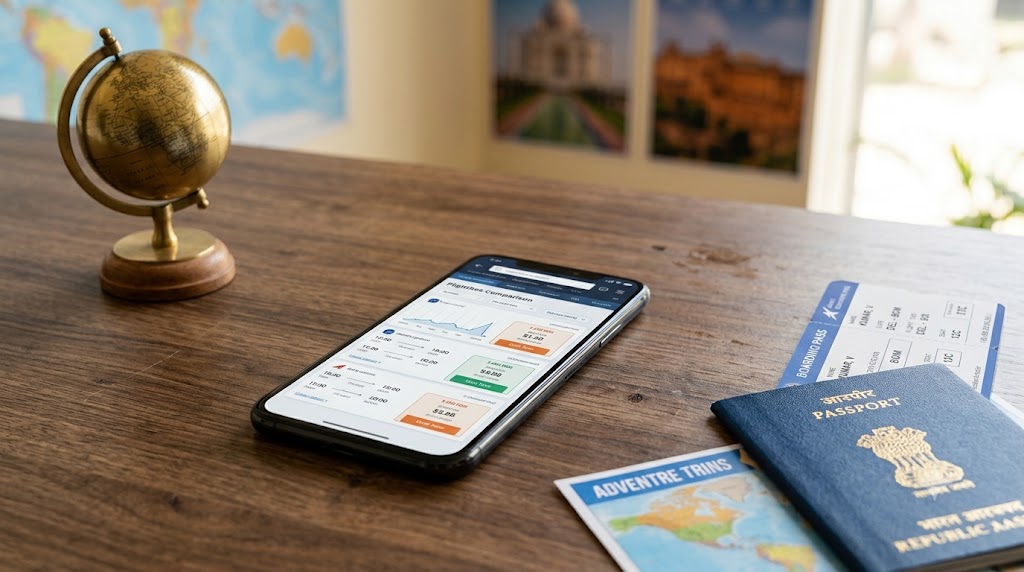
    Close up of a person comparing flight prices on a phone screen next to a passport and boarding pass
    Comparing OTA prices is genuinely the right move for a simple domestic flight, not every booking

    A Quick Decision Table

    Booking Type Better Fit Why
    Simple domestic flight, no group OTA or airline app Straightforward, price-transparent, no coordination needed
    International flight, complex routing Travel agent Consolidator fare access typically beats OTA pricing by 5-7%
    Group of 5 or more travelling together Travel agent Coordinated seating, hotel blocks, and one point of contact
    Trip requiring visa documentation Travel agent Human review of paperwork before submission, not after rejection
    Corporate travel with recurring bookings Travel agent A dedicated desk that knows your company’s travel policy and preferences
    Last-minute flexible solo trip OTA Speed and self-service comparison matter more than personalised advice here

    Five Signs You Are About to Make an Expensive OTA Mistake

    Not every OTA booking goes wrong, most do not, but a specific set of warning signs tends to precede the bookings people regret. Worth checking against before you hit confirm.

    • You are booking more than three or four travellers on the same itinerary. Beyond this size, coordination risk climbs fast, and a split booking across two flights is a common, expensive surprise.
    • Your trip involves a visa you have never applied for before. A first-time Schengen or UK application has genuine failure points a general OTA support line will not catch before you submit.
    • You are combining multiple cities or countries in one trip. Multi-city international routing is exactly where algorithmic pricing tends to miss cheaper combinations a human with fare-construction knowledge would catch.
    • The trip is non-refundable and more than a few months away. Airline schedules and visa rules do occasionally change, and having someone actively monitoring your specific booking is worth more the further out you have booked.
    • You are booking for a company and need consistent policy compliance. A one-off OTA booking will not track your organisation’s travel policy, preferred airlines, or reporting needs the way a dedicated corporate desk will.

    None of these mean an OTA booking will definitely go wrong. They mean the odds of something needing a human to fix it go up meaningfully, and that is exactly the point where the cost of a travel agent’s time starts looking like insurance rather than an unnecessary fee.

    What a Good Travel Agent Conversation Actually Looks Like

    If you have never used one, it is worth knowing what to expect, since a genuinely useful conversation looks different from a sales call.

    1. They ask about your actual constraints first, dates, budget range, group composition, before pitching any specific package, since a good recommendation depends entirely on these details.
    2. They tell you honestly when an OTA would serve you better, the way this guide has for a simple domestic flight, rather than pushing a booking that does not need their involvement.
    3. They explain the routing and pricing logic, not just the final number, so you understand why a particular flight combination or hotel category was chosen.
    4. They give you a direct number or contact, not a generic support inbox, for anything that comes up before or during the trip.
    5. They follow up on visa or documentation deadlines proactively, rather than waiting for you to ask whether something has been submitted.

    If a conversation with a travel agent does not look roughly like this, that is a fair signal to keep comparing options rather than assuming every agency delivers the same value.

    Corporate Travel: A Category of Its Own

    Everything above applies doubly for company travel. A business booking flights individually through whatever OTA each employee happens to prefer ends up with inconsistent pricing, no policy compliance, and no single point of accountability when travel plans change at short notice, which they often do for business trips specifically. A dedicated corporate travel desk tracks your organisation’s preferred airlines, negotiated rates where they exist, and reporting needs, turning a scattered set of individual bookings into one coordinated, policy-compliant process. This is a large enough topic that we have covered it in more depth separately, worth reading if your company currently books travel ad hoc.

    What “Since 2005” Actually Means for This Decision

    We mention our history not as a slogan but because it is directly relevant to the specific advantages above. Consolidator fare relationships, embassy documentation familiarity, airline contacts who pick up the phone when a group booking needs fixing, none of that is built overnight. Flywings Tour & Packages Pvt Ltd has operated out of Phase 7, Mohali since 2005, and the value we are describing above is the accumulated result of two decades of exactly these situations, not a claim we are making without a track record behind it.

    How to Tell If a Quote Is Actually Fair

    Since we are asking you to trust a human recommendation over an algorithm’s price, it is only fair to explain how to check whether that recommendation is actually a good one, rather than asking for blind trust.

    • Ask for the quote broken down by component, flight, hotel, transfers, visa fees, rather than a single bundled figure. A travel agent unwilling to break this down is a fair reason to be cautious.
    • Compare the flight portion specifically against what you see on an OTA for the same route and dates. This isolates whether the consolidator advantage is real for your specific booking, rather than taking it on faith.
    • Ask what happens if you need to cancel or change dates, and get the answer in writing before booking, not after.
    • Check how long the agency has actually operated, since consolidator relationships and airline contacts genuinely take years to build, a newer agency claiming the same advantages as an established one is worth a second look.

    A good travel agent will not be defensive about any of these questions. If one is, that tells you something worth knowing before you commit.

    Group Travel, in More Detail

    This deserves more than the single row it got in the decision table above, since it is one of the clearest cases where the gap between OTA and agent booking shows up in real, avoidable problems. A family of twelve booking a Kashmir trip individually through an OTA risks ending up on different flights if seats run low, in different hotel room categories if availability shifts between individual bookings, and with no single person tracking whether everyone’s documentation, IDs for domestic travel, passports and visas for international, is actually in order before departure day. A coordinated group booking through one desk solves all three at once: one flight manifest, one confirmed room block, and one person whose job is making sure nothing falls through the cracks between twelve different individual confirmations. This applies whether the group is an extended family, a friend circle, a wedding party, or a corporate offsite, the coordination problem is structurally the same regardless of who is travelling.

    Who Should Genuinely Stick With OTAs

    To be fair and specific rather than just directionally honest: solo or couple travellers booking a simple domestic weekend trip, anyone comfortable doing their own visa research for a visa-free or straightforward e-visa destination, and last-minute flexible travellers who value speed over savings are all genuinely well served by an OTA or airline app directly. We would rather you book those trips in five minutes on your phone than call us for something that does not need a conversation. Our value shows up on the bookings this guide has actually named, groups, international routing, visa documentation, and corporate travel, not on every single transaction regardless of complexity.

    What Happens After You Book With Us

    Beyond the initial quote and booking, the ongoing relationship is where the value compounds over a trip’s lifetime. A dedicated contact tracks your visa application status and follows up before a deadline rather than after a missed one, monitors for schedule changes on your specific flights and notifies you rather than leaving you to discover a change at the airport, and remains reachable by phone through the trip itself, not just during the booking process. This is the part of the service that rarely gets mentioned in a “why choose us” pitch but is genuinely where most of the stress reduction actually happens for travellers who have used both OTAs and a proper agency and can compare the experience directly.

    What We Are Not Claiming

    We are not going to tell you a travel agent always beats an OTA, because that is not true, and we would rather you trust an honest answer than a sales pitch. If your trip is a simple domestic flight with flexible dates and no group involved, book it yourself and save the time. We would rather earn your business on the trips where we genuinely add value than pretend to be necessary for every single booking.

    Frequently Asked Questions

    Is a travel agent more expensive than booking online?

    Not necessarily, and often the opposite for international and group bookings specifically, where consolidator fare access and coordinated group pricing frequently beat the best publicly listed OTA price. For a simple domestic flight, the price difference is usually negligible either way.

    What happens if my flight gets cancelled and I booked through an agent?

    A person who already knows your itinerary contacts the airline directly on your behalf to rebook or resolve the issue, rather than you navigating a general customer support queue alone.

    Is it worth using a travel agent for a simple one-way domestic flight?

    Generally no. This is exactly the scenario where an OTA or airline app works well on its own, and we would tell you that honestly rather than take a booking that does not need our involvement.

    Why do group bookings specifically benefit from a travel agent?

    Because coordinating seats, hotel room blocks, and arrival timing across many travellers is not what most OTA platforms are built for. A group booking handled by one accountable desk avoids the common problem of a group ending up split across different flights or with mismatched hotel confirmations.

    Do travel agents help with visa applications?

    Yes, a proper travel desk reviews your documentation before submission rather than after a rejection, which matters most for destinations with genuine paperwork requirements like Schengen Europe, the UK, or the US.

    How do I know if a travel agent’s quote is actually competitive?

    Ask for the quote broken down by component and compare the flight portion specifically against an OTA for the same route and dates. A travel agent confident in their pricing will not hesitate to show this breakdown.

    Is it worth switching from OTA bookings for a company’s corporate travel?

    Generally yes, once a company is booking travel regularly enough that policy compliance, consistent pricing, and a single accountable contact start to matter more than the convenience of individual employees booking through whichever app they prefer.

    What if I only need help with one part of the trip, like the visa, and want to book flights myself?

    That is a genuinely reasonable split, and a good travel desk should be comfortable handling just the visa documentation piece for you rather than insisting on a full package if that is not what you need.

    Book the Way That Actually Fits Your Trip

    If your trip is a group, an international routing, a visa-heavy destination, or corporate travel your company needs handled reliably, that is exactly where a real conversation with a human beats an algorithm. Explore our full range of services, read how to choose the right travel agency if you have not settled on one yet, or call us directly at +91 99143 10333 for a free, no-obligation comparison against what you are seeing online, we will tell you honestly if an OTA is the better call for your specific trip. Flywings team since 2005.

  • Corporate Travel Management for Chandigarh Companies: The Complete 2026 Guide

    Corporate Travel Management for Chandigarh Companies: The Complete 2026 Guide

    Somewhere between “book it on the company card and expense it later” and a full enterprise travel programme, most growing companies in Chandigarh and Mohali are stuck in an expensive middle ground — travel bookings scattered across apps and inboxes, no visibility into what the company actually spends, and a finance team reconciling GST invoices manually every month-end. Corporate travel management exists to fix exactly this, and it doesn’t require the scale of a national enterprise to make sense. At Flywings Tour & Packages Pvt Ltd, we’ve run the travel desk for Tricity businesses since 2005 — this guide covers what a real corporate travel programme includes, what it actually saves, and how to know if your company needs one.

    Quick context: Indian companies are notably bullish on 2026 travel — the large majority expect stable-to-growing travel budgets this year. Well-run corporate travel programmes typically deliver 15–30% savings through negotiated rates and policy enforcement, and over half of Indian companies report ongoing challenges with GST input tax credit compliance on travel spend — one of the easiest problems a managed programme solves.

    The Real Cost of “Just Booking It Yourself”

    Unmanaged corporate travel doesn’t look expensive line by line — a flight here, a hotel there — but it compounds in ways most finance teams only notice at audit time:

    • No negotiated rates: every employee pays retail fare, every time, with no volume discount ever building up.
    • Policy drift: without enforcement, “book economy, standard hotel category” quietly becomes optional, and costs creep upward employee by employee.
    • GST leakage: input tax credit on air travel and hotel stays requires correctly formatted invoices with the company’s GSTIN — something individual employee bookings frequently get wrong, costing the company recoverable tax.
    • Disruption costs: a cancelled flight or a rescheduled meeting means an employee alone on the phone with an airline call centre, often paying full change fees that a managed booking would have avoided.
    • Zero visibility: finance can’t answer “how much did we spend on travel last quarter, by department” without manually collecting expense reports — a data gap that makes budgeting close to guesswork.

    Signs Your Company Needs a Managed Travel Programme

    • Employees are booking flights and hotels on personal cards and expensing them, with no consolidated view of total spend.
    • Your finance team struggles to claim GST input tax credit on travel because invoices arrive inconsistently formatted or addressed to individuals.
    • There’s no written travel policy, or one exists but nobody enforces it.
    • A cancelled flight or hotel issue becomes the travelling employee’s personal problem to solve, mid-trip.
    • Leadership has asked “what are we spending on travel?” and nobody had a fast, confident answer.
    • Your company is planning its first offsite, conference or incentive trip and has no one internally who’s run one before.

    If two or more of these sound familiar, a managed corporate account — even a lightweight one — will very likely pay for itself within the first few bookings. None of these signs require a company of any particular size to show up; they’re symptoms of informal booking habits, and they appear just as reliably in a 15-person startup as in a 500-person enterprise.

    What a Real Corporate Travel Programme Includes

    1. A Dedicated Booking Desk

    Instead of each employee booking independently, one desk (a named contact, not a rotating call centre) handles every booking against your company’s profile — travel preferences, approved airlines and hotel tiers, and billing details captured once, used every time.

    2. Negotiated Corporate Rates

    Airlines and hotels offer meaningfully better pricing to agencies booking consistent volume than to individual travellers booking one-off — this is where a chunk of that 15–30% savings figure typically comes from, without asking employees to fly less comfortably or stay somewhere worse.

    3. A Travel Policy That’s Actually Enforced

    A written policy is a start; enforcement at the point of booking is what makes it work. This means the desk simply doesn’t book outside policy tiers without an approval step — removing the awkward conversation of finance rejecting an expense claim after the trip is already done.

    4. GST-Compliant Invoicing

    Every booking carries your company’s GSTIN correctly from the start, with consolidated monthly invoices your finance team can reconcile without chasing down individual receipts — directly addressing the input-tax-credit compliance gap that affects the majority of Indian companies managing travel informally.

    5. Reporting and Visibility

    A monthly statement showing spend by department, by traveller, and by category turns “what did we spend on travel” from a research project into a two-minute question with an immediate answer.

    6. 24/7 Disruption Support

    When a flight cancels at 9 PM the night before a client meeting, your travelling employee calls one number and someone reworks the itinerary — rather than navigating an airline’s call centre alone, on their own time, mid-trip.

    7. International Business Travel and Visa Support

    For companies sending employees abroad — client visits, trade fairs, overseas offices — business visa documentation is its own specialised process, distinct from tourist visas. Invitation letters, company documentation, and express processing options for time-sensitive trips are exactly where a desk with two decades of visa experience (see our visa assistance service) earns its keep, especially when a deal-closing trip can’t wait on a standard processing timeline.

    8. Duty of Care

    Knowing where your travelling employees are, and being able to reach or reroute them quickly if something goes wrong at their destination, is a basic responsibility that informal booking simply can’t deliver. A managed programme keeps a live record of who’s travelling where, which matters most exactly when it’s needed least — during a disruption, a health issue, or a regional safety concern.

    Corporate team at an offsite conference venue meeting room — MICE travel planning Chandigarh Mohali
    MICE (Meetings, Incentives, Conferences, Exhibitions) travel brings its own logistics — venue, room blocks, and group transport — that a leisure-travel mindset doesn’t cover.

    MICE Travel: When Business Travel Becomes an Event

    MICE — Meetings, Incentives, Conferences and Exhibitions — is corporate travel’s more complex cousin, and it’s where many companies discover they need outside help fastest:

    • Meetings and offsites: a leadership offsite in the Himachal hills or a sales kickoff in Goa needs venue sourcing, room blocks, AV setup coordination, and group transport — quite different from booking individual business trips.
    • Incentive trips: reward travel for top performers, often international, needs a different planning lens than routine business travel — the experience itself is the point.
    • Conferences and exhibitions: group flight blocks, hotel room blocks with flexible rooming lists, and on-ground coordination for a delegation attending (or hosting) an industry event.

    We plan MICE trips the same way we plan large family or pilgrimage groups (see our group travel desk) — group fare blocks, room blocks with flexible name lists, and one point of coordination instead of each attendee booking independently. The planning horizon matters here more than in routine business travel: venue availability for a 50-person offsite in peak season can require locking dates two to three months ahead, while a group flight block for a conference delegation needs early commitment to secure the seat allocation at all, let alone at a good rate.

    2026 Corporate Travel Trends Shaping What “Good” Looks Like

    Trend What It Means for Your Company
    Budget confidence is high The large majority of Indian companies expect stable-to-growing travel spend in 2026 — this is a year to set up a programme properly, not defer it.
    Policy tightening Many companies are revisiting travel policies and renegotiating supplier contracts — a sign that “informal” travel management is increasingly seen as a cost leak worth fixing.
    Rising “bleisure” travel A majority of organisations report employees extending business trips into personal leisure time — worth a clear policy on what the company covers versus what the employee pays for the extension.
    GST/ITC compliance pressure Over half of Indian companies cite ongoing challenges claiming input tax credit on travel — one of the most concrete, quantifiable reasons to formalise booking through one compliant channel.
    Technology expectations Companies increasingly expect approval workflows and reporting to just work, not be assembled from spreadsheets — even a lightweight managed programme should deliver this.

    Building a Simple Travel Policy: What to Include

    Companies without any written policy don’t need to start with a fifty-page document — a working first version covers just a few decisions clearly:

    1. Booking class by trip length or seniority. E.g., economy for domestic trips under a set duration, a defined upgrade threshold for long-haul international travel.
    2. Hotel category and location guidelines. A star-rating band and a “within reasonable distance of the meeting/office” rule prevents both overspending and inconvenient bookings.
    3. Advance booking expectations. Requiring bookings a set number of days ahead (except genuine emergencies) captures most of the 15–30% savings available through early booking.
    4. Approval workflow. Who signs off on international travel, MICE spend, or bookings above a certain value — kept simple enough that it doesn’t become a bottleneck.
    5. Bleisure policy. A clear line on what the company covers if an employee extends a business trip personally — flights typically stay company-booked, with the employee covering extra nights and personal activities.
    6. Expense and reconciliation process. How travel spend flows into monthly accounting, ideally through consolidated invoicing rather than individual reimbursement claims.

    We help first-time clients draft exactly this kind of lightweight policy as part of onboarding — enough structure to control cost and compliance, without the bureaucracy that makes employees quietly ignore it.

    Choosing a Corporate Travel Partner: Questions Worth Asking

    • “Do you offer GST-compliant invoicing with our GSTIN as standard?” If the answer is vague, your input tax credit will likely stay a recurring headache.
    • “What happens if a flight cancels at 11 PM?” A real answer names a person or a live desk, not a support ticket system.
    • “Can you handle both routine bookings and a 40-person offsite?” Many providers are good at one and weak at the other — worth confirming both are genuinely covered.
    • “How is pricing structured — is there a minimum volume commitment?” Understand what you’re committing to before your first booking, not after.
    • “Do you handle business visa documentation for international travel?” This is where generalist booking apps consistently fall short of a proper travel desk.

    Real Scenarios We’ve Solved for Tricity Companies

    • “Our sales team books flights on five different apps.” A Mohali IT company consolidated all flight and hotel bookings for a 40-person sales team through one desk — the immediate win wasn’t even the fare savings, it was finance finally seeing total travel spend in one monthly statement instead of forty expense reports.
    • “We’re planning our first company offsite and have no idea where to start.” A growing Chandigarh startup needed a 25-person leadership offsite in the hills within six weeks. We handled venue sourcing, room blocks, transport from Chandigarh, and on-site coordination — the founders’ only job was showing up.
    • “Our GST credits on travel keep getting rejected.” A manufacturing client’s accounts team was losing input tax credit because employee-booked hotel invoices didn’t carry the company GSTIN correctly. Routing bookings through one compliant channel fixed this within the first billing cycle.

    Setting Up Your First Corporate Account: What to Expect

    1. A short discovery call. We map your typical routes, travel volume, and current pain points — usually 20–30 minutes.
    2. A proposal tailored to your scale. Fare/rate structure, policy tiers, SLAs and billing terms scaled to how much your company actually travels — no enterprise-sized programme forced onto a small team.
    3. Onboarding your travellers. Employees get one contact for bookings; no new software to learn, no app to install.
    4. First bookings and reporting. Within the first billing cycle, your finance team receives its first consolidated, GST-compliant statement.

    There’s no meaningful minimum size for this to make sense — companies booking even a handful of trips a month already save time and gain visibility from day one; the savings and reporting benefits simply scale up from there. Most clients tell us the biggest surprise isn’t the fare savings, which take a booking cycle or two to become obvious — it’s how quickly the mental overhead of “who’s handling travel this week” disappears once one desk owns it. For an office manager or finance lead who’s been juggling this alongside their actual job, that alone is often reason enough to make the switch.

    Corporate Travel Needs by Company Stage

    • Early-stage startups: travel is infrequent but high-stakes — a founder flying to close a deal or meet an investor can’t afford booking friction or a missed connection. Even without volume, a single point of contact who picks up the phone matters disproportionately at this stage.
    • Growing SMEs (20–200 employees): this is where informal booking habits start costing real money — enough travel volume to unlock negotiated rates, but usually still without a formal policy or consolidated invoicing. Most of our new corporate accounts start here.
    • Established companies with regular travel: the priority shifts to reporting, compliance and MICE capability — leadership wants department-wise spend visibility, and offsites/conferences become a recurring, not occasional, need.
    • Companies with international operations: business visa turnaround time becomes a genuine bottleneck for deal timelines, making visa-desk integration (not just flight booking) a core requirement rather than a nice-to-have.

    We structure every corporate proposal around which of these stages a company is actually in, rather than offering one fixed package regardless of size.

    Corporate Travel vs Ad-Hoc Booking: The Honest Comparison

    Ad-Hoc (Employees Book Themselves) Managed Corporate Account
    Pricing Retail fares every time Negotiated corporate rates
    Policy compliance Discovered after the fact, if at all Enforced at the point of booking
    GST invoicing Inconsistent, often unclaimable Correctly formatted every time
    Reporting Manually assembled from expense reports Monthly statement, ready to reconcile
    Disruption handling Employee’s problem, mid-trip One call to a desk that already knows the itinerary
    MICE/group events Ad-hoc, usually a stressed internal team member’s extra job Planned by a desk experienced in group logistics

    Why a Local Chandigarh/Mohali Desk Beats a National Call Centre

    Large national travel management companies exist, and they work fine for large national companies. For most Tricity businesses, though, a local desk has practical advantages that scale doesn’t replace:

    • Someone who actually knows your team. A named contact who recognises your frequent travellers by name books faster and catches preference mismatches a rotating call-centre agent won’t.
    • Face-to-face onboarding. Walking into an office in Phase 7, Mohali to set up a corporate account is simply easier than a chat-support thread with a national provider.
    • Regional route expertise. Knowing when IXC beats a Delhi departure, or which Amritsar international connections work best for your team’s routes, is exactly the kind of detail a Chandigarh-based desk gets right by default.
    • Faster escalation. When something needs fixing urgently, a local relationship with decades of history moves faster than a ticket number in a national queue.

    Frequently Asked Questions

    Is there a minimum company size for corporate travel management?

    No rigid minimum — companies booking even a few trips a month already benefit from consolidated billing and basic policy structure. Pricing and service level scale with your volume, and many of our longest-standing accounts started small.

    How much can a company actually save with managed corporate travel?

    Industry data points to 15–30% savings through negotiated rates, policy enforcement and supplier consolidation — the exact figure depends on your current booking habits and travel volume, which we assess honestly in the first discovery call rather than promising a fixed number upfront.

    Do you provide GST-compliant invoices for corporate travel?

    Yes — every booking carries your company’s GSTIN correctly, with monthly consolidated statements designed for straightforward input tax credit reconciliation, directly addressing the compliance gap that affects most companies managing travel informally.

    What is MICE travel, and does my company need it?

    MICE stands for Meetings, Incentives, Conferences and Exhibitions — essentially, travel that becomes an event rather than a simple point-to-point trip. If your company runs offsites, sales kickoffs, incentive trips or attends/hosts industry conferences, this is a distinct planning need from routine business travel, and one we handle end to end.

    Can you handle bleisure (business + leisure) travel requests?

    Yes — with rising numbers of employees extending business trips into personal time, we help companies set a clear policy on what’s covered versus what the employee arranges and pays for separately, then book accordingly without complicating the company’s travel policy.

    How quickly can we set up a corporate account?

    Most companies are booking their first trip within days of the discovery call — there’s no lengthy procurement process or software rollout, since the “system” is a dedicated desk your team calls or emails directly.

    Can you plan a company offsite or conference from scratch?

    Yes — venue sourcing, room blocks, group flight bookings, on-ground transport and coordination are all part of our MICE planning service. Tell us your group size, dates and rough goals, and we’ll build a proposal from there.

    Does a startup with infrequent travel really need a managed programme?

    Even without volume, having one reliable contact for high-stakes trips (an investor meeting, a deal-closing client visit) reduces the risk of booking friction at exactly the wrong moment. Many of our startup clients began with occasional bookings and formalised the relationship as travel frequency grew.

    How do you handle business visas for international company travel?

    Through the same visa desk that has processed tourist and business visas since 2005 — invitation letter guidance, company documentation, and express processing options for time-sensitive trips, integrated directly with your corporate travel bookings rather than handled as a separate process.

    What happens to our current travel policy when we onboard with you?

    If you have one, we work within it and enforce it at the point of booking. If you don’t, we help draft a simple first version — booking classes, hotel tiers, approval thresholds and a bleisure policy — during onboarding, scaled to your company’s actual travel patterns rather than a generic template.

    Put a Real System Behind Your Company’s Travel

    Whether it’s twenty flights a month or one big annual offsite, the gap between “employees book it themselves” and a properly run corporate travel programme is usually smaller — and faster to close — than most companies expect. Explore our corporate travel management services, our group and MICE travel desk, or start the conversation directly:

    Written by Sukhjinder Kaur, Senior Travel Content Writer at Flywings Tour & Packages Pvt Ltd — managing business travel for Tricity companies from Mohali, Punjab since 2005. Industry figures reflect 2026 travel-industry research as of July 2026; every company’s savings and setup will vary, so treat these as planning benchmarks, not guarantees.