Tag: Himalaya

  • Nepal Package from Chandigarh: The One Document Mistake That Stops Indians at the Border

    Nepal Package from Chandigarh: The One Document Mistake That Stops Indians at the Border

    Nepal is visa-free for Indians, and that fact leads almost every article about travelling there, which is exactly why the actual document requirement catches people off guard. If you are planning a Nepal Package from Chandigarh, this is one detail you need to get right before booking your trip. At Flywings Tour & Packages Pvt Ltd, we have had more than one client assume their Aadhaar card would work for air travel to Kathmandu, the same way it works for a domestic flight, only to find out at check-in that it does not. This guide starts with that correction, since it is the single most avoidable way a simple, visa-free trip goes wrong.

    Quick context: For air travel to Nepal, Indian citizens need an original physical passport or Election Commission Voter ID, nothing else works. Aadhaar, PAN, and driving licences are not accepted, and photocopies or scanned images of any document are not accepted either.

    The Document Rule, Stated Plainly

    Travel Mode What You Actually Need
    Air travel (Chandigarh or Delhi to Kathmandu) An original, physical Indian passport or Election Commission Voter ID card. No visa required, but one of these two documents is mandatory.
    Overland border crossing The original Voter ID is accepted in place of a passport at land checkpoints, following the same physical-document-only rule.
    Not accepted, at any crossing Aadhaar card, PAN card, driving licence, and any photocopy, scan, or digital image of a passport or Voter ID

    This rule exists specifically because Nepal’s visa-free arrangement with India relies on verifying citizenship through one of these two documents in original form, not because of any general suspicion of other Indian ID types. Knowing this before you book flights, not at the airport counter, is the entire point of this section.

    Getting There for a Nepal Package from Chandigarh

    There is no direct flight from Chandigarh to Kathmandu. Delhi is the practical hub, with Air India running a substantial non-stop schedule, roughly 42 weekly flights, and a flight time of about an hour and a half. From Chandigarh, that means a short domestic hop to Delhi followed by one direct international leg, genuinely one of the shorter international connections available from this region.

    The Circuit

    A Nepal Package from Chandigarh works particularly well when you combine Kathmandu, Pokhara, and Chitwan into one itinerary rather than trying to cover Nepal through a single-city stay.

    Kathmandu, 2 to 3 Days

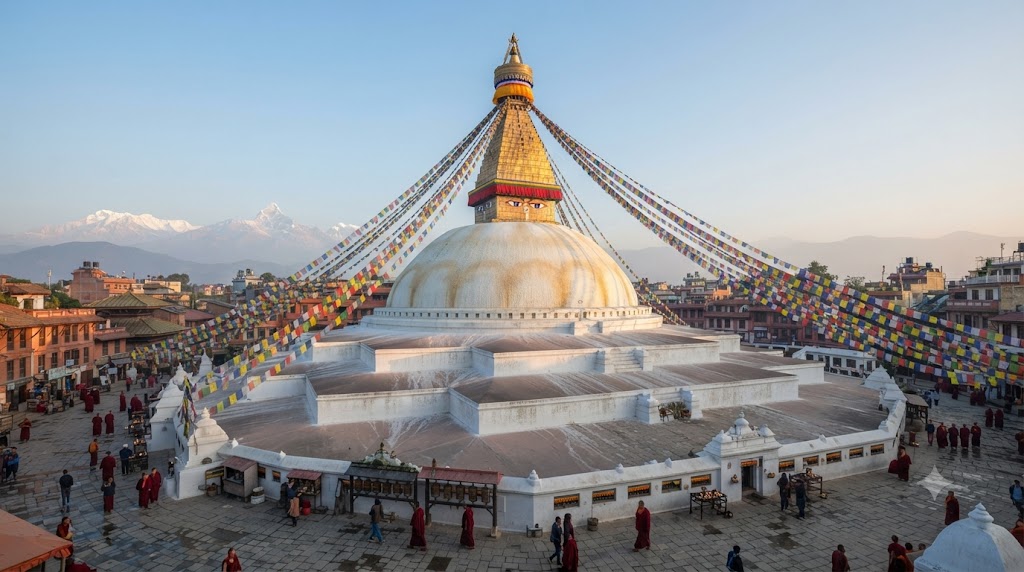
    The cultural core of most Nepal itineraries. The Boudhanath and Swayambhunath stupas, both major Buddhist pilgrimage sites, the Pashupatinath Temple, one of the most significant Shiva temples outside India, and Kathmandu Durbar Square’s palace and temple complex together anchor a proper two to three day stay. Pashupatinath specifically draws a large number of Indian pilgrims given its religious significance, worth building extra time around if that is part of your trip’s purpose.

    Pokhara, 2 to 3 Days

    A dramatically different pace from Kathmandu, set beside Phewa Lake with the Annapurna range as a backdrop. Boating on the lake, paragliding over the valley, and the Sarangkot viewpoint for sunrise over the mountains make Pokhara the adventure and relaxation counterpart to Kathmandu’s cultural focus. This is also where more serious trekkers base themselves before heading into the Annapurna region, though a standard leisure itinerary does not need to go beyond the town itself.

    Chitwan, 1 to 2 Days

    Nepal’s oldest national park, and a genuine wildlife draw, home to one of the last populations of single-horned rhinoceros alongside Bengal tigers and a wide range of bird species. A jungle safari here adds a completely different texture to the trip compared to Kathmandu’s temples and Pokhara’s lake, well suited to travellers who have already covered similar Himalayan cultural circuits and want something distinct.
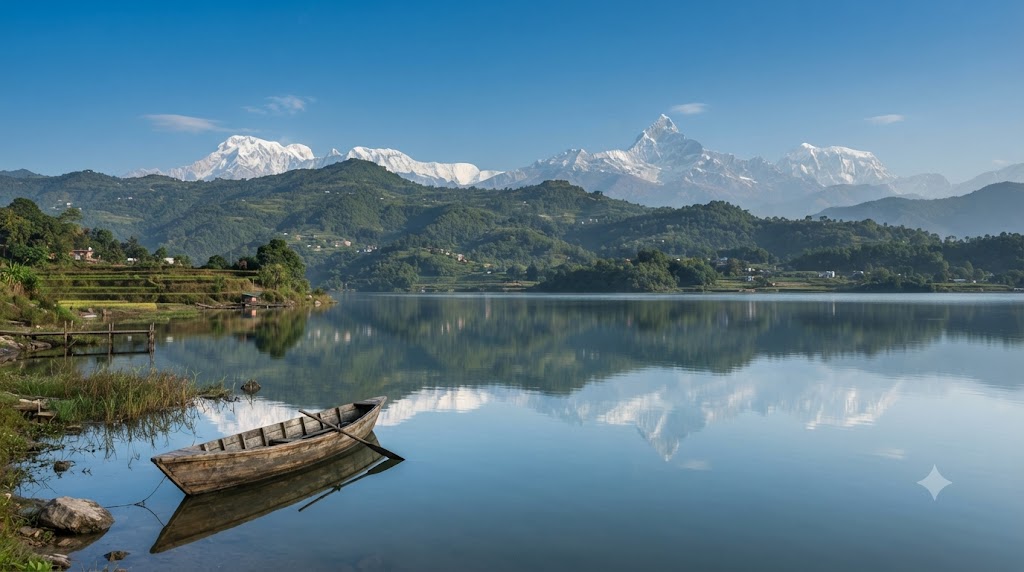
    Phewa Lake in Pokhara Nepal with the Annapurna mountain range reflected in the calm water
    Phewa Lake in Pokhara, the adventure and relaxation counterpart to Kathmandu’s cultural circuit

    Nepal Package from Chandigarh: A Sample 7-Day Itinerary

    • Day 1: Arrive Kathmandu, settle in, evening at Thamel
    • Day 2: Boudhanath, Pashupatinath, Kathmandu Durbar Square
    • Day 3: Swayambhunath, Patan Durbar Square, drive or fly to Pokhara
    • Day 4: Phewa Lake boating, Sarangkot sunrise the following morning
    • Day 5: Pokhara at leisure, optional paragliding, drive to Chitwan
    • Day 6: Full Chitwan day, jungle safari, cultural programme in the evening
    • Day 7: Return to Kathmandu for departure

    This routing covers all three destinations without excessive backtracking, and works whether you drive between cities or use Nepal’s reasonably efficient domestic flight network to save time on the Kathmandu-Pokhara leg specifically.

    Best Time to Visit

    Window Conditions
    Mid-September to December Clear skies, comfortable temperatures, the best mountain visibility for Pokhara and Sarangkot specifically, generally considered the best overall window
    March to April Spring, warm days, rhododendrons in bloom in the hills, the other strong window
    June to August Monsoon season, workable in Kathmandu and Chitwan but genuinely disruptive for mountain visibility and Pokhara-area activities
    December to February Cold, particularly in the evenings and in Pokhara, but clear and considerably quieter than the autumn peak

    What to Eat

    Nepali food shares real common ground with North Indian cuisine while carrying its own distinct dishes, a comfortable food culture for most Indian travellers to adjust to immediately.

    • Momos, Nepal’s signature dish, steamed or fried dumplings filled with meat or vegetables, found everywhere from street stalls to proper restaurants and genuinely considered a Nepali specialty rather than a borrowed Tibetan snack at this point
    • Dal bhat, the everyday meal structure, lentil soup, rice, and vegetable curries, similar in spirit to a North Indian thali but with its own distinct spice profile
    • Newari cuisine, Kathmandu Valley’s indigenous food tradition, worth seeking out specifically in the old city areas for dishes rarely found outside the valley
    • Sel roti, a ring-shaped sweet rice bread, traditionally made for festivals but available year-round from local vendors

    Vegetarian travellers generally do well in both Kathmandu and Pokhara’s tourist areas, given the overlap with familiar North Indian vegetarian cooking traditions.

    Nepal vs Bhutan

    Since both are nearby Himalayan neighbours increasingly compared by Indian travellers weighing a culturally rich mountain trip, here is the honest distinction, and our Bhutan guide covers the other side of this comparison in more depth.

    Factor Nepal Bhutan
    Documentation Visa-free, but requires an original passport or Voter ID specifically No visa needed, but an entry permit plus a nightly Sustainable Development Fee applies
    Cost structure No mandatory daily fee, generally the more budget-friendly of the two A fixed nightly SDF (discounted for Indians) adds a predictable but real cost layer
    Trip character A broader mix of pilgrimage sites, adventure activities, and wildlife in one circuit A more deliberately structured, lower-volume cultural and monastery-focused trip
    Best fit Travellers wanting flexibility, a wider mix of activities, and a lower overall cost Travellers specifically drawn to Bhutan’s uncrowded, high-value tourism model

    Our honest read: Nepal wins on flexibility and cost, Bhutan wins on the deliberately uncrowded experience its tourism policy protects. Neither is the wrong choice, they suit genuinely different priorities.

    Why This Gap Exists

    We checked a dozen of the top-ranking results for “Nepal package from Chandigarh” while researching this guide, and nearly all of them are generic Nepal-based tour operator websites with no departure-city specificity at all, or agencies based in Gorakhpur and other border-adjacent Indian cities that make more geographic sense for their own audience than for a Chandigarh-based traveller. This is a genuinely underserved search compared to how large and fast-growing the actual Indian-to-Nepal travel market has become.

    Packing and Practical Notes

    • Nepali Rupee is the local currency, though Indian Rupees are widely accepted in tourist areas, though notes above a certain denomination sometimes face restrictions, worth carrying a mix of smaller denominations.
    • Carry your original passport or Voter ID at all times during the trip, not just at the airport, since it may be requested at hotels and certain checkpoints.
    • Layer for genuine temperature variation between Kathmandu, Pokhara, and Chitwan, the valley cities run cooler than Chitwan’s lower-altitude, warmer climate.
    • Domestic flights between Kathmandu and Pokhara are worth booking rather than the full road journey if your trip is on the shorter end, saving meaningful time versus the roughly six to seven hour drive.

    Nepal for Family and Group Trips

    The Kathmandu-Pokhara-Chitwan circuit suits family groups well, Kathmandu’s temples and Pokhara’s lake are both manageable for a wide age range, and Chitwan’s jungle safari format works for children old enough to sit through a multi-hour excursion. For pilgrimage-focused groups specifically, Pashupatinath draws large numbers of Indian visitors, and coordinating timing around less crowded hours, early morning specifically, matters more for a comfortable group experience than for an individual visit.

    Cost Shape, Without Fixed Numbers

    We are not publishing fixed price tags, since cost depends on trip length, hotel category, and whether you fly or drive between cities, but the relative shape is genuinely favourable. Nepal remains one of the more affordable international trips available to Indian travellers, no visa fee, a short flight, and daily costs generally lower than a comparable Southeast Asian itinerary. Reach out and we will build a real, itemised quote for your dates within 24 hours, no obligation.

    Who This Trip Suits

    • Pilgrims and spiritually motivated travellers, given Pashupatinath’s significance and the broader Buddhist heritage sites in Kathmandu, worth comparing against our Varanasi guide if a pilgrimage-focused trip is the priority
    • Adventure travellers, particularly for Pokhara’s paragliding and trekking access into the Annapurna region
    • Wildlife enthusiasts, given Chitwan’s rhino and tiger populations, a genuine alternative to a domestic safari circuit
    • First-time international travellers, given how low-friction the visa-free, short-flight, low-cost combination makes this compared to almost any other international option

    Frequently Asked Questions

    Do Indians need a visa for Nepal?

    No, entry is visa-free for Indian citizens for tourism, business, and pilgrimage, governed by the long-standing India-Nepal Treaty of Peace and Friendship.

    Can I travel to Nepal using my Aadhaar card?

    No. Aadhaar, PAN, and driving licences are not accepted for travel to Nepal. You need an original, physical Indian passport or Election Commission Voter ID card, and photocopies or digital scans of either are not accepted.

    Is there a direct flight from Chandigarh to Kathmandu?

    Not from Chandigarh directly, but Delhi has extensive direct connectivity to Kathmandu, roughly 42 weekly Air India flights alone, at about an hour and a half flight time, so the trip is a short domestic hop to Delhi followed by one direct international leg.

    How many days does a Nepal trip need?

    A Nepal Package from Chandigarh covering Kathmandu, Pokhara, and Chitwan can comfortably be planned for seven days. Four to five days works for a Kathmandu-and-Pokhara-only trip that skips the Chitwan wildlife extension.

    Is Nepal good for a pilgrimage trip specifically?

    Yes, particularly around Pashupatinath Temple in Kathmandu, one of Hinduism’s most significant Shiva temples, drawing a substantial number of Indian pilgrims each year alongside its role as a broader tourist destination.

    What is the biggest planning mistake people make with Nepal specifically?

    Assuming Aadhaar will work as identification the way it does for domestic Indian travel. It does not, and confirming you have an original passport or Voter ID ready well before your travel date avoids the single most common and entirely avoidable issue with an otherwise simple trip.

    Can children travel to Nepal without their own passport?

    Children also need their own original passport or Voter ID, the same identity document rule applies regardless of age, worth confirming well ahead of travel if a child in your group does not yet have either document.

    Is Nepal safe for solo and women travellers?

    Yes, Nepal is generally considered a safe and welcoming destination for tourism, including for solo and women travellers, with a well-established tourist infrastructure across the main Kathmandu-Pokhara-Chitwan circuit.

    Can this trip be combined with trekking in the Annapurna region?

    Yes, Pokhara is the standard base for Annapurna region treks, and travellers with additional days and genuine trekking experience can extend a standard leisure itinerary into a proper multi-day trek, though this needs separate planning and gear beyond a standard sightseeing trip.

    Get the Document Right, Then Enjoy the Easiest International Trip Available

    A visa-free destination should not be the trip where paperwork goes wrong, and the fix here is simple once you know the specific rule. Explore more international tour packages from Chandigarh, compare it against our Bhutan guide if you are weighing another nearby Himalayan destination, or call us directly at +91 99143 10333 for an itinerary with the document requirements confirmed before you book anything. Flywings team since 2013.
  • Bhutan Package from Chandigarh: The Two Permits Nobody Explains Properly

    Bhutan Package from Chandigarh: The Two Permits Nobody Explains Properly

    Almost every “Bhutan for Indians” article repeats the same headline, no visa required, and stops there, as though that settles the paperwork question. It does not. At Flywings Tour & Packages Pvt Ltd, the single most common mid-trip surprise we hear about from clients who booked Bhutan independently is discovering, once they are already in Thimphu, that their permit does not actually cover where they wanted to go next. This guide exists to fix that gap, and to cover what genuinely changed in 2026, before getting into the route itself. We checked a dozen of the top-ranking “Bhutan package from Chandigarh” results while researching this piece, and while most correctly state that no visa is needed, almost none draw the actual distinction that matters once you are planning an itinerary beyond a short Thimphu-Paro loop.

    Quick context: No visa is needed for Indian citizens visiting Bhutan, but a standard Entry Permit only covers Thimphu and Paro. Anywhere beyond those two towns, Punakha, Bumthang, Phobjikha, requires a separate, free Route Permit obtained after arrival. Missing this distinction is the most common planning mistake we see.

    What Changed in 2026

    What’s New What It Means for You
    SDF rate extension The discounted Sustainable Development Fee for Indian nationals, INR 1,200 per person per night, has been extended through September 30, 2027, longer certainty than travellers planning a 2027 trip might expect
    New 5 percent GST on tourism services Applies to hotel stays, guided tours, and other tourism services booked within Bhutan, a genuinely new cost layer most pre-2026 guides do not mention
    Gelephu Mindfulness City development A major new development project in southern Bhutan, still under construction, not yet a standard tourist stop but increasingly referenced in current Bhutan coverage

    The Two-Permit System, Explained Properly

    The Standard Entry Permit

    Applied for online in advance and issued on arrival at Paro International Airport by immigration authorities. This permit covers Thimphu, the capital, and Paro, where the airport sits and where the iconic Tiger’s Nest monastery is located. For a short trip focused on just these two towns, this is genuinely all the paperwork you need.

    The Route Permit, for Everywhere Else

    If your itinerary includes Punakha, the former capital and home to one of Bhutan’s most photographed dzongs, Bumthang’s Buddhist heritage sites, or Phobjikha Valley’s black-necked crane habitat, you need a separate Route Permit. It is free and typically issued within about an hour at the Department of Immigration office in Thimphu, but it is a step, not an automatic extension of your entry permit, and travellers who assume otherwise sometimes lose a planning day sorting it out once they realise.

    The practical takeaway: if your Bhutan itinerary is more than a Thimphu-Paro loop, plan for the Route Permit as a deliberate first-day task in Thimphu, not an afterthought.

    Getting There from Chandigarh

    Only two airlines fly into Paro International Airport, Druk Air and Bhutan Airlines, and both operate primarily from Delhi, alongside Kolkata, Bagdogra, Guwahati, and Mumbai. Druk Air runs direct Delhi-Paro flights several times a week, a flight of just under three hours. From Chandigarh, that means a short domestic hop to Delhi followed by one direct international leg into Paro, no second connection required once you reach Delhi.

    The Route

    Paro, 1 to 2 Days

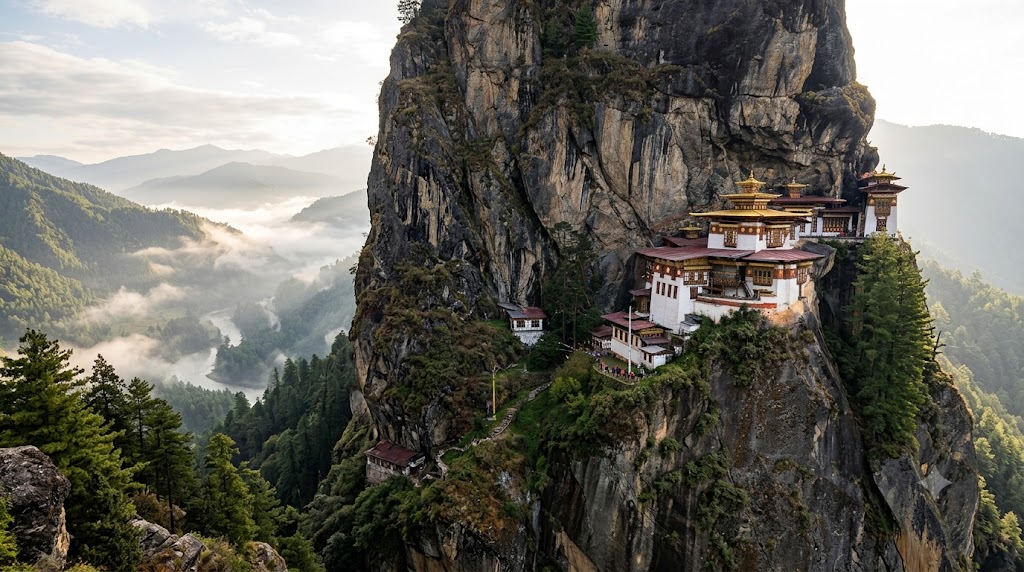
    The Tiger’s Nest monastery, Paro Taktsang, perched dramatically on a cliff face, is the single most recognisable image of Bhutan and the reason most visitors build in real time here rather than rushing through. The hike up is genuinely demanding, several hours round trip at altitude, worth pacing rather than treating as a quick stop.

    Thimphu, 2 Days

    The capital, and where your Route Permit gets sorted if your trip extends further. Beyond the paperwork, Thimphu’s weekend market, the giant Buddha Dordenma statue overlooking the valley, and the National Memorial Chorten anchor a proper two-day stay.

    Punakha, 1 to 2 Days (Requires Route Permit)

    A dramatic mountain drive from Thimphu over the Dochula Pass, often lined with prayer flags and, on a clear day, Himalayan peak views. Punakha Dzong itself, set at the confluence of two rivers, is widely considered Bhutan’s most beautiful fortress-monastery.

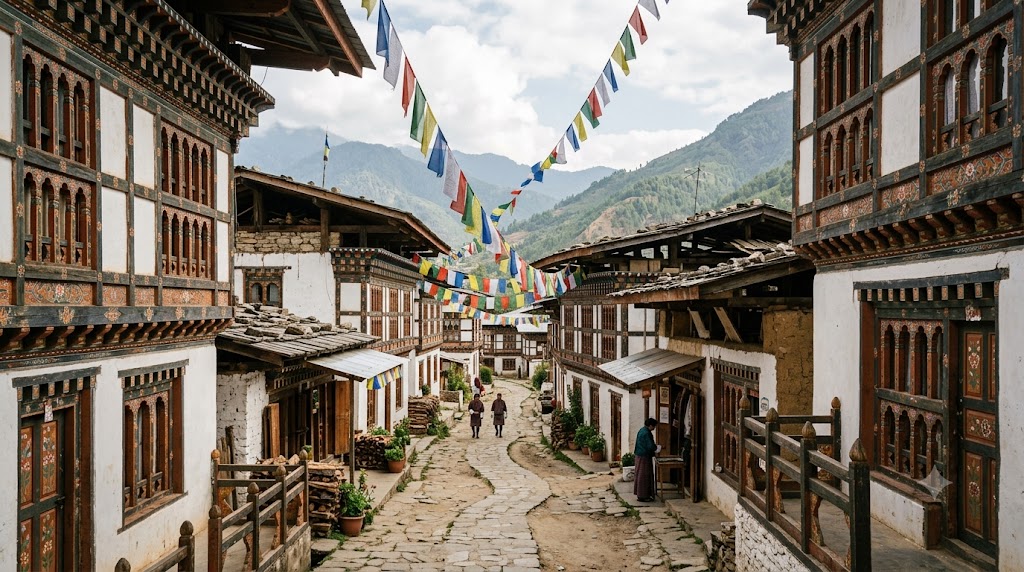
    Traditional Bhutanese architecture with colourful painted windows in Thimphu Bhutan
    Thimphu’s traditional architecture, where most Bhutan itineraries also handle the Route Permit for onward travel

    A Sample 6-Day Itinerary

    • Day 1: Arrive Paro, settle in, evening at leisure
    • Day 2: Tiger’s Nest hike, a full day given the altitude and distance
    • Day 3: Drive to Thimphu, Route Permit processed, city sightseeing begins
    • Day 4: Full Thimphu day, weekend market, Buddha Dordenma, National Memorial Chorten
    • Day 5: Drive to Punakha via Dochula Pass, Punakha Dzong
    • Day 6: Return to Paro via Thimphu, departure

    This pacing treats the Route Permit as a first-priority task on arrival in Thimphu specifically so it does not delay the Punakha leg later in the trip.

    Best Time to Visit

    Window Conditions
    March to May Spring, rhododendrons in bloom, generally considered the best window alongside autumn
    September to November Clear skies, comfortable temperatures, the other peak window, and when several of Bhutan’s major festivals (tshechus) take place
    June to August Monsoon season, workable but with a higher chance of disrupted mountain views and road delays
    December to February Cold, particularly in the evenings, but clear and quiet, a genuinely good window for travellers prioritising fewer crowds over the mildest weather

    Extending Further: Bumthang and Phobjikha Valley

    For travellers with ten days or more, Bhutan’s central valleys reward the extra Route Permit-covered distance. Bumthang, considered the spiritual heartland of Bhutan, is home to some of the country’s oldest and most significant Buddhist temples, a genuinely different, quieter pace than the Paro-Thimphu-Punakha circuit most first-time visitors stick to. Phobjikha Valley, a glacial valley that hosts endangered black-necked cranes migrating from Tibet each winter, offers a completely different landscape, wide, open, and pastoral rather than mountainous. Both require the Route Permit and add genuine driving time, worth it specifically for travellers who have already done the standard circuit or who have the days to spare on a first visit.

    What to Eat

    Bhutanese food is distinctly spicier than most visitors expect from a Himalayan cuisine, built around chillies treated as a vegetable rather than a garnish.

    • Ema datshi, Bhutan’s national dish, chillies cooked in a thick cheese sauce, genuinely spicy and worth trying even for those cautious about heat, since it defines the local palate
    • Red rice, a Bhutanese staple, nuttier and denser than the white rice most Indian travellers are used to
    • Momos, Tibetan-influenced dumplings, found everywhere from street stalls to hotel restaurants
    • Suja (butter tea), salty rather than sweet, a genuine part of Bhutanese hospitality tradition worth trying at least once
    • Ara, a local rice or grain spirit, traditionally offered during festivals and family gatherings

    Vegetarian travellers are generally well catered for, given Bhutan’s strong Buddhist dietary tradition, though the spice level in most local dishes is worth flagging to your guide in advance if you prefer milder food.

    Bhutan vs Georgia vs Uzbekistan

    Since all three have become increasingly popular picks for Indian travellers seeking a culturally rich, less-crowded alternative to the standard international circuit, here is the honest comparison. Our Georgia guide and Uzbekistan guide cover the other two in more depth.

    Factor Bhutan Georgia Uzbekistan
    Documentation No visa, entry permit plus SDF, straightforward but genuinely two-tiered Paid e-visa plus 2026 DuVerify step and mandatory insurance Paid e-visa, straightforward single step
    Flight from Delhi Direct, under 3 hours Direct, roughly 6.5 hours Direct, under 3 hours
    Core appeal Living Buddhist culture, mountain monasteries, deliberately low tourist volume Mountains, wine country, European old-town feel Silk Road architecture, desert cities
    Best fit Travellers wanting a genuinely uncrowded, spiritually significant Himalayan trip Nature and mountain-scenery-focused travellers History and architecture-focused travellers

    Our honest read: Bhutan wins clearly for travellers who specifically want the low-crowd, high-significance experience its tourism policy is built around, nothing else on this list, or arguably in the region, replicates that deliberate scarcity.

    Etiquette Notes

    • Dress modestly when visiting dzongs and monasteries, shoulders and knees covered, and a long scarf (kabney) is required for certain formal areas, usually provided or arranged by your guide.
    • Remove footwear before entering temple interiors, and photography is often restricted inside, worth checking with your guide at each specific site.
    • Bhutan operates a “high value, low volume” tourism philosophy deliberately, so expect a more structured, guided experience than a fully independent trip in most other countries, guides are effectively mandatory for most itineraries beyond Thimphu and Paro.

    Bhutan for Family and Group Trips

    The Thimphu-Paro-Punakha circuit suits families reasonably well, though the Tiger’s Nest hike specifically involves genuine physical exertion worth weighing for older travellers or young children, a partial hike to the viewpoint café is a common compromise for anyone not attempting the full climb. For groups, the SDF’s clear per-person, per-night structure makes budgeting genuinely predictable compared to destinations with more variable fee structures, and Route Permit processing scales reasonably well for group bookings handled through one operator rather than individually.

    Booking Timing

    The March-to-May and September-to-November windows are Bhutan’s clear peak seasons, and hotel availability, particularly in Paro and Punakha, tightens accordingly. Booking two to three months ahead for either window is a sensible buffer, and slightly more for the autumn festival season specifically, since several of Bhutan’s most significant tshechus draw both domestic and international visitors who plan well ahead.

    Cost Shape, Without Fixed Numbers

    We are not publishing fixed price tags, since cost depends on trip length, hotel category, and how far your itinerary extends beyond Thimphu and Paro, but the relative shape is worth knowing. The Sustainable Development Fee, at the discounted Indian rate, is charged per person per night and is a fixed, predictable cost you can plan around exactly, unlike destinations where fees vary by season or operator. The new 5 percent GST applies on top of standard tourism services, a genuinely new line item worth confirming is included in any quote you receive rather than discovering as an add-on later. Reach out and we will build a real, itemised quote for your dates within 24 hours, no obligation.

    Who This Trip Suits

    • Travellers drawn to Buddhist culture and architecture, given Bhutan’s monasteries, dzongs, and living religious tradition throughout the itinerary
    • Couples and honeymooners wanting a Himalayan trip with a distinctly different character from Kashmir or Himachal, worth comparing against our Kashmir guide if you are weighing Himalayan options generally
    • Photography enthusiasts, particularly around the Tiger’s Nest and Punakha Dzong
    • Travellers who value a genuinely uncrowded, well-preserved destination, Bhutan’s “high value, low volume” tourism policy is deliberate, and it shows in how uncongested even the main sights feel compared to more mainstream Himalayan circuits

    Frequently Asked Questions

    Do Indians need a visa for Bhutan?

    No visa is required, but a valid passport (or voter ID card, OCI cards are not accepted) and an entry permit are both required, applied for online in advance and issued on arrival.

    What is the difference between the Entry Permit and the Route Permit?

    The standard Entry Permit covers Thimphu and Paro only. A separate, free Route Permit, obtained at the Department of Immigration office in Thimphu, is required for anywhere else, including Punakha, Bumthang, and Phobjikha Valley.

    What is the Sustainable Development Fee?

    A per-person, per-night government levy funding Bhutan’s tourism and environmental programmes. Indian nationals pay a discounted rate of INR 1,200 per night, extended through September 2027, considerably less than the USD 100 per night rate other international visitors pay.

    Is there a direct flight from Chandigarh to Bhutan?

    Not from Chandigarh directly, but Delhi has direct Druk Air flights to Paro several times a week, a flight of just under three hours, so the trip is a short domestic hop to Delhi followed by one direct international leg.

    How many days does a Bhutan trip need?

    Six days covers Paro, Thimphu, and Punakha comfortably. Four days works for a Thimphu-Paro-only trip that skips the Route Permit process entirely.

    Is the new GST charge included in package quotes?

    It should be, and it is worth confirming explicitly with any operator, since the 5 percent tourism services GST is a genuinely new 2026 addition that an outdated quote template might not yet include.

    Can I travel independently in Bhutan, or do I need a guide?

    For destinations beyond Thimphu and Paro specifically, a guide is effectively required as part of standard Route Permit-linked travel, consistent with Bhutan’s structured, low-volume tourism approach. This is not a bureaucratic inconvenience so much as how the country’s tourism model is deliberately built.

    Is Bhutan expensive compared to other Himalayan destinations?

    The Sustainable Development Fee adds a predictable per-night cost most other Himalayan destinations do not have, but the discounted Indian rate keeps the overall trip broadly comparable to a mid-range Kashmir or Himachal holiday once flights and hotels are factored in together.

    Plan the Permits Properly, Not Just the Sightseeing

    A Bhutan itinerary planned around “no visa needed” alone misses the actual paperwork decision that matters, whether your trip needs a Route Permit and when to get it sorted. Explore more international tour packages from Chandigarh, compare it against our Uzbekistan guide if you are weighing a culturally rich, less-crowded Asian destination generally, or call us directly at +91 99143 10333 for an itinerary with both permits planned in from day one, whether that is a focused four-day Thimphu-Paro trip or the fuller circuit with Punakha and beyond built in. Flywings team since 2013.

  • Leh Ladakh Package from Chandigarh: The 2026 Permit Rules Changed, Here’s What You Actually Need

    Leh Ladakh Package from Chandigarh: The 2026 Permit Rules Changed, Here’s What You Actually Need

    Planning a Leh Ladakh package from Chandigarh this season? Start with the fact most guides still get wrong: Ladakh’s permit system changed in 2026. At Flywings Tour & Packages Pvt Ltd we have sent Tricity groups up to Leh for years. This guide covers the new permit rules, the acclimatisation schedule that decides whether the trip goes well, the road-versus-flight choice from Chandigarh, and a sample 8-day plan.

    Quick context: Indian tourists no longer need the old Inner Line Permit document for general Leh sightseeing. An online Ladakh environment fee through the LAHDC Leh portal covers that now. A genuine Inner Line Permit is still required for Pangong Tso, Nubra Valley, Tso Moriri and Hanle, the border zones most people come to Ladakh to see.

    What Changed With Ladakh Permits in 2026

    Area What Indian Tourists Need
    General Leh sightseeing (town, nearby monasteries) The Ladakh environment fee, paid online through the LAHDC Leh portal, with the receipt carried. No separate ILP document.
    Pangong Tso, Nubra Valley, Tso Moriri, Hanle A genuine Inner Line Permit, since these sit in restricted border zones
    Arriving by air at Leh Permit processing is available on arrival at the airport

    The practical takeaway: the “no permit needed” headline only covers basic Leh sightseeing. The moment your plan includes Pangong Tso or Nubra Valley, which is almost every plan, you still need the ILP. Rules here change often, so confirm them with your operator before you travel.

    Acclimatisation Decides the Trip

    Leh sits at about 3,500 metres. Khardung La is above 5,300 metres, Pangong Tso around 4,300 and Tso Moriri near 4,500. Altitude sickness is a genuine medical risk here, and it should shape your itinerary more than any other factor.

    • Rest for the first 24 to 48 hours in Leh, with nothing more than short walks, before any higher excursion.
    • Skip alcohol and heavy exertion for two days, since both slow your body’s adjustment.
    • Drink more water than feels necessary, because dehydration makes every symptom worse.
    • Descend at once if warning signs appear: severe headache, persistent nausea or breathlessness at rest.
    • Check with a doctor first if you have a heart or respiratory condition, and tell your operator so the plan can build in extra buffer.

    More Ladakh trips are cut short by altitude sickness than by any logistics failure, and nearly all of them trace back to an itinerary that skipped this rest window.

    Chandigarh to Leh: Road Trip or Flight

    The Manali-Leh Road Trip

    You drive up to Manali first, then roughly 490 kilometres over some of the highest motorable passes in the world. The road gains height gradually over two to three days, which genuinely helps acclimatisation, but it uses days a flight would save, and it is usually open only from around June to September. A third route runs from Srinagar through Kargil, which pairs well with a Kashmir stay.

    Flying to Leh

    Faster, but your body gets no gradual adjustment at all: you go from near sea level to 3,500 metres in under two hours, which makes the rest days above more important, not less. Most departures from Chandigarh connect through Delhi, and our flight booking desk can check which option suits your dates.

    Our honest read: with ten or more days, drive up one way and fly back. With a week or less, fly both ways and protect the rest schedule rather than compressing it.

    What a Leh Ladakh Package from Chandigarh Covers

    Leh Town and Monasteries, 1 to 2 Days

    Shanti Stupa, Leh Palace and the monasteries at Thiksey and Hemis. Only the environment fee is needed here, no ILP.

    Nubra Valley, 1 to 2 Days

    Reached over Khardung La, with sand dunes and double-humped Bactrian camels set against the Himalaya. Requires the ILP.

    Pangong Tso, 1 to 2 Days

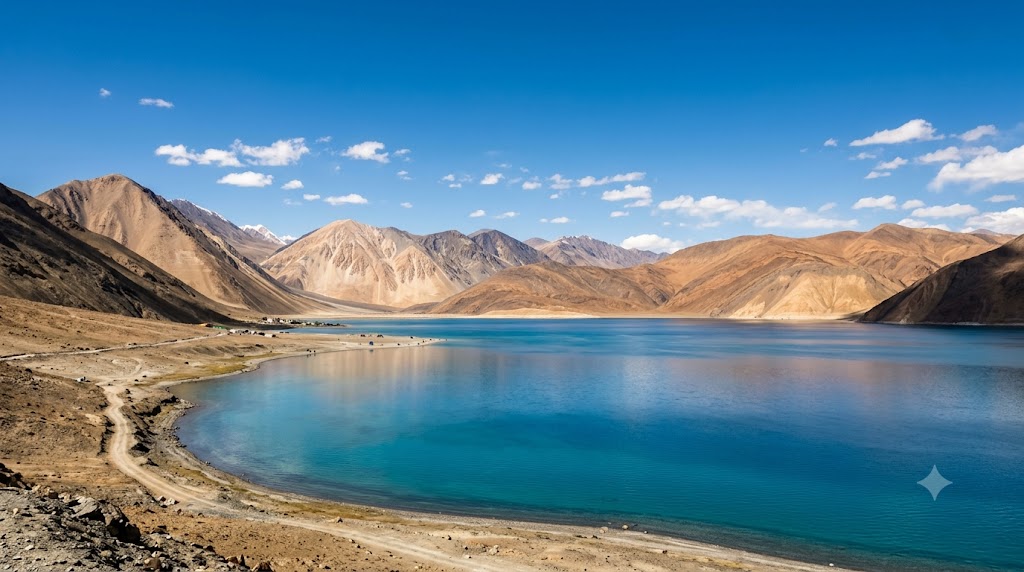
    The turquoise lake behind most people’s picture of Ladakh. Stay overnight rather than rushing a day trip, because sunrise before the Leh crowds arrive is the reason to go. Requires the ILP.

    Tso Moriri, Optional

    Quieter than Pangong with a similar lake landscape, worth adding if you have spare days. Requires the ILP.

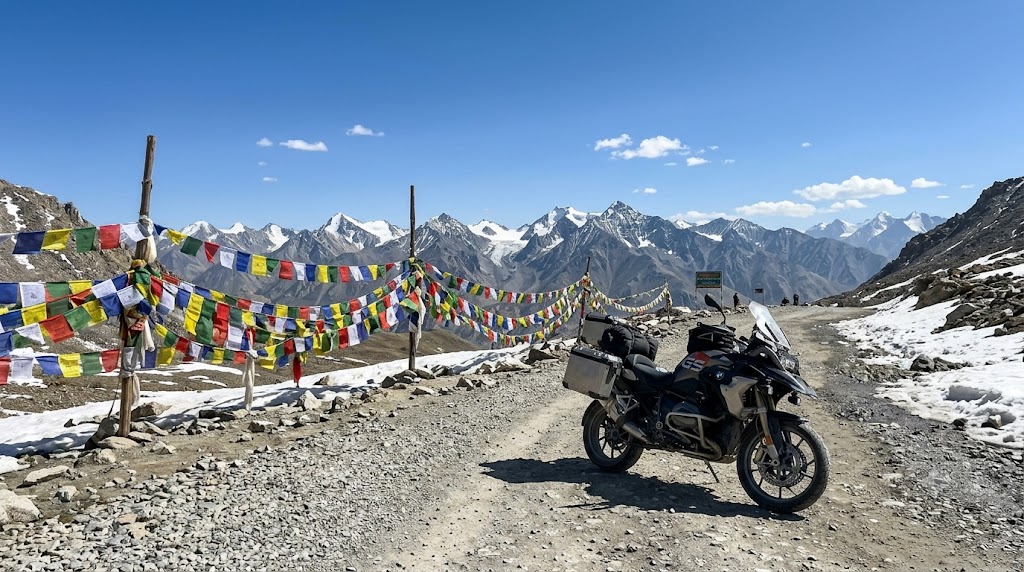
    Motorcycle parked at a high mountain pass with prayer flags and snow patches near Khardung La on a Leh Ladakh trip
    Khardung La, the high pass connecting Leh to Nubra Valley

    A Sample 8-Day Itinerary

    • Day 1: Arrive in Leh by air and rest completely, with a short evening walk only
    • Day 2: Continued acclimatisation, gentle town sightseeing and Shanti Stupa
    • Day 3: Leh Palace, Thiksey and Hemis monasteries
    • Day 4: Drive to Nubra Valley over Khardung La, overnight in Nubra
    • Day 5: Sand dunes, a camel ride and Diskit Monastery
    • Day 6: Drive to Pangong Tso, overnight at the lake
    • Day 7: Sunrise at Pangong, drive back to Leh
    • Day 8: Departure

    Add two or three days for Tso Moriri or a Manali road leg.

    Best Time to Visit and When to Book

    Window Conditions
    June to September Main season: passes open, stable weather, the only window for the Manali-Leh road. Snow walls still line the high passes in June and July.
    September Clear skies and thinner crowds, the best balance of weather and quiet
    October to May Roads largely closed and Leh reachable by air only, a much colder trip better suited to a second visit

    Hotels and vehicles around Nubra and Pangong fill up through July and August. Booking two to three months ahead secures a vehicle for the restricted-zone circuit and gives the ILP paperwork enough lead time.

    Ladakh or Spiti?

    Both are high-altitude road trips from Chandigarh. Ladakh is larger, better supplied and the natural first choice. Spiti is smaller and rawer, and needs no permit for Indians on the standard circuit, which makes it an excellent second trip. Our Spiti Valley tour package covers that side of the comparison.

    Ladakh for Groups and Bachelor Trips

    Ladakh has become a favourite for friend groups and bachelor and bachelorette trips. Vehicles and permits both scale with group size, so booking through one desk keeps everyone on the same itinerary. Our group tour packages explain how we handle that.

    What Drives the Cost

    The cost of a Leh Ladakh package from Chandigarh depends on whether you fly or drive, the vehicle for the Nubra-Pangong circuit (a standard car versus a proper SUV) and the season, which is why we quote each trip rather than publish a fixed price. Permit fees are modest. The real drivers are the restricted-zone vehicle and peak-season flights, so confirm permits and vehicles before you book flights, not after. Browse our other India tour packages from Chandigarh, or ask for an itemised quote for your dates within 24 hours.

    Frequently Asked Questions

    Do Indian tourists still need a permit for Ladakh in 2026?

    Not for general Leh sightseeing, which needs only the online Ladakh environment fee through the LAHDC Leh portal. A genuine Inner Line Permit is still required for Pangong Tso, Nubra Valley, Tso Moriri and Hanle.

    Is there a direct flight from Chandigarh to Leh?

    Most departures connect through Delhi, where IndiGo and Air India fly the Delhi to Leh sector. Direct Chandigarh to Leh services have run seasonally, so check your specific dates.

    How many days does a Ladakh trip need?

    Seven to eight days covers Leh, Nubra Valley and Pangong Tso while respecting the rest schedule. Ten or more days allows a one-way Manali road trip or a Tso Moriri extension.

    Is altitude sickness a serious risk in Ladakh?

    Yes. Leh sits at about 3,500 metres and several key stops sit higher. Resting for 24 to 48 hours on arrival is the single most important thing a first-time visitor can do.

    Can families with young children do a Ladakh trip?

    Yes, with care: see a paediatrician first and build in extra rest days.

    Plan It Around Acclimatisation

    A Ladakh itinerary built to cover the most stops in the fewest days is exactly how altitude sickness cuts a trip short. Send us your dates or call +91 99143 10333 for a plan with the permits and rest days built in from the start, whether that is an eight-day fly-in trip or the fuller road-and-fly route through Manali. Flywings team since 2013.