Tag: Booking Advice

  • Jim Corbett Safari from Chandigarh: How to Book the Official Way, Without the Middlemen

    Jim Corbett Safari from Chandigarh: How to Book the Official Way, Without the Middlemen

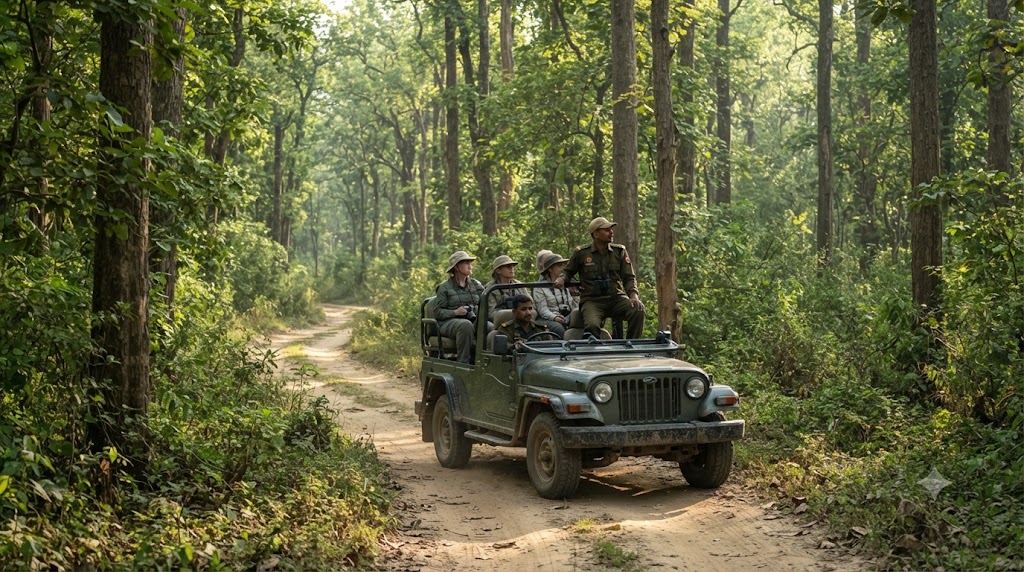
    Searching for a Jim Corbett safari booking is one of the more confusing experiences in Indian wildlife travel. Within a few minutes you will find half a dozen sites that look official, use the word “official” in their titles, and charge a markup for doing what the government booking system does directly. At Flywings Tour & Packages Pvt Ltd, we have helped Tricity families and friend groups plan this trip for years, and the most common problem we fix is not logistics, it is a booking made through the wrong channel at the wrong price. This guide walks through the actual system, what the zones mean, and how to avoid the middlemen.

    Quick context: Jim Corbett National Park is a protected tiger reserve, and safari entry is controlled through zone-based permits with limited vehicle numbers per day. The permit system, not the travel agent you choose, decides whether you get a seat, which is why understanding the zones and release windows matters more than any individual booking portal’s promises.

    How the Official Booking System Works

    • Choose your zone first, since each zone has its own permit pool and its own availability, a few popular zones fill far earlier than others.
    • Choose your safari type, jeep or canter, with the vehicle capacity and seating arrangement tied to that choice.
    • Choose morning or evening, each slot has its own permit allocation, so a sunrise slot and an evening slot in the same zone are effectively separate bookings.
    • Enter visitor details exactly as they appear on your ID, name, age, and ID proof, since mismatches are a common reason a booking is rejected at the gate.
    • Pay the fee online and keep the e-permit, printed or on your phone, and present it at the entry gate on the day.

    The official government booking channel is the one to use directly. Third-party sites can help with planning or bundling accommodation, but the safari permit itself is issued through the official system, and a reputable travel agent should be able to show you exactly what they are booking on your behalf rather than a vague bundled price.

    Understanding the Zones

    Zone Character Best For
    Dhikala The most famous zone, central to the park, large open grasslands and river views First-time visitors and anyone prioritising tiger sightings, but it fills earliest
    Bijrani Dense forest with high general wildlife activity Visitors wanting heavy wildlife density, a strong alternative when Dhikala is fully booked
    Jhirna Open for safaris throughout the year, generally less crowded than Dhikala and Bijrani Travellers with flexible dates who want a dependable option across the season
    Dhela Quieter and less crowded, a more peaceful, slower-paced drive Travellers who prefer fewer vehicles on the track
    Durga Devi Strong birdlife, quieter forest character Birdwatchers and photographers focused on birds rather than big cats

    The honest advice here: if tiger sighting is the single goal and you have fixed dates, the Dhikala and Bijrani slots are the ones to target the moment permits open, not after you have decided on the rest of your itinerary.
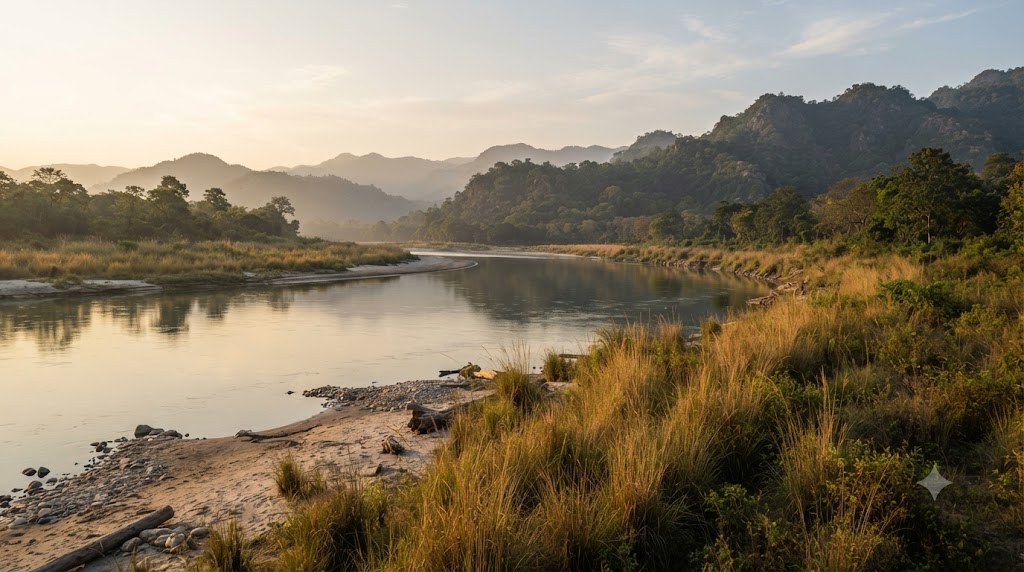
    Riverbank scene with a sandy shoreline and tall grass in Jim Corbett National Park Ramganga river
    The Ramganga riverside, one of the quieter, scenic stretches visible on the park’s outer edges

    When Permits Open, and Why the Window Matters

    Permits for the most popular zones open roughly 45 to 90 days ahead of the safari date, and the most sought-after slots, particularly for weekends and the winter peak season from roughly November to March, tend to sell out within hours of release. Planning around this window matters more than any other single decision in your trip. If you cannot secure a permit for your preferred zone and date, the honest recommendation is to shift your dates or your zone rather than accept a middleman’s markup for the same permit that the official system could have issued directly.

    Getting There from Chandigarh

    There is no direct flight to Jim Corbett. The nearest major airport is Dehradun’s Jolly Grant Airport, roughly two to three hours by road, and the more common approach for Chandigarh-based travellers is a road journey directly, roughly five to six hours depending on traffic and route. The drive passes through the Haridwar and Ramnagar corridor, and most visitors base themselves in Ramnagar, the gateway town, for the park’s entry points.

    A Practical Two-Day Itinerary

    • Day 1: Drive from Chandigarh to Ramnagar, check in, afternoon at leisure, confirm the next morning’s permit and gate timing
    • Day 2: Early morning safari in your booked zone, return to Ramnagar for lunch, optional evening departure or a second safari if booked

    A two-day trip is workable for a single safari, but three days gives genuine flexibility if your first sighting is a miss, and wildlife sightings are never fully guaranteed on any single drive.

    Best Time to Visit

    Window Conditions
    November to March Cool, clear, the most comfortable window for safaris, and the peak demand period, booking well ahead is essential
    April to June Hotter, drier, and tiger sightings are often considered more reliable near water sources, though the heat is intense in the afternoons
    July to October Monsoon season, the park is generally closed or heavily restricted during peak rains, so check current status before planning

    Note that park closures and zone availability change from year to year, so confirm current status on the official system or with your operator before committing to dates.

    Common Mistakes to Avoid

    • Booking through an unofficial middleman at a markup, the permit itself is government-issued, and a markup buys you nothing except the convenience of someone else clicking the button for you.
    • Assuming any zone will do, the zone you pick shapes what you see, Dhikala and Bijrani are not interchangeable with the quieter zones for a tiger-focused trip.
    • Missing the release window and then complaining the permits are gone, the release window is public information, and planning around it is the only reliable way to secure a preferred slot.
    • Ignoring the ID requirement, a name or ID mismatch at the gate can cost a booked slot entirely.

    Wildlife Etiquette on the Track

    • Stay inside the vehicle at all times, the single most important rule, and the one guides enforce most strictly.
    • Keep voices low and avoid sudden movements, wildlife responds to disturbance, and a quiet vehicle gives everyone a better chance of a clear sighting.
    • Do not use flash photography, it can startle animals and disturb other visitors, and most guides will ask you to stop if it is used.
    • Carry any litter back out with you, the park is protected, and visible waste detracts from the experience for the next group.

    What to Pack

    • Warm layers for early morning safaris, the pre-dawn drive can be genuinely cold in winter even though afternoons are mild.
    • Neutral-coloured clothing, bright colours and very loud patterns stand out against the forest backdrop.
    • Binoculars, wildlife is often seen at a distance, and a good pair genuinely improves the experience, particularly for birdwatchers.
    • A printed copy of your e-permit and ID, since the gate check requires the exact documents you booked against.
    • Sun protection and water for midday breaks, the afternoon heat can be intense even in winter.

    Food and Stay in Ramnagar

    Ramnagar, the gateway town, has a practical range of hotels and resorts, from budget guesthouses to riverside properties, and most visitors base themselves there rather than inside the park. Local food is simple and filling, dal, rice, roti, and vegetable preparations typical of the Kumaon region, a welcome change from the heavier restaurant menus of larger cities. Vegetarian options are plentiful throughout the town.

    Corbett vs Rajaji National Park

    Rajaji National Park, closer to Haridwar, is the other major wildlife option in the region, and travellers often weigh the two. Corbett offers the stronger reputation for tiger sightings and a larger, more established safari infrastructure. Rajaji is generally quieter, with fewer vehicles and a more relaxed pace, and suits travellers prioritising birdlife and a calmer forest experience over the chance of a big-cat sighting. For a first wildlife trip, Corbett is usually the better pick. For a second, more reflective visit to the region, Rajaji rewards the slower pace.

    Cost Shape, Without Fixed Numbers

    We are not publishing fixed price tags here, since park fees, vehicle category, and accommodation costs change, and quoting a number from a page that may be outdated in a month would be a disservice. What is worth knowing is that the official permit fee is a government-set amount, the same whether you book it yourself or through an agent, which is exactly why any significant markup on the permit itself is worth questioning. Our quotes always break the permit cost out separately from accommodation and transport, so there is no ambiguity about what the middle layer is actually charging for. Reach out and we will build a real, itemised quote for your dates within 24 hours, no obligation.

    Who This Trip Suits

    • Wildlife enthusiasts and photographers, particularly those prioritising tiger and birdlife sightings
    • Families with older children, the safari format works well for children old enough to sit through a multi-hour drive on uneven tracks
    • Friend groups looking for a weekend escape, a combined Corbett and Rishikesh trip works well for a longer weekend, and our Rishikesh rafting guide covers the adventure side of that combination
    • Travellers who have done the hill stations and want a genuinely different Uttarakhand experience, see also our weekend getaways from Chandigarh for other short trips from the Tricity

    Frequently Asked Questions

    Can I book a Jim Corbett safari directly through the official system?

    Yes. The official booking system lets you choose zone, safari type, and time slot, then pay and receive an e-permit, without any intermediary required.

    How far in advance should I book?

    Permits for popular zones open roughly 45 to 90 days before the safari date and sell out quickly, especially for winter weekends, so booking as soon as the window opens gives you the best chance at your preferred slot.

    Which zone is best for seeing tigers?

    Dhikala and Bijrani are generally considered the strongest zones for tiger sightings, though no zone guarantees a sighting, since wildlife movement is unpredictable.

    Is Jim Corbett safe for families?

    Yes, the safaris are conducted in vehicles with trained guides, and the main safari tracks are well-established. Follow the guide’s instructions at all times and stay inside the vehicle.

    How long is the drive from Chandigarh?

    Roughly five to six hours by road depending on traffic and route, with the drive passing through Haridwar and the Ramnagar corridor.

    Do I need a special permit beyond the safari booking?

    The safari permit itself is the key requirement, and it is issued through the official system. Your accommodation and transport are separate arrangements.

    Can I see tigers on every safari?

    No, and it is worth setting that expectation honestly. Tiger sightings are never guaranteed on any single drive. Visitors who plan for a multi-day stay, or who accept that a good sighting of birdlife and other wildlife is equally part of the experience, generally come away more satisfied than those expecting a guaranteed big-cat encounter.

    Is it worth paying a travel agent to handle the booking?

    Only for the planning side, not the permit itself. A good agent can help you choose the zone and dates, coordinate accommodation and transport, and watch the release window for you. The permit fee itself is a government-set amount, so any agent charging a noticeably higher figure for the same permit is worth questioning.

    What is the difference between jeep and canter safaris?

    Jeeps are smaller, open vehicles with a more intimate, closer-to-the-ground feel, while canters carry more people and suit larger groups. Both are conducted with guides, and the choice mostly depends on group size and how much you value the closer experience.

    Book the Permit Properly, Then Enjoy the Forest

    A Corbett safari is worth the planning, and the planning is mostly about understanding the permit system clearly enough to avoid the middlemen. Explore more India tour packages from Chandigarh, or call us directly at +91 99143 10333 for a planned trip with the permit timing built around your dates. Flywings team since 2013.
  • Travel Agent in Mohali: A Complete Guide to Hassle-Free Travel Planning

    Travel Agent in Mohali: A Complete Guide to Hassle-Free Travel Planning

    Search for a travel agent in Mohali and you will get pages of results. Most look the same after a while, a logo, a phone number, a list of destinations. The one thing that is hard to tell from a listing is whether the agency actually picks up the phone when your flight gets cancelled, or reads your visa file properly before it gets submitted rather than after it comes back rejected. Flywings Tour & Packages Pvt Ltd has run out of Phase 7, Mohali since 2013. Flights, visas, hotels, custom holiday packages, we have handled all of it for families, couples and businesses across the Tricity for more than a decade now.

    Below is what a proper Mohali travel agent should be doing for you, and a few questions worth asking before you hand anyone your booking.

    Why Bother With a Local Travel Agent in Mohali

    A tour and travel agency near you gives you one thing an app never will: a real person who is on the hook for your booking, start to finish. For a plain domestic flight, sure, book it online, that works fine. Where a local agent earns their keep is the messier stuff, an international trip with a tricky layover, a group booking where everyone needs to land together, a visa file that has to be right the first time.

    There is also a local-knowledge angle people underrate. A travel agency in Chandigarh that has been doing this for years knows which Chandigarh and Amritsar flight routings are actually worth it, which visa categories give local applicants the most trouble, and whether a weekend trip or a proper week-long holiday makes more sense for a given budget.

    What a Full-Service Travel Agency in Chandigarh Should Cover

    • Flight booking, domestic and international, with someone explaining the routing instead of just handing you whatever number an app spat out
    • Visa assistance, documents checked properly, applications filed for tourist and business visas across 50+ countries
    • Hotel reservations that match what you actually want to spend, not a default category picked to hit a margin
    • Custom holiday packages built around your dates and interests, not a template with your name pasted on top
    • Group and corporate coordination, for families, wedding parties, and companies that travel often

    Not every agency is equally good at all five. A family planning a Himachal weekend needs something different from a company booking recurring staff travel, so it is fair to ask an agency directly what they are actually strong at rather than take “we do everything” at face value.

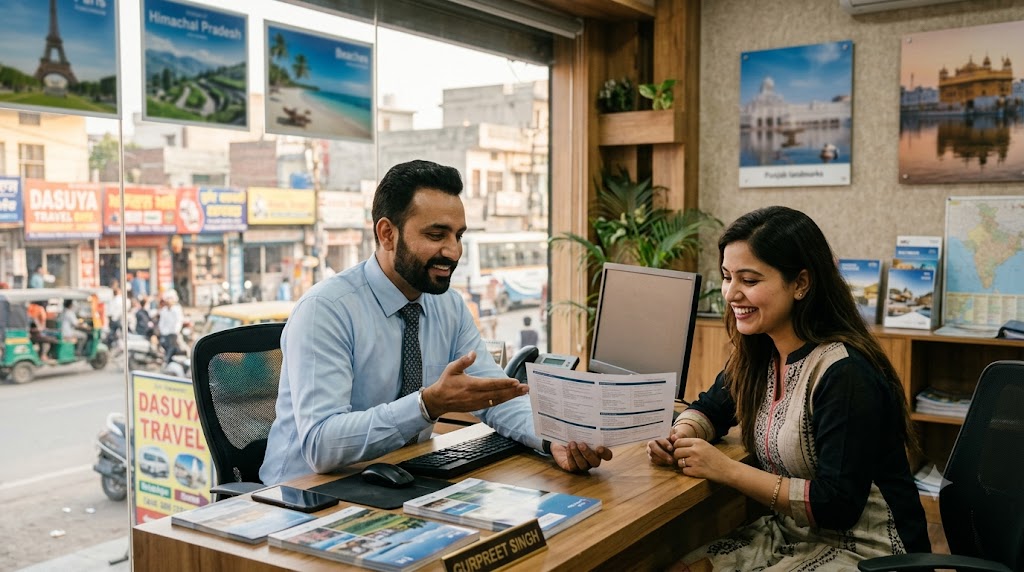
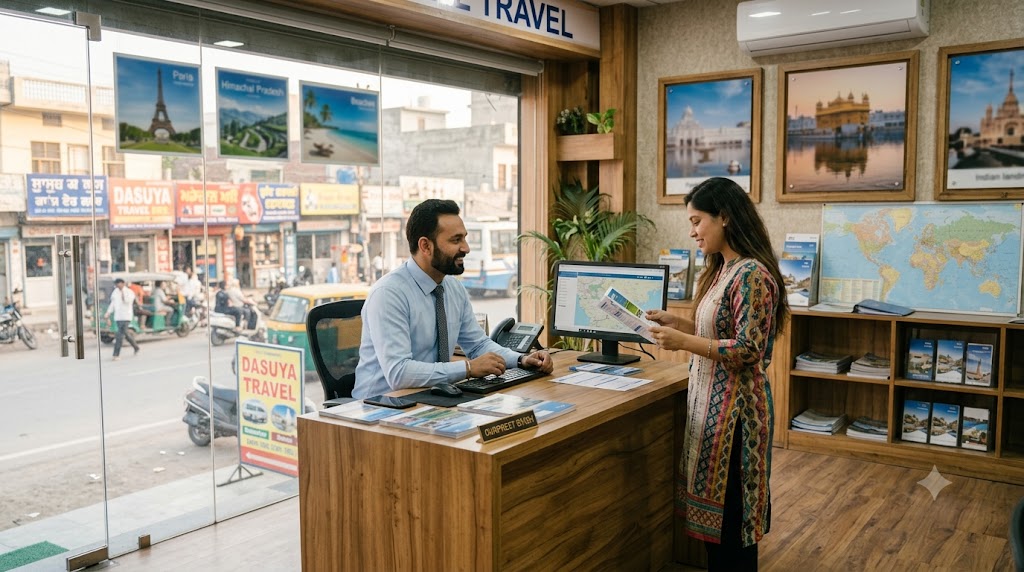
    Front office of a Mohali travel agency with a staff member assisting a walk-in client
    A walk-in conversation at our Phase 7 office, where most trip planning actually starts

    Mohali, Chandigarh, and the Rest of the Tricity

    Our office sits in Phase 7, Mohali, but we work with clients across Chandigarh, Panchkula and Zirakpur just as much. A lot of people who search for a tour and travel agency near me end up here because it is close enough to sit down in person for a trip that matters, a destination wedding, a first big international holiday, a company setting up an annual travel arrangement. Smaller, routine bookings mostly happen over a phone call or WhatsApp, no office visit needed.

    How to Actually Pick One

    How long has the agency been around in the Tricity? Do they have a real office you could walk into? Is the visa work done in-house or handed off to someone else? A quote broken down by flight, hotel, and visa fee separately tells you more than one lump number ever will, and you want a specific person to call if a booking changes, not a queue. If any of these questions get a vague answer, that is worth noticing before you pay anything.

    For what it is worth, this is exactly how we run things: a Phase 7 office you can walk into, a visa desk that is ours, not outsourced, and one person handling your booking from the first quote to the day you get back.

    Frequently Asked Questions

    What does a travel agent in Mohali actually do?

    Books your flights and hotels, handles visa paperwork, and builds custom itineraries, staying as your one point of contact from the first call to the trip’s end.

    Should I just book online instead of using a travel agency?

    For a simple domestic flight, go ahead, an app will do fine. Once it is international, a group, or anything with visa paperwork attached, a local agent usually saves you both money and a headache.

    Does Flywings handle visas for international trips?

    Yes. Our visa desk in Mohali has been doing this since 2013, covering 50+ countries, and we check the paperwork before it goes in, which is where most preventable rejections happen.

    Can you book flights out of Chandigarh and Amritsar?

    Yes, both, plus Delhi and other airports, with routing suggestions based on your actual dates and where you are headed.

    Are your packages fixed, or can they be customised?

    Both exist. We keep ready packages for the popular destinations, but if none of them fit, we will build one from scratch around your budget and dates.

    How do I actually get a quote?

    Call us, or drop an enquiry on the website. You will get an itemised quote back, usually within a day.

    Get in Touch

    Flight, visa, or a whole holiday from scratch, we are a five-minute drive away in Phase 7, Mohali, not a call centre somewhere else. Look at flight booking directly, or start a visa assistance conversation. Or just call +91 99143 10333. Flywings, since 2013.

  • Honeymoon Planning Mistakes That Cost Couples the Most, and How to Avoid Them

    Honeymoon Planning Mistakes That Cost Couples the Most, and How to Avoid Them

    We have sat across the desk from enough newly engaged couples to notice the same handful of mistakes recurring almost every time, not because anyone is careless, but because a honeymoon is usually the single most expensive, most emotionally loaded trip either partner has ever planned, and that combination makes ordinary planning instincts go slightly sideways. This guide is not a destination listicle. It is the specific list of mistakes that actually cost couples the most, in money, in disappointment, or in unnecessary stress during a week that is supposed to be the opposite of stressful. Most honeymoon content online is destination-first, “top 10 romantic places,” written before knowing anything about a specific couple’s budget, timeline, or priorities. This one is planning-first, the mistakes and fixes below apply regardless of which destination you eventually choose.

    Quick context: The single most expensive honeymoon mistake is not choosing the wrong destination. It is choosing the right destination in the wrong month, or choosing it before deciding what the trip should actually cost.

    Mistake One: Picking the Destination Before the Budget

    This is the mistake that quietly causes most of the others. Couples fall in love with a destination first, Maldives, Switzerland, Bali, and only work out the budget afterward, which means every subsequent decision becomes a series of compromises forced by a number that should have come first. The fix is simple to state and genuinely hard to do when emotions are involved: agree on a realistic total budget before either partner starts browsing destinations, then let that number narrow the list rather than the other way around. A well-matched destination within budget consistently produces a better trip than a stretched, compromised version of a dream destination.

    Mistake Two: Booking the Right Destination in the Wrong Month

    This is the mistake we see cause the most genuine disappointment, more than budget overruns, because it is invisible until you are already there. A honeymoon in Kerala during peak monsoon, in the Maldives during its rainiest stretch, or in a hill destination during its foggiest, least scenic weeks looks identical on a booking page to the same destination in its best season, and the couple only discovers the difference on arrival. Every destination has a genuine best window, and the fix is checking it specifically for your dates before booking, not assuming any time of year works equally well.

    Mistake Three: Booking Too Late

    Flights and hotels for honeymoon-popular destinations are consistently cheaper two to three months ahead of travel than they are a few weeks out, and for peak windows like Christmas and New Year specifically, five to seven months of lead time is genuinely worth having. Beyond price, late booking also shrinks the actual choice available, the best-located hotels, the private-pool villas, the well-reviewed boutique stays, sell out first, leaving later bookers choosing from whatever remains rather than what they actually wanted.

    Mistake Four: Booking From Photos Alone

    A resort’s marketing photos are, by definition, its best possible angles taken on its best possible day. Booking purely off these images, without reading recent guest reviews specifically, is one of the more common ways a honeymoon underdelivers against expectation. Reviews from the last few months, not the property’s curated testimonials, tend to surface the details that actually affect a stay, noise levels, service consistency, whether the “sea view” is genuinely unobstructed, that photos alone will never reveal.

    Couple walking hand in hand on a beach at sunset during their honeymoon
    The right destination in the wrong season looks identical on a booking page but delivers a very different trip

    Mistake Five: Choosing a Rigid, Non-Customisable Package

    Plenty of honeymoon packages are built as fixed templates, same hotel, same activities, same pacing, regardless of what the specific couple actually wants. A package that cannot be adjusted, more beach time and less sightseeing, a different hotel category, an added spa day, forces a couple into someone else’s idea of a honeymoon rather than their own. Before booking any package, ask directly whether meaningful customisation is genuinely possible or just a marketing claim, since the difference matters more on this specific trip than almost any other.

    Mistake Six: Underestimating the Climate’s Effect on Everything Else

    Wardrobe, activity planning, even photography, all depend heavily on a destination’s actual climate at the specific time of travel, and this is consistently underestimated until couples are already packing. A honeymoon wardrobe genuinely benefits from being planned at least a couple of months ahead, not because of the shopping itself, but because climate-appropriate clothing affects comfort, photos, and which activities are even realistic, dramatically more than most couples expect before experiencing the gap firsthand.

    Mistake Seven: Overpacking the Itinerary

    A honeymoon is not a sightseeing trip disguised as a romantic one, though it is easy to accidentally plan it that way, especially for a couple used to efficient, activity-packed holidays. Cramming too many destinations or excursions into a honeymoon leaves little room for the unstructured time that is often what couples remember most afterward, a slow breakfast, an unplanned afternoon, a spontaneous walk. Building in deliberate slack, fewer stops, more time at each one, consistently produces better honeymoon memories than a checklist-driven itinerary.

    The Fix List, Summarised

    Mistake The Fix
    Destination before budget Agree on a total budget first, then choose within it
    Wrong season for the destination Check the specific best-time-to-visit window for your actual travel dates
    Booking too late Book 2 to 3 months ahead generally, 5 to 7 months for Christmas/New Year
    Trusting photos alone Read recent guest reviews, not just curated marketing images
    Rigid packages Confirm genuine customisation is possible before booking
    Ignoring climate impact Plan wardrobe and activities around the destination’s actual conditions
    Overpacked itinerary Build in deliberate unstructured time, do not fill every day

    Mistake Eight: Deciding International vs Domestic on Prestige Alone

    A lot of couples default to an international honeymoon as the assumed “correct” choice without genuinely comparing it against a well-chosen domestic alternative for their specific budget and timeline. A tight-budget international trip that forces cutting corners on hotel category and experiences often delivers less genuine romance than a properly resourced domestic honeymoon in Kashmir, Kerala, or the Andamans at a comparable total cost. Neither choice is inherently better, and lining up a shortlist from our international tour packages from Chandigarh against a domestic option at the same budget is a genuinely useful way to compare, since the mistake is picking based on assumed prestige rather than a real look at what each option actually delivers for the money available.

    Mistake Nine: Not Planning Around Family Involvement

    For a lot of Indian couples, particularly soon after a wedding, family expectations genuinely shape honeymoon planning in ways couples from other cultural contexts do not navigate as often, requests to visit relatives along the route, pressure around timing tied to wedding-season logistics, or budget decisions influenced by contributions from both families. None of this is wrong, but leaving it unaddressed until late in planning causes real friction. Having an honest conversation as a couple early about which family expectations you will accommodate and which you will politely decline avoids a lot of last-minute stress that has nothing to do with the destination itself.

    Red Flags in a Honeymoon Package Quote

    • A single bundled price with no component breakdown, making it impossible to compare against alternatives or understand where the money is actually going.
    • Vague hotel descriptions without a specific, named property, “4-star beachfront resort” without naming which one is a common way lower-quality properties get substituted after booking.
    • No mention of a cancellation or date-change policy until you ask directly, particularly important for a booking made this far in advance of the actual trip.
    • Pressure to book immediately without time to compare against other options, a genuine limited-availability situation is different from routine urgency tactics applied regardless of actual demand.

    Budget Shape, Without Fixed Numbers

    We are not publishing fixed price tags, since honeymoon cost varies enormously by destination, season, and hotel category, but the relative shape is worth understanding before you start comparing quotes.

    Tier What Changes
    Value-conscious Well-chosen domestic destination or a shorter international trip, mid-range hotels with romantic add-ons (a candlelight dinner, a couples spa session) rather than a fully premium property throughout
    Mid-range (most common) A properly resourced international trip like Bali, Maldives on a standard water villa category, or Thailand, with private transfers and one or two premium experiences built in
    Premium Overwater villas, private candlelit dinners, couples’ spa packages throughout, and a longer trip length, treating the honeymoon as the primary travel investment of the year

    Booking three to four months ahead of peak season typically saves meaningfully across every tier, and the saving tends to matter more at the value-conscious end, where every rupee has a clearer impact on what the trip can actually include.

    What a Genuinely Custom Honeymoon Itinerary Looks Like

    Beyond avoiding the mistakes above, a properly built honeymoon itinerary starts from a conversation, not a template, what does slow-paced actually mean to this couple, do they want a single resort or a short multi-stop trip, what matters more, privacy or activities. That conversation, not a fixed package pulled off a shelf, is what actually produces a trip that fits two specific people rather than an average of every couple who has ever booked that destination. This is a large part of why we build honeymoon itineraries individually rather than offering only fixed templates, the questions above genuinely change what the right recommendation looks like.

    Popular Honeymoon Destinations and Their Actual Best Windows

    Since mistake two, wrong season, causes the most disappointment, here is a quick reference for some of the most popular honeymoon picks among our Chandigarh clients specifically.

    Destination Best Window Avoid
    Maldives November to April May to October monsoon season, rougher seas and reduced water-activity availability
    Bali April to October dry season Peak wet season, November to March, though short showers are workable outside the heaviest months
    Kashmir March to June for gardens and pleasant weather, December to February for a snow honeymoon specifically Late monsoon-adjacent weeks with unpredictable weather
    Kerala backwaters September to March, post-monsoon and dry June to August peak monsoon, when houseboat routes and outdoor plans get disrupted
    Switzerland/Europe June to September for full accessibility, December for a snow-and-Christmas-market honeymoon Shoulder months when higher-altitude attractions may be closed or inaccessible

    This is a starting reference, not a substitute for checking your specific travel dates against current conditions, since exact seasonal windows do shift slightly year to year.

    Who Should Skip a Fixed Package Entirely

    Worth saying honestly. Couples with a very clear, specific vision already, exact hotels researched, exact activities decided, may find a fixed package adds cost without adding value, and are often better served booking flights and hotels independently while using a travel desk only for the pieces that genuinely need coordination, like visa documentation for an international destination. A package earns its value most clearly for couples who want the planning itself handled, not just the bookings, which describes most first-time honeymoon planners but not all of them.

    Where Travel Insurance Actually Fits In

    Easy to overlook amid the excitement of planning, but worth a specific mention given how much has typically been invested in a honeymoon by the time of travel. Comprehensive travel insurance covering trip cancellation, medical emergencies, and lost baggage is worth the modest additional cost specifically for a honeymoon, given the non-refundable nature of many premium hotel bookings and the higher overall financial stake compared to a routine holiday. This is a small, easily forgotten line item that matters disproportionately if anything does go wrong close to the travel date.

    Frequently Asked Questions

    What is the single most expensive honeymoon planning mistake?

    Choosing the destination before setting a budget, since it forces every later decision into a series of compromises rather than starting from a number that actually fits the couple’s finances.

    How far in advance should a honeymoon be booked?

    Two to three months ahead generally secures better pricing and hotel availability. For peak windows like Christmas and New Year specifically, five to seven months of lead time is genuinely worth having given how quickly the best properties sell out.

    Is it worth paying more for a customisable honeymoon package over a fixed one?

    Generally yes, since a fixed template cannot account for what makes a specific couple’s ideal pace and priorities different from another couple’s, and a honeymoon is exactly the trip where that mismatch matters most.

    How do I check if a destination’s timing is right for our honeymoon dates?

    Check the specific best-time-to-visit information for that exact destination and month, rather than assuming a popular honeymoon destination works equally well year-round, since monsoon and off-season windows can look identical to peak season on a booking page.

    Should we read hotel reviews even for a well-known luxury property?

    Yes. Even well-known properties have variation month to month in service quality and guest experience, and recent reviews, from the last few months rather than older ones, are more reliable than marketing photos or older testimonials.

    Is an international honeymoon always better than a domestic one?

    No. A well-resourced domestic honeymoon at a comparable total cost often delivers more genuine romance than an international trip stretched too thin by budget. The right choice depends on comparing what each option actually delivers for the available budget, not on assumed prestige.

    Do we need travel insurance for a honeymoon specifically?

    Strongly recommended, given the typically higher financial stake and the non-refundable nature of many premium honeymoon hotel bookings. The modest additional cost is worth it relative to what is being protected.

    How do we handle family expectations about the honeymoon without conflict?

    Have an honest conversation as a couple first about which family requests, visits to relatives along the route, budget contributions, timing constraints, you will accommodate, before discussing plans with either family, so you present a united decision rather than negotiating separately and inconsistently.

    Plan the Honeymoon Around the Two of You, Not a Template

    We would rather spend thirty minutes understanding what you both actually want than hand you a package built for an average couple who is not either of you. Explore our honeymoon packages service, or call us directly at +91 99143 10333 for a genuinely custom itinerary built around your dates, budget, and pace, not a template built for someone else’s honeymoon. Flywings team since 2013.

  • How to Choose the Best Travel Agent in Chandigarh, Mohali and Panchkula

    How to Choose the Best Travel Agent in Chandigarh, Mohali and Panchkula

    Search “best travel agent in Chandigarh” and you will get a stack of listicles, ranked lists of five or ten agencies with star ratings and short blurbs, most of them reading suspiciously similar to each other. We are not going to add another one. What we are giving you instead is the actual checklist we think you should run any agency through before booking, including us, because the honest answer to “who is the best travel agent” depends entirely on what you need, not on a generic ranking that cannot know your specific trip. Most “top 10 travel agencies” articles for this exact search are written by content farms with no real relationship to any of the agencies listed, ranking them by SEO convenience rather than genuine service quality. We would rather give you the tools to evaluate this yourself than pretend a ranked list could ever substitute for that.

    Quick context: The Chandigarh Tricity has a genuinely competitive travel agency market, Teji Travels, Shipra Travels, Grand Travel Planners, and Evergreen Travels among others all have real track records. This guide is not about ranking them, it is about what to actually check before you commit to any of them.

    The Checklist

    1. How Long Have They Actually Operated in the Tricity?

    Longevity in this specific business matters more than in most, because the advantages that make an agency worth using, consolidator fare access, airline relationships, embassy documentation familiarity, genuinely take years to build. An agency that opened last year cannot have the same depth of relationships as one that has been booking Chandigarh-Delhi-Dubai routes since 2013. Ask directly, and be specific about whether they mean the agency or just the current owner’s tenure, since agencies do change hands.

    2. Do They Have a Physical Office You Can Walk Into?

    Not because online-only agencies are automatically untrustworthy, but because a real office in Phase 7 Mohali, Sector 17 Chandigarh, or wherever they operate from signals a level of accountability that a purely digital storefront does not. If something goes wrong with your booking, being able to walk in and speak to someone in person is worth knowing you have as an option, even if you never need to use it.

    3. Do They Handle Your Specific Trip Type Regularly?

    A generalist agency and one that regularly handles group bookings, corporate travel, or visa-heavy international trips are not the same thing, even if both technically offer all three. Ask specifically, “how many group bookings of this size have you handled in the last year,” or “how many Schengen visa applications have you processed,” rather than accepting a general “yes, we do that” answer.

    4. Can They Explain Their Pricing, Not Just State It?

    A trustworthy agency will break a quote down by component, flights, hotels, transfers, visa fees, and explain why a particular routing or hotel category was chosen. An agency that only offers a single bundled number and gets defensive when asked to break it down is a fair reason to keep comparing.

    5. Is There a Single Accountable Contact, or a Rotating Queue?

    Ask who specifically will handle your booking from start to finish, and whether that is the same person you will reach if something needs fixing mid-trip. Agencies large enough to have multiple desks sometimes lose the single-point-of-contact advantage that is a big part of why people choose an agent over an OTA in the first place.

    6. Do They Handle Visa Documentation In-House?

    Some agencies outsource visa processing entirely to a third party, which adds a layer of communication delay and reduces accountability if something is filled out incorrectly. An agency with its own visa desk, rather than a pass-through arrangement, generally catches documentation issues earlier and follows up more reliably.

    Family sitting together discussing a travel itinerary with a printed checklist and brochures on a table
    Running any agency, including ours, through a real checklist beats trusting a generic star rating

    7. How Do Their Online Reviews Actually Read?

    Star ratings alone tell you very little, a 4.5 built on eight reviews means something different from a 4.5 built on three hundred. Read a sample of the actual written reviews rather than just the number, specifically looking for mentions of group bookings, visa handling, or how the agency responded when something went wrong, since those are the exact scenarios this checklist cares about. A pattern of reviews praising responsiveness during a problem is worth more than a pattern of reviews only mentioning a smooth, uneventful booking, since the latter tells you nothing about how the agency handles the harder cases.

    8. Do They Offer Genuinely Customised Itineraries, or Only Fixed Packages?

    Some agencies operate almost entirely off a catalogue of pre-built packages with minimal flexibility. Others will build an itinerary around your specific dates, budget, and interests from scratch. Neither approach is automatically wrong, a well-priced fixed package can be excellent value for a standard trip, but know which one you are getting, and ask directly whether changes to a package’s hotel category, duration, or included activities are genuinely possible or just a marketing claim.

    Red Flags Worth Knowing

    • Reluctance to put anything in writing, a quote, a cancellation policy, an itinerary, that only exists verbally is a real risk, regardless of how confident the conversation sounds.
    • Pressure to book immediately without time to compare, a legitimate deal with genuine time pressure (a specific fare closing) is different from generic urgency tactics used regardless of actual availability.
    • Vague answers about who handles a problem after booking, if the agency cannot clearly explain what happens if your flight is cancelled, that gap will matter exactly when you need it least.
    • No verifiable physical address or years of operation, a legitimate, established agency will not hesitate to confirm both clearly.

    Where Flywings Fits Against This Checklist

    Since we built this checklist to be genuinely useful rather than just a lead-in to a sales pitch, it is only fair to tell you honestly where we stand against it rather than let you assume.

    Checklist Item Flywings Tour & Packages Pvt Ltd
    Years operating in the Tricity Since 2013, from our Phase 7, Mohali office
    Physical office Yes, Phase 7, Mohali, open for walk-in consultations
    Group and corporate booking experience A core part of our business since inception, families, wedding parties, and corporate teams alike
    Pricing transparency Itemised quotes broken down by component on request, always
    Single accountable contact Yes, one desk handles your booking from quote through to return
    In-house visa processing Yes, our own visa desk for 50+ countries, not outsourced

    We would rather you verify this against the checklist yourself, ask us the same questions you would ask any agency, than take our word for it. Where we know we are not the right fit, a client wanting only a single, simple domestic flight booked with no group and no visa involved, we will tell you honestly to book it yourself through an OTA rather than take a transaction that does not need our involvement, the same principle we laid out in our companion piece on when a travel agent is actually worth using.

    Matching the Agency to the Occasion

    Beyond the general checklist, certain trip occasions benefit from an agency that specifically specialises in them, worth asking about directly rather than assuming general competence covers it.

    • Honeymoons benefit from an agency that understands the difference between a generic beach package and a genuinely romantic itinerary pacing, private transfers, well-chosen hotel categories, activities that suit a couple rather than a family group.
    • Destination weddings need an agency comfortable coordinating dozens or hundreds of guest bookings, room blocks, and often multiple vendor relationships at the destination itself, a meaningfully different skill set from booking a single family’s holiday.
    • Pilgrimage and yatra travel benefits from an agency with specific route knowledge, altitude and health considerations for high-altitude yatras in particular, and established relationships with local operators at the destination.
    • Corporate travel needs policy compliance tracking and reporting most leisure-focused agencies are not set up to handle well, worth confirming an agency has genuine B2B experience rather than treating a corporate booking like an oversized leisure trip.

    Ask any agency you are considering directly how many bookings of your specific occasion type they have handled recently, rather than accepting a general “we do everything” answer at face value.

    How We Built This Checklist

    We built this list from the questions clients have actually asked us over more than a decade in this business, and from the complaints we have heard about other agencies when clients switched to us after a bad experience elsewhere. It is not a theoretical framework, it reflects the specific things that go wrong when an agency falls short on any one of these points, a split group booking, a rejected visa application that could have been caught earlier, an unreachable contact after a flight got cancelled. We would rather hand you the actual diagnostic questions than ask you to trust a marketing claim.

    Questions Worth Asking Before You Book, With Anyone

    1. “How long has this specific agency been operating in Chandigarh or Mohali?”
    2. “Can you break this quote down by component rather than one bundled number?”
    3. “Who is my specific point of contact if something changes after I book?”
    4. “Do you process visa documentation yourselves or send it to a third party?”
    5. “What happens, step by step, if my flight is cancelled or delayed?”
    6. “Can I see this itinerary and cancellation policy in writing before I pay?”

    A confident, established agency will answer all six without hesitation. Treat any noticeable evasiveness as useful information, not an inconvenience.

    What a Good First Phone Call Actually Sounds Like

    Beyond the checklist itself, the tone of an initial conversation tells you a lot. A good first call spends more time asking questions than pitching, who is travelling, what the occasion is, what has gone wrong on past trips if any, before recommending anything specific. It should end with you having a clear next step, a quote by a specific time, a document to send over for a visa assessment, not a vague “we’ll be in touch.” And it should not feel like the agent is reading from a script regardless of what you actually said, a genuine conversation adjusts to your specific answers rather than following the same pitch for every caller. If a first call feels rushed or generic, that is a reasonable preview of what the rest of the relationship will feel like.

    A Note on Registered Business Details

    Beyond the checklist above, a legitimate travel agency in India should be able to provide its registered business name and GST registration on request for any significant booking, particularly for corporate travel where an invoice needs to match company records. This is a small, practical detail rarely mentioned in generic “best of” lists but genuinely worth confirming before a large payment, since a legitimate registered business has nothing to hesitate about here and an unregistered or informal operation may.

    Coverage Across the Wider Tricity

    Worth clarifying since search intent for “best travel agent Chandigarh” often actually means the wider region rather than the city proper. A genuinely useful Tricity-based agency should comfortably serve clients across Chandigarh, Mohali, Panchkula, and Zirakpur without treating any of them as an afterthought, since the practical difference in serving these areas is minor given how closely integrated the region is. If an agency’s service noticeably favours one part of the Tricity over another, particularly around in-person meetings or document drop-off, that is worth factoring in if you are based outside the city centre specifically.

    Why “Best” Genuinely Depends on Your Trip

    An agency that excels at solo backpacker itineraries is not automatically the right fit for a fifty-guest destination wedding. One built around leisure travel may not have the corporate account management a business needs for recurring employee travel. Rather than trusting a generic “best of” list to have already done this matching for you, apply the checklist above to two or three agencies whose specialty genuinely matches your trip type, and let the answers, not the star rating, make the decision.

    Frequently Asked Questions

    Is a bigger, more well-known agency always better?

    Not necessarily. Size sometimes trades off against the single-point-of-contact advantage that makes a travel agent worth using over an OTA in the first place. A mid-sized, established local agency often delivers more personal accountability than a large national chain’s local branch.

    How do I verify how long a travel agency has actually operated?

    Ask directly, and cross-check against their registered business address and any online reviews dated further back than a year or two, which is a reasonable signal of genuine longevity rather than a recently rebranded operation.

    Should I choose an agency based on price alone?

    No. The cheapest quote is not useful if it comes from an agency that cannot handle a problem mid-trip, or that outsources visa processing with no accountability if something is filed incorrectly. Weigh price against the checklist items above, not in isolation.

    What is the biggest mistake people make when choosing a travel agent?

    Trusting a generic ranked list without checking whether that agency’s specific specialty, leisure, corporate, group, visa-heavy, actually matches their own trip. The “best” agency for a solo trip and the “best” for a fifty-person wedding group are frequently not the same one.

    Does Flywings only work with Chandigarh, Mohali and Panchkula clients?

    Our office is based in Phase 7, Mohali, serving the full Tricity and wider Punjab region, but we regularly work with clients booking from further afield who found us through a specific package or guide rather than local proximity alone.

    Should I trust a travel agency’s own website testimonials?

    Treat them as a starting point, not a verdict. Testimonials on an agency’s own site are inherently selected to be favourable, which is not the same as being false, but cross-checking against independent review platforms and, ideally, someone you personally know who has used the agency gives a more complete picture.

    Is it worth visiting a travel agency’s office in person before booking a large trip?

    For a significant booking, a group trip, a destination wedding, a corporate travel contract, yes. An in-person conversation reveals things a phone call or email exchange often does not, how organised the office genuinely is, whether the person you meet is the person who will actually handle your booking, and whether the answers to the checklist questions above hold up when asked face to face.

    What should I do if an agency refuses to answer these checklist questions clearly?

    Treat that refusal as useful information and continue comparing other options. A legitimate, established agency confident in its own service should have no difficulty answering every question on this list directly.

    Run the Checklist, Then Call Us

    We would rather earn your booking by holding up to genuine scrutiny than by being the loudest name in a search result. Ask us every question on this list, compare the answers against any other Tricity agency you are considering, and book with whoever genuinely earns it. Explore our full background and team, browse our complete range of services, or call us directly at +91 99143 10333 to start with exactly the questions above, we would genuinely rather answer them upfront than have you discover the answers only after something goes wrong. Flywings team since 2013, Phase 7, Mohali.

  • Travel Agent vs Online Booking in Chandigarh: When You Actually Need a Human

    Travel Agent vs Online Booking in Chandigarh: When You Actually Need a Human

    Every few months someone in Chandigarh asks us a version of the same question, slightly embarrassed, as though it is a strange thing to ask a travel agency: “Honestly, why should I book through you instead of just doing it myself online?” It is a fair question, and the honest answer is that sometimes you should not. Online booking genuinely wins for a simple, one-way domestic flight with flexible dates. Where it stops winning, and where an actual conversation with someone who does this daily starts paying for itself, is worth being specific about rather than vague about. Most articles comparing travel agents and OTAs are written by one side or the other with an obvious thumb on the scale. We are a travel agency writing this, so read the self-interest into it if you like, but we have tried to write the section below the way we would actually answer the question if you called our Mohali office and asked it directly.

    Quick context: Industry data shows travel agencies are projected to gain market share against OTAs through 2026, driven largely by international and complex bookings, where agents with consolidator fare access typically beat the best publicly listed price by 5 to 7 percent, and by the value of having a human accountable when something goes wrong.

    The Honest Answer: It Depends What You Are Booking

    We are not going to pretend an OTA is always worse. That would be self-serving and untrue. The real answer splits cleanly by booking type, and knowing which category your trip falls into is the actual decision that matters.

    Simple Domestic Flight, Fixed Dates: OTA Usually Wins

    A one-way or round-trip domestic flight with dates you are not going to change, no group, no visa involved, is exactly what OTAs and airline apps are built for. Compare prices across two or three platforms, use a card offer if you have one, and book it yourself. Paying an agent for this adds a step without adding real value.

    International Flights: A Genuine Agent Advantage

    This is where the honest data actually favours a travel agent, not marketing spin. Agents with consolidator access to international fares typically beat the best publicly available OTA price by a real, measurable margin, commonly cited around 5 to 7 percent, particularly on complex multi-city or peak-season international routing. On a Dubai, Thailand, or Europe fare, that is not a trivial saving, and it is on top of the advice on routing and layover choices an OTA’s algorithm will not give you.

    Group Trips: Where OTAs Genuinely Struggle

    Booking eight, fifteen, or forty seats together, on the same flight, with the same hotel block, coordinated arrival times, is not a scenario most OTA platforms are built to handle gracefully. This is the single most common reason Chandigarh families, wedding parties, and corporate teams end up calling us instead of booking individually online, someone needs to hold the whole group together as one coordinated booking, not twenty separate transactions that may or may not end up on the same flight.

    Visa-Heavy Trips: The Documentation Difference

    An OTA will sell you a flight and a hotel. It will not review your visa documentation, tell you your bank statement does not meet a specific embassy’s requirement, or follow up when an application needs a correction. For destinations with a genuine documentation process, Schengen Europe, the UK, the US, even some UAE and Southeast Asian visa categories, this gap is where a proper travel desk earns its value most clearly.

    When Something Goes Wrong: The Real Test

    This is the scenario that actually reveals the difference, and it rarely comes up until it matters. A flight gets cancelled, a connection is missed, a hotel booking does not match what was confirmed. With an OTA, you are generally on your own with a customer support queue. With a travel agent, a specific person who already knows your itinerary picks up the phone and deals with the airline or hotel directly on your behalf. This is genuinely the difference most travellers only appreciate once, usually at the worst possible moment for it to matter.

    Close up of a person comparing flight prices on a phone screen next to a passport and boarding pass
    Comparing OTA prices is genuinely the right move for a simple domestic flight, not every booking

    A Quick Decision Table

    Booking Type Better Fit Why
    Simple domestic flight, no group OTA or airline app Straightforward, price-transparent, no coordination needed
    International flight, complex routing Travel agent Consolidator fare access typically beats OTA pricing by 5-7%
    Group of 5 or more travelling together Travel agent Coordinated seating, hotel blocks, and one point of contact
    Trip requiring visa documentation Travel agent Human review of paperwork before submission, not after rejection
    Corporate travel with recurring bookings Travel agent A dedicated desk that knows your company’s travel policy and preferences
    Last-minute flexible solo trip OTA Speed and self-service comparison matter more than personalised advice here

    Five Signs You Are About to Make an Expensive OTA Mistake

    Not every OTA booking goes wrong, most do not, but a specific set of warning signs tends to precede the bookings people regret. Worth checking against before you hit confirm.

    • You are booking more than three or four travellers on the same itinerary. Beyond this size, coordination risk climbs fast, and a split booking across two flights is a common, expensive surprise.
    • Your trip involves a visa you have never applied for before. A first-time Schengen or UK application has genuine failure points a general OTA support line will not catch before you submit.
    • You are combining multiple cities or countries in one trip. Multi-city international routing is exactly where algorithmic pricing tends to miss cheaper combinations a human with fare-construction knowledge would catch.
    • The trip is non-refundable and more than a few months away. Airline schedules and visa rules do occasionally change, and having someone actively monitoring your specific booking is worth more the further out you have booked.
    • You are booking for a company and need consistent policy compliance. A one-off OTA booking will not track your organisation’s travel policy, preferred airlines, or reporting needs the way a dedicated corporate desk will.

    None of these mean an OTA booking will definitely go wrong. They mean the odds of something needing a human to fix it go up meaningfully, and that is exactly the point where the cost of a travel agent’s time starts looking like insurance rather than an unnecessary fee.

    What a Good Travel Agent Conversation Actually Looks Like

    If you have never used one, it is worth knowing what to expect, since a genuinely useful conversation looks different from a sales call.

    1. They ask about your actual constraints first, dates, budget range, group composition, before pitching any specific package, since a good recommendation depends entirely on these details.
    2. They tell you honestly when an OTA would serve you better, the way this guide has for a simple domestic flight, rather than pushing a booking that does not need their involvement.
    3. They explain the routing and pricing logic, not just the final number, so you understand why a particular flight combination or hotel category was chosen.
    4. They give you a direct number or contact, not a generic support inbox, for anything that comes up before or during the trip.
    5. They follow up on visa or documentation deadlines proactively, rather than waiting for you to ask whether something has been submitted.

    If a conversation with a travel agent does not look roughly like this, that is a fair signal to keep comparing options rather than assuming every agency delivers the same value.

    Corporate Travel: A Category of Its Own

    Everything above applies doubly for company travel. A business booking flights individually through whatever OTA each employee happens to prefer ends up with inconsistent pricing, no policy compliance, and no single point of accountability when travel plans change at short notice, which they often do for business trips specifically. A dedicated corporate travel desk tracks your organisation’s preferred airlines, negotiated rates where they exist, and reporting needs, turning a scattered set of individual bookings into one coordinated, policy-compliant process. This is a large enough topic that we have covered it in more depth separately, worth reading if your company currently books travel ad hoc.

    What “Since 2013” Actually Means for This Decision

    We mention our history not as a slogan but because it is directly relevant to the specific advantages above. Consolidator fare relationships, embassy documentation familiarity, airline contacts who pick up the phone when a group booking needs fixing, none of that is built overnight. Flywings Tour & Packages Pvt Ltd has operated out of Phase 7, Mohali since 2013, and the value we are describing above is the accumulated result of more than a decade of exactly these situations, not a claim we are making without a track record behind it.

    How to Tell If a Quote Is Actually Fair

    Since we are asking you to trust a human recommendation over an algorithm’s price, it is only fair to explain how to check whether that recommendation is actually a good one, rather than asking for blind trust.

    • Ask for the quote broken down by component, flight, hotel, transfers, visa fees, rather than a single bundled figure. A travel agent unwilling to break this down is a fair reason to be cautious.
    • Compare the flight portion specifically against what you see on an OTA for the same route and dates. This isolates whether the consolidator advantage is real for your specific booking, rather than taking it on faith.
    • Ask what happens if you need to cancel or change dates, and get the answer in writing before booking, not after.
    • Check how long the agency has actually operated, since consolidator relationships and airline contacts genuinely take years to build, a newer agency claiming the same advantages as an established one is worth a second look.

    A good travel agent will not be defensive about any of these questions. If one is, that tells you something worth knowing before you commit.

    Group Travel, in More Detail

    This deserves more than the single row it got in the decision table above, since it is one of the clearest cases where the gap between OTA and agent booking shows up in real, avoidable problems. A family of twelve booking a Kashmir trip individually through an OTA risks ending up on different flights if seats run low, in different hotel room categories if availability shifts between individual bookings, and with no single person tracking whether everyone’s documentation, IDs for domestic travel, passports and visas for international, is actually in order before departure day. A coordinated group booking through one desk solves all three at once: one flight manifest, one confirmed room block, and one person whose job is making sure nothing falls through the cracks between twelve different individual confirmations. This applies whether the group is an extended family, a friend circle, a wedding party, or a corporate offsite, the coordination problem is structurally the same regardless of who is travelling.

    Who Should Genuinely Stick With OTAs

    To be fair and specific rather than just directionally honest: solo or couple travellers booking a simple domestic weekend trip, anyone comfortable doing their own visa research for a visa-free or straightforward e-visa destination, and last-minute flexible travellers who value speed over savings are all genuinely well served by an OTA or airline app directly. We would rather you book those trips in five minutes on your phone than call us for something that does not need a conversation. Our value shows up on the bookings this guide has actually named, groups, international routing, visa documentation, and corporate travel, not on every single transaction regardless of complexity.

    What Happens After You Book With Us

    Beyond the initial quote and booking, the ongoing relationship is where the value compounds over a trip’s lifetime. A dedicated contact tracks your visa application status and follows up before a deadline rather than after a missed one, monitors for schedule changes on your specific flights and notifies you rather than leaving you to discover a change at the airport, and remains reachable by phone through the trip itself, not just during the booking process. This is the part of the service that rarely gets mentioned in a “why choose us” pitch but is genuinely where most of the stress reduction actually happens for travellers who have used both OTAs and a proper agency and can compare the experience directly.

    What We Are Not Claiming

    We are not going to tell you a travel agent always beats an OTA, because that is not true, and we would rather you trust an honest answer than a sales pitch. If your trip is a simple domestic flight with flexible dates and no group involved, book it yourself and save the time. We would rather earn your business on the trips where we genuinely add value than pretend to be necessary for every single booking.

    Frequently Asked Questions

    Is a travel agent more expensive than booking online?

    Not necessarily, and often the opposite for international and group bookings specifically, where consolidator fare access and coordinated group pricing frequently beat the best publicly listed OTA price. For a simple domestic flight, the price difference is usually negligible either way.

    What happens if my flight gets cancelled and I booked through an agent?

    A person who already knows your itinerary contacts the airline directly on your behalf to rebook or resolve the issue, rather than you navigating a general customer support queue alone.

    Is it worth using a travel agent for a simple one-way domestic flight?

    Generally no. This is exactly the scenario where an OTA or airline app works well on its own, and we would tell you that honestly rather than take a booking that does not need our involvement.

    Why do group bookings specifically benefit from a travel agent?

    Because coordinating seats, hotel room blocks, and arrival timing across many travellers is not what most OTA platforms are built for. A group booking handled by one accountable desk avoids the common problem of a group ending up split across different flights or with mismatched hotel confirmations.

    Do travel agents help with visa applications?

    Yes, a proper travel desk reviews your documentation before submission rather than after a rejection, which matters most for destinations with genuine paperwork requirements like Schengen Europe, the UK, or the US.

    How do I know if a travel agent’s quote is actually competitive?

    Ask for the quote broken down by component and compare the flight portion specifically against an OTA for the same route and dates. A travel agent confident in their pricing will not hesitate to show this breakdown.

    Is it worth switching from OTA bookings for a company’s corporate travel?

    Generally yes, once a company is booking travel regularly enough that policy compliance, consistent pricing, and a single accountable contact start to matter more than the convenience of individual employees booking through whichever app they prefer.

    What if I only need help with one part of the trip, like the visa, and want to book flights myself?

    That is a genuinely reasonable split, and a good travel desk should be comfortable handling just the visa documentation piece for you rather than insisting on a full package if that is not what you need.

    Book the Way That Actually Fits Your Trip

    If your trip is a group, an international routing, a visa-heavy destination, or corporate travel your company needs handled reliably, that is exactly where a real conversation with a human beats an algorithm. Explore our full range of services, read how to choose the right travel agency if you have not settled on one yet, or call us directly at +91 99143 10333 for a free, no-obligation comparison against what you are seeing online, we will tell you honestly if an OTA is the better call for your specific trip. Flywings team since 2013.