Tag: Amritsar

  • Oman Tour Package from Amritsar: The Direct Flight Nobody Talks About

    Oman Tour Package from Amritsar: The Direct Flight Nobody Talks About

    Here is a fact almost nobody planning an Oman trip out of Punjab seems to know: you do not need to route through Delhi. Air India Express flies directly from Amritsar to Muscat, and that single detail changes the entire calculation for anyone in the Tricity weighing a short-haul Gulf trip. Indian arrivals into Oman jumped 26 percent in the first half of 2026 alone, and Muscat-specific searches from India are up over 200 percent, yet every generic “Oman package from Chandigarh” page we have checked routes you through Delhi or Mumbai without mentioning the option sitting right next door in Amritsar. This guide starts with that flight, then walks through what makes Oman worth the trip once you land. We have checked a dozen of the top-ranking “Oman package from Chandigarh” and “Oman package from Amritsar” results while researching this piece, and not one mentions the direct Amritsar route specifically, they all default to a Delhi-first itinerary structure regardless of where the traveller is actually starting from. That gap is exactly what this guide is built to close.

    Quick context: Oman fits four genuinely different landscapes, city, mountains, desert, and coast, into a country small enough to cross in a day’s drive. That range in such a short flight from Punjab is the actual selling point, more than any single sight.

    The Amritsar Flight, Explained

    Air India Express operates direct flights between Amritsar and Muscat, part of the airline’s Gulf network that also serves Delhi, Kochi, Kozhikode, and Thiruvananthapuram from Muscat. For a Chandigarh-based traveller, this means skipping the domestic connection entirely, a short drive to Amritsar’s Sri Guru Ram Dass Jee International Airport rather than a flight-plus-layover routing through Delhi. The flight itself runs roughly three and a half hours, comparable to a Dubai flight time, which makes Oman a genuinely realistic long-weekend option in a way that requires almost no extra planning around connections.

    Why the Search Growth Matters Here Specifically

    A 211 percent jump in Muscat searches and a 26 percent rise in actual Indian arrivals within six months is not a small trend, it reflects a genuine shift in where short-haul Gulf travellers are looking beyond the usual Dubai default. For a Tricity-based traveller, that shift lines up almost perfectly with a route advantage, the direct Amritsar flight, that has existed quietly without much promotion. Two growing trends meeting one underused flight route is exactly the kind of gap worth acting on before it closes, and it is the reason we are publishing this guide now rather than waiting for Oman to become as commonly discussed as Dubai already is.

    The E-Visa: What It Actually Takes

    Detail What to Know
    Application Entirely online through Oman’s official e-visa system, no embassy visit
    Cost Roughly OMR 5 for a 10-day tourist visa, or OMR 20 for 30 days
    Processing time Typically 24 to 48 hours
    Documents needed Passport scan valid at least 6 months, a passport-size photo, return flight booking, confirmed hotel booking, and proof of a bank balance of at least OMR 200
    On arrival Print the approval PDF and present it to immigration at Muscat International Airport, it is not automatically linked to your passport digitally

    Note that Oman largely discontinued visa-on-arrival for most nationalities including India, so this e-visa step is not optional the way it might be for some neighbouring Gulf destinations, apply before you fly, not after you land. Build in a buffer of at least a week before your travel date when applying, since the stated 24-to-48-hour processing window is a typical case rather than a guarantee, and a rejected or incomplete application needs time to be corrected and resubmitted without threatening your travel dates.

    Four Landscapes, One Short Trip

    This is the detail that makes Oman genuinely stand out against other short-haul Gulf options. Most nearby international destinations from Punjab deliver one dominant experience, a city, a beach, a desert. Oman delivers all four within a country you can reasonably cross by road in a single well-planned week.

    City: Muscat, 2 Days

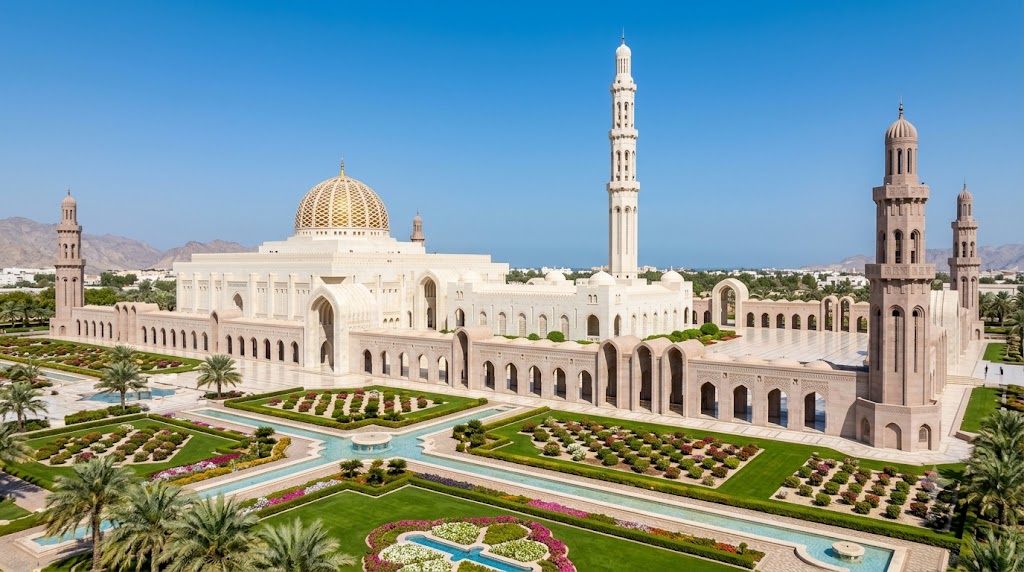
    The Sultan Qaboos Grand Mosque, best visited before 11 AM to beat both the heat and the crowds, is the essential stop, alongside the Mutrah Souq for spices, frankincense, and silver, and the Royal Opera House Muscat for a look at the city’s more modern architectural face. Muscat itself is noticeably calmer and less built-up than Dubai, a genuine part of its appeal for travellers who want Gulf convenience without Gulf-city intensity.

    Mountains: Nizwa and the Interior, 1 to 2 Days

    A drive inland to Nizwa, once Oman’s capital, centres on its imposing fort and a Friday-morning livestock and produce souq that feels genuinely local rather than staged for tourists. The surrounding Al Hajar mountains, including Jebel Shams, Oman’s highest peak and known locally as the Grand Canyon of Arabia for its dramatic gorge views, reward an extra day if your itinerary allows it.

    Desert: Wahiba Sands, 1 Night

    An overnight stay at a Bedouin-style desert camp in the Wahiba Sands is the single experience most first-time visitors rate highest. Dune bashing by 4×4, a camel ride at sunset, and a night sky largely free of light pollution combine into an experience that genuinely does not exist anywhere within a similar flight time from Punjab.

    Coast: Muscat’s Beaches or a Salalah Extension

    Muscat’s own coastline offers pleasant beaches and dolphin-watching boat trips without needing to travel further, but travellers with extra days sometimes add Salalah in the south, a genuinely different Oman shaped by the annual khareef monsoon season, lush and green in a way that surprises people expecting only desert.
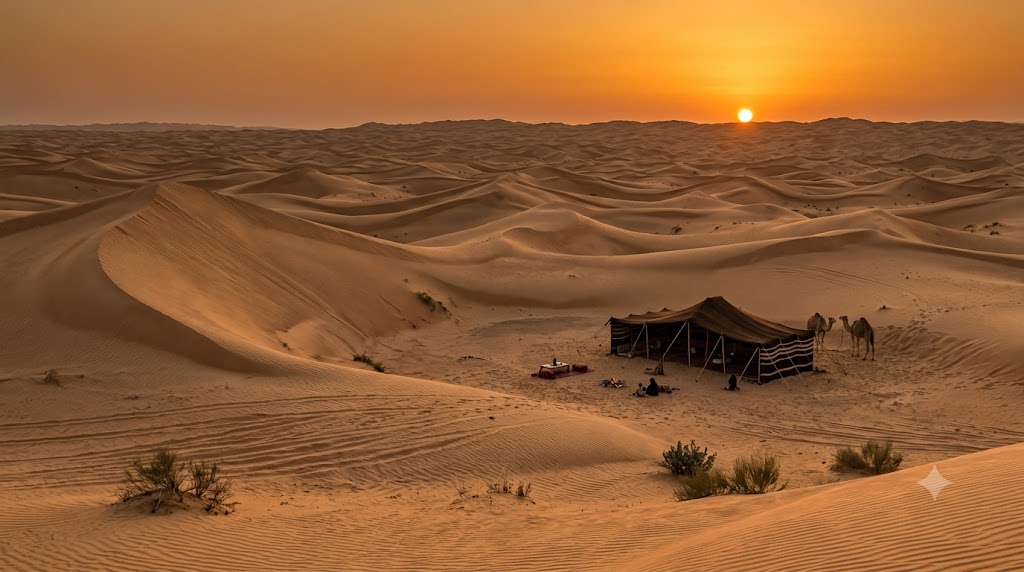
    Golden sand dunes of Wahiba Sands desert in Oman at sunset with a Bedouin style camp tent
    An overnight desert camp in the Wahiba Sands, the experience most first-time Oman visitors rate highest

    A Sample 6-Day Itinerary

    • Day 1: Arrive Muscat, evening at Mutrah Corniche and the souq
    • Day 2: Sultan Qaboos Grand Mosque in the morning, Royal Opera House and Old Muscat in the afternoon
    • Day 3: Drive to Nizwa, fort and souq visit, onward toward the Wahiba Sands by evening
    • Day 4: Overnight desert camp, dune bashing, camel ride, stargazing
    • Day 5: Morning desert sunrise, drive back to Muscat via Wadi Bani Khalid for a swim stop at the natural pools
    • Day 6: Muscat beach morning or last-minute souq shopping, departure

    This pacing covers all four landscapes without feeling rushed, and it fits comfortably within a long weekend plus a couple of extra leave days, well suited to the kind of short-haul trip Amritsar’s direct connection makes realistic in the first place.

    Best Time to Visit

    Window Conditions
    October to April The main travel season, warm but manageable daytime temperatures, cooler evenings, ideal for the desert camp and mountain legs
    May to September Very hot in Muscat and the interior, often exceeding 40 degrees C, best avoided for the desert and mountain legs specifically
    June to September (Salalah only) The khareef monsoon season transforms Salalah into a green, misty landscape, the one part of the country where summer is actually the peak season

    What to Eat

    Omani food is less internationally known than its Gulf neighbours’ cuisines, but it is a genuine part of the experience once you know what to look for.

    • Shuwa, slow-cooked marinated lamb or goat, traditionally wrapped in banana leaves and cooked in an underground pit for close to a full day, usually reserved for special occasions but available at better restaurants
    • Majboos, a spiced rice dish with meat or fish, closely related to biryani in structure and a comfortable, familiar flavour profile for Indian travellers
    • Omani halwa, a dense, sticky dessert flavoured with cardamom, rosewater, and saffron, traditionally served alongside Omani coffee as a welcome gesture
    • Omani coffee (qahwa), lightly spiced with cardamom, served in small cups and refilled generously, a hospitality ritual worth experiencing rather than rushing through
    • Fresh seafood along the coast, including grilled kingfish and prawns, reflecting Oman’s long coastline and fishing tradition

    Indian restaurants are also widely available in Muscat given the large resident Indian community, useful for travellers wanting a familiar meal partway through the trip, though it would be a shame to skip Omani food entirely on a first visit.

    Oman vs Dubai: The Honest Comparison

    Since Dubai is the default comparison almost every Punjab traveller makes, here is how the two actually stack up.

    Factor Oman Dubai
    Pace and atmosphere Calmer, more traditional, less built-up Fast-paced, modern, shopping and skyline focused
    Signature experience Desert camping, mountain drives, natural landscapes Malls, iconic architecture, desert safaris as a shorter add-on
    Flight from Punjab Direct from Amritsar, around 3.5 hours Via Chandigarh-Delhi or a direct Amritsar-Dubai option, broadly similar flight time
    Repeat-visit appeal High for travellers who have already done Dubai and want something different Very high as a reliable, tested favourite
    Best fit Nature, adventure, and a quieter Gulf experience City energy, shopping, and a wider range of entertainment options

    Our honest read: Oman is not trying to be a Dubai replacement, and most of our clients who book it have already done Dubai once or twice and specifically want the desert-and-mountain experience Dubai’s city-first itinerary does not really offer.

    Extending Into the Mountains: Jebel Shams and Jebel Akhdar

    For travellers with an extra day or two, Oman’s mountain interior rewards the detour. Jebel Shams, Oman’s highest peak, overlooks a dramatic gorge often compared to a miniature Grand Canyon, with viewpoints and a rim walking trail that require no technical climbing experience. Jebel Akhdar, the Green Mountain, sits at a high enough elevation to support terraced rose and fruit gardens in an otherwise arid country, and its cooler temperatures make it a popular escape during the hotter months when Muscat and the desert legs become less comfortable. Both are reachable by 4×4 from the Nizwa area and work well as an extension rather than a replacement for the core Muscat-Nizwa-Wahiba Sands route.

    Wadi Bani Khalid: The Detail Most Itineraries Skip

    Between Nizwa and the Wahiba Sands sits Wadi Bani Khalid, a series of natural turquoise pools fed by mountain springs, cool enough for a genuinely refreshing swim after a hot desert drive. Most rushed itineraries skip it entirely in favour of getting to the desert camp faster, but it costs little extra time to build in as a midday stop and consistently surprises first-time visitors who did not expect a natural swimming pool in the middle of an otherwise arid landscape.

    Cost Shape, Without Fixed Numbers

    We are not publishing fixed price tags, since cost varies by season and hotel category, but the relative shape is worth knowing. Oman generally runs comparable to or slightly above Dubai for hotels of an equivalent standard, but the direct Amritsar flight keeps the airfare component genuinely competitive against routing through a metro hub, and the desert camp night is typically one of the more affordable experiences on the itinerary relative to what it delivers. Reach out and we will build a real, itemised quote for your dates within 24 hours, no obligation.

    Culture and Dress Code Notes

    Oman is a conservative Muslim country, and while it is genuinely welcoming to tourists, a few practical notes go a long way toward a smoother trip.

    • Dress modestly in public, shoulders and knees covered for both men and women, particularly outside beach and resort areas.
    • Full coverage is required at the Sultan Qaboos Grand Mosque, including a headscarf for women, loose full-length clothing, and closed shoes; scarves are sometimes available to borrow on site but carrying your own avoids any delay.
    • Alcohol is available in licensed hotels and restaurants but not sold in general retail the way it is in Dubai, worth knowing if that is part of your trip planning.
    • Public displays of affection are best kept minimal, consistent with broader Gulf cultural norms.
    • Fridays follow a different rhythm, since it is the primary day of rest, with some souqs and businesses operating on adjusted hours, the Nizwa livestock souq specifically is a Friday-morning institution worth timing your visit around rather than against.

    Packing and Practical Notes

    • Omani Rial is the local currency; cards are widely accepted in Muscat but carry cash for the Nizwa souq and desert camp.
    • Pack for a genuine temperature swing, hot desert days and noticeably cooler desert nights, particularly if visiting the Wahiba Sands or the Jebel Akhdar mountain extension.
    • A dedicated 4×4 with an experienced driver is essential for the Wahiba Sands and Jebel Shams legs, the terrain is not suited to a standard rental car, and most well-run itineraries include this as part of the package rather than leaving it to arrange locally.
    • English is widely spoken in Muscat’s tourist areas, including hotels, restaurants, and major attractions, making on-the-ground communication straightforward for most travellers.

    Booking Timing

    Two timing factors are worth acting on. First, the October-to-April travel window is when demand, and pricing, both climb, so booking a few months ahead for a winter trip specifically pays off more than it would for a shoulder-season booking. Second, awareness of the direct Amritsar-Muscat route is still relatively low even within the Tricity itself, meaning seat availability on this specific flight is currently more forgiving than the equivalent Delhi-Muscat route, though that gap is likely to close as more Punjab-based travellers discover it over the coming year.

    Oman for Family and Group Trips

    The city-mountain-desert combination genuinely suits mixed-age groups better than most short-haul international options. Muscat itself is easy and comfortable for older travellers, the desert camp typically offers both adventurous dune-bashing and calmer camel-ride options within the same evening, and younger travellers in the group tend to rate the 4×4 desert driving and mountain legs as genuine highlights rather than filler. For larger friend groups, the direct Amritsar flight means the whole group can travel together on one route without needing to coordinate around a Delhi layover, simplifying logistics meaningfully compared to most other international options from this region.

    Who This Trip Suits

    • First-time Gulf travellers wanting something calmer than Dubai without giving up short flight time or easy visa access
    • Adventure-leaning younger travellers, given the growing interest in dune bashing, mountain trekking, and desert camping specifically among younger Indian visitors
    • Families wanting a genuinely varied trip in a short window, since the city-mountain-desert combination keeps a mixed-age group engaged without needing multiple flights
    • Repeat Dubai visitors looking for a change that still keeps flight time and visa complexity low

    Frequently Asked Questions

    Is there really a direct flight from Amritsar to Muscat?

    Yes, Air India Express operates this route directly, avoiding the need to connect through Delhi or any other hub, a detail most generic Oman package content for this region does not mention.

    Do Indians need a visa for Oman?

    Yes, a standard e-visa applied for entirely online, with processing typically taking 24 to 48 hours. Oman has largely discontinued visa-on-arrival for Indian passport holders, so this needs to be arranged before travel.

    Is Oman safe for Indian tourists, including families and solo travellers?

    Yes, Oman is widely regarded as one of the safest countries in the Gulf region, with a stable, low-crime environment that suits families, solo travellers, and first-time Gulf visitors alike.

    How many days does an Oman trip need?

    Five to six days comfortably covers Muscat, Nizwa, and an overnight in the Wahiba Sands, the core experience most first-time visitors are after. Add extra days for a Jebel Shams mountain extension or a Salalah add-on if your schedule allows.

    What is the best single experience in Oman for a first visit?

    The overnight Wahiba Sands desert camp consistently rates as the highlight for first-time visitors, combining a 4×4 dune-bashing experience, a Bedouin-style camp, and genuinely dark night skies within a single, well-organised overnight stop.

    Is Oman good for a honeymoon?

    Yes, particularly the desert camp night and a Salalah extension if travel dates allow, both of which offer a quieter, more intimate experience than a typical city-and-beach Gulf itinerary.

    Can I rent a car and drive myself in Oman?

    Self-driving is possible on Muscat’s main roads and the highway to Nizwa, but the Wahiba Sands and Jebel Shams legs require genuine off-road capability and local route knowledge, which is why most well-planned itineraries use a dedicated 4×4 with a driver for those specific stretches rather than a standard rental.

    Is alcohol available in Oman?

    Yes, but only within licensed hotels, resorts, and certain restaurants, not through general retail. This is a meaningfully more relaxed policy than some neighbouring countries but still more restricted than Dubai, worth factoring in if it matters to your trip plans.

    How does the Amritsar route compare to flying via Delhi or Dubai first?

    The direct Amritsar-Muscat flight is both faster and simpler than any routing that adds a connection, since it skips the domestic leg to a metro hub entirely. For a Chandigarh or Amritsar-based traveller, this is currently the most efficient way to reach Oman available, and it is the detail most generic package content for this region overlooks completely.

    Book the Route That Actually Starts in Punjab

    A generic Oman package built around a Delhi departure ignores the one advantage a Tricity traveller already has, a direct flight sitting an hour and a half down the road in Amritsar. Explore more international tour packages from Chandigarh, compare it against our Chandigarh and Amritsar international flights guide, or call us directly at +91 99143 10333 for an itinerary built around the Amritsar route from the start, whether that is a quick five-day city-and-desert trip or the fuller week with a Jebel Shams mountain extension added in. Flywings team since 2005.
  • Diwali 2026 Travel from Chandigarh: The Countdown Guide to Booking Before Prices Spike

    Diwali 2026 Travel from Chandigarh: The Countdown Guide to Booking Before Prices Spike

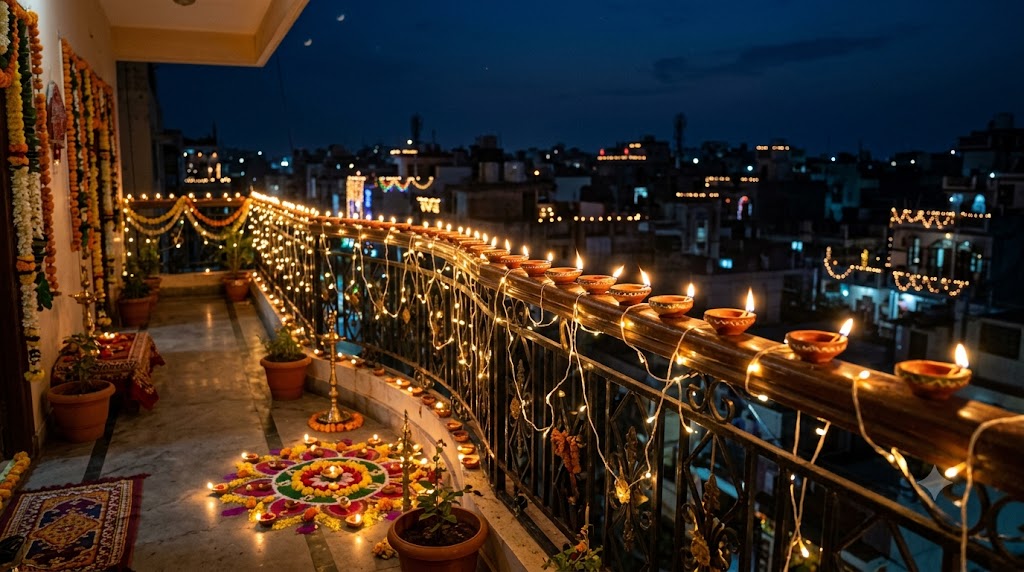
    Diwali 2026 falls on Sunday, 8 November, and if that date feels far away right now, it is not. It sits exactly inside the booking window that decides whether your festival trip costs a fair fare or a panic fare. At Flywings Tour & Packages Pvt Ltd, the weeks before Diwali are the busiest of our year, and the single biggest factor separating a smooth trip from a stressful one is not the destination. It is when the booking actually happened. This guide is built as a countdown, so wherever you are reading it, you know exactly what to do next.

    Quick facts before you plan: Diwali 2026 is Sunday, 8 November. The five-day festival window runs from Dhanteras on 6 November to Bhai Dooj on 10 November. The best outbound days are 5, 8 or 9 November, with 6 and 7 November typically the most expensive. Fares booked 60-90 days ahead run meaningfully cheaper than last-week bookings.

    12 Weeks Out: Lock Your Dates and Start Watching Fares

    At twelve weeks before Diwali, most people have not started thinking about travel yet, which is exactly why this is the best time to start. Decide roughly where you want to go and how many days you can take off. You do not need a firm booking yet, but you do need a firm date range, because every week you wait from here narrows your options and raises your likely fare. This is also the point to start a fare watch on your preferred route with our desk, the same approach we cover in detail in our cheap flights guide. Twelve weeks feels early to most people, and that instinct is exactly why so many festival trips end up costing more than they needed to. The travellers who move first are not being anxious. They are simply the ones who understand how festival demand actually behaves.

    8-10 Weeks Out: Book Flights Now, Not Later

    This is the single most important window on this entire calendar. Fares booked 60-90 days ahead of Diwali are consistently the cheapest available, and every week you wait after this point trades away savings. If your dates are fixed by family plans or leave approval, this is when you commit. Two tactical details worth knowing:

    • Flying on Diwali day itself (8 November) is often 20-40% cheaper than flying the Friday or Saturday before it, since most travellers want to be home for the actual festival evening rather than in transit.
    • Return flights on 12 or 13 November tend to be the best-value return dates, just after the festival crowd has already gone home.

    If you are travelling as a family group or planning a joint trip with relatives, this is also the point to ask about group fare blocks, which we cover in our group travel desk.

    6-8 Weeks Out: Confirm Hotels and Visas

    With flights locked, hotel rooms in popular Diwali destinations begin filling fast, particularly anywhere with its own festival draw. If your trip is international, this is also the last comfortable window to file a visa application without rushing processing. For destinations we have covered in detail, cross-check the current entry rules before booking non-refundable stays, especially given how quickly rules can shift, as our Thailand visa update showed earlier this year.

    4 Weeks Out: The Last Comfortable Booking Window

    By four weeks out, the easiest fares and room categories are already gone, but a good trip is still very achievable. This is the point where we start actively working around constraints rather than simply booking the obvious choice. If your first-choice flight has gone up sharply, we look at nearby dates, alternate routings through Delhi, or a different departure time that still gets you home for the festival.

    2 Weeks Out: Damage Control, Not Panic

    If you are reading this with two weeks left, the message is simple: it is late, not hopeless. Fares will be higher and the best hotels will be gone, but options still exist, particularly if you have some flexibility on exact dates or are open to a less obvious destination. This is exactly where a ticketing desk that tracks live inventory daily earns its keep over a portal search that only shows what is left rather than what could still work with a small adjustment.

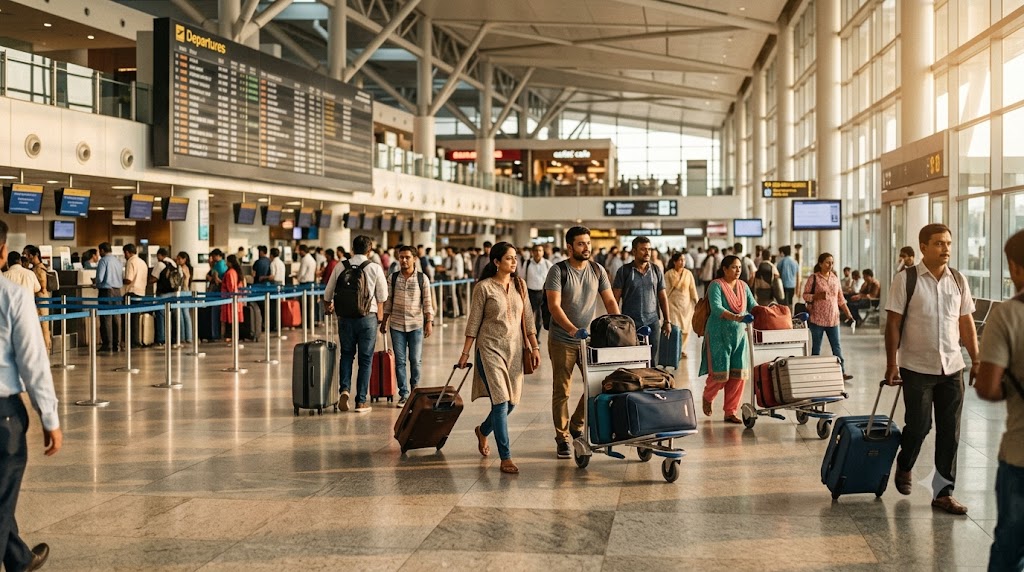
    Airport departure board and travellers with luggage during festival travel season - Diwali flight booking tips
    Festival-week airports fill fast. The travellers who booked eight to ten weeks out are the ones moving through security calmly.

    Why Festival Fares Behave Differently From Normal Fares

    On a normal route, fares mostly follow the booking-window pattern we cover in our cheap flights guide: book four to six weeks out and you generally do fine. Diwali breaks that pattern because demand is not spread across the month, it is compressed into a handful of specific days. Airlines know exactly which dates the whole country wants to fly on, and fare buckets on those dates empty out far faster than on an ordinary week. This is why the 60-90 day window matters more for Diwali than for almost any other trip you will book all year. It is not a general rule of thumb here, it is the difference between a normal fare and a genuinely inflated one.

    What Actually Happens to a Route You Wait On

    It helps to see this as a real pattern rather than an abstract warning. A route that shows a comfortable, ordinary fare in early August will typically show a noticeably higher fare by mid-September, purely because the cheapest seat buckets have sold. By late October, the same route often has only the highest fare classes left, and by the first week of November, some flights on the peak days are simply full. None of this happens as one dramatic jump. It happens in small increments every week, which is exactly why it is easy to underestimate until the week you actually try to book.

    Diwali 2026: The Full Festival Calendar

    Date Occasion
    Friday, 6 November Dhanteras
    Saturday, 7 November Choti Diwali / Naraka Chaturdashi
    Sunday, 8 November Diwali / Lakshmi Puja
    Monday, 9 November Govardhan Puja
    Tuesday, 10 November Bhai Dooj

    Knowing this full calendar matters for travel planning specifically because it shapes demand. The Friday and Saturday before Diwali are when everyone wants to already be home, which is exactly why those two days carry the highest fares of the entire window.

    Best and Worst Days to Fly: A Simple Rule

    Day Fare Pattern Why
    Thursday, 5 November Good value Ahead of the main rush, before demand peaks
    Friday, 6 November Most expensive Everyone wants to be home for Dhanteras and the run-up to Diwali
    Saturday, 7 November Most expensive Last full travel day before Diwali itself
    Sunday, 8 November Often 20-40% cheaper Diwali day itself, when most travellers prefer to already be settled at home
    Monday, 9 November Good value Festival mood continues, but travel demand has eased
    Thursday-Friday, 12-13 November Best return value The return rush has already passed

    Where to Go for Diwali: Three Directions

    Stay in Punjab, See the Festival Itself

    You do not need to leave the region to have a memorable Diwali trip. Amritsar’s Golden Temple during Diwali is lit with thousands of lamps in one of the most photographed sights of the entire festival calendar, covered in full in our Golden Temple visitor guide. If a short domestic trip fits your leave better than an international one, this is very often the best single option on this list.

    A Long Weekend Escape

    With Diwali falling on a Sunday, a few strategically placed leave days either side create a genuine long weekend without using much annual leave. Our weekend getaways guide covers the full shortlist of hill and heritage options within a few hours of Chandigarh, several of which are at their most pleasant in early November.

    An International Trip Timed Around It

    For travellers using Diwali as the anchor for a longer international holiday, November sits inside the good-weather window for several of our most-booked destinations, including Dubai, Malaysia and Singapore. Since Diwali leave often stacks with a following weekend, this is one of the few windows all year where a proper international trip fits inside a realistic leave balance.

    How This Is Different From a Normal Long Weekend

    Our weekend getaways guide covers the general 2026 long-weekend calendar, and much of that logic still applies here, but Diwali deserves its own treatment for one reason: it is the single highest-demand travel week of the entire Indian calendar, well above Republic Day, Independence Day or even most wedding-season weekends. That scale changes the maths. A booking strategy that comfortably works for an ordinary long weekend, such as booking three to four weeks out, simply does not hold for Diwali, where the same timeline often means choosing from whatever fares happen to be left rather than the fare you actually wanted.

    Diwali Booking Mistakes We See Every Year

    • Waiting for a sale that never quite arrives. Diwali is peak season everywhere in India. Airlines rarely need to discount a route that will sell out anyway.
    • Booking the outbound flight without checking the return date’s price. A cheap outbound on a bad return date can cost more overall than a slightly pricier outbound paired with a smart return.
    • Ignoring tier-2 routing options. Sometimes flying via a slightly less obvious connection, rather than the first result a search shows, saves meaningfully during peak weeks.
    • Assuming hotel rooms will still be there. Popular Diwali destinations, especially Amritsar and hill towns, genuinely sell out their best properties weeks ahead.
    • Forgetting visa timelines for international trips. A visa that normally takes a few days can slow down during any high-demand travel season, so file early rather than assuming standard processing speed will hold.

    Packing and Practical Diwali Travel Notes

    • Carry sweets and gifts in checked luggage, not hand baggage, since many airlines restrict certain packaged food items and loose sweets in the cabin, and checked bags avoid the question entirely.
    • Firecrackers cannot be carried on any flight, checked or hand baggage, under standard aviation safety rules. Buy them locally at your destination if that is part of your celebration plan.
    • Book airport transfers in advance for late Diwali-night arrivals, since taxi availability in many cities drops sharply on the festival evening itself as drivers head home to celebrate.
    • Keep a printed copy of hotel bookings and ID for every traveller, particularly for group trips, since front desks during peak season move faster with paperwork ready rather than searched for on the spot.
    • If travelling with elderly family members, confirm wheelchair or priority boarding assistance at the time of booking rather than at the airport, since festival-week staff are stretched thinner than usual.

    Group and Family Diwali Travel

    Diwali is one of the few times of year when extended families genuinely try to travel together, and this is exactly where a coordinated booking beats everyone booking separately. Group fare blocks hold seats and allow later name confirmation, room blocks keep everyone in the same wing of a hotel rather than scattered floors apart, and one point of contact means a schedule change affects one phone call instead of ten confused family group chats. If your Diwali plan involves more than a handful of travellers, tell us the headcount early. This is a peak-season constraint that only gets tighter the closer you get to the date, and group flexibility on dates tends to shrink faster than individual flexibility does, simply because more people need to agree on the same days.

    Diwali Travel by Traveller Type

    • Students coming home: book the moment your college calendar confirms the break, since student routes to smaller cities often have fewer flight options to begin with, and those thin out fastest of all.
    • Couples planning a Diwali honeymoon or anniversary trip: pair the festival with an international window like our Bali vs Maldives vs Dubai guide covers, since November sits inside good weather for most of those routes.
    • Families with school-going kids: school Diwali breaks are usually announced well ahead, so this is often the easiest group to plan early for, provided the booking actually happens as soon as dates are known rather than closer to the break itself.
    • Working professionals with limited leave: since Diwali falls on a Sunday in 2026, a well-placed single leave day either side can create a genuine long weekend without a heavy leave-balance cost.
    • Senior citizens visiting family: book earlier rather than later specifically to secure aisle seating, wheelchair assistance slots and convenient flight timings, all of which get harder to arrange as a route fills up.

    What This Costs to Get Wrong

    The honest version of this guide is simple: nothing about Diwali travel is complicated, but the cost of delay compounds quietly. A route that is comfortably affordable at ten weeks out can be significantly pricier at four weeks out, not because of any single dramatic price jump, but because each week a few more of the cheapest seats and rooms disappear. Nobody notices the individual week that mattered. Everyone notices the total by the time they are booking in a hurry. The fix is not complicated. It is simply acting on this countdown at whichever stage you are reading it, rather than filing it away for later and rediscovering it in October with fewer options left.

    Diwali Travel Within India vs an International Trip

    Both are genuinely good options for Diwali, and the right choice depends less on budget than on what kind of break you actually want. A domestic trip, particularly to somewhere with its own festival atmosphere like Amritsar or a nearby hill town, lets you stay connected to the Diwali mood itself, the lights, the food, the sense of the whole country celebrating around you. An international trip trades that atmosphere for a genuine change of scene, which some travellers specifically want after a demanding year, and November’s weather works well for several of our most-booked routes. Neither is the better answer in general. We usually ask one simple question to help clients decide: do you want Diwali to be the destination, or do you want Diwali to be the excuse to finally take the trip you have been planning anyway. The answer usually settles it quickly.

    A Simple Test to Know Which Week You Are In

    If you are unsure where you fall on this countdown, a quick way to check is to look at what a normal search shows you right now. If your preferred route and dates still show a range of reasonable fare options across several airlines, you are still in a comfortable booking window. If you notice most flights on your exact dates only show one or two remaining fare classes, or prices have visibly jumped compared to nearby dates, you have moved into the later, more constrained part of the calendar. Either way, calling our desk at this point gets you an honest read on whether to book immediately, wait a short window for a specific fare release, or adjust dates slightly for meaningfully better value.

    Frequently Asked Questions

    When is Diwali in 2026?

    Diwali falls on Sunday, 8 November 2026. The full five-day festival window runs from Dhanteras on 6 November to Bhai Dooj on 10 November.

    Is it actually cheaper to fly on Diwali day itself?

    Often, yes. Since most travellers prioritise being home before the festival evening, flights on 8 November itself can run 20-40% cheaper than the Friday or Saturday immediately before it, when demand peaks hardest.

    How far in advance should I book Diwali flights?

    Sixty to ninety days ahead is the sweet spot for most routes. At the time of publishing this guide, that window is open now. Every week that passes narrows the gap between a fair fare and a peak-week fare.

    Where should I go for a short Diwali trip from Chandigarh?

    Amritsar is one of the most rewarding short options, since the Golden Temple during Diwali is genuinely spectacular and it is only a few hours from the Tricity. For something further, our weekend getaways guide covers hill and heritage options that suit a long weekend built around the festival dates.

    Can Flywings arrange a Diwali trip for an extended family group?

    Yes, and this is one of our busiest services every festival season. Group flight blocks, coordinated hotel rooms and one point of contact for the whole family are exactly what we build for Diwali group trips. Share your headcount and rough dates as early as possible.

    What if I am only booking a few weeks before Diwali?

    It is late, not hopeless. Fares and room categories will be more limited, but a live desk that checks actual current inventory can usually still find a workable option, particularly with a little flexibility on exact dates.

    Should I book Diwali flights and hotels separately or together?

    Together, ideally, and through one desk. Booking a flight without confirming hotel availability for the same dates risks landing a great fare with nowhere good left to stay, particularly in smaller Diwali-popular towns where room inventory is limited. We check both before confirming either.

    Do visa rules change or slow down during Diwali season?

    Processing speed does not officially change, but volume does, since many travellers file applications in the same weeks. Filing your visa application as early as possible in the countdown, rather than assuming standard turnaround will hold under higher demand, is the safer approach for any international Diwali trip.

    Start the Countdown Today

    Diwali 2026 is close enough to plan properly and far enough away to still get it right. Tell us your dates, your destination ideas and your group size, and we will build the itinerary around the calendar above rather than around a rush. Explore our tour packages, browse India tour packages from Chandigarh, or reach us directly:

    Written by Sukhjinder Kaur, Senior Travel Content Writer at Flywings Tour & Packages Pvt Ltd – booking flights and holidays from Mohali, Punjab since 2005. Dates and fare patterns reflect published festival calendars and industry booking data as of August 2026. Confirm current fares and availability when you enquire.

  • Golden Temple Amritsar: The Complete Visitor Guide — Perfect Your Day, Hour by Hour (2026)

    Golden Temple Amritsar: The Complete Visitor Guide — Perfect Your Day, Hour by Hour (2026)

    Amritsar rewards a well-planned single day better than almost any other city in India — the Golden Temple works on any schedule you give it (it never closes), the Wagah Border ceremony runs on a fixed clock 30 km away, and the gap between them is exactly enough time for the food this city is famous for. At Flywings Tour & Packages Pvt Ltd, we’ve sent Chandigarh and Punjab families here for a day trip, a weekend, and everything in between since 2005. Here is the whole visit mapped hour by hour, so you leave with the full experience and not the rushed version.

    6:00 AM — Sunrise at the Golden Temple

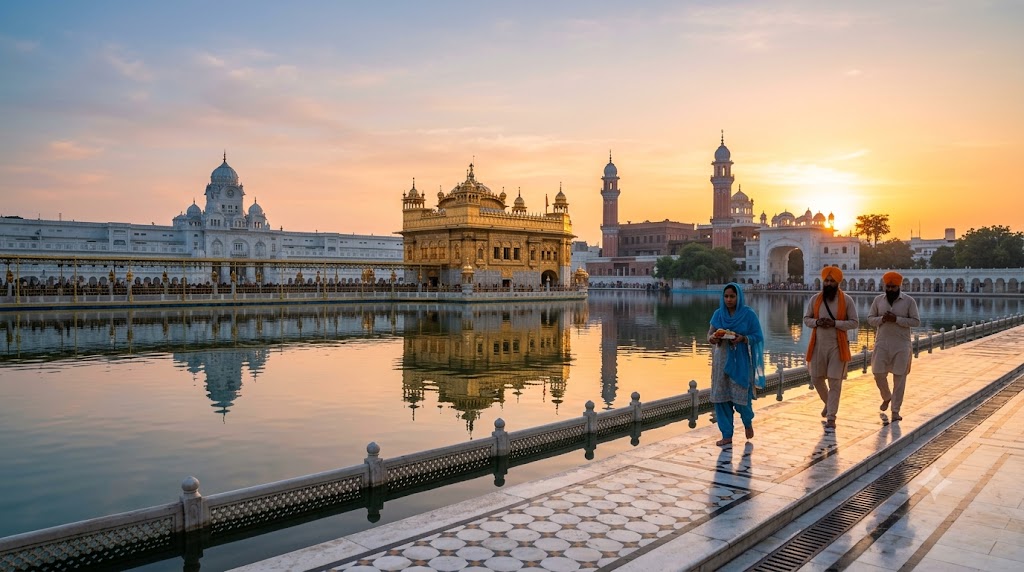
    The single best hour to arrive. The Golden Temple (Harmandir Sahib) is open 24 hours a day, every day, with free entry and no religious qualification to enter — but sunrise is when the marble parkarma is calmest, the light on the gilded dome is softest, and the crowds of the day haven’t arrived yet. Enter via the causeway, and before anything else, follow the three rules every visitor observes: remove your shoes at the entrance (free counters hold them), cover your head (scarves are provided if you don’t have one), and wash your feet in the shallow water channel at the entrance. Modest dress — shoulders and knees covered — applies to everyone, regardless of gender.

    Budget a minimum of 2–3 hours for a proper visit: the walk around the parkarma, the causeway queue into the inner sanctum for darshan, and simply sitting by the sarovar (the sacred pool) taking it in. If you want the complete experience including a langar meal and time to reflect, plan for closer to 5–6 hours across the day rather than a single rushed pass.

    9:00 AM — Langar: The World’s Largest Free Kitchen

    Somewhere around mid-morning, once you’ve done a first circuit of the temple, sit for langar — the free community meal that has run continuously at the Golden Temple for centuries. It serves around 100,000 meals a day, free, to anyone regardless of faith, caste or nationality, prepared and served largely by volunteers. Queues move fast even when they look long; join the line, sit on the floor in the communal hall, and eat what’s served. It’s not just a meal — it’s the single clearest expression of the Golden Temple’s core philosophy, and skipping it is the most common regret we hear from first-time visitors.

    11:00 AM — Jallianwala Bagh and the Partition Museum

    Both sit within walking distance of the Golden Temple along Heritage Street, and both add historical weight to the trip:

    • Jallianwala Bagh: the walled garden and site of the 1919 massacre, now a memorial with a small museum — a sober, important stop, best given 30–45 minutes.
    • Partition Museum: the world’s first museum dedicated to the 1947 Partition, telling the story through oral histories, refugee artifacts, letters and photographs. It’s open 10 AM–6 PM, Tuesday to Sunday (closed Monday), with a modest entry fee for tourists. Give it at least an hour if you’re interested in history — photography isn’t permitted inside, so be present rather than filming.

    1:00 PM — Amritsari Food Break

    This is non-negotiable in Amritsar. Hall Bazaar and the lanes around the Golden Temple complex serve some of the best food in North India — kulchas stuffed and griddled to order, lassi thick enough to stand a spoon in, and tandoori everything. Locals have their favourite decades-old spots; ask your driver or hotel, since the best kulcha stall in Amritsar rarely has a sign worth photographing.

    1:45 PM — A Quick Heritage Street Shopping Stop

    If you have twenty minutes before heading to Wagah, Heritage Street between the Golden Temple and Town Hall is worth a walk-through: Punjabi phulkari embroidery, juttis (traditional footwear), and Amritsari papad and wadiyan make honest, packable souvenirs. Save the bigger shopping session for the evening when you’re back from Wagah and not racing a ceremony start time — Hall Bazaar stays lively well into the night.

    2:30 PM — Depart for Wagah Border

    The Wagah Border sits roughly 30 km from central Amritsar, and this is the one fixed appointment of the day — the Beating Retreat ceremony has a set start time and fills up fast, so leave with a real buffer. Most hotels and drivers recommend departing by 2:30–3 PM to account for security queues and seating, especially in peak season or around national holidays.

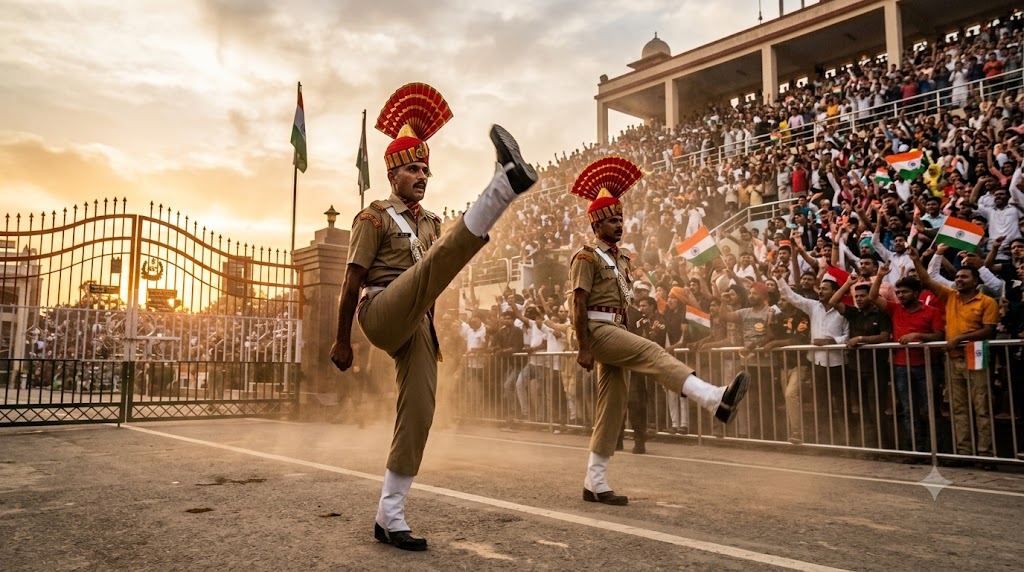
    BSF soldiers performing the high-energy Wagah Border retreat ceremony at sunset — Wagah Border ceremony Amritsar
    The Wagah Border Beating Retreat — 45 minutes of high-kick marching, flag lowering and crowd energy between India’s BSF and Pakistan’s Rangers, completely free to watch.

    4:30–5:30 PM — The Wagah Border Ceremony

    The ceremony’s start time shifts with the season — around 4:30 PM in winter, closer to 5:30 PM in summer — so confirm the current timing for your travel date. What follows is genuinely one of India’s most electric 45 minutes: BSF and Pakistan Rangers soldiers perform a high-energy display of precision marching, high kicks and flag lowering, with packed stands cheering on both sides of the border. It’s free, but arrive early for a decent seat — the stands fill completely around Independence Day (15 August) and other national occasions, when the atmosphere reaches its peak patriotic energy. If you’re travelling around mid-August, this is worth building your whole Amritsar day around.

    7:00 PM — Back to the Golden Temple, Lit Up

    The Golden Temple at night is a different experience entirely from the morning — the dome and surrounding buildings are lit, reflected in the sarovar, and the atmosphere turns quieter and more contemplative as the day-trip crowds thin out. This is also, for many visitors, the most photogenic hour of the whole day.

    9:45 PM — The Palki Sahib Ceremony

    If you can stay this late, this is the single most moving ritual at the Golden Temple: the Guru Granth Sahib (the Sikh holy scripture) is ceremonially carried in a golden palanquin from the main sanctum back to the Akal Takht for the night, accompanied by singing and devotees lining the causeway. It runs around 9:45 PM (closer to 10 PM in summer). Staying for this turns a good day trip into a genuinely memorable one — but it does mean a later drive back if you’re returning to Chandigarh same-day.

    One Day or Two? Planning the Logistics

    One-Day Trip from Chandigarh Overnight in Amritsar
    Best for Time-limited visitors, a focused Golden Temple + Wagah day Families wanting the full hour-by-hour experience above, including Palki Sahib
    Departure from Chandigarh Early morning, ideally by 5–6 AM to maximise the day Flexible — arrive the evening before
    Return Late night after Wagah or an early Palki Sahib viewing Next morning, unhurried
    Getting there ~230 km road (4–4.5 hours) or a short flight to Amritsar (ATQ) Same options, less time pressure

    Our honest recommendation: if you can spare one night, do — the Palki Sahib ceremony and a relaxed, non-rushed morning darshan are worth it. If time is genuinely tight, the one-day version above still delivers the Golden Temple, langar, Wagah Border and Amritsari food in a single, well-paced day.

    Where to Stay, If You’re Staying the Night

    • Walking distance from the Golden Temple: the most convenient tier — you can dip back in for the night view or Palki Sahib without a taxi, though rooms here vary widely in comfort and book up fast around Independence Day and Sikh festival dates.
    • Near the Mall Road / Ranjit Avenue area: more modern hotel options with easier parking, a short cab ride from the temple complex.
    • Highway-adjacent properties: useful if you’re arriving late by road or continuing on toward Jammu the next morning, trading a bit of walkability for convenience on a longer itinerary.

    We book the tier that matches your plan — temple-adjacent for a Palki Sahib-focused evening, or highway-side if Amritsar is a stopover on a longer Vaishno Devi or Kashmir trip.

    Getting to Amritsar from Chandigarh

    Amritsar is one of the most convenient short trips from the Tricity — road, rail and air all work well, and Amritsar’s own international airport (ATQ) means many travellers also combine a Golden Temple visit with an onward or inbound international flight, as we cover in our international flights from Chandigarh and Amritsar guide. It also sits directly on the route north toward Jammu, making it a natural add-on to a Vaishno Devi yatra or a Kashmir trip.

    Practical Tips We Give Every Client

    • Head covering: carry your own scarf or bandana if you’d rather not use the temple’s shared ones, especially for larger groups.
    • Photography: generally allowed around the Golden Temple complex, but strictly prohibited inside the Partition Museum — check signage at each site.
    • Footwear: shoe-check counters at the Golden Temple are free and well-organised, but keep your token safe.
    • Wagah Border seating: gender-segregated stands are standard; arrive early for a clear view, and expect security screening similar to an airport.
    • Mobility considerations: the Golden Temple parkarma is flat marble and wheelchair-manageable; Wagah’s stand seating is less accommodating — let us know in advance if this matters for your group.
    • Weather: October–March offers the most comfortable temperatures for a full day of walking; summer visits should front-load outdoor time to the morning and evening.

    Frequently Asked Questions

    What are the Golden Temple’s timings?

    The Golden Temple is open 24 hours a day, every day of the year, with free entry at any time. There’s no official closing time — the complex, langar and parkarma are accessible round the clock, though the most peaceful hours are early morning and late evening.

    How do I combine the Golden Temple and Wagah Border in one day?

    Start at the Golden Temple at sunrise, cover langar and the Heritage Street sites (Jallianwala Bagh, Partition Museum) by early afternoon, have lunch, then depart for Wagah Border by 2:30–3 PM to reach in time for the ceremony (4:30 PM in winter, 5:30 PM in summer). Return to the Golden Temple in the evening for the lit-up night view and, if time allows, the 9:45 PM Palki Sahib ceremony.

    What time is the Wagah Border ceremony?

    Around 4:30 PM in winter months and closer to 5:30 PM in summer — always confirm the current schedule for your travel date, and plan to arrive at least 1.5–2 hours early, especially around Independence Day (15 August) when stands fill to capacity.

    Is the Golden Temple free to visit?

    Yes, entirely — there’s no entry fee, and langar (the community meal) is also free for every visitor regardless of faith or nationality. The Partition Museum, a separate attraction nearby, does charge a modest entry fee for tourists.

    Can I visit Amritsar as a day trip from Chandigarh?

    Yes — it’s roughly a 4–4.5 hour drive each way (about 230 km), which comfortably supports a well-planned one-day visit if you leave early. For the full hour-by-hour experience including the night-time Palki Sahib ceremony, an overnight stay is more relaxed.

    Can Flywings arrange a private Amritsar day trip from Chandigarh?

    Yes — private cab, a paced itinerary matched to the hour-by-hour plan above, and Wagah Border seating guidance are all part of our Amritsar day-trip and overnight packages. Tell us your dates and group size for a quote.

    Plan Your Perfect Amritsar Day

    Amritsar is one of the easiest, most rewarding trips from the Tricity — but the difference between a rushed visit and a genuinely memorable one comes down to timing it right. Let us plan the day (or the overnight) around you. Explore more of our India tour packages from Chandigarh, or reach us directly:

    Written by Sukhjinder Kaur, Senior Travel Content Writer at Flywings Tour & Packages Pvt Ltd — planning trips from Mohali, Punjab since 2005. Timings verified as of July 2026; ceremony schedules and museum hours can shift seasonally, so confirm current timings when you enquire.