Author: Fly-wings

  • How to Choose the Best Travel Agent in Chandigarh, Mohali and Panchkula

    How to Choose the Best Travel Agent in Chandigarh, Mohali and Panchkula

    Search “best travel agent in Chandigarh” and you will get a stack of listicles, ranked lists of five or ten agencies with star ratings and short blurbs, most of them reading suspiciously similar to each other. We are not going to add another one. What we are giving you instead is the actual checklist we think you should run any agency through before booking, including us, because the honest answer to “who is the best travel agent” depends entirely on what you need, not on a generic ranking that cannot know your specific trip. Most “top 10 travel agencies” articles for this exact search are written by content farms with no real relationship to any of the agencies listed, ranking them by SEO convenience rather than genuine service quality. We would rather give you the tools to evaluate this yourself than pretend a ranked list could ever substitute for that.

    Quick context: The Chandigarh Tricity has a genuinely competitive travel agency market, Teji Travels, Shipra Travels, Grand Travel Planners, and Evergreen Travels among others all have real track records. This guide is not about ranking them, it is about what to actually check before you commit to any of them.

    The Checklist

    1. How Long Have They Actually Operated in the Tricity?

    Longevity in this specific business matters more than in most, because the advantages that make an agency worth using, consolidator fare access, airline relationships, embassy documentation familiarity, genuinely take years to build. An agency that opened last year cannot have the same depth of relationships as one that has been booking Chandigarh-Delhi-Dubai routes since 2005. Ask directly, and be specific about whether they mean the agency or just the current owner’s tenure, since agencies do change hands.

    2. Do They Have a Physical Office You Can Walk Into?

    Not because online-only agencies are automatically untrustworthy, but because a real office in Phase 7 Mohali, Sector 17 Chandigarh, or wherever they operate from signals a level of accountability that a purely digital storefront does not. If something goes wrong with your booking, being able to walk in and speak to someone in person is worth knowing you have as an option, even if you never need to use it.

    3. Do They Handle Your Specific Trip Type Regularly?

    A generalist agency and one that regularly handles group bookings, corporate travel, or visa-heavy international trips are not the same thing, even if both technically offer all three. Ask specifically, “how many group bookings of this size have you handled in the last year,” or “how many Schengen visa applications have you processed,” rather than accepting a general “yes, we do that” answer.

    4. Can They Explain Their Pricing, Not Just State It?

    A trustworthy agency will break a quote down by component, flights, hotels, transfers, visa fees, and explain why a particular routing or hotel category was chosen. An agency that only offers a single bundled number and gets defensive when asked to break it down is a fair reason to keep comparing.

    5. Is There a Single Accountable Contact, or a Rotating Queue?

    Ask who specifically will handle your booking from start to finish, and whether that is the same person you will reach if something needs fixing mid-trip. Agencies large enough to have multiple desks sometimes lose the single-point-of-contact advantage that is a big part of why people choose an agent over an OTA in the first place.

    6. Do They Handle Visa Documentation In-House?

    Some agencies outsource visa processing entirely to a third party, which adds a layer of communication delay and reduces accountability if something is filled out incorrectly. An agency with its own visa desk, rather than a pass-through arrangement, generally catches documentation issues earlier and follows up more reliably.
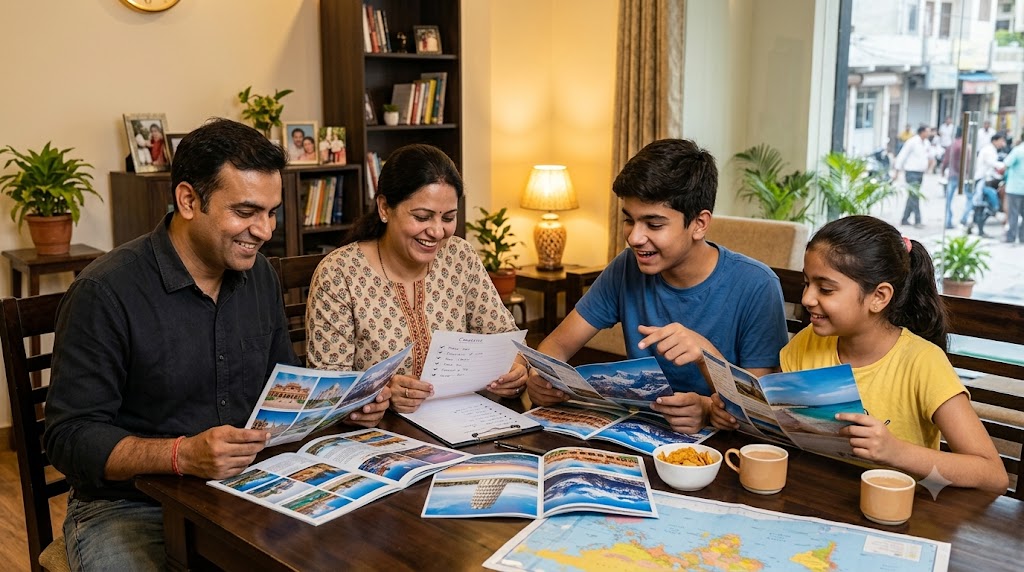
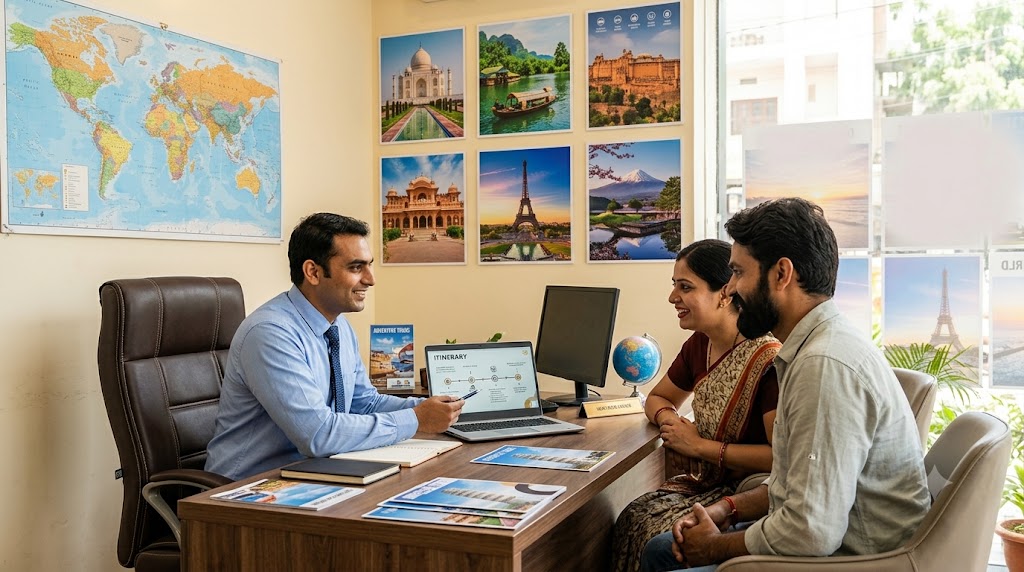
    Family sitting together discussing a travel itinerary with a printed checklist and brochures on a table
    Running any agency, including ours, through a real checklist beats trusting a generic star rating

    7. How Do Their Online Reviews Actually Read?

    Star ratings alone tell you very little, a 4.5 built on eight reviews means something different from a 4.5 built on three hundred. Read a sample of the actual written reviews rather than just the number, specifically looking for mentions of group bookings, visa handling, or how the agency responded when something went wrong, since those are the exact scenarios this checklist cares about. A pattern of reviews praising responsiveness during a problem is worth more than a pattern of reviews only mentioning a smooth, uneventful booking, since the latter tells you nothing about how the agency handles the harder cases.

    8. Do They Offer Genuinely Customised Itineraries, or Only Fixed Packages?

    Some agencies operate almost entirely off a catalogue of pre-built packages with minimal flexibility. Others will build an itinerary around your specific dates, budget, and interests from scratch. Neither approach is automatically wrong, a well-priced fixed package can be excellent value for a standard trip, but know which one you are getting, and ask directly whether changes to a package’s hotel category, duration, or included activities are genuinely possible or just a marketing claim.

    Red Flags Worth Knowing

    • Reluctance to put anything in writing, a quote, a cancellation policy, an itinerary, that only exists verbally is a real risk, regardless of how confident the conversation sounds.
    • Pressure to book immediately without time to compare, a legitimate deal with genuine time pressure (a specific fare closing) is different from generic urgency tactics used regardless of actual availability.
    • Vague answers about who handles a problem after booking, if the agency cannot clearly explain what happens if your flight is cancelled, that gap will matter exactly when you need it least.
    • No verifiable physical address or years of operation, a legitimate, established agency will not hesitate to confirm both clearly.

    Where Flywings Fits Against This Checklist

    Since we built this checklist to be genuinely useful rather than just a lead-in to a sales pitch, it is only fair to tell you honestly where we stand against it rather than let you assume.

    Checklist Item Flywings Tour & Packages Pvt Ltd
    Years operating in the Tricity Since 2005, from our Phase 7, Mohali office
    Physical office Yes, Phase 7, Mohali, open for walk-in consultations
    Group and corporate booking experience A core part of our business since inception, families, wedding parties, and corporate teams alike
    Pricing transparency Itemised quotes broken down by component on request, always
    Single accountable contact Yes, one desk handles your booking from quote through to return
    In-house visa processing Yes, our own visa desk for 50+ countries, not outsourced

    We would rather you verify this against the checklist yourself, ask us the same questions you would ask any agency, than take our word for it. Where we know we are not the right fit, a client wanting only a single, simple domestic flight booked with no group and no visa involved, we will tell you honestly to book it yourself through an OTA rather than take a transaction that does not need our involvement, the same principle we laid out in our companion piece on when a travel agent is actually worth using.

    Matching the Agency to the Occasion

    Beyond the general checklist, certain trip occasions benefit from an agency that specifically specialises in them, worth asking about directly rather than assuming general competence covers it.

    • Honeymoons benefit from an agency that understands the difference between a generic beach package and a genuinely romantic itinerary pacing, private transfers, well-chosen hotel categories, activities that suit a couple rather than a family group.
    • Destination weddings need an agency comfortable coordinating dozens or hundreds of guest bookings, room blocks, and often multiple vendor relationships at the destination itself, a meaningfully different skill set from booking a single family’s holiday.
    • Pilgrimage and yatra travel benefits from an agency with specific route knowledge, altitude and health considerations for high-altitude yatras in particular, and established relationships with local operators at the destination.
    • Corporate travel needs policy compliance tracking and reporting most leisure-focused agencies are not set up to handle well, worth confirming an agency has genuine B2B experience rather than treating a corporate booking like an oversized leisure trip.

    Ask any agency you are considering directly how many bookings of your specific occasion type they have handled recently, rather than accepting a general “we do everything” answer at face value.

    How We Built This Checklist

    We built this list from the questions clients have actually asked us over two decades in this business, and from the complaints we have heard about other agencies when clients switched to us after a bad experience elsewhere. It is not a theoretical framework, it reflects the specific things that go wrong when an agency falls short on any one of these points, a split group booking, a rejected visa application that could have been caught earlier, an unreachable contact after a flight got cancelled. We would rather hand you the actual diagnostic questions than ask you to trust a marketing claim.

    Questions Worth Asking Before You Book, With Anyone

    1. “How long has this specific agency been operating in Chandigarh or Mohali?”
    2. “Can you break this quote down by component rather than one bundled number?”
    3. “Who is my specific point of contact if something changes after I book?”
    4. “Do you process visa documentation yourselves or send it to a third party?”
    5. “What happens, step by step, if my flight is cancelled or delayed?”
    6. “Can I see this itinerary and cancellation policy in writing before I pay?”

    A confident, established agency will answer all six without hesitation. Treat any noticeable evasiveness as useful information, not an inconvenience.

    What a Good First Phone Call Actually Sounds Like

    Beyond the checklist itself, the tone of an initial conversation tells you a lot. A good first call spends more time asking questions than pitching, who is travelling, what the occasion is, what has gone wrong on past trips if any, before recommending anything specific. It should end with you having a clear next step, a quote by a specific time, a document to send over for a visa assessment, not a vague “we’ll be in touch.” And it should not feel like the agent is reading from a script regardless of what you actually said, a genuine conversation adjusts to your specific answers rather than following the same pitch for every caller. If a first call feels rushed or generic, that is a reasonable preview of what the rest of the relationship will feel like.

    A Note on Registered Business Details

    Beyond the checklist above, a legitimate travel agency in India should be able to provide its registered business name and GST registration on request for any significant booking, particularly for corporate travel where an invoice needs to match company records. This is a small, practical detail rarely mentioned in generic “best of” lists but genuinely worth confirming before a large payment, since a legitimate registered business has nothing to hesitate about here and an unregistered or informal operation may.

    Coverage Across the Wider Tricity

    Worth clarifying since search intent for “best travel agent Chandigarh” often actually means the wider region rather than the city proper. A genuinely useful Tricity-based agency should comfortably serve clients across Chandigarh, Mohali, Panchkula, and Zirakpur without treating any of them as an afterthought, since the practical difference in serving these areas is minor given how closely integrated the region is. If an agency’s service noticeably favours one part of the Tricity over another, particularly around in-person meetings or document drop-off, that is worth factoring in if you are based outside the city centre specifically.

    Why “Best” Genuinely Depends on Your Trip

    An agency that excels at solo backpacker itineraries is not automatically the right fit for a fifty-guest destination wedding. One built around leisure travel may not have the corporate account management a business needs for recurring employee travel. Rather than trusting a generic “best of” list to have already done this matching for you, apply the checklist above to two or three agencies whose specialty genuinely matches your trip type, and let the answers, not the star rating, make the decision.

    Frequently Asked Questions

    Is a bigger, more well-known agency always better?

    Not necessarily. Size sometimes trades off against the single-point-of-contact advantage that makes a travel agent worth using over an OTA in the first place. A mid-sized, established local agency often delivers more personal accountability than a large national chain’s local branch.

    How do I verify how long a travel agency has actually operated?

    Ask directly, and cross-check against their registered business address and any online reviews dated further back than a year or two, which is a reasonable signal of genuine longevity rather than a recently rebranded operation.

    Should I choose an agency based on price alone?

    No. The cheapest quote is not useful if it comes from an agency that cannot handle a problem mid-trip, or that outsources visa processing with no accountability if something is filed incorrectly. Weigh price against the checklist items above, not in isolation.

    What is the biggest mistake people make when choosing a travel agent?

    Trusting a generic ranked list without checking whether that agency’s specific specialty, leisure, corporate, group, visa-heavy, actually matches their own trip. The “best” agency for a solo trip and the “best” for a fifty-person wedding group are frequently not the same one.

    Does Flywings only work with Chandigarh, Mohali and Panchkula clients?

    Our office is based in Phase 7, Mohali, serving the full Tricity and wider Punjab region, but we regularly work with clients booking from further afield who found us through a specific package or guide rather than local proximity alone.

    Should I trust a travel agency’s own website testimonials?

    Treat them as a starting point, not a verdict. Testimonials on an agency’s own site are inherently selected to be favourable, which is not the same as being false, but cross-checking against independent review platforms and, ideally, someone you personally know who has used the agency gives a more complete picture.

    Is it worth visiting a travel agency’s office in person before booking a large trip?

    For a significant booking, a group trip, a destination wedding, a corporate travel contract, yes. An in-person conversation reveals things a phone call or email exchange often does not, how organised the office genuinely is, whether the person you meet is the person who will actually handle your booking, and whether the answers to the checklist questions above hold up when asked face to face.

    What should I do if an agency refuses to answer these checklist questions clearly?

    Treat that refusal as useful information and continue comparing other options. A legitimate, established agency confident in its own service should have no difficulty answering every question on this list directly.

    Run the Checklist, Then Call Us

    We would rather earn your booking by holding up to genuine scrutiny than by being the loudest name in a search result. Ask us every question on this list, compare the answers against any other Tricity agency you are considering, and book with whoever genuinely earns it. Explore our full background and team, browse our complete range of services, or call us directly at +91 99143 10333 to start with exactly the questions above, we would genuinely rather answer them upfront than have you discover the answers only after something goes wrong. Flywings team since 2005, Phase 7, Mohali.
  • Travel Agent vs Online Booking in Chandigarh: When You Actually Need a Human

    Travel Agent vs Online Booking in Chandigarh: When You Actually Need a Human

    Every few months someone in Chandigarh asks us a version of the same question, slightly embarrassed, as though it is a strange thing to ask a travel agency: “Honestly, why should I book through you instead of just doing it myself online?” It is a fair question, and the honest answer is that sometimes you should not. Online booking genuinely wins for a simple, one-way domestic flight with flexible dates. Where it stops winning, and where an actual conversation with someone who does this daily starts paying for itself, is worth being specific about rather than vague about. Most articles comparing travel agents and OTAs are written by one side or the other with an obvious thumb on the scale. We are a travel agency writing this, so read the self-interest into it if you like, but we have tried to write the section below the way we would actually answer the question if you called our Mohali office and asked it directly.

    Quick context: Industry data shows travel agencies are projected to gain market share against OTAs through 2026, driven largely by international and complex bookings, where agents with consolidator fare access typically beat the best publicly listed price by 5 to 7 percent, and by the value of having a human accountable when something goes wrong.

    The Honest Answer: It Depends What You Are Booking

    We are not going to pretend an OTA is always worse. That would be self-serving and untrue. The real answer splits cleanly by booking type, and knowing which category your trip falls into is the actual decision that matters.

    Simple Domestic Flight, Fixed Dates: OTA Usually Wins

    A one-way or round-trip domestic flight with dates you are not going to change, no group, no visa involved, is exactly what OTAs and airline apps are built for. Compare prices across two or three platforms, use a card offer if you have one, and book it yourself. Paying an agent for this adds a step without adding real value.

    International Flights: A Genuine Agent Advantage

    This is where the honest data actually favours a travel agent, not marketing spin. Agents with consolidator access to international fares typically beat the best publicly available OTA price by a real, measurable margin, commonly cited around 5 to 7 percent, particularly on complex multi-city or peak-season international routing. On a Dubai, Thailand, or Europe fare, that is not a trivial saving, and it is on top of the advice on routing and layover choices an OTA’s algorithm will not give you.

    Group Trips: Where OTAs Genuinely Struggle

    Booking eight, fifteen, or forty seats together, on the same flight, with the same hotel block, coordinated arrival times, is not a scenario most OTA platforms are built to handle gracefully. This is the single most common reason Chandigarh families, wedding parties, and corporate teams end up calling us instead of booking individually online, someone needs to hold the whole group together as one coordinated booking, not twenty separate transactions that may or may not end up on the same flight.

    Visa-Heavy Trips: The Documentation Difference

    An OTA will sell you a flight and a hotel. It will not review your visa documentation, tell you your bank statement does not meet a specific embassy’s requirement, or follow up when an application needs a correction. For destinations with a genuine documentation process, Schengen Europe, the UK, the US, even some UAE and Southeast Asian visa categories, this gap is where a proper travel desk earns its value most clearly.

    When Something Goes Wrong: The Real Test

    This is the scenario that actually reveals the difference, and it rarely comes up until it matters. A flight gets cancelled, a connection is missed, a hotel booking does not match what was confirmed. With an OTA, you are generally on your own with a customer support queue. With a travel agent, a specific person who already knows your itinerary picks up the phone and deals with the airline or hotel directly on your behalf. This is genuinely the difference most travellers only appreciate once, usually at the worst possible moment for it to matter.

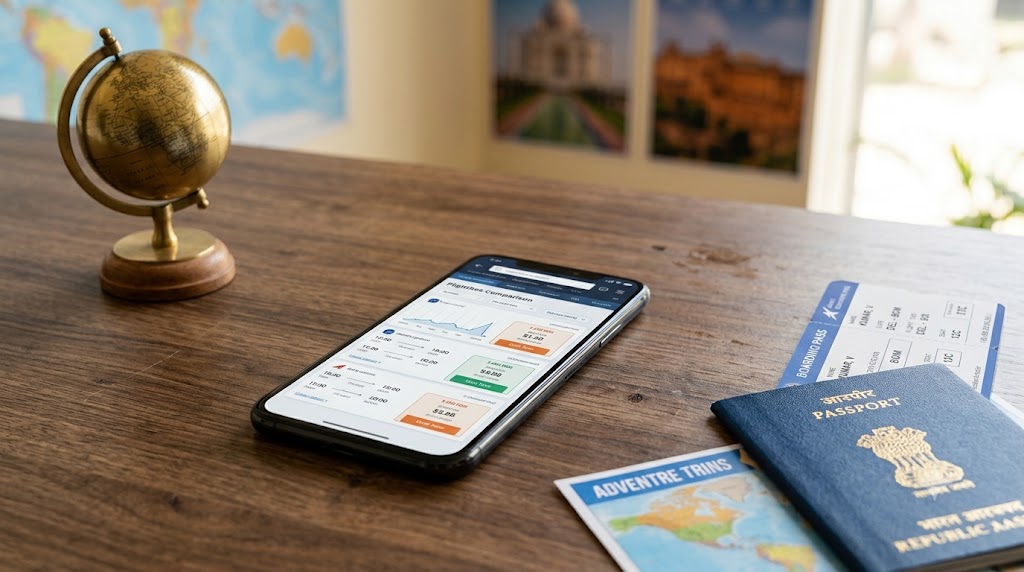
    Close up of a person comparing flight prices on a phone screen next to a passport and boarding pass
    Comparing OTA prices is genuinely the right move for a simple domestic flight, not every booking

    A Quick Decision Table

    Booking Type Better Fit Why
    Simple domestic flight, no group OTA or airline app Straightforward, price-transparent, no coordination needed
    International flight, complex routing Travel agent Consolidator fare access typically beats OTA pricing by 5-7%
    Group of 5 or more travelling together Travel agent Coordinated seating, hotel blocks, and one point of contact
    Trip requiring visa documentation Travel agent Human review of paperwork before submission, not after rejection
    Corporate travel with recurring bookings Travel agent A dedicated desk that knows your company’s travel policy and preferences
    Last-minute flexible solo trip OTA Speed and self-service comparison matter more than personalised advice here

    Five Signs You Are About to Make an Expensive OTA Mistake

    Not every OTA booking goes wrong, most do not, but a specific set of warning signs tends to precede the bookings people regret. Worth checking against before you hit confirm.

    • You are booking more than three or four travellers on the same itinerary. Beyond this size, coordination risk climbs fast, and a split booking across two flights is a common, expensive surprise.
    • Your trip involves a visa you have never applied for before. A first-time Schengen or UK application has genuine failure points a general OTA support line will not catch before you submit.
    • You are combining multiple cities or countries in one trip. Multi-city international routing is exactly where algorithmic pricing tends to miss cheaper combinations a human with fare-construction knowledge would catch.
    • The trip is non-refundable and more than a few months away. Airline schedules and visa rules do occasionally change, and having someone actively monitoring your specific booking is worth more the further out you have booked.
    • You are booking for a company and need consistent policy compliance. A one-off OTA booking will not track your organisation’s travel policy, preferred airlines, or reporting needs the way a dedicated corporate desk will.

    None of these mean an OTA booking will definitely go wrong. They mean the odds of something needing a human to fix it go up meaningfully, and that is exactly the point where the cost of a travel agent’s time starts looking like insurance rather than an unnecessary fee.

    What a Good Travel Agent Conversation Actually Looks Like

    If you have never used one, it is worth knowing what to expect, since a genuinely useful conversation looks different from a sales call.

    1. They ask about your actual constraints first, dates, budget range, group composition, before pitching any specific package, since a good recommendation depends entirely on these details.
    2. They tell you honestly when an OTA would serve you better, the way this guide has for a simple domestic flight, rather than pushing a booking that does not need their involvement.
    3. They explain the routing and pricing logic, not just the final number, so you understand why a particular flight combination or hotel category was chosen.
    4. They give you a direct number or contact, not a generic support inbox, for anything that comes up before or during the trip.
    5. They follow up on visa or documentation deadlines proactively, rather than waiting for you to ask whether something has been submitted.

    If a conversation with a travel agent does not look roughly like this, that is a fair signal to keep comparing options rather than assuming every agency delivers the same value.

    Corporate Travel: A Category of Its Own

    Everything above applies doubly for company travel. A business booking flights individually through whatever OTA each employee happens to prefer ends up with inconsistent pricing, no policy compliance, and no single point of accountability when travel plans change at short notice, which they often do for business trips specifically. A dedicated corporate travel desk tracks your organisation’s preferred airlines, negotiated rates where they exist, and reporting needs, turning a scattered set of individual bookings into one coordinated, policy-compliant process. This is a large enough topic that we have covered it in more depth separately, worth reading if your company currently books travel ad hoc.

    What “Since 2005” Actually Means for This Decision

    We mention our history not as a slogan but because it is directly relevant to the specific advantages above. Consolidator fare relationships, embassy documentation familiarity, airline contacts who pick up the phone when a group booking needs fixing, none of that is built overnight. Flywings Tour & Packages Pvt Ltd has operated out of Phase 7, Mohali since 2005, and the value we are describing above is the accumulated result of two decades of exactly these situations, not a claim we are making without a track record behind it.

    How to Tell If a Quote Is Actually Fair

    Since we are asking you to trust a human recommendation over an algorithm’s price, it is only fair to explain how to check whether that recommendation is actually a good one, rather than asking for blind trust.

    • Ask for the quote broken down by component, flight, hotel, transfers, visa fees, rather than a single bundled figure. A travel agent unwilling to break this down is a fair reason to be cautious.
    • Compare the flight portion specifically against what you see on an OTA for the same route and dates. This isolates whether the consolidator advantage is real for your specific booking, rather than taking it on faith.
    • Ask what happens if you need to cancel or change dates, and get the answer in writing before booking, not after.
    • Check how long the agency has actually operated, since consolidator relationships and airline contacts genuinely take years to build, a newer agency claiming the same advantages as an established one is worth a second look.

    A good travel agent will not be defensive about any of these questions. If one is, that tells you something worth knowing before you commit.

    Group Travel, in More Detail

    This deserves more than the single row it got in the decision table above, since it is one of the clearest cases where the gap between OTA and agent booking shows up in real, avoidable problems. A family of twelve booking a Kashmir trip individually through an OTA risks ending up on different flights if seats run low, in different hotel room categories if availability shifts between individual bookings, and with no single person tracking whether everyone’s documentation, IDs for domestic travel, passports and visas for international, is actually in order before departure day. A coordinated group booking through one desk solves all three at once: one flight manifest, one confirmed room block, and one person whose job is making sure nothing falls through the cracks between twelve different individual confirmations. This applies whether the group is an extended family, a friend circle, a wedding party, or a corporate offsite, the coordination problem is structurally the same regardless of who is travelling.

    Who Should Genuinely Stick With OTAs

    To be fair and specific rather than just directionally honest: solo or couple travellers booking a simple domestic weekend trip, anyone comfortable doing their own visa research for a visa-free or straightforward e-visa destination, and last-minute flexible travellers who value speed over savings are all genuinely well served by an OTA or airline app directly. We would rather you book those trips in five minutes on your phone than call us for something that does not need a conversation. Our value shows up on the bookings this guide has actually named, groups, international routing, visa documentation, and corporate travel, not on every single transaction regardless of complexity.

    What Happens After You Book With Us

    Beyond the initial quote and booking, the ongoing relationship is where the value compounds over a trip’s lifetime. A dedicated contact tracks your visa application status and follows up before a deadline rather than after a missed one, monitors for schedule changes on your specific flights and notifies you rather than leaving you to discover a change at the airport, and remains reachable by phone through the trip itself, not just during the booking process. This is the part of the service that rarely gets mentioned in a “why choose us” pitch but is genuinely where most of the stress reduction actually happens for travellers who have used both OTAs and a proper agency and can compare the experience directly.

    What We Are Not Claiming

    We are not going to tell you a travel agent always beats an OTA, because that is not true, and we would rather you trust an honest answer than a sales pitch. If your trip is a simple domestic flight with flexible dates and no group involved, book it yourself and save the time. We would rather earn your business on the trips where we genuinely add value than pretend to be necessary for every single booking.

    Frequently Asked Questions

    Is a travel agent more expensive than booking online?

    Not necessarily, and often the opposite for international and group bookings specifically, where consolidator fare access and coordinated group pricing frequently beat the best publicly listed OTA price. For a simple domestic flight, the price difference is usually negligible either way.

    What happens if my flight gets cancelled and I booked through an agent?

    A person who already knows your itinerary contacts the airline directly on your behalf to rebook or resolve the issue, rather than you navigating a general customer support queue alone.

    Is it worth using a travel agent for a simple one-way domestic flight?

    Generally no. This is exactly the scenario where an OTA or airline app works well on its own, and we would tell you that honestly rather than take a booking that does not need our involvement.

    Why do group bookings specifically benefit from a travel agent?

    Because coordinating seats, hotel room blocks, and arrival timing across many travellers is not what most OTA platforms are built for. A group booking handled by one accountable desk avoids the common problem of a group ending up split across different flights or with mismatched hotel confirmations.

    Do travel agents help with visa applications?

    Yes, a proper travel desk reviews your documentation before submission rather than after a rejection, which matters most for destinations with genuine paperwork requirements like Schengen Europe, the UK, or the US.

    How do I know if a travel agent’s quote is actually competitive?

    Ask for the quote broken down by component and compare the flight portion specifically against an OTA for the same route and dates. A travel agent confident in their pricing will not hesitate to show this breakdown.

    Is it worth switching from OTA bookings for a company’s corporate travel?

    Generally yes, once a company is booking travel regularly enough that policy compliance, consistent pricing, and a single accountable contact start to matter more than the convenience of individual employees booking through whichever app they prefer.

    What if I only need help with one part of the trip, like the visa, and want to book flights myself?

    That is a genuinely reasonable split, and a good travel desk should be comfortable handling just the visa documentation piece for you rather than insisting on a full package if that is not what you need.

    Book the Way That Actually Fits Your Trip

    If your trip is a group, an international routing, a visa-heavy destination, or corporate travel your company needs handled reliably, that is exactly where a real conversation with a human beats an algorithm. Explore our full range of services, read how to choose the right travel agency if you have not settled on one yet, or call us directly at +91 99143 10333 for a free, no-obligation comparison against what you are seeing online, we will tell you honestly if an OTA is the better call for your specific trip. Flywings team since 2005.

  • Varanasi Tour Package from Chandigarh: The City the Corridor Rebuilt

    Varanasi Tour Package from Chandigarh: The City the Corridor Rebuilt

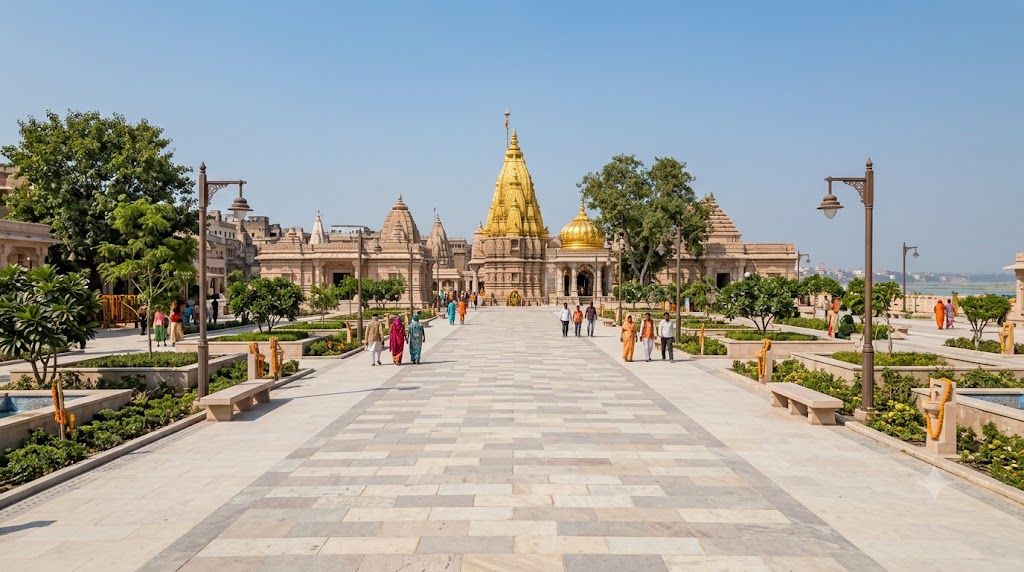
    If your mental image of visiting Kashi Vishwanath Temple is a narrow, congested lane leading to a cramped darshan queue, that image is outdated. The 2021 Kashi Vishwanath Corridor redevelopment replaced that lane with a wide, landscaped plaza connecting the temple directly to the Ganga, and the numbers since have been dramatic, over 46 crore visitors and roughly 1.25 lakh crore rupees added to the state economy. Varanasi searches are up 120 percent this year, and the city has overtaken Goa and Shimla as India’s fastest-growing tourism hub. What most existing “Varanasi package from Chandigarh” content will not tell you is exactly how different the visit itself now feels compared to before. This guide starts there. We checked close to a dozen top-ranking Varanasi package pages for Chandigarh departures while researching this guide, and not one described the corridor’s physical layout in any real detail, most simply list “Kashi Vishwanath Temple visit” as a bullet point identical to how it would have read in 2019, before any of this infrastructure existed.

    Why This Matters Beyond Just Sightseeing

    The corridor rebuild is not just a convenience upgrade, it changes the itinerary math itself. A pre-2021 Varanasi trip often budgeted extra time simply for navigating the congested approach to the temple, factoring in unpredictable queue lengths and slow movement through narrow lanes. That time buffer is largely unnecessary now, which means a well-planned itinerary today can comfortably fit more, an extra Sarnath visit, a second Aarti viewing from a different ghat, a proper old-city food walk, into the same number of days a pre-corridor trip would have needed just to cover the basics.

    Quick context: The Kashi Vishwanath Corridor did not just widen a lane, it fundamentally changed how the temple visit and the Ganga connect physically. If you or anyone you are travelling with visited Varanasi before 2021, plan for a genuinely different experience this time.

    What Actually Changed

    Before the Corridor (Pre-2021) After the Corridor (2026)
    A narrow, congested lane led from the ghats to the temple, often a slow, jostling walk A wide, landscaped plaza directly connects the temple complex to the Ganga, a five-minute walk that feels nothing like the old approach
    Limited amenities near the temple, minimal seating or shade Purpose-built facility blocks, seating areas, and shaded walkways integrated into the corridor design
    Congestion made a rushed, transactional darshan common, especially for first-timers unfamiliar with the layout The more open layout allows a slower, more contemplative visit even during busy periods
    Around 6 million annual visitors before the redevelopment began Over 46 crore cumulative visitors since December 2021, with the city crossing 11 crore visitors in 2024 alone

    The practical takeaway for anyone planning this trip: do not build your expectations, or your time estimate for the temple visit, around an old description of Varanasi. The whole point of entry to the city’s most important site has been rebuilt.

    Getting There from Chandigarh

    There is no fully direct Chandigarh-Varanasi flight on most carriers, but connectivity has genuinely improved. Multiple daily connecting options run via Delhi, and Air India alone operates a significant number of flights on routes touching both cities, with a typical journey involving a short layover rather than a long one. Delhi itself connects to Varanasi directly in around an hour and ten to twenty minutes, with Air India running several daily non-stop flights on that specific leg, so a Chandigarh-Delhi hop followed by a short Delhi-Varanasi flight is the most reliable routing. For travellers who enjoy train journeys, the Varanasi-New Delhi Vande Bharat Express is also a genuinely comfortable option for the Delhi-Varanasi leg specifically.

    The Core Experience: Ghats, Temple, Aarti

    Kashi Vishwanath Temple

    One of the twelve Jyotirlinga temples, among the most sacred Shiva sites in Hinduism, the current structure dates to the 18th century with its distinctive gold-plated spire. The Mangala Aarti, held around 3 AM, is widely considered the most spiritually significant darshan of the day, though it requires advance booking and an early start that not every itinerary can accommodate.

    Dashashwamedh Ghat and the Evening Ganga Aarti

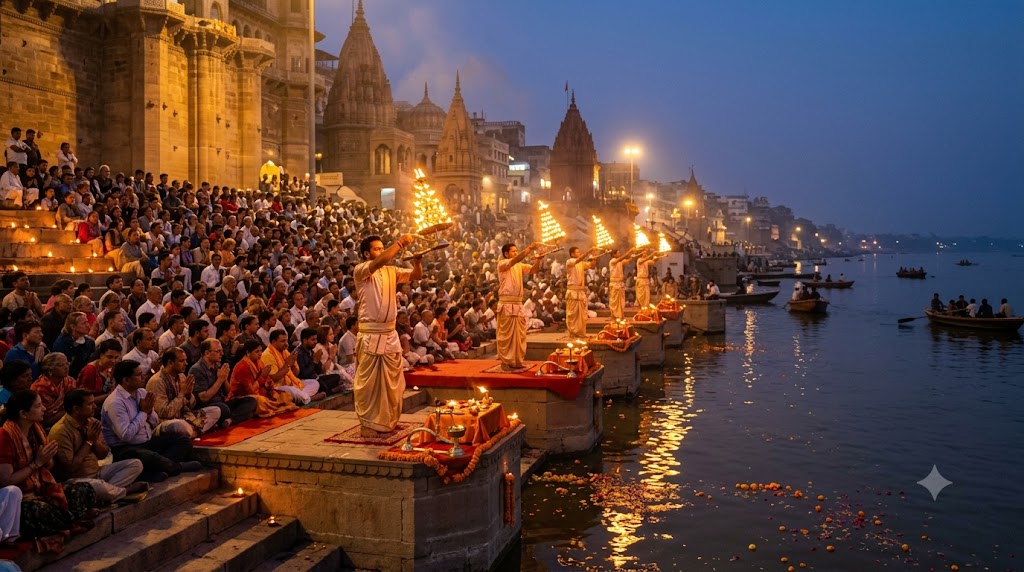
    The most famous of Varanasi’s ghats and the site of the nightly Ganga Aarti, a ceremony of synchronised lamp offerings performed by priests facing the river. It begins around 6:45 to 7:00 PM in winter and slightly later, around 7:00 to 7:15 PM, in summer, running for roughly 45 minutes to an hour. Arrive at least 30 to 45 minutes early to secure a decent viewing spot, or book a boat on the river itself for a genuinely different vantage point than watching from the ghat.

    Manikarnika Ghat

    One of the city’s cremation ghats, and a site many visitors find genuinely moving rather than uncomfortable once they understand its significance in Hindu belief around death and liberation. Visit respectfully, avoid photography unless explicitly permitted, and consider going with a knowledgeable guide who can explain the rituals rather than observing without context.

    Wide open plaza of the redeveloped Kashi Vishwanath Corridor with the golden spired temple in Varanasi
    The redeveloped Kashi Vishwanath Corridor plaza, a fundamentally different approach to the temple than the pre-2021 lane

    Sarnath: The Easy Half-Day Addition

    Just 10 kilometres from Varanasi, a 25-to-45-minute drive depending on traffic, Sarnath is where Buddha delivered his first sermon after attaining enlightenment. The Dhamek Stupa, the archaeological museum housing the original Ashoka Lion Capital, now India’s national emblem, and the deer park together make for a full but comfortable 3-to-4-hour visit. Nearly every well-planned Varanasi itinerary treats Sarnath as a straightforward same-trip addition rather than a separate journey, and there is little reason not to.

    A Sample 3-Day Itinerary

    • Day 1: Arrive Varanasi, Kashi Vishwanath Temple and the new corridor plaza, evening Ganga Aarti at Dashashwamedh Ghat
    • Day 2: Early morning boat ride on the Ganga at sunrise, ghat walk covering Manikarnika and Assi Ghat, afternoon at leisure through the old-city lanes and markets, second evening Aarti from a different vantage point if desired
    • Day 3: Sarnath half-day, Banaras Hindu University campus and its own Vishwanath Temple replica, departure

    Two days is workable for a tightly focused trip, temple and Aarti on day one, Sarnath and a ghat walk on day two, but three days lets the pace breathe, particularly around the sunrise boat ride, which loses much of its appeal if rushed.

    Best Time to Visit

    Window Conditions
    November to February The clear peak window, comfortable temperatures for the ghat walks and early-morning boat rides, and when malaiyo, a Varanasi seasonal sweet delicacy, is available
    March to May Genuinely hot, particularly uncomfortable for the extended outdoor time a ghat-focused itinerary requires
    July to September Monsoon season; the Ganga’s water level rises significantly and can submerge lower ghat steps, changing the boat and Aarti experience considerably
    Major festivals (Dev Deepawali, Mahashivratri) Spectacular but extremely crowded, worth it for the specific atmosphere but requiring advance hotel booking well ahead of the date

    The Sunrise Boat Ride, Done Properly

    This is the single experience most visitors rate above everything else, and it is worth planning around rather than squeezing in. A wooden boat departs before sunrise, typically from Assi Ghat or Dashashwamedh Ghat, and drifts along the riverfront as the city wakes, priests beginning their morning rituals, bells ringing from temples along the bank, and the light changing across the ghats’ stone steps in a way photographs rarely capture properly. A private boat costs more than a shared one but is worth it for the quieter, unhurried pace, particularly if photography is a priority. Book the previous evening directly with a boatman or through your hotel rather than assuming availability on the morning itself during peak season.

    Walking the Old City

    Beyond the temple and the ghats, Varanasi’s old-city lanes, particularly around Vishwanath Gali, are worth a slow, unstructured wander. Narrow enough that vehicles cannot enter, lined with shops selling Banarasi silk sarees, brass items, and religious artefacts, and threaded with small eateries serving food that rarely makes it onto a hotel restaurant menu. This is not a sight to check off a list so much as a texture of the city worth simply absorbing for an hour or two, ideally with no fixed destination in mind.

    What to Eat

    Varanasi’s food culture is a genuine part of the city’s identity, distinct enough to justify planning meals around rather than treating as an afterthought.

    • Kachori sabzi, a classic Varanasi breakfast, fried bread with a spiced vegetable curry, found at small stalls throughout the old city and best eaten fresh and hot in the morning
    • Banarasi paan, a betel-leaf preparation the city is famous for nationally, worth trying at least once from a reputed local vendor rather than a tourist-facing stall
    • Malaiyo, a delicate, foam-like milk dessert available only during the winter months, roughly November to February, a genuinely seasonal specialty worth timing a trip around if dessert is a priority
    • Thandai, a spiced, chilled milk drink particularly associated with festivals, refreshing after a hot day of sightseeing outside the peak winter window
    • Chaat and street food generally, Varanasi’s old-city lanes are considered among the best street-food destinations in North India, though standard travel-hygiene precautions apply as anywhere

    Vegetarian travellers will find Varanasi one of the easiest Indian cities to navigate, given its deep vegetarian food culture tied to its status as a major pilgrimage destination.

    Etiquette and Practical Notes

    • Dress modestly for temple visits, shoulders and knees covered, and be prepared to remove footwear and, at Kashi Vishwanath specifically, leave phones and bags at a designated counter before entering the inner sanctum.
    • Approach Manikarnika Ghat respectfully, photography is generally discouraged or restricted near the cremation activity, and a guide’s context makes the visit considerably more meaningful than observing without explanation.
    • Carry cash for the old-city lanes, where card acceptance remains limited among smaller vendors and boatmen.
    • Book Mangala Aarti access in advance if you want the 3 AM darshan specifically, since it requires prior registration rather than a walk-in queue.

    Varanasi vs Ayodhya

    Since both Uttar Pradesh pilgrimage cities have seen dramatic tourism growth in recent years and are often compared, here is the honest distinction.

    Factor Varanasi Ayodhya
    Primary significance One of Hinduism’s oldest continuously inhabited spiritual cities, centred on Shiva worship at Kashi Vishwanath The birthplace of Lord Ram, centred on the newly consecrated Ram Mandir since January 2024
    Character A dense, ancient old city with the Ganga ghats as its defining feature A rapidly modernising pilgrimage city built substantially around the new temple complex
    Recent transformation The 2021 Kashi Vishwanath Corridor redevelopment The 2024 Ram Mandir consecration and surrounding infrastructure build-out
    Combinable Yes, roughly 200 kilometres apart, a genuinely common combined itinerary for pilgrims covering both in one trip Yes, for the same reason

    Given the distance between them, a combined Varanasi-Ayodhya itinerary is worth genuine consideration for pilgrims with five or more days available, and it is a combination we build regularly for clients wanting to cover both of Uttar Pradesh’s major spiritual transformation stories in one trip.

    Varanasi for Family and Group Trips

    The corridor redevelopment specifically has made this a considerably easier trip for multi-generational families than it used to be, wider walkways, better seating, and a more manageable temple approach all reduce the physical strain that used to make Varanasi a genuinely tiring visit for older travellers. The boat ride is calm and suits most ages and fitness levels, and the old-city walk can be paced to whatever the group is comfortable with. For larger pilgrimage groups specifically, advance coordination on Aarti viewing spots and Mangala Aarti registration matters more than for a solo or couple’s trip, worth handling through a tour operator who can secure group arrangements ahead of arrival.

    Cost Shape, Without Fixed Numbers

    We are not publishing fixed price tags, since cost depends on season, hotel proximity to the ghats, and whether you book a private boat versus a shared one, but the relative shape is favourable. Varanasi remains one of the more affordable domestic pilgrimage-and-culture trips available, current spending data shows visitors from outside Uttar Pradesh averaging around 8,000 rupees per person across the full trip including travel, boarding, and typical purchases, a genuinely accessible figure for a short domestic break. Reach out and we will build a real, itemised quote for your dates within 24 hours, no obligation.

    Who This Trip Suits

    • Pilgrimage and spiritually motivated travellers, for whom the corridor redevelopment has made the core darshan experience meaningfully more comfortable than it used to be
    • First-time visitors who have heard “Varanasi is chaotic” secondhand, and want to see how much the corridor area specifically has changed that reputation, even as the old-city lanes retain their original character
    • Photography and culture enthusiasts, given the Ganga Aarti’s visual drama and the old city’s genuinely unique streetscape
    • Multi-generational family trips, since the corridor’s wider walkways and better amenities have made the temple visit specifically more manageable for older travellers than it used to be

    Booking Timing

    Two windows are worth planning around specifically. The November-to-February peak season, when malaiyo is in season and temperatures are most comfortable for the extended outdoor time this trip requires, sees genuinely tight hotel availability near the ghats and is worth booking two to three months ahead. Major festival dates, particularly Dev Deepawali and Mahashivratri, see the sharpest spikes of all, hotel rates and availability both move considerably, and booking three to four months ahead is realistic for these specific dates given how far in advance serious pilgrims and photographers plan around them.

    Frequently Asked Questions

    What actually changed with the Kashi Vishwanath Corridor?

    The narrow lane that used to connect the ghats to the temple was replaced with a wide, landscaped plaza offering a direct, five-minute walk between the Ganga and the temple complex, along with proper seating, shade, and facility blocks that did not previously exist.

    Is there a direct flight from Chandigarh to Varanasi?

    Not fully direct on most carriers, but connectivity is strong via Delhi, a short Chandigarh-Delhi hop followed by a direct Delhi-Varanasi flight of roughly 70 to 80 minutes, with several daily departures.

    How many days does a Varanasi trip need?

    Two days covers the essentials, the temple, the corridor, and one Ganga Aarti. Three days is recommended for a more comfortable pace that properly includes a sunrise boat ride and a full Sarnath half-day without feeling rushed.

    What time is the Ganga Aarti?

    Around 6:45 to 7:00 PM in winter and 7:00 to 7:15 PM in summer, running for approximately 45 minutes to an hour at Dashashwamedh Ghat. Arrive 30 to 45 minutes early for a good viewing spot.

    Is Sarnath worth adding to a Varanasi trip?

    Yes, and easily. It is only 10 kilometres away, a 25-to-45-minute drive, and the full visit, including the Dhamek Stupa and the archaeological museum, takes just 3 to 4 hours, making it a straightforward same-trip addition rather than a separate journey.

    Is Varanasi safe for families and older travellers?

    Yes, and the corridor redevelopment specifically has made the core temple-and-ghat experience more manageable for older travellers than the pre-2021 layout, with wider walkways and better amenities than existed before.

    Can Varanasi be combined with Ayodhya in one trip?

    Yes, the two cities sit roughly 200 kilometres apart, and a combined itinerary is a common and practical choice for pilgrims wanting to cover both of Uttar Pradesh’s major recent spiritual transformation stories, the Kashi Vishwanath Corridor and the Ram Mandir, in a single five-or-more-day trip.

    Is Varanasi crowded, and does the corridor help with that?

    Varanasi does draw large crowds, particularly during festivals and the November-to-February peak season, but the corridor’s wider plaza layout genuinely handles crowd flow better than the old narrow lane did, even if the city’s overall visitor numbers are considerably higher than before.

    See the City the Corridor Actually Rebuilt

    A generic package built from an outdated description of Varanasi will undersell exactly what makes this trip worth planning right now, a genuinely transformed core pilgrimage experience layered onto the city’s centuries-old character. Explore more India tour packages from Chandigarh, compare it against our Golden Temple Amritsar guide if you are weighing a spiritual circuit generally, or call us directly at +91 99143 10333 for an itinerary that reflects the city as it actually is today. Flywings team since 2005.

  • Jorhat and Majuli Tour Package from Chandigarh: Assam’s 493 Percent Destination

    Jorhat and Majuli Tour Package from Chandigarh: Assam’s 493 Percent Destination

    Jorhat posted a 493 percent jump in traveller searches this year, the sharpest rise of any Indian destination we found while researching this year’s content calendar, and yet we could not find a single “Jorhat package from Chandigarh” or “Majuli package from Chandigarh” guide anywhere. What exists is a handful of generic pan-India Majuli write-ups and local Assam travel-agent listing pages, nothing built for someone actually planning this trip from Punjab. That gap is exactly what this guide fills, tea-estate culture in Jorhat, a river-island spiritual retreat in Majuli, and the ferry logistics that tie the two together. Search spikes this dramatic tend to precede a wave of generic content, thin listicles copying each other’s bullet points once a destination trends, and right now that wave has not arrived yet, which is exactly why a genuinely useful planning guide has real value while the window is still open.

    Why This Surge Is Different From a Typical Trend Spike

    Most sudden destination search spikes fade as quickly as they arrive, driven by a single viral photo or a short news cycle. Jorhat and Majuli’s rise looks more structural. The no-permit accessibility genuinely differentiates it from most of the rest of Northeast India, where Inner Line Permits add friction for anyone planning on short notice, Majuli’s mask-making GI tag in 2024 gave the island a fresh, concrete news hook beyond generic scenery appeal, and the broader domestic shift toward “offbeat, culturally rich” travel, the same pattern driving interest in Varanasi and Sikkim this year, gives this destination tailwind that a single viral moment would not.

    Quick context: Unlike Tawang or parts of Nagaland, Majuli and Jorhat need no Inner Line Permit for Indian tourists at all, just a valid photo ID. That, combined with the search surge, is a big part of why this destination is moving from unknown to mainstream so quickly.

    Two Places, One Genuinely Different Trip

    Jorhat and Majuli sit close together geographically, a short ferry ride apart, but they deliver almost entirely different experiences, which is why we are treating them as a paired trip rather than one destination with two names.

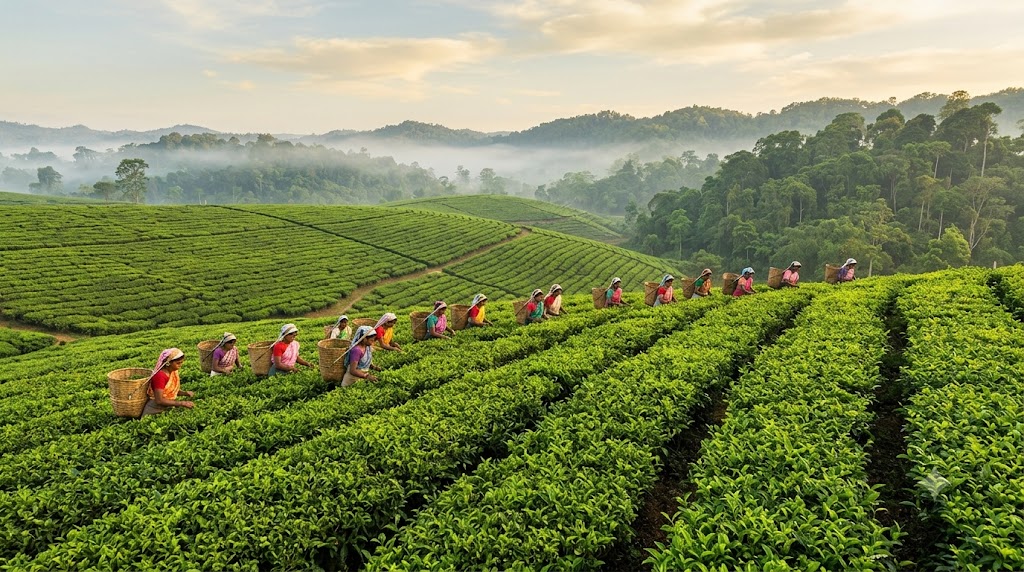
    • Jorhat is Assam’s tea capital, colonial-era planter bungalows, working tea estates open to visitors, and a genuine window into the industry behind the cup of Assam tea most Indian households drink daily.
    • Majuli is the world’s largest river island, formed by the Brahmaputra, and the spiritual heart of Assamese Vaishnavism, home to living monasteries called Satras that have preserved centuries-old dance, music, and mask-making traditions.

    Most first-time visitors expect one or the other to be the “main” destination and the second an add-on. In practice, they earn roughly equal time, and skipping either one leaves a real gap in the trip.

    Getting There from Chandigarh

    There is no direct flight from Chandigarh, but the routing is more straightforward than it looks. Delhi to Guwahati runs on multiple daily non-stop flights across several airlines, and Guwahati to Chandigarh is itself well served with around 20 daily flights on the return leg, meaning Guwahati functions as a genuine two-way hub rather than a one-directional stopover. From Guwahati, Jorhat is reachable either by a short domestic flight into Jorhat’s own Rowriah Airport, connected by non-stop flights from Guwahati and Kolkata, or by a scenic road journey of around five to six hours if you would rather see the Brahmaputra valley on the way in.

    The Ferry: The Detail That Makes or Breaks This Trip

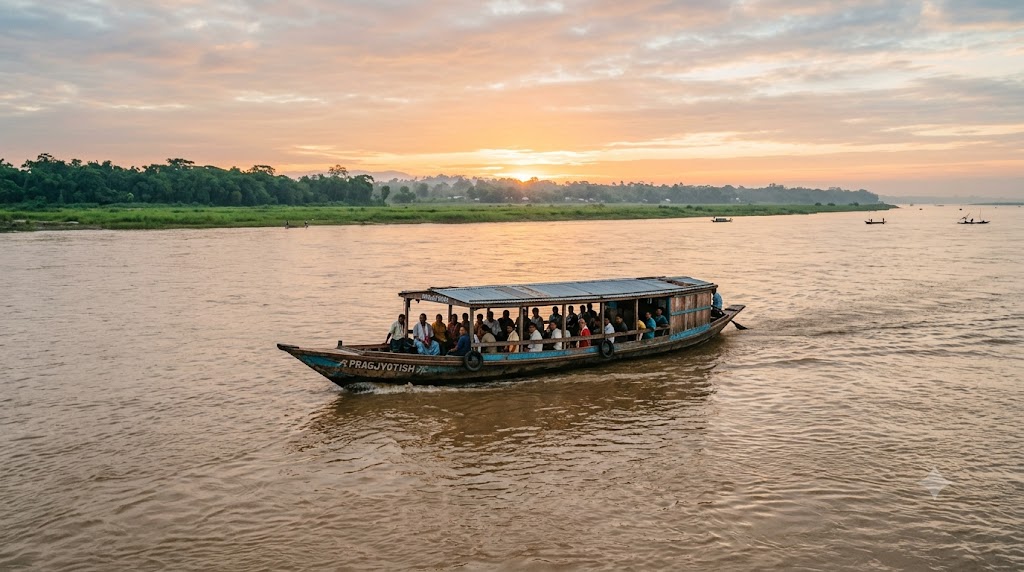
    This is the single most important practical detail in this entire guide, more than flights, more than hotels. Majuli is reached from Jorhat via a ferry from Nimati Ghat, and getting this timing wrong is the most common way a well-planned Jorhat-Majuli trip goes sideways.

    Detail What to Know
    Crossing time Roughly 1.5 hours from Nimati Ghat to Majuli
    Typical operating window Ferries generally run between 8 AM and 4 PM, with the first departure from Majuli around 7:30 AM and the last around 3:15 PM
    Fare Modest, typically in the range of 15 to 30 rupees per person for a standard passenger ferry
    Schedule reliability Genuinely inconsistent. Most ferries do not run on a fixed published timetable the way a city bus does, and timings shift with river conditions
    Monsoon risk July to September sees frequent flooding-related disruption, with services occasionally suspended entirely for days at a time

    The practical takeaway: never plan a same-day return crossing as your only option, and never schedule your Majuli visit for the July-to-September window if you can avoid it. Build in a buffer day, confirm the day’s ferry schedule locally the morning of travel rather than trusting an online timetable, and treat any Majuli itinerary as needing at least one overnight stay on the island rather than a rushed day trip.

    What to Do in Jorhat

    • Tea estate visits, several working estates around Jorhat welcome visitors for guided walks through the plantation, a tour of the processing factory, and a proper tasting session, a genuinely different experience from simply drinking tea at home
    • Colonial planter bungalow stays, a number of heritage tea-estate bungalows now operate as boutique accommodation, offering a level of old-world charm that is hard to find outside this specific region
    • Kaziranga National Park, roughly a two-hour drive away, home to the one-horned rhinoceros and a natural extension for anyone with an extra day or two, though it deserves its own dedicated write-up rather than a rushed add-on

    What to Do in Majuli

    • Satra visits, the island’s monasteries are living institutions, not museum pieces, and visitors can observe monks practising traditional dance and music forms that trace back to the 15th-century Vaishnavite reformer Srimanta Sankardev
    • Mask-making workshops, Majuli’s mukha shilpa tradition received a Geographical Indication tag in March 2024, a formal recognition of a craft found essentially nowhere else in India, and several Satras welcome visitors to watch the process
    • Cycling the island, Majuli is flat, rural, and genuinely rewarding to explore by bicycle, rice paddies, small villages, and river views without the need for a vehicle
    • Sunset at the riverbank, simple, unstructured, and consistently rated by visitors as one of the most memorable parts of the trip
    Green tea plantation rows stretching to the horizon with workers picking leaves near Jorhat Assam
    A working tea estate near Jorhat, the industry behind the cup of Assam tea most Indian households drink daily

    A Sample 6-Day Itinerary

    • Day 1: Arrive Guwahati, connect to Jorhat by flight or road, evening at leisure
    • Day 2: Full Jorhat day, tea estate tour and tasting, planter bungalow stay
    • Day 3: Morning ferry to Majuli, check in, first Satra visit
    • Day 4: Full Majuli day, mask-making workshop, cycling the island, sunset at the riverbank
    • Day 5: Morning ferry back to Jorhat, optional half-day Kaziranga detour if time allows, or a relaxed final Jorhat morning
    • Day 6: Return to Guwahati for departure

    This pacing gives both halves of the trip proper time and builds in the ferry-schedule flexibility this route genuinely needs rather than assuming a tight same-day crossing will work as planned.

    Best Time to Visit

    Window Conditions
    October to March The clear recommended window, dry weather, reliable ferry schedules, and comfortable temperatures for both the tea estates and the island
    April to June Warmer and more humid but still workable, with fewer crowds than the peak winter months
    July to September Monsoon season, avoid if possible, since Brahmaputra flooding routinely disrupts ferry schedules and can cut off parts of Majuli entirely

    What to Eat

    Assamese food is distinct from both mainland Indian and the rest of Northeast Indian cuisine, built around simplicity, fresh river fish, and a lighter use of oil and spice than most Indian regional cooking.

    • Assamese thali, typically rice, dal, a fish curry, and a mix of seasonal vegetable preparations, often finished with khar, a distinctive alkaline preparation unique to the region
    • Fish curry (masor tenga), a tangy, light fish preparation, often made with tomato or elephant apple, a genuine regional speciality worth seeking out over a generic hotel menu
    • Pitha, rice-based sweet and savoury cakes, particularly associated with Assamese festivals but available year-round in local eateries
    • Assam tea itself, obviously, and a proper tasting session at a working estate in Jorhat is a genuinely different experience from a teabag at home
    • Betel nut and paan, offered as a customary gesture of hospitality in many Assamese homes and at Satras, worth trying at least once if offered

    Vegetarian travellers are reasonably well catered for in Jorhat’s hotels and restaurants, though Majuli’s food options are simpler and more limited given the island’s smaller scale, worth flagging dietary needs to your homestay or guide in advance.

    Practical and Packing Notes

    • Carry cash, particularly for Majuli, where card acceptance is limited outside the larger guesthouses, and small ferry and local transport fares are cash-only.
    • Book Majuli accommodation in advance during the October-to-March peak, since the island’s homestay and guesthouse capacity is genuinely limited compared to a mainstream hill-station destination.
    • Dress modestly when visiting Satras, and be mindful that some monastery areas restrict photography during active prayer or practice sessions, worth checking with your guide before assuming it is allowed.
    • Mobile network coverage on Majuli is patchy, genuinely part of the island’s appeal for anyone wanting to properly disconnect, but worth planning around if you need to stay reachable.

    Who This Trip Is Not For

    Worth saying honestly. If a fixed, predictable schedule matters more than anything else, the ferry’s informal timing will be a genuine source of frustration rather than charm. If five-star resort infrastructure is the expectation, Majuli in particular operates at a homestay-and-guesthouse level of comfort, clean and welcoming but simple, not luxurious. And travellers wanting a well-trodden, Instagram-familiar circuit may find the lack of established tourist infrastructure here more effort than reward. For travellers drawn to genuine cultural depth, living traditions rather than staged performances, and a destination that still feels like an actual discovery, this delivers exactly what the search surge suggests it does.

    Jorhat-Majuli vs Sikkim vs Meghalaya

    Since a lot of our Chandigarh clients are comparing Northeast India options generally rather than this route specifically, here is the honest positioning.

    Factor Jorhat-Majuli Sikkim Meghalaya
    Terrain Flat river-island and plains, very different from a typical Northeast hill trip High-altitude Himalayan, mountains and passes Rolling hills and living root bridges, moderate altitude
    Permits None needed for the core circuit Needed for Nathula and North Sikkim specifically None needed for the standard circuit
    Signature experience Living monastery culture, tea estates, mask-making craft Alpine valleys, Buddhist monasteries, high mountain passes Living root bridges, waterfalls, caving
    Tourist infrastructure maturity Still developing, genuinely offbeat Well established Moderately established, particularly around Shillong and Cherrapunji

    Our honest read: if you have already done Sikkim or Meghalaya and want something that still feels like a discovery, Jorhat and Majuli deliver that in a way neither of the more established Northeast circuits can right now, precisely because so few people have been yet.

    Jorhat-Majuli for Family and Group Trips

    This route suits culturally curious families reasonably well, Jorhat’s tea estates in particular offer an easy, low-exertion day that works for a wide age range, and cycling Majuli is manageable for most fitness levels. The ferry crossing itself is calm and generally comfortable, though families with very young children should factor in the crossing’s informal timing when planning the rest of the day around it. For groups of friends specifically, the combination of genuine novelty, affordability, and a destination few people in their circle will have already visited makes this an increasingly appealing pick for a trip that stands out from the usual rotation.

    Cost Shape, Without Fixed Numbers

    We are not publishing fixed price tags, since cost depends on season, whether you choose a heritage tea-estate bungalow or a standard hotel, and how many days you add for Kaziranga, but the relative shape is favourable. This remains a genuinely affordable domestic trip compared to most hill-station or beach alternatives, the Majuli ferry crossing itself costs next to nothing, and Assam’s overall cost of accommodation and food runs noticeably below what a comparable Himachal or Uttarakhand trip would. Reach out and we will build a real, itemised quote for your dates within 24 hours, no obligation.

    Who This Trip Suits

    • Culture and heritage-focused travellers drawn to Majuli’s living monastery traditions and craft heritage rather than a checklist of viewpoints
    • Photography enthusiasts, given the combination of tea-estate landscapes, river light, and genuinely distinct cultural subject matter
    • Travellers who have already done the well-worn Northeast circuit (Shillong, Gangtok) and want something that still feels like a real discovery
    • Anyone comfortable with a bit of logistical flexibility, given the ferry schedule’s informal nature, this is not a trip for travellers who need every hour planned to the minute

    Booking Timing

    Two things are worth acting on given how recent this search surge is. First, Majuli’s homestay and guesthouse capacity is genuinely limited, nothing close to the room inventory a mainstream hill station carries, so peak-season (October to March) accommodation is worth booking well ahead rather than assuming last-minute availability the way you might for a larger destination. Second, flight pricing on the Delhi-Guwahati and Guwahati-Jorhat legs tends to firm up as demand grows, and given the scale of this year’s search increase, earlier booking captures pricing from before that demand fully materialises in fares.

    Frequently Asked Questions

    Is a permit needed to visit Jorhat or Majuli?

    No, Indian tourists need no Inner Line Permit for either destination, just a valid photo ID, unlike Tawang or parts of Nagaland where permits are required.

    Is there a direct flight from Chandigarh to Jorhat?

    Not from Chandigarh directly. The trip routes through Guwahati, which has strong flight connectivity in both directions, followed by a short domestic flight or a five-to-six-hour road journey to Jorhat.

    How many days does a Jorhat-Majuli trip need?

    Six days covers both destinations comfortably, including at least one overnight stay on Majuli itself rather than a rushed day trip. Four days works for a shorter version that skips the Kaziranga extension.

    Is the Majuli ferry safe and reliable?

    Generally safe, but not reliable in the way a scheduled city service is. Timings shift with river conditions and are not always published accurately in advance, which is why we recommend confirming the day’s schedule locally rather than trusting an online timetable, and avoiding the July-to-September monsoon window entirely.

    What is Majuli’s mask-making tradition?

    Known as mukha shilpa, it is a centuries-old craft practised in the island’s Satras, used to create elaborate masks for traditional dance and drama performances tracing back to the 15th-century Vaishnavite reformer Srimanta Sankardev. The craft received a Geographical Indication tag in March 2024.

    Can this trip be combined with Kaziranga National Park?

    Yes, and it is a natural extension for wildlife enthusiasts, roughly a two-hour drive from Jorhat. Add at least one extra day if including it, since the park deserves proper time rather than a rushed half-day stop.

    Is Jorhat-Majuli safe for solo and women travellers?

    Yes, Assam is generally considered a safe state for tourism, and the Jorhat-Majuli circuit specifically sees a warm, welcoming reception given how genuinely pleased locals are that visitors are discovering the region. As with any offbeat destination, sticking to established homestays and guides rather than fully improvised arrangements is the sensible approach.

    What should first-time visitors know that generic guides miss?

    That the ferry schedule genuinely is not fixed the way most travel content implies. Build slack into the itinerary around the crossing rather than treating the published timetable as reliable, and this becomes a smooth, memorable trip rather than a stressful one.

    Get Ahead of the Search Curve

    A 493 percent search jump this sharp does not stay under-the-radar for long, and booking now, while genuine planning content and competitive pricing both still exist for this route, is worth doing before the rest of the market catches up. Explore more India tour packages from Chandigarh, compare it against our Sikkim guide if you are weighing Northeast India trips generally, or call us directly at +91 99143 10333 for an itinerary with the ferry logistics planned properly from the start, whether that is a focused four-day trip or the fuller six-day version with a Kaziranga extension built in. Flywings team since 2005.

  • Uzbekistan Tour Package from Chandigarh: The Silk Road Relay Through Four Cities

    Uzbekistan Tour Package from Chandigarh: The Silk Road Relay Through Four Cities

    Let us clear up something several websites currently get wrong: Uzbekistan is not visa-free for Indian travellers. It is close, an entirely online e-visa, no embassy visit, roughly 20 US dollars, but “close to effortless” and “free” are different claims, and a genuine amount of confusion is circulating about which one applies. Uzbekistan is having a real moment regardless, on track for around 12 million visitors in 2026 and a 22.6 percent jump in foreign arrivals in just the first seven months of the year, with India named specifically among its fastest-growing source markets. This guide starts by getting the visa fact straight, then walks through the four-city relay almost every well-planned Uzbekistan trip actually follows. Most existing “Uzbekistan package from Chandigarh” content is a generic OTA city page listing hotel deals without addressing either the visa confusion or the actual flight routing from this region, which is exactly the gap this guide is built to close.

    Quick context: Uzbekistan requires a paid e-visa for Indian citizens, applied for entirely online at the official government portal, roughly 20 US dollars, typically approved within 3 to 4 working days. It is straightforward, but it is not free, and it is not visa-on-arrival by default.

    The Visa, Correctly Explained

    Detail Accurate 2026 Information
    Process Standard e-visa, applied for entirely online at the official portal, e-visa.gov.uz
    Cost Approximately USD 20, paid online by card
    Processing time Typically 3 to 4 working days for standard processing; an expedited option exists for travellers needing it faster
    Recommended lead time Apply 5 to 7 working days before travel to leave buffer for any issues
    Documents needed Passport scan, a recent photo, and standard travel details, entered directly on the portal

    Apply only through the official e-visa.gov.uz portal. Several third-party sites offer to process this for you at a marked-up fee, unnecessary given how straightforward the direct application is. If you have read elsewhere that Indians can enter Uzbekistan visa-free, that claim is not accurate for a standard tourist visit and appears to stem from confusion with Uzbekistan’s separate transit and UAE-residency-linked entry provisions, which apply only to specific traveller categories, not the general Indian tourist case.

    Where the confusion likely comes from: Uzbekistan does offer genuinely visa-free entry to a large list of other nationalities, and it offers a 5-day visa-free transit provision for travellers passing through to a third country. Neither of those applies to a standard Indian tourist flying in specifically to visit Uzbekistan itself, and conflating the two is the most common factual error we found while researching this guide across a dozen existing “Uzbekistan visa for Indians” articles, several of which contradicted each other on the same page.

    Why the Timing Makes This a Genuine Discovery Right Now

    Central Asia as a whole is having a moment among Indian travellers this year, Georgia’s search growth and Uzbekistan’s arrival numbers are part of the same broader shift toward destinations that feel like a genuine discovery rather than a well-worn circuit. Uzbekistan specifically stands out within that shift for one practical reason most of the coverage misses, the flight time from Delhi is shorter than a flight to several destinations within Southeast Asia, which makes it one of the most accessible “new” international options currently available to a North Indian traveller.

    Getting There: A Genuinely Short Flight

    This is an underrated part of Uzbekistan’s appeal. IndiGo and Uzbekistan Airways both operate direct flights between Delhi and Tashkent, with roughly 19 weekly departures between them, and the flight itself takes under three hours, comparable to a domestic flight time within India. From Chandigarh, that means a short domestic hop to Delhi followed by one of the shortest international legs of any of the emerging destinations we cover, no long-haul fatigue before the trip has even started.

    The Four-City Relay

    Uzbekistan’s appeal is built around four historic Silk Road cities, and the country’s layout means these are best travelled as a relay, one direction, rather than a hub-and-spoke pattern from a single base.

    Stop One: Tashkent, 1 to 2 Days

    The modern capital and your likely arrival point, Tashkent mixes Soviet-era architecture, including its striking metro stations that double as an unofficial art gallery, with the Chorsu Bazaar and a handful of surviving old-town madrasas. Most travellers treat it as a brief orientation stop before heading into the more historic cities, though the metro alone is worth a half day for architecture enthusiasts.

    Stop Two: Samarkand, 2 Days

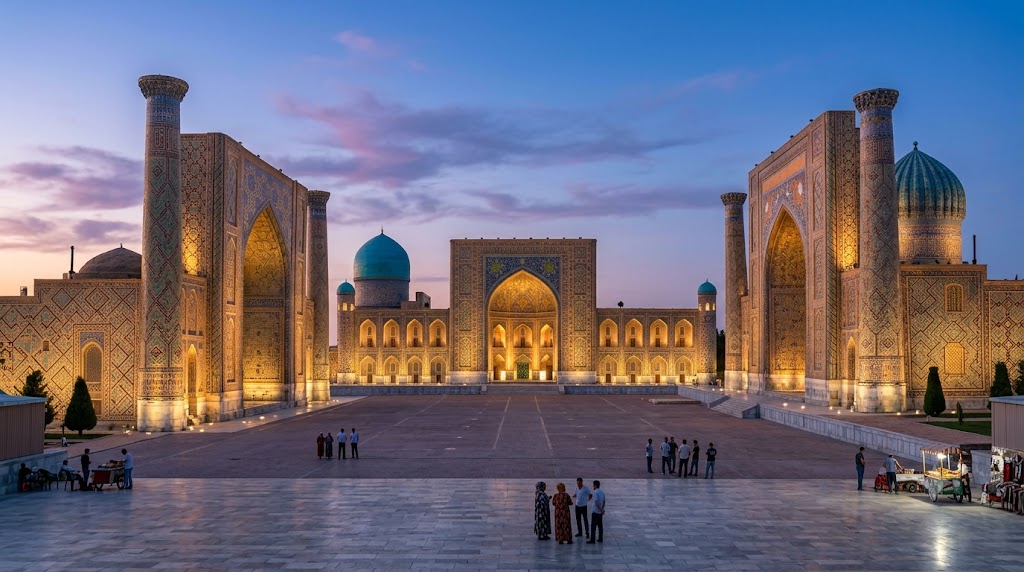
    The single most essential stop on the entire route. Registan Square, three ornate madrasas covered in turquoise and blue tilework facing each other across a grand square, is one of the most photographed sights on the Silk Road and genuinely lives up to the images. Gur-e-Amir, the mausoleum of Timur (Tamerlane), and the Shah-i-Zinda necropolis, a corridor of intricately tiled tombs, round out a city that alone justifies the trip for a lot of first-time visitors.

    Stop Three: Bukhara, 2 Days

    A UNESCO World Heritage old town roughly 2,500 years old, and the most atmospheric of the four cities to simply walk through without a fixed itinerary. The Kalyan Minaret, the Ark Fortress, and a compact old-town core small enough to explore almost entirely on foot make Bukhara the city most travellers describe as their favourite once the trip is over, even though Samarkand tends to win on individual monuments.

    Stop Four: Khiva, 1 to 2 Days

    The furthest and most logistically demanding stop, a walled desert city and the best-preserved historic centre in the region, small enough to feel like an open-air museum. Given the distance involved, roughly 1,000 kilometres from Tashkent, Khiva is the city most commonly dropped from shorter itineraries, worth including only if your trip runs seven days or longer.

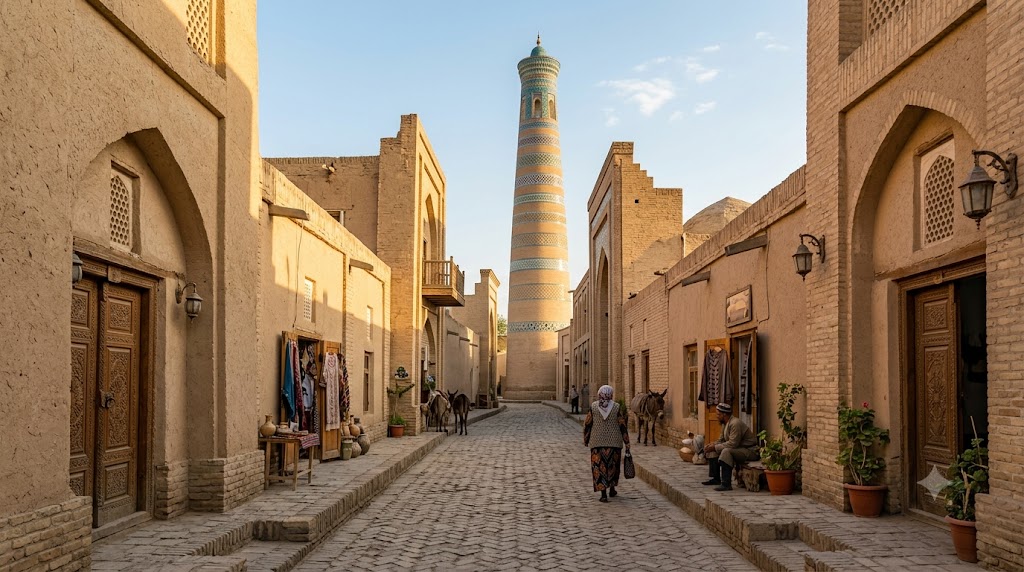
    Narrow street in old Bukhara Uzbekistan lined with sand coloured historic buildings and a tall minaret
    Bukhara’s old town, small enough to explore on foot and the city most travellers rate as their favourite

    How Many Days Do You Actually Need

    Trip Length Recommended Shape
    5 to 6 days Tashkent, Samarkand, and Bukhara, skipping Khiva given the distance
    7 to 8 days All four cities, the classic relay route and the most commonly booked length
    10 or more days The full relay at a slower pace, with extra time in Bukhara specifically, or a side trip to the Fergana Valley for travellers interested in Uzbekistan’s craft and silk-weaving traditions

    Domestic connections between the four cities run on a mix of high-speed rail, the Afrosiyob train between Tashkent and Samarkand in particular is fast and comfortable, and domestic flights for the longer Bukhara-Khiva or Khiva-Tashkent legs, both reasonably efficient and part of why covering all four cities in a single trip stays realistic even on a shorter schedule.

    Extending Further: The Fergana Valley

    For travellers with two weeks or more, the Fergana Valley, east of Tashkent, offers a genuinely different side of Uzbekistan from the four-city Silk Road relay. Known for its silk-weaving workshops, particularly in the town of Margilan, and its ceramics tradition in Rishtan, it is less visited than Samarkand or Bukhara and offers a more hands-on, craft-focused travel experience, watching silk being handwoven on traditional looms or ceramics thrown and painted by artisans continuing generations-old techniques. This is a genuine add-on for travellers with time to spare rather than a first-trip essential, but worth knowing about for anyone planning a longer, deeper Uzbekistan visit.

    Uzbekistan vs Georgia

    Since both are recently trending, relatively new-to-Indian-travellers destinations often considered together, here is the honest comparison.

    Factor Uzbekistan Georgia
    Visa Paid e-visa, roughly USD 20, 3 to 4 day processing Paid e-visa plus a new 2026 DuVerify step and mandatory insurance
    Flight from Delhi Direct, under 3 hours Direct, roughly 6.5 hours
    Core appeal Silk Road architecture and history, desert cities Mountains, wine country, European old-town feel
    Best fit History and architecture-focused travellers, shorter available leave Nature and mountain-scenery-focused travellers, slightly longer trip

    Our honest read: if flight time and a shorter overall trip matter most, Uzbekistan wins clearly, under three hours in the air is a genuinely different proposition from six and a half. If mountain scenery and a wine-country leg matter more than historic architecture, Georgia remains the stronger pick.

    Best Time to Visit

    Window Conditions
    March to May Spring, mild temperatures, considered one of the two best windows
    September to early November Autumn, similarly mild and comfortable, the other best window
    June to August Genuinely hot, particularly in Bukhara and Khiva’s desert settings, workable but not the peak experience
    December to February Cold, especially at night, but manageable for travellers prioritising thinner crowds over comfort

    A Sample 8-Day Itinerary

    This is the shape most of our Chandigarh clients end up booking, the full four-city relay paced to avoid feeling rushed on any single leg.

    • Day 1: Arrive Tashkent, evening at Chorsu Bazaar and the old-town madrasas
    • Day 2: Tashkent metro architecture tour, Amir Timur Square, board the Afrosiyob high-speed train to Samarkand in the afternoon
    • Day 3: Full Samarkand day, Registan Square, Gur-e-Amir mausoleum, Bibi-Khanym Mosque
    • Day 4: Shah-i-Zinda necropolis in the morning, drive or train to Bukhara in the afternoon
    • Day 5: Full Bukhara old-town day, Kalyan Minaret, Ark Fortress, unhurried walking through the historic core
    • Day 6: Domestic flight to Khiva, evening walk through the walled old city
    • Day 7: Full Khiva day, Itchan Kala fortress walls, Kalta Minor minaret
    • Day 8: Domestic flight back to Tashkent, departure

    This routing avoids unnecessary backtracking, moving in one direction through the country rather than returning to Tashkent between every stop, which most well-planned Uzbekistan itineraries follow for exactly this reason.

    What to Eat

    Uzbek cuisine reflects its Silk Road position, a genuine crossroads of Persian, Turkic, and Russian culinary influence.

    • Plov (osh), Uzbekistan’s national dish, a rice pilaf cooked with meat, carrots, and onions, with regional variations across each of the four cities worth comparing as you travel
    • Shashlik, skewered grilled meat, a staple across every city and a reliable, familiar option for most travellers
    • Somsa, a baked pastry filled with meat or pumpkin, similar in spirit to a samosa and an easy, comforting snack between sightseeing stops
    • Non bread, a round, decoratively stamped flatbread baked in a clay oven, sold everywhere and central to Uzbek hospitality traditions
    • Green tea, served constantly and considered a hospitality ritual as much as a beverage, refused refills are considered mildly impolite in traditional settings

    Vegetarian travellers should plan ahead, meat features heavily in traditional Uzbek cooking, though larger city restaurants in Tashkent and Samarkand increasingly offer vegetarian options, and it helps to flag dietary needs to your guide in advance, particularly in Khiva and Bukhara’s smaller old-town eateries.

    Who This Trip Genuinely Is Not For

    Worth saying honestly. If beach time or resort infrastructure is the priority, Uzbekistan is landlocked and offers none of that, this is a history-and-architecture trip first and foremost. If a traveller wants minimal walking, several of the old-town cores, particularly Bukhara and Khiva, are best explored on foot over cobblestone streets, genuinely rewarding but not ideal for anyone with significant mobility concerns. And summer heat in Bukhara and Khiva specifically can be intense, worth avoiding for anyone particularly heat-sensitive. For travellers drawn to history, architecture, and a destination that still feels like a genuine discovery relative to more established international circuits, it delivers exactly what the current surge in interest suggests.

    Packing and Practical Notes

    • Uzbek Som is the local currency; cards are increasingly accepted in Tashkent and Samarkand hotels but carry cash for smaller cities and local bazaars.
    • Dress modestly for mosque and madrasa visits, shoulders and knees covered, consistent with general Central Asian and Islamic cultural norms.
    • Comfortable walking shoes matter more here than almost any other destination we cover, given how much of the experience in Bukhara and Khiva specifically happens on foot over uneven old-town stone streets.
    • English is spoken reasonably well in tourist-facing roles in the four main cities, though Russian remains the more widely understood second language generally, worth knowing if you are travelling with someone who speaks it.

    Uzbekistan for Family and Group Trips

    The four-city relay works reasonably well for family groups, given the country’s overall safety reputation and the manageable walking distances within each old-town core, though the Khiva leg’s distance and the desert heat outside the spring and autumn windows are worth weighing for very young children or older travellers with limited stamina. For groups of friends and history-interested travellers specifically, the combination of dramatic architecture, a genuinely low cost relative to comparable Western destinations, and a short flight time makes this an increasingly popular pick for a first “off the usual list” international trip, distinct from the standard Dubai-Thailand-Bali rotation most groups default to.

    Cost Shape, Without Fixed Numbers

    We are not publishing fixed price tags, since cost varies with season and hotel category, but the relative shape is favourable. Uzbekistan generally runs noticeably cheaper than a comparable Western European Silk Road-adjacent trip, and the short direct flight from Delhi keeps the airfare component reasonable too. Domestic rail and flight connections between the four cities are inexpensive by Indian standards, which is part of why the full four-city relay stays realistic even on a mid-range budget. Reach out and we will build a real, itemised quote for your dates within 24 hours, no obligation.

    Why the Timing Is Good Right Now

    Uzbekistan’s tourism infrastructure is genuinely still catching up to its own arrival growth, more hotels, more high-speed rail capacity, and more direct flight options are all being added through 2026, which means the destination currently offers a combination that tends not to last, real historical significance and dramatic architecture without the crowd density or pricing that a more mature tourist circuit eventually develops. Booking in the next year or two, while Delhi-Tashkent flight capacity is still expanding rather than fully mature, means better availability on the Afrosiyob high-speed train’s premium seating and the boutique heritage hotels in Bukhara and Khiva that tend to book out fastest as more travellers discover the route.

    Frequently Asked Questions

    Is Uzbekistan really visa-free for Indians?

    No, this is a commonly repeated inaccuracy. Indian citizens need a standard paid e-visa, applied for entirely online, typically approved within 3 to 4 working days. Visa-free entry only applies to specific categories such as Indian nationals holding valid UAE residency, not the general tourist case.

    Is there a direct flight from Chandigarh to Uzbekistan?

    Not from Chandigarh directly, but Delhi has direct flights to Tashkent on both IndiGo and Uzbekistan Airways, taking under three hours, so the trip is a short domestic hop to Delhi followed by one of the shortest international legs available among comparable emerging destinations.

    How many days does a Uzbekistan trip need?

    Seven to eight days covers the full four-city relay, Tashkent, Samarkand, Bukhara, and Khiva, comfortably. Five to six days works well if you skip Khiva given its distance from the other three cities.

    Which city should not be skipped if time is limited?

    Samarkand. Registan Square alone is worth the trip for most first-time visitors, and it is the single most recognisable and photographed site anywhere on the Uzbekistan Silk Road route.

    Is Uzbekistan safe for solo and women travellers?

    Yes, Uzbekistan is frequently cited as one of the safer countries in the region for tourism, with low reported crime rates along the main Silk Road circuit and a well-established tourist infrastructure in all four cities.

    Is Uzbekistan good for a honeymoon?

    Yes, particularly Bukhara’s walkable old town and Khiva’s atmospheric walled city, both of which offer a slower, more intimate pace than Tashkent or Samarkand and have become an increasingly popular pick among Indian honeymooners drawn to the Silk Road’s history and architecture.

    Can vegetarian Indian travellers manage in Uzbekistan?

    With some planning, yes, though it takes more effort than in a destination with a stronger vegetarian food culture. Larger city restaurants in Tashkent and Samarkand increasingly cater to vegetarian diets, and flagging the requirement to your guide in advance helps considerably in the smaller old-town eateries of Bukhara and Khiva.

    Is the high-speed train between cities comfortable and worth using?

    Yes, the Afrosiyob high-speed train connecting Tashkent and Samarkand in particular is modern, comfortable, and considerably faster than driving, and it has become a genuine part of the travel experience rather than just a transport link, worth booking in advance for the better seat classes during peak season.

    Get the Visa Facts Right Before You Book

    A trip built on the wrong visa assumption is the single most avoidable way to derail an Uzbekistan booking, and it is worth confirming current requirements directly rather than trusting the first search result. Explore more international tour packages from Chandigarh, compare it against our Georgia guide if you are weighing Central Asia against the Caucasus, or call us directly at +91 99143 10333 for an itinerary with the e-visa timeline built in correctly from the start, whether that is a compact five-day Tashkent-Samarkand-Bukhara trip or the full eight-day relay through all four Silk Road cities. Flywings team since 2005.

  • Sikkim Tour Package from Chandigarh: The Permit-Free Half and the Permit-Required Half

    Sikkim Tour Package from Chandigarh: The Permit-Free Half and the Permit-Required Half

    Sikkim confuses first-time visitors in one specific way, and it is not the altitude or the weather. It is the permits. Half the state needs nothing beyond a standard photo ID, and the other half needs a specific document arranged in advance, and almost no generic package page draws that line clearly. Sikkim crossed 1.2 million visitors by October 2025 alone and is on a genuine upward trend, but the “Sikkim package from Chandigarh” results we checked while researching this guide mostly gloss over the one detail that actually determines whether your itinerary works as planned. This guide starts there, then walks through the route. Most of the top-ranking “Sikkim package from Chandigarh” pages we checked list Nathula, Yumthang, and Gangtok side by side as if they carry identical planning requirements, which is exactly the kind of oversimplification that leaves a first-time visitor either under-planning the permit leg or avoiding it entirely out of unnecessary caution. We are structuring this whole guide around that permit line deliberately, since it is the single detail that most often turns a well-planned Sikkim trip into a frustrating one, either a group that skips North Sikkim entirely because they assumed the paperwork would be too complicated, or a group that shows up expecting to drive straight to Yumthang Valley without realising a permit needs to be arranged first.

    Why the Permit Confusion Happens

    Sikkim’s border with China and its history as a former independent kingdom that merged with India only in 1975 both feed into a general sense that the whole state operates under special rules, which is only half true. The Inner Line Permit system that applies broadly across several Northeast Indian states does not apply to Sikkim’s main tourist circuit for Indian citizens at all. What does apply is a narrower, destination-specific Protected Area Permit for the border-adjacent and high-security zones, Nathula Pass sits right at the India-China border, and North Sikkim’s Lachen and Lachung valleys sit close enough to sensitive areas that the same logic applies. Once you separate “permit needed because of proximity to the border” from “permit needed because it is Sikkim,” the whole system becomes far less confusing.

    Shorter and Longer Variants

    Trip Length What to Include
    4 days Gangtok and Pelling only, the permit-free half, no PAP paperwork needed at all
    5 to 6 days Add Nathula and Tsomgo Lake as a single day-trip PAP addition to the 4-day base
    7 to 8 days The full route described above, Gangtok, Nathula-Tsomgo, North Sikkim, and Pelling
    10+ days Extend into Darjeeling given the shared Bagdogra gateway, or add Gurudongmar Lake as a further North Sikkim extension for travellers comfortable with the additional altitude

    Quick context: Indian citizens need no permit at all for Gangtok, Pelling, or Ravangla. A Protected Area Permit is required for Nathula Pass, Tsomgo Lake, and all of North Sikkim beyond Chungthang, including the Yumthang Valley. Both halves are worth visiting, but they need different planning.

    The Permit-Free Half

    Indian nationals travelling to Gangtok, Pelling, Ravangla, and most of the popular tourist circuit in East and West Sikkim need no Inner Line Permit or Protected Area Permit at all, just a valid government photo ID, the same as any other domestic Indian trip. This surprises a lot of first-time visitors who assume, because Sikkim borders China and shares that reputation with other Northeast states, that some kind of permit applies everywhere in the state. It does not, for this half.

    • Gangtok, the capital, with the MG Marg promenade, the Ropeway cable car, and Rumtek Monastery, one of the largest and most significant Buddhist monasteries in Sikkim
    • Pelling, known for its Kanchenjunga sunrise views and the Pemayangtse and Khecheopalri lake circuit
    • Ravangla, home to the large Buddha Park statue and quieter mountain views than the more crowded Gangtok viewpoints

    This half alone is enough for a solid four to five day trip and needs zero advance paperwork beyond your normal ID.

    The Permit-Required Half

    A Protected Area Permit, commonly shortened to PAP, is required for Nathula Pass, Tsomgo (Changu) Lake, Baba Mandir, and everything in North Sikkim beyond the town of Chungthang, including Lachen, Lachung, the Yumthang Valley, and Gurudongmar Lake. This is the half most people are actually chasing when they picture Sikkim from photos, snow passes, high-altitude lakes, and valleys carpeted in wildflowers, and it is also the half that needs planning ahead rather than a walk-in visit.

    Destination Permit Needed Typical Duration
    Nathula Pass PAP, Indian nationals only, issued for a single-day excursion 1 day trip from Gangtok
    Tsomgo (Changu) Lake PAP Usually combined with Nathula as a single day trip
    North Sikkim (Lachen, Lachung, Yumthang, Gurudongmar) PAP, issued for a minimum of 3 and up to 5 days 3 to 5 day loop out of Gangtok

    Permits are usually arranged by your tour operator through the Sikkim Tourism Department or a local police checkpost, typically a day or so ahead of travel, and carry only a nominal government fee. Bring a Voter ID, Passport, or Driving License specifically, since Aadhaar and PAN cards are not always accepted for this particular permit, a detail that catches travellers off guard more often than any other part of the process.

    Getting There from Chandigarh

    There is no direct flight from Chandigarh, and Sikkim’s own Pakyong Airport, while technically operational, sees frequent weather-related cancellations given its high-altitude, visual-flight-rules-only runway. Bagdogra Airport in West Bengal is the reliable gateway almost every well-planned Sikkim trip actually uses, connected to Delhi, Kolkata, Mumbai, and other major hubs with multiple daily flights. From Chandigarh, that means a domestic hop to Delhi followed by a Delhi-Bagdogra flight, then roughly a four-hour scenic drive up to Gangtok. Do not book a Pakyong-routed itinerary expecting certainty, treat Bagdogra as the dependable plan and Pakyong as a bonus if it happens to work on your travel day. This is a genuinely different routing reality from most of the international destinations we cover, where a single missed connection is the main risk, here the entire final flight leg itself carries a real chance of weather diversion, which is exactly why building the itinerary around the more reliable Bagdogra option from the start, rather than hoping Pakyong cooperates, saves a lot of last-minute stress.

    The drive itself from Bagdogra to Gangtok, winding up through the hills via Rangpo, is scenic enough to function as the first real sight of the trip rather than dead travel time, and most operators build in a lunch or tea stop along the way that doubles as a first taste of the region’s mountain air after the flight.

    A Sample 7-Day Itinerary

    • Day 1: Arrive Bagdogra, drive to Gangtok, evening at MG Marg
    • Day 2: Gangtok sightseeing, Ropeway, Rumtek Monastery, Ganesh Tok and Hanuman Tok viewpoints
    • Day 3: Nathula Pass and Tsomgo Lake day trip (PAP required, weather-dependent, roads occasionally close on short notice)
    • Day 4: Drive to Lachung in North Sikkim (PAP required), overnight stay
    • Day 5: Early morning Yumthang Valley and Zero Point, drive back toward Gangtok
    • Day 6: Drive to Pelling, Kanchenjunga viewpoint, Pemayangtse Monastery
    • Day 7: Drive back to Bagdogra for departure

    This pacing gives both halves of the state their due without over-packing any single day, and it builds in the North Sikkim permit lead time by placing that leg after the Gangtok arrival days rather than immediately on landing.

    Colourful yellow and pink flowers covering the wide open landscape of Yumthang Valley in North Sikkim
    Yumthang Valley in bloom, the highlight of the permit-required North Sikkim leg

    Best Time to Visit

    Window Conditions
    March to May Rhododendron and orchid bloom season, Sikkim’s standout spring window, still with some snow at higher elevations
    October to December Clear skies and the best Kanchenjunga visibility, cooler but generally dry
    June to September Monsoon season, landslides and road closures are genuinely common, particularly on the North Sikkim route, best avoided
    December to February Cold, snow possible in Gangtok itself and heavy snow in North Sikkim, a different but genuinely beautiful version of the trip for cold-weather travellers

    Altitude and Health Notes

    North Sikkim’s key stops sit at genuine altitude, Yumthang Valley at around 3,564 metres and Gurudongmar Lake close to 5,183 metres, high enough that altitude adjustment matters for some travellers. A few practical points worth building into the itinerary rather than discovering on the road.

    • Spend at least one night in Gangtok (around 1,650 metres) before heading to North Sikkim, giving your body a partial acclimatisation step rather than jumping straight from the plains to high altitude.
    • Stay hydrated and avoid alcohol the night before a high-altitude day, standard altitude-sickness advice that applies here as much as anywhere in the Himalayas.
    • Travellers with heart or respiratory conditions should consult a doctor before the Gurudongmar Lake extension specifically, given its elevation, and mention this to your tour operator when booking so the itinerary can be adjusted if needed.
    • Warm layered clothing is essential even outside winter, since North Sikkim’s temperature swings are sharp regardless of season, and Nathula Pass itself sits above 4,300 metres with snow possible even in warmer months.

    Monastery Culture and What to Expect

    Sikkim’s Buddhist monastery heritage is a genuine part of the trip, not a side note. Rumtek Monastery near Gangtok is one of the most significant Kagyu lineage monasteries outside Tibet, and Pemayangtse Monastery near Pelling, one of the oldest in Sikkim, offers both religious significance and some of the best Kanchenjunga views in the region from its grounds. Visitors are generally welcome to observe prayer sessions respectfully, dress modestly, remove footwear before entering prayer halls, and photography rules vary by monastery and are worth confirming with your guide rather than assuming.

    What to Eat

    Sikkim’s food reflects its Nepali, Tibetan, and Lepcha influences, distinct from both mainland Indian and typical Northeast Indian cuisine.

    • Momos, Tibetan-style dumplings, steamed or fried, filled with vegetables, chicken, or pork, sold everywhere from street stalls to proper restaurants and genuinely better here than most versions found elsewhere in India
    • Thukpa, a warming noodle soup, particularly welcome after a cold day in North Sikkim
    • Gundruk, a fermented leafy green dish with a distinctive tangy flavour, a genuine taste of local Sikkimese and Nepali home cooking
    • Sikkimese tea and local millet-based drinks, including tongba, a warm millet beer served in a traditional wooden vessel, worth trying at least once in Gangtok

    Vegetarian travellers are well catered for throughout the state, and MG Marg in Gangtok in particular has a wide enough restaurant spread to suit most dietary preferences without difficulty.

    Sikkim vs Darjeeling

    Since a lot of Chandigarh clients weigh a Sikkim trip against a Darjeeling one, given their geographic proximity, here is the honest comparison.

    Factor Sikkim Darjeeling
    Signature experience High-altitude passes, alpine valleys, Buddhist monastery culture Tea estates, the Darjeeling Himalayan Railway, colonial hill-station charm
    Permits Required for Nathula, Tsomgo, and North Sikkim specifically None required for Indian tourists
    Pace More driving-intensive, particularly the North Sikkim leg More compact and walkable within the town itself
    Best combined Often paired with Darjeeling for travellers with 10+ days, since both share the Bagdogra gateway Often paired with Sikkim for the same reason

    Given both share the same Bagdogra gateway, a combined Sikkim-plus-Darjeeling itinerary is genuinely practical for travellers with ten days or more, and it is a combination we build often for Chandigarh clients wanting to make the most of the long flight-plus-drive routing to reach this part of the country.

    Sikkim for Family and Group Trips

    The permit-free Gangtok-Pelling half of the state suits family groups comfortably, with reasonable road conditions and well-established tourist infrastructure. The North Sikkim leg is more physically demanding given the altitude and longer drive days, worth weighing against the ages and fitness levels within a mixed-generation group, and it is entirely reasonable to build an itinerary that includes only the permit-free half if that better suits the group. For groups of friends specifically, sharing a jeep for the North Sikkim leg is both the most affordable and often the most enjoyable way to do it, rather than each smaller group booking a private vehicle separately.

    Cost Shape, Without Fixed Numbers

    We are not publishing fixed price tags, since cost depends on season, vehicle category for the North Sikkim leg, and hotel standard, but the relative shape is worth knowing. Sikkim’s North Sikkim leg specifically requires a shared or private jeep rather than a standard car, since the roads and altitude demand it, and this is usually the single largest line item after flights. Booking a shared jeep rather than a private one meaningfully reduces this cost for smaller groups willing to travel with other tourists on the same dates. Reach out and we will build a real, itemised quote for your dates within 24 hours, no obligation.

    Who This Trip Suits

    • First-time Northeast India visitors wanting a well-established circuit with reliable tourist infrastructure rather than a fully offbeat trip
    • Photography and nature enthusiasts, given the rhododendron season and the Yumthang Valley’s wildflower carpets specifically
    • Families comfortable with some altitude and winding mountain roads, since North Sikkim in particular involves genuine high-altitude travel
    • Honeymooners wanting mountain scenery distinctly different from Himachal or Kashmir, given Sikkim’s Buddhist monastery culture and its own distinct Himalayan character

    Booking Timing

    Two windows are worth planning around specifically. The March-to-May rhododendron season is Sikkim’s most photographed window and books out well ahead, both for hotels in Gangtok and Yumthang-route vehicles, so a spring trip is worth locking in two to three months out rather than a few weeks. The October-to-December clear-sky window is the second peak, particularly popular with photography-focused travellers chasing unobstructed Kanchenjunga views, and sees a similar advance-booking pattern. Outside these two windows, availability is considerably easier to secure closer to your travel date.

    How Sikkim Compares on Safety and Infrastructure

    Worth noting for travellers weighing Sikkim against a first Northeast India trip generally: Sikkim is consistently ranked among the cleanest and best-organised states in India for tourism infrastructure, was the first fully organic farming state in the country, and its main tourist towns have well-developed hotel and road networks compared to some of its neighbouring Northeast states. This is part of why it functions well as an entry point into the wider Northeast region for a first-time visitor, established enough to feel manageable, distinctive enough to feel like a genuinely different trip from anywhere else on a typical Indian traveller’s list.

    Frequently Asked Questions

    Do Indian tourists need a permit for Sikkim?

    Not for Gangtok, Pelling, Ravangla, or most of the standard tourist circuit, a valid photo ID is enough. A Protected Area Permit is required specifically for Nathula Pass, Tsomgo Lake, and North Sikkim beyond Chungthang, including Lachen, Lachung, and the Yumthang Valley.

    Is there a direct flight from Chandigarh to Sikkim?

    Not from Chandigarh directly, and Sikkim’s own Pakyong Airport is unreliable due to frequent weather cancellations. Bagdogra Airport in West Bengal, reached via a Delhi connection from Chandigarh, is the dependable gateway, followed by a roughly four-hour drive to Gangtok.

    How many days does a Sikkim trip need?

    Seven days covers both the permit-free Gangtok-Pelling circuit and a proper North Sikkim loop including the Yumthang Valley comfortably. Four to five days works if you skip North Sikkim and stay within the permit-free half.

    What documents does the North Sikkim permit require?

    A Voter ID, Passport, or Driving License specifically. Aadhaar and PAN cards are not consistently accepted for this particular permit, worth confirming with your tour operator well before travel.

    Is Sikkim safe during the monsoon season?

    The core Gangtok-Pelling circuit remains generally accessible, but the North Sikkim route to Lachen and Lachung sees genuine landslide and road-closure risk during June to September, which is why we would steer most clients away from that leg specifically during monsoon months.

    What is the single best experience in Sikkim for a first visit?

    The Yumthang Valley, particularly during the March to May bloom season, consistently rates as the highlight for first-time visitors, a wide alpine valley carpeted in wildflowers with snow-dusted peaks framing the view, genuinely different from anything in Himachal or Kashmir.

    Can foreign nationals visit Sikkim too?

    Yes, though the rules differ from Indian nationals. Foreigners need an Inner Line Permit even for the otherwise permit-free half of the state, and shorter validity windows apply for the North Sikkim Protected Area Permit compared to what Indian tourists receive.

    Is Sikkim expensive compared to Himachal or Uttarakhand?

    Broadly comparable for the Gangtok-Pelling half, though the North Sikkim leg’s mandatory jeep transport and higher-altitude hotel logistics do add a real cost premium compared to a typical Himachal hill-station trip, worth factoring into the budget if North Sikkim is on your list.

    Plan Both Halves, Not Just the Photogenic One

    A generic Sikkim itinerary built from a photo feed alone tends to overweight the North Sikkim permit leg and underweight the planning it actually needs, or it skips North Sikkim entirely without realising it is genuinely reachable with a bit of lead time. Explore more India tour packages from Chandigarh, compare it against our Spiti Valley guide if you are weighing high-altitude Himalayan trips generally, or call us directly at +91 99143 10333 for an itinerary with the permit timeline built in from day one, whether that means a straightforward four-day Gangtok-Pelling trip or the full North Sikkim loop with the paperwork already sorted before you land in Bagdogra. Flywings team since 2005.

  • Oman Tour Package from Amritsar: The Direct Flight Nobody Talks About

    Oman Tour Package from Amritsar: The Direct Flight Nobody Talks About

    Here is a fact almost nobody planning an Oman trip out of Punjab seems to know: you do not need to route through Delhi. Air India Express flies directly from Amritsar to Muscat, and that single detail changes the entire calculation for anyone in the Tricity weighing a short-haul Gulf trip. Indian arrivals into Oman jumped 26 percent in the first half of 2026 alone, and Muscat-specific searches from India are up over 200 percent, yet every generic “Oman package from Chandigarh” page we have checked routes you through Delhi or Mumbai without mentioning the option sitting right next door in Amritsar. This guide starts with that flight, then walks through what makes Oman worth the trip once you land. We have checked a dozen of the top-ranking “Oman package from Chandigarh” and “Oman package from Amritsar” results while researching this piece, and not one mentions the direct Amritsar route specifically, they all default to a Delhi-first itinerary structure regardless of where the traveller is actually starting from. That gap is exactly what this guide is built to close.

    Quick context: Oman fits four genuinely different landscapes, city, mountains, desert, and coast, into a country small enough to cross in a day’s drive. That range in such a short flight from Punjab is the actual selling point, more than any single sight.

    The Amritsar Flight, Explained

    Air India Express operates direct flights between Amritsar and Muscat, part of the airline’s Gulf network that also serves Delhi, Kochi, Kozhikode, and Thiruvananthapuram from Muscat. For a Chandigarh-based traveller, this means skipping the domestic connection entirely, a short drive to Amritsar’s Sri Guru Ram Dass Jee International Airport rather than a flight-plus-layover routing through Delhi. The flight itself runs roughly three and a half hours, comparable to a Dubai flight time, which makes Oman a genuinely realistic long-weekend option in a way that requires almost no extra planning around connections.

    Why the Search Growth Matters Here Specifically

    A 211 percent jump in Muscat searches and a 26 percent rise in actual Indian arrivals within six months is not a small trend, it reflects a genuine shift in where short-haul Gulf travellers are looking beyond the usual Dubai default. For a Tricity-based traveller, that shift lines up almost perfectly with a route advantage, the direct Amritsar flight, that has existed quietly without much promotion. Two growing trends meeting one underused flight route is exactly the kind of gap worth acting on before it closes, and it is the reason we are publishing this guide now rather than waiting for Oman to become as commonly discussed as Dubai already is.

    The E-Visa: What It Actually Takes

    Detail What to Know
    Application Entirely online through Oman’s official e-visa system, no embassy visit
    Cost Roughly OMR 5 for a 10-day tourist visa, or OMR 20 for 30 days
    Processing time Typically 24 to 48 hours
    Documents needed Passport scan valid at least 6 months, a passport-size photo, return flight booking, confirmed hotel booking, and proof of a bank balance of at least OMR 200
    On arrival Print the approval PDF and present it to immigration at Muscat International Airport, it is not automatically linked to your passport digitally

    Note that Oman largely discontinued visa-on-arrival for most nationalities including India, so this e-visa step is not optional the way it might be for some neighbouring Gulf destinations, apply before you fly, not after you land. Build in a buffer of at least a week before your travel date when applying, since the stated 24-to-48-hour processing window is a typical case rather than a guarantee, and a rejected or incomplete application needs time to be corrected and resubmitted without threatening your travel dates.

    Four Landscapes, One Short Trip

    This is the detail that makes Oman genuinely stand out against other short-haul Gulf options. Most nearby international destinations from Punjab deliver one dominant experience, a city, a beach, a desert. Oman delivers all four within a country you can reasonably cross by road in a single well-planned week.

    City: Muscat, 2 Days

    The Sultan Qaboos Grand Mosque, best visited before 11 AM to beat both the heat and the crowds, is the essential stop, alongside the Mutrah Souq for spices, frankincense, and silver, and the Royal Opera House Muscat for a look at the city’s more modern architectural face. Muscat itself is noticeably calmer and less built-up than Dubai, a genuine part of its appeal for travellers who want Gulf convenience without Gulf-city intensity.

    Mountains: Nizwa and the Interior, 1 to 2 Days

    A drive inland to Nizwa, once Oman’s capital, centres on its imposing fort and a Friday-morning livestock and produce souq that feels genuinely local rather than staged for tourists. The surrounding Al Hajar mountains, including Jebel Shams, Oman’s highest peak and known locally as the Grand Canyon of Arabia for its dramatic gorge views, reward an extra day if your itinerary allows it.

    Desert: Wahiba Sands, 1 Night

    An overnight stay at a Bedouin-style desert camp in the Wahiba Sands is the single experience most first-time visitors rate highest. Dune bashing by 4×4, a camel ride at sunset, and a night sky largely free of light pollution combine into an experience that genuinely does not exist anywhere within a similar flight time from Punjab.

    Coast: Muscat’s Beaches or a Salalah Extension

    Muscat’s own coastline offers pleasant beaches and dolphin-watching boat trips without needing to travel further, but travellers with extra days sometimes add Salalah in the south, a genuinely different Oman shaped by the annual khareef monsoon season, lush and green in a way that surprises people expecting only desert.

    Golden sand dunes of Wahiba Sands desert in Oman at sunset with a Bedouin style camp tent
    An overnight desert camp in the Wahiba Sands, the experience most first-time Oman visitors rate highest

    A Sample 6-Day Itinerary

    • Day 1: Arrive Muscat, evening at Mutrah Corniche and the souq
    • Day 2: Sultan Qaboos Grand Mosque in the morning, Royal Opera House and Old Muscat in the afternoon
    • Day 3: Drive to Nizwa, fort and souq visit, onward toward the Wahiba Sands by evening
    • Day 4: Overnight desert camp, dune bashing, camel ride, stargazing
    • Day 5: Morning desert sunrise, drive back to Muscat via Wadi Bani Khalid for a swim stop at the natural pools
    • Day 6: Muscat beach morning or last-minute souq shopping, departure

    This pacing covers all four landscapes without feeling rushed, and it fits comfortably within a long weekend plus a couple of extra leave days, well suited to the kind of short-haul trip Amritsar’s direct connection makes realistic in the first place.

    Best Time to Visit

    Window Conditions
    October to April The main travel season, warm but manageable daytime temperatures, cooler evenings, ideal for the desert camp and mountain legs
    May to September Very hot in Muscat and the interior, often exceeding 40 degrees C, best avoided for the desert and mountain legs specifically
    June to September (Salalah only) The khareef monsoon season transforms Salalah into a green, misty landscape, the one part of the country where summer is actually the peak season

    What to Eat

    Omani food is less internationally known than its Gulf neighbours’ cuisines, but it is a genuine part of the experience once you know what to look for.

    • Shuwa, slow-cooked marinated lamb or goat, traditionally wrapped in banana leaves and cooked in an underground pit for close to a full day, usually reserved for special occasions but available at better restaurants
    • Majboos, a spiced rice dish with meat or fish, closely related to biryani in structure and a comfortable, familiar flavour profile for Indian travellers
    • Omani halwa, a dense, sticky dessert flavoured with cardamom, rosewater, and saffron, traditionally served alongside Omani coffee as a welcome gesture
    • Omani coffee (qahwa), lightly spiced with cardamom, served in small cups and refilled generously, a hospitality ritual worth experiencing rather than rushing through
    • Fresh seafood along the coast, including grilled kingfish and prawns, reflecting Oman’s long coastline and fishing tradition

    Indian restaurants are also widely available in Muscat given the large resident Indian community, useful for travellers wanting a familiar meal partway through the trip, though it would be a shame to skip Omani food entirely on a first visit.

    Oman vs Dubai: The Honest Comparison

    Since Dubai is the default comparison almost every Punjab traveller makes, here is how the two actually stack up.

    Factor Oman Dubai
    Pace and atmosphere Calmer, more traditional, less built-up Fast-paced, modern, shopping and skyline focused
    Signature experience Desert camping, mountain drives, natural landscapes Malls, iconic architecture, desert safaris as a shorter add-on
    Flight from Punjab Direct from Amritsar, around 3.5 hours Via Chandigarh-Delhi or a direct Amritsar-Dubai option, broadly similar flight time
    Repeat-visit appeal High for travellers who have already done Dubai and want something different Very high as a reliable, tested favourite
    Best fit Nature, adventure, and a quieter Gulf experience City energy, shopping, and a wider range of entertainment options

    Our honest read: Oman is not trying to be a Dubai replacement, and most of our clients who book it have already done Dubai once or twice and specifically want the desert-and-mountain experience Dubai’s city-first itinerary does not really offer.

    Extending Into the Mountains: Jebel Shams and Jebel Akhdar

    For travellers with an extra day or two, Oman’s mountain interior rewards the detour. Jebel Shams, Oman’s highest peak, overlooks a dramatic gorge often compared to a miniature Grand Canyon, with viewpoints and a rim walking trail that require no technical climbing experience. Jebel Akhdar, the Green Mountain, sits at a high enough elevation to support terraced rose and fruit gardens in an otherwise arid country, and its cooler temperatures make it a popular escape during the hotter months when Muscat and the desert legs become less comfortable. Both are reachable by 4×4 from the Nizwa area and work well as an extension rather than a replacement for the core Muscat-Nizwa-Wahiba Sands route.

    Wadi Bani Khalid: The Detail Most Itineraries Skip

    Between Nizwa and the Wahiba Sands sits Wadi Bani Khalid, a series of natural turquoise pools fed by mountain springs, cool enough for a genuinely refreshing swim after a hot desert drive. Most rushed itineraries skip it entirely in favour of getting to the desert camp faster, but it costs little extra time to build in as a midday stop and consistently surprises first-time visitors who did not expect a natural swimming pool in the middle of an otherwise arid landscape.

    Cost Shape, Without Fixed Numbers

    We are not publishing fixed price tags, since cost varies by season and hotel category, but the relative shape is worth knowing. Oman generally runs comparable to or slightly above Dubai for hotels of an equivalent standard, but the direct Amritsar flight keeps the airfare component genuinely competitive against routing through a metro hub, and the desert camp night is typically one of the more affordable experiences on the itinerary relative to what it delivers. Reach out and we will build a real, itemised quote for your dates within 24 hours, no obligation.

    Culture and Dress Code Notes

    Oman is a conservative Muslim country, and while it is genuinely welcoming to tourists, a few practical notes go a long way toward a smoother trip.

    • Dress modestly in public, shoulders and knees covered for both men and women, particularly outside beach and resort areas.
    • Full coverage is required at the Sultan Qaboos Grand Mosque, including a headscarf for women, loose full-length clothing, and closed shoes; scarves are sometimes available to borrow on site but carrying your own avoids any delay.
    • Alcohol is available in licensed hotels and restaurants but not sold in general retail the way it is in Dubai, worth knowing if that is part of your trip planning.
    • Public displays of affection are best kept minimal, consistent with broader Gulf cultural norms.
    • Fridays follow a different rhythm, since it is the primary day of rest, with some souqs and businesses operating on adjusted hours, the Nizwa livestock souq specifically is a Friday-morning institution worth timing your visit around rather than against.

    Packing and Practical Notes

    • Omani Rial is the local currency; cards are widely accepted in Muscat but carry cash for the Nizwa souq and desert camp.
    • Pack for a genuine temperature swing, hot desert days and noticeably cooler desert nights, particularly if visiting the Wahiba Sands or the Jebel Akhdar mountain extension.
    • A dedicated 4×4 with an experienced driver is essential for the Wahiba Sands and Jebel Shams legs, the terrain is not suited to a standard rental car, and most well-run itineraries include this as part of the package rather than leaving it to arrange locally.
    • English is widely spoken in Muscat’s tourist areas, including hotels, restaurants, and major attractions, making on-the-ground communication straightforward for most travellers.

    Booking Timing

    Two timing factors are worth acting on. First, the October-to-April travel window is when demand, and pricing, both climb, so booking a few months ahead for a winter trip specifically pays off more than it would for a shoulder-season booking. Second, awareness of the direct Amritsar-Muscat route is still relatively low even within the Tricity itself, meaning seat availability on this specific flight is currently more forgiving than the equivalent Delhi-Muscat route, though that gap is likely to close as more Punjab-based travellers discover it over the coming year.

    Oman for Family and Group Trips

    The city-mountain-desert combination genuinely suits mixed-age groups better than most short-haul international options. Muscat itself is easy and comfortable for older travellers, the desert camp typically offers both adventurous dune-bashing and calmer camel-ride options within the same evening, and younger travellers in the group tend to rate the 4×4 desert driving and mountain legs as genuine highlights rather than filler. For larger friend groups, the direct Amritsar flight means the whole group can travel together on one route without needing to coordinate around a Delhi layover, simplifying logistics meaningfully compared to most other international options from this region.

    Who This Trip Suits

    • First-time Gulf travellers wanting something calmer than Dubai without giving up short flight time or easy visa access
    • Adventure-leaning younger travellers, given the growing interest in dune bashing, mountain trekking, and desert camping specifically among younger Indian visitors
    • Families wanting a genuinely varied trip in a short window, since the city-mountain-desert combination keeps a mixed-age group engaged without needing multiple flights
    • Repeat Dubai visitors looking for a change that still keeps flight time and visa complexity low

    Frequently Asked Questions

    Is there really a direct flight from Amritsar to Muscat?

    Yes, Air India Express operates this route directly, avoiding the need to connect through Delhi or any other hub, a detail most generic Oman package content for this region does not mention.

    Do Indians need a visa for Oman?

    Yes, a standard e-visa applied for entirely online, with processing typically taking 24 to 48 hours. Oman has largely discontinued visa-on-arrival for Indian passport holders, so this needs to be arranged before travel.

    Is Oman safe for Indian tourists, including families and solo travellers?

    Yes, Oman is widely regarded as one of the safest countries in the Gulf region, with a stable, low-crime environment that suits families, solo travellers, and first-time Gulf visitors alike.

    How many days does an Oman trip need?

    Five to six days comfortably covers Muscat, Nizwa, and an overnight in the Wahiba Sands, the core experience most first-time visitors are after. Add extra days for a Jebel Shams mountain extension or a Salalah add-on if your schedule allows.

    What is the best single experience in Oman for a first visit?

    The overnight Wahiba Sands desert camp consistently rates as the highlight for first-time visitors, combining a 4×4 dune-bashing experience, a Bedouin-style camp, and genuinely dark night skies within a single, well-organised overnight stop.

    Is Oman good for a honeymoon?

    Yes, particularly the desert camp night and a Salalah extension if travel dates allow, both of which offer a quieter, more intimate experience than a typical city-and-beach Gulf itinerary.

    Can I rent a car and drive myself in Oman?

    Self-driving is possible on Muscat’s main roads and the highway to Nizwa, but the Wahiba Sands and Jebel Shams legs require genuine off-road capability and local route knowledge, which is why most well-planned itineraries use a dedicated 4×4 with a driver for those specific stretches rather than a standard rental.

    Is alcohol available in Oman?

    Yes, but only within licensed hotels, resorts, and certain restaurants, not through general retail. This is a meaningfully more relaxed policy than some neighbouring countries but still more restricted than Dubai, worth factoring in if it matters to your trip plans.

    How does the Amritsar route compare to flying via Delhi or Dubai first?

    The direct Amritsar-Muscat flight is both faster and simpler than any routing that adds a connection, since it skips the domestic leg to a metro hub entirely. For a Chandigarh or Amritsar-based traveller, this is currently the most efficient way to reach Oman available, and it is the detail most generic package content for this region overlooks completely.

    Book the Route That Actually Starts in Punjab

    A generic Oman package built around a Delhi departure ignores the one advantage a Tricity traveller already has, a direct flight sitting an hour and a half down the road in Amritsar. Explore more international tour packages from Chandigarh, compare it against our Chandigarh and Amritsar international flights guide, or call us directly at +91 99143 10333 for an itinerary built around the Amritsar route from the start, whether that is a quick five-day city-and-desert trip or the fuller week with a Jebel Shams mountain extension added in. Flywings team since 2005.

  • Sri Lanka Tour Package from Chandigarh: Now Visa-Free, and the Route That Actually Works

    Sri Lanka Tour Package from Chandigarh: Now Visa-Free, and the Route That Actually Works

    Sri Lanka just got easier to say yes to. Since May 25, 2026, Indian tourists no longer pay anything for the ETA that used to carry a visa fee, and IndiGo now flies direct out of Delhi into Colombo six times a week. For a Chandigarh-based traveller, that combination, zero visa cost plus a genuinely short connection, moves Sri Lanka from “someday” into “this year” territory for a lot of the people we talk to. This guide covers what changed, then walks through the route almost every well-planned Sri Lanka trip actually follows, a single journey from the coast up into tea country and back down again, anchored by one of the most scenic train rides in the world. Most existing Chandigarh-specific package pages are auto-generated city listings that have not been updated with the new visa rule at all, still quoting a fee that no longer exists, which is exactly the kind of stale detail worth clearing up before anyone books.

    Quick context: India is now Sri Lanka’s single largest source market for inbound tourism, and the free-ETA change is recent enough that a lot of pre-2026 content online still quotes a visa fee that no longer applies. Confirm current requirements before you pay for anything labelled a “visa fee.”

    Why We Are Flagging This Now

    Policy changes like this one tend to have a lag between when they take effect and when the wider pool of travel content online actually reflects them accurately, and Sri Lanka’s free-ETA change is recent enough that the lag is still very much in effect. Getting this detail right matters beyond just saving a small visa fee, it is often the first concrete fact that tips someone from browsing toward actually booking, and outdated information at that stage costs more in lost momentum than the fee itself ever would have.

    What Changed: The Free ETA

    Detail Current Rule (2026)
    Cost Free for Indian passport holders, following the expanded programme approved on May 7, 2026 and in effect since May 25, 2026
    Validity 30 days, double-entry, meaning you can leave and re-enter once within that window
    How to apply Online via the official ETA portal, entering passport details, travel dates, and accommodation address
    Approval time Typically 24 to 48 hours by email
    Passport requirement Valid for at least 6 months from your date of entry
    Extra documentation A confirmed return or onward ticket showing intent to leave within 30 days

    Apply only through the official government ETA portal. Because this is such a recent change, several third-party sites still charge a “service fee” for something that costs nothing directly from the source, worth double-checking before you pay anyone for this step. If a package quote you receive still itemises a Sri Lanka visa fee as a separate line item, treat that as a sign the itinerary was put together from an outdated template rather than checked against this year’s actual rules.

    Getting There from Chandigarh

    There is no direct Chandigarh-Colombo flight, but the routing improved meaningfully in 2026. IndiGo now operates six direct weekly flights between Delhi and Colombo, and Air India runs daily flights on the same route, so the trip from Chandigarh is a short domestic hop to Delhi followed by one direct international leg, roughly four hours in the air. That is a noticeably easier routing than it was even a year ago, when most Sri Lanka trips out of North India involved a longer connection through a southern Indian hub.

    The Spine Route: One Journey, Not a Checklist

    Sri Lanka is compact enough that the country’s best-loved circuit is genuinely one continuous route rather than a set of disconnected stops. Here is how it runs, and why each leg earns its place.

    Leg One: Colombo, 1 Day

    Most visitors treat Colombo as an arrival point rather than a destination, and that is broadly the right call for a first trip. A half day covers the essentials, Gangaramaya Temple, the Pettah Market, Galle Face Green at sunset, before heading inland the next morning.

    Leg Two: Sigiriya and Dambulla, 1 to 2 Days

    An inland detour before the hill country, built around Sigiriya, the ancient rock fortress rising dramatically out of the jungle, and the Dambulla cave temples nearby. This leg is optional if your trip is under a week, but it is the single most photographed site in the country and worth the extra day if you have it.

    Leg Three: Kandy, 1 to 2 Days

    The cultural heart of the hill country, home to the Temple of the Sacred Tooth Relic, one of Buddhism’s most significant pilgrimage sites, and the Royal Botanical Gardens at Peradeniya. Kandy is also where the trip’s signature journey begins.

    Leg Four: The Kandy to Ella Train, Half a Day

    This is the leg that anchors the entire route, and it is worth planning the rest of the itinerary around rather than treating as an afterthought. The train climbs through tea plantation country, misty hills, and waterfalls, crossing the Nine Arch Bridge, arguably Sri Lanka’s most photographed piece of infrastructure, on the way. Book this leg well in advance, observation-car and reserved seats sell out weeks ahead in peak season, and an unreserved standing journey is a very different experience from a seated one on a five-hour ride.

    Leg Five: Ella, 1 to 2 Days

    A small hill town that has become a backpacker and honeymooner favourite in equal measure. Little Adam’s Peak is a manageable sunrise hike with big views, and the surrounding tea estates make for an easy, unhurried couple of days after the train journey.

    Leg Six: The South Coast, 2 to 3 Days

    Down from the hills to beaches, typically Mirissa or Bentota depending on the vibe you want, surf-and-whale-watching energy at Mirissa, calmer resort energy at Bentota, plus Galle Fort, a UNESCO-listed colonial old town with ramparts, a lighthouse, and a genuinely different architectural feel from anywhere else on the route.

    Galle Fort lighthouse and colonial ramparts overlooking the ocean at sunset in Sri Lanka
    Galle Fort’s colonial ramparts, the closing stretch of the classic Sri Lanka route

    How Many Days Does This Route Need

    Trip Length What to Cut or Keep
    5 to 6 days Skip Sigiriya, go Colombo, Kandy, the train, Ella, and one south coast stop
    7 to 8 days The full spine route as described above, the most commonly booked length and the one we would default to recommending
    10 or more days Add a Yala National Park safari for leopard and elephant sightings, or extend the south coast stretch to cover both Mirissa and Bentota rather than choosing one

    Best Time to Visit

    Sri Lanka’s weather is genuinely two-sided, the west and south coasts and the hill country follow one monsoon pattern, the east and north follow the opposite one, which is useful to know if you are trying to time a trip around weather.

    Window Best For
    December to March The classic spine route above, west and south coasts plus hill country, at their driest and most reliable
    May to September The north and east coast, including Jaffna and Trincomalee, which stay dry during this window while the south sees its monsoon
    April and October to November Inter-monsoon shoulder months, workable but with a higher chance of short, sharp showers anywhere in the country

    A Sample 8-Day Itinerary

    This is the shape most of our Chandigarh clients end up booking, the full spine route paced to avoid feeling rushed at any single leg.

    • Day 1: Arrive Colombo, half-day city tour, Gangaramaya Temple and Galle Face Green sunset
    • Day 2: Drive to Sigiriya, afternoon climb of the rock fortress, evening at Dambulla cave temples
    • Day 3: Drive to Kandy, Temple of the Sacred Tooth Relic, evening cultural dance show
    • Day 4: Morning at Peradeniya Botanical Gardens, board the afternoon train to Ella through tea country
    • Day 5: Full day in Ella, Little Adam’s Peak sunrise hike, Nine Arch Bridge, tea estate visit
    • Day 6: Drive to the south coast, check into Mirissa or Bentota, evening at leisure
    • Day 7: Beach day, optional whale watching from Mirissa (best November to April) or a Galle Fort half-day trip
    • Day 8: Morning at Galle Fort if not covered the day before, drive to Colombo for departure

    This pacing keeps each leg to a comfortable one or two nights and builds the train journey in as a genuine highlight rather than a rushed transfer, which is the single most common mistake in self-planned Sri Lanka itineraries.

    Extending the Trip: Yala National Park

    For anyone with ten days or more, a Yala National Park safari is worth adding between the south coast and Colombo. Yala has one of the highest leopard densities of any national park in the world, alongside elephants, sloth bears, and a huge range of birdlife. Most visitors add one or two nights near the park and go out on early-morning and late-afternoon safari drives, when animal activity is highest and the heat is more manageable. This add-on suits wildlife enthusiasts specifically rather than every traveller, and it does add real driving time to the route, worth weighing against simply extending the beach leg instead if wildlife is not a priority.

    Sri Lanka for Family and Group Trips

    The spine route described above works comfortably for multi-generational family groups with a couple of adjustments. Older travellers do well skipping the Sigiriya rock climb in favour of the Dambulla cave temples, which involve far less physical exertion for a comparable cultural payoff, and the train journey itself is genuinely one of the more relaxing legs of any Sri Lanka itinerary, seated, scenic, and requiring no walking at all. For larger friend groups and younger travellers, the country’s affordability relative to Thailand or Bali means the budget stretches further across a bigger group without compromising on hotel quality, and the range of activities, hiking, surfing, wildlife, temples, all within a compact geography, tends to keep a mixed-interest group satisfied without anyone feeling like the itinerary was built around someone else’s preferences.

    What to Eat

    Sri Lankan food shares real common ground with South Indian cuisine, which makes it one of the more comfortable international food cultures for Indian travellers to adjust to immediately.

    • Rice and curry, the everyday meal structure, typically several vegetable and protein curries served alongside rice, similar in spirit to a South Indian thali but with a distinct coconut-and-spice profile
    • Hoppers (appa), bowl-shaped rice-flour pancakes, often served with an egg cracked into the centre for breakfast
    • Kottu roti, chopped flatbread stir-fried with vegetables, egg, and meat or paneer, cooked with a distinctive rhythmic chopping sound that street stalls are known for
    • Fresh seafood, particularly along the south coast, where the day’s catch typically reaches the table within hours
    • Ceylon tea, grown in the hill country you will pass through on the train, worth a proper tasting stop at one of the estates around Ella or Nuwara Eliya

    Vegetarian travellers generally do very well here, given the structural overlap with South Indian vegetarian cooking, and most restaurants on the tourist circuit are used to accommodating Indian dietary preferences without difficulty.

    Who This Route Is Not For

    Worth saying honestly. If a single-resort, minimal-movement beach holiday is what you actually want, a Maldives or a Goa trip suits that better than Sri Lanka’s multi-stop circuit, which does involve genuine road time between legs. If mobility is a serious concern, the Sigiriya rock climb and the Little Adam’s Peak hike both involve real physical effort, though both have easier alternative viewpoints nearby for anyone who wants the scenery without the climb. For most travellers wanting a short-haul trip that combines culture, hill country, a genuinely memorable train journey, and beach time in one affordable week, this remains one of the strongest value propositions available from North India right now.

    Packing and Practical Notes

    • Sri Lankan Rupee is the local currency; cards are widely accepted in Colombo and tourist hotels but carry cash for smaller towns and the train journey.
    • Dress modestly for temple visits, shoulders and knees covered, and be prepared to remove footwear before entering, including at the Temple of the Sacred Tooth Relic in Kandy.
    • Book the Kandy-Ella train and any peak-season hotels well ahead, particularly around Sri Lankan and Indian holiday overlaps, when both domestic and Indian tourist demand spike together.
    • Mobile data is easy to arrange on arrival, with tourist SIM cards available at Bandaranaike International Airport, useful given how much of the route runs through hill country with patchy signal.

    Cost Shape, Without Fixed Numbers

    We are not publishing fixed price tags, since cost depends on season, hotel category, and train seat class, but the relative shape is genuinely favourable. Sri Lanka has long been one of the better value international trips available to Indian travellers, and with the visa fee now removed entirely, that value case gets stronger still. Daily costs for a comfortable mid-range trip, hotels, meals, and transport combined, generally undercut a comparable Southeast Asian itinerary, and the short direct flight from Delhi keeps the airfare component reasonable too. Reach out and we will build a real itemised quote for your dates within 24 hours, no obligation.

    Sri Lanka vs Kerala vs Thailand

    Since several of our Chandigarh clients weigh Sri Lanka against a domestic Kerala trip or a Thailand booking, here is the honest comparison.

    Factor Sri Lanka Kerala Thailand
    Documentation Free ETA, straightforward online application None, domestic travel Visa-free for up to 60 days for Indians
    Flight from Chandigarh One domestic hop plus a direct international leg from Delhi Typically one connection via a metro hub One domestic hop plus a direct international leg
    Signature experience The Kandy-Ella hill-country train journey Backwater houseboat cruises in Alleppey A broader mix of beaches, city energy, and nightlife
    Food familiarity for Indian travellers High, close overlap with South Indian flavours Highest, it is India Moderate, distinct but generally well-loved spice profile
    Best fit A short-haul international trip that still feels culturally close A no-passport-needed version of a similar hill-and-coast combination A more established, resort-and-nightlife-heavy international trip

    Our honest read: if the goal is genuinely to travel internationally without the trip feeling unfamiliar or logistically complicated, Sri Lanka currently offers close to the easiest version of that available to a North Indian traveller, now that the visa cost has been removed entirely.

    Booking Timing

    Two things are worth acting on sooner rather than later this year specifically. First, the free-ETA change is genuinely new enough that awareness is still building, meaning flight and hotel pricing has not yet fully adjusted to the demand increase it is likely to bring, booking now captures pricing from before that adjustment happens. Second, the Kandy-Ella train’s limited reserved seating means peak-season dates, particularly around Indian festival long weekends, need booking weeks rather than days in advance. Neither is urgent in the way a limited-time discount would be, but both reward planning a few weeks ahead of instinct.

    Frequently Asked Questions

    Is Sri Lanka really visa-free for Indians now?

    Yes, since May 25, 2026, the ETA required for Indian tourists is completely free, though you still need to apply for it online before travelling. It is free of cost, not free of the application step.

    Is there a direct flight from Chandigarh to Sri Lanka?

    Not from Chandigarh directly, but Delhi now has direct flights to Colombo on both IndiGo and Air India, so the trip is a short domestic hop to Delhi followed by one direct international leg of around four hours.

    Do I need to book the Kandy to Ella train in advance?

    Yes, strongly recommended. Reserved and observation-car seats on this route sell out weeks ahead in peak season, and travelling without a reservation usually means standing for a significant part of the roughly five-hour journey.

    How many days does a Sri Lanka trip need?

    Seven to eight days covers the full classic route, Colombo, Kandy, the hill-country train, Ella, and the south coast, comfortably. Five to six days works if you skip the Sigiriya detour.

    Is Sri Lanka good for a honeymoon?

    Yes, particularly the Ella and south coast legs, which offer a slower pace and a good mix of hill-country romance and beach time within a single short trip.

    What is driving the recent surge in Jaffna specifically?

    Jaffna’s deep Tamil heritage, improved direct connectivity from southern India, and its position in the dry zone during the north Indian summer months have all contributed to a sharp rise in interest, though it suits a different kind of traveller, heritage and culture focused, than the classic hill-country-and-beach route this guide is built around.

    Is Sri Lanka safe for solo and women travellers?

    Yes, Sri Lanka is generally considered one of the safer destinations in the region for tourists, including solo and women travellers, with a well-established tourist infrastructure along the main circuit. As with any international trip, standard precautions apply, particularly around late-evening travel in unfamiliar areas.

    Can this trip be combined with the Maldives?

    Yes, and it is a genuinely popular combination given how close the two destinations sit to each other. Colombo has reasonable onward connectivity to Male, making a Sri Lanka-plus-Maldives combined itinerary a realistic option for travellers with ten days or more who want both a cultural circuit and pure beach time in one trip.

    Plan the Route Properly, Not as a Checklist

    A Sri Lanka trip built as a list of city names rather than one connected journey usually means backtracking, wasted travel time, and a rushed or missed train booking. That is the real value of planning this one with someone who has mapped the actual route rather than working off a generic template. Explore more international tour packages from Chandigarh, or call us directly at +91 99143 10333 for an itinerary built around the current free-ETA rules and a properly timed train booking, whether that is a compact five-day trip or the full ten-day route with a Yala safari added in. Flywings team since 2005.

  • Vietnam Tour Package from Chandigarh: North, Central, or South, and How to Pick

    Vietnam Tour Package from Chandigarh: North, Central, or South, and How to Pick

    Vietnam is having a genuine moment among Indian travellers, arrivals are up roughly seventy percent this year alone, and Vietnam’s own tourism board has started talking openly about challenging Thailand for the Indian outbound market. What most of the coverage does not tell you, and what we get asked constantly once someone actually starts planning, is that Vietnam is not one trip. It is three distinct ones stitched into a single narrow country, and picking the wrong region for the days you have is the single biggest reason first-time visitors come back saying they only scratched the surface. This guide is built around that decision. Most pan-India Vietnam content either lists all three regions in a single generic itinerary without acknowledging the trade-off, or focuses on Delhi and Mumbai departure logistics that do not directly apply to a Chandigarh-based traveller routing through Delhi anyway. This version starts from the actual decision point, how many days do you have and which of the three feels right, then builds the flight routing, visa steps, and cost expectations around that answer.

    Quick context: Vietnam runs roughly 1,650 kilometres north to south, and its north, centre, and south regions feel like genuinely different countries in climate, food, and pace. A week is enough for one region done properly. Ten to fourteen days is what it takes to see two or three without rushing.

    Why the Timing Is Good Right Now

    Vietnam’s Indian arrivals surge is recent enough that the destination still has the feel of a discovery rather than a well-trodden circuit, unlike Thailand or Bali where the main tourist areas have long since adjusted their pricing and pace around large-scale Indian tourism. That window narrows every quarter as more airlines add capacity and more Indian travellers follow the same search trend driving this guide. Booking now, while flight frequency is still growing rather than fully mature, means better availability on the Halong Bay cruise categories and Hoi An heritage hotels that tend to book out fastest once a destination fully arrives on the mainstream Indian travel radar.

    Why “Vietnam” Is Really Three Trips

    Unlike a compact destination such as Bali or Singapore, where a single itinerary can reasonably cover most of the highlights, Vietnam’s length works against that. The north around Hanoi and Halong Bay, the centre around Hoi An and Da Nang, and the south around Ho Chi Minh City and the Mekong Delta each have their own personality, and flying between them eats a meaningful chunk of a short trip. The honest advice we give every first-time client: pick a region and do it properly rather than trying to skim all three on a seven-day trip.

    What’s Driving the Surge

    The seventy percent jump in Indian arrivals is not a single-cause story. Vietnam’s tourism board has run targeted marketing at the Indian market for the past two years, direct flight capacity between Delhi and both Hanoi and Ho Chi Minh City has expanded meaningfully, and the e-visa overhaul cut approval time from over a week to under two days. Layer on genuine word-of-mouth from Indian honeymooners and content creators who have visited over the past year or two, and Vietnam has crossed from a niche pick into a destination most first-time Southeast Asia travellers now actively consider alongside Thailand and Bali rather than after them.

    Getting There from Chandigarh

    There is no direct flight from Chandigarh, but the routing has genuinely improved this year. Delhi is now well connected to both Hanoi and Ho Chi Minh City with direct international legs, IndiGo, Vietnam Airlines, and VietJet all fly Delhi-Hanoi direct, while Air India, VietJet, and EVA Air connect Delhi to Ho Chi Minh City. That means a short Chandigarh-Delhi domestic hop followed by one direct international leg into whichever region you are starting from, with Air India also launching direct Delhi-Hanoi service from May 2026, adding further capacity and competition on the route.

    The E-Visa: Simpler Than Most Assume

    Vietnam’s e-visa process for Indians is genuinely one of the easier ones on offer right now, and this has been a real driver of the recent surge in Indian arrivals.

    • Entirely online application, no embassy visit required for a standard tourist e-visa.
    • Approval typically within 24 to 48 hours, a dramatic improvement from the seven-to-ten business day standard that applied only a couple of years ago.
    • Multi-entry validity of up to 90 days, useful if your itinerary includes a side trip to Cambodia or Laos within the same visit.
    • Modest fee, paid entirely online, with no separate identity verification step or unusual add-on requirement at the time of writing.

    Compared to a Schengen visa or even some Southeast Asian neighbours’ processes, this is about as low-friction as international travel documentation gets, and it is a large part of why Vietnam has become such an easy sell against destinations that require more planning lead time.

    Pick Your Region

    North: Hanoi and Halong Bay, 4 to 5 Days

    Hanoi’s Old Quarter, with its chaotic scooter traffic and centuries-old shophouses, is the cultural and culinary heart of the trip, and this is genuinely one of the best street food cities in Asia. The unmissable add-on is Halong Bay, a UNESCO World Heritage Site where towering limestone karsts rise straight out of emerald water, best experienced on an overnight cruise rather than a rushed day trip. Ninh Binh, sometimes called Halong Bay on land for its similar karst scenery set among rice paddies, is a strong optional third stop if you have a full week rather than a long weekend.

    Central: Hoi An and Da Nang, 3 to 4 Days

    This is the region most likely to surprise people who only researched Hanoi and Ho Chi Minh City before booking. Hoi An’s ancient town, a UNESCO site of yellow heritage buildings strung with colourful lanterns, is one of the most photogenic places in Southeast Asia, especially at dusk. Da Nang, a short drive away, adds modern beach resorts and the dramatic Golden Bridge, held up by giant stone hands, at Ba Na Hills. This region works particularly well for couples and honeymooners wanting a slower pace than the two big cities offer.

    South: Ho Chi Minh City and the Mekong Delta, 3 to 4 Days

    Ho Chi Minh City, still commonly called Saigon by locals, is Vietnam’s commercial engine, faster-paced and more modern-feeling than Hanoi, with a genuinely moving War Remnants Museum and Cu Chi Tunnels day trip for anyone interested in the country’s twentieth-century history. A Mekong Delta boat excursion, floating markets and riverside villages, is the natural add-on and a strong contrast to the city itself.

    Colourful lanterns hanging over an old street in Hoi An ancient town Vietnam at dusk
    Hoi An’s lantern-lit old town, the standout stop on Vietnam’s central region circuit

    How Many Days Do You Actually Need

    Trip Length Recommended Shape
    5 to 6 days One region done properly, North (Hanoi plus Halong Bay) is the most popular first-timer choice
    8 to 10 days Two regions, most commonly North plus Central, connected by a short domestic flight
    12 to 14 days All three regions, the classic north-to-south or south-to-north route, genuinely enough time to see the country’s range without feeling rushed

    The domestic flights between regions are frequent, cheap by Indian standards, and short, typically under two hours, so combining two regions is far more realistic in Vietnam than it would be trying to combine two similarly distant regions in a country with weaker internal connectivity.

    Vietnam vs Thailand vs Bali

    This is the comparison we get asked about most, since all three sit in a similar price and flight-time bracket from North India.

    Factor Vietnam Thailand Bali
    Visa process Fast e-visa, 24 to 48 hours Visa-free for up to 60 days for Indians Visa on arrival, straightforward
    Best for Culture, dramatic landscapes, history, still relatively under-the-radar for Indian travellers A tested first-timer mix of beaches, nightlife, and city energy Beaches plus a strong wellness and honeymoon culture
    Crowds (Indian travellers specifically) Growing fast but still noticeably thinner than Thailand or Bali The most established, can feel touristy in peak season Well established, particularly busy in the Seminyak and Canggu belt
    Food Distinct and lighter, built around fresh herbs and broths Familiar spice profile for Indian palates, widely loved More Western-leaning in tourist areas, though local warungs offer genuine Indonesian food

    Our honest read: if this is someone’s first Southeast Asia trip and they want the safest, most tested option, Thailand still wins. If they have already done Thailand or Bali and want something that feels genuinely different without stepping up to a harder visa process, Vietnam is currently the strongest pick, and it is why we are seeing repeat Southeast Asia travellers choose it specifically.

    Best Time to Visit

    Window Conditions
    December to May (North) Cool and dry, the best window for Hanoi and Halong Bay specifically
    February to May (Central) Warm and dry, ideal for Hoi An and Da Nang before the summer humidity builds
    December to April (South) Dry season, most comfortable for Ho Chi Minh City and the Mekong Delta
    June to August Hot and humid nationwide, with the north also seeing its wettest months; workable but not the peak experience

    Because the three regions have slightly different ideal windows, a trip covering all three is best planned for the December-to-April overlap, which works reasonably well across the whole country.

    A Sample 10-Day Itinerary: North Plus Central

    This is the combination we build most often for Chandigarh clients with ten days available, since it pairs Vietnam’s most iconic natural sight with its most photogenic old town without the trip feeling rushed.

    • Day 1: Arrive Hanoi, settle in, evening walk through the Old Quarter, street food dinner
    • Day 2: Full Hanoi day, Hoan Kiem Lake, Temple of Literature, Ho Chi Minh Mausoleum complex
    • Day 3-4: Overnight Halong Bay cruise, kayaking among the limestone karsts, cave visits, sunrise on the water
    • Day 5: Return to Hanoi, optional Ninh Binh day trip if energy allows, or a rest day
    • Day 6: Fly Hanoi to Da Nang, transfer to Hoi An, evening in the lantern-lit ancient town
    • Day 7: Full Hoi An day, tailoring shops, cooking class, My Son ruins as an optional half-day add-on
    • Day 8: Da Nang day, Ba Na Hills and the Golden Bridge, or beach time at Da Nang’s own coastline
    • Day 9: Slower final day, markets and cafes, or a Marble Mountains visit near Da Nang
    • Day 10: Departure from Da Nang

    This routing avoids doubling back, flying into Hanoi and out of Da Nang rather than returning to the same city twice, which most airlines and travel agents can arrange as an open-jaw ticket without a significant cost penalty.

    What to Eat

    Vietnamese food is a genuine highlight of the trip and worth planning around rather than treating as an afterthought.

    • Pho, the beef or chicken noodle soup most people already know, but noticeably different and generally better in Hanoi, its city of origin, than anywhere else in the world
    • Banh mi, a baguette sandwich left over from French colonial influence, filled with grilled meat, pickled vegetables, and fresh herbs, sold everywhere from street carts to sit-down cafes
    • Bun cha, grilled pork patties served with rice noodles and a tangy dipping broth, a Hanoi speciality worth seeking out specifically
    • Cao lau, a Hoi An speciality noodle dish found almost nowhere else in the country, made with water drawn from a specific local well according to tradition
    • Vietnamese coffee, strong and served with condensed milk, either hot or over ice, distinct enough from Indian filter coffee to be worth trying rather than skipping in favour of a familiar cafe chain

    Vegetarian travellers do reasonably well in tourist areas, particularly in Hoi An, though it helps to know a few key phrases or carry a translation app for smaller local eateries where English menus are not guaranteed.

    Who Vietnam Genuinely Is Not For

    Worth saying plainly rather than oversimplifying. If beach resort infrastructure at a Bali or Maldives level is the priority, Vietnam’s beaches, while genuinely pleasant around Da Nang and further south in Phu Quoc, are not the country’s strongest card and would be a secondary reason to visit rather than the main one. If a traveller wants everything pre-packaged with minimal on-the-ground decision-making, the three-region structure does require some upfront planning choices that a single-resort Maldives trip simply does not. And Hanoi’s traffic, while navigable, is genuinely chaotic by Indian metro standards in a way that catches some first-time visitors off guard for the first day or two. For travellers drawn to culture, food, and dramatic natural scenery who are comfortable with a bit more on-the-ground movement than a beach-resort trip requires, it delivers exactly what the recent surge in Indian interest suggests.

    Practical Notes

    • Vietnamese Dong is the local currency; cards are widely accepted in cities but carry cash for street food stalls and smaller towns like Hoi An.
    • Domestic flights between regions should be booked alongside your international ticket, not left to arrange locally, since peak-season seats on the Hanoi-Da Nang and Da Nang-Ho Chi Minh City routes do sell out.
    • Pack for humidity even in the cooler December-to-May window, particularly in the south, where temperatures stay warm year-round regardless of season.
    • Hoi An’s tailoring shops are a genuine highlight for many visitors, custom clothing made and fitted within 24 to 48 hours, but build at least one extra day into that leg specifically if this is on your list.

    Cost Shape, Without Fixed Numbers

    We are not publishing fixed price tags, since cost varies with season, hotel category, and number of regions covered, but the relative shape is worth knowing.

    • Generally comparable to or slightly below Thailand for an equivalent standard of hotels and guided tours, and meaningfully cheaper than a comparable Bali honeymoon package once flight costs are factored in.
    • Domestic flights between regions are inexpensive relative to what a similar internal hop would cost in many other international destinations, which is part of why covering two or three regions in one trip stays realistic on a mid-range budget.
    • Halong Bay overnight cruises vary widely by boat category, from simple shared cruises to premium private-cabin junks, and this is usually where a Vietnam budget has the most flexibility to flex up or down.

    Reach out and we will put together a real, region-specific itemised quote for your dates within 24 hours, no obligation.

    Vietnam for Families and Groups

    Beyond the honeymoon and repeat-Southeast-Asia-traveller crowd currently driving the search growth, Vietnam works well for family trips and larger groups too. Halong Bay cruises come in family cabin configurations, Hoi An’s flat, walkable old town suits older travellers and young children alike far better than a hilly or beach-scattered destination would, and the food, while distinct, tends to be mild enough that fussy eaters generally adjust within a day or two. For larger friend groups, the country’s affordability relative to Bali or a Western beach destination means splitting costs across a bigger group stretches further without sacrificing the quality of hotels or guided experiences. The one planning note for families specifically: keep domestic flight connections to a minimum, one region done well beats three regions rushed, especially with young children or older relatives in the group.

    Frequently Asked Questions

    Do Indians need a visa for Vietnam?

    Yes, a standard e-visa, applied for entirely online with approval typically within 24 to 48 hours and multi-entry validity of up to 90 days.

    Is there a direct flight from Chandigarh to Vietnam?

    Not from Chandigarh directly, but Delhi has direct flights to both Hanoi and Ho Chi Minh City on multiple airlines, so the trip is a short domestic hop to Delhi followed by one direct international leg.

    How many days does a first Vietnam trip need?

    Five to six days is enough to properly cover one region, most commonly the north with Hanoi and Halong Bay. Ten or more days is worth planning if you want to cover two or three regions in a single trip.

    Is Vietnam better than Thailand or Bali?

    Not strictly better, but genuinely different. Thailand remains the safer first-timer choice, while Vietnam suits travellers who have already done a Thailand or Bali trip and want a destination that feels distinctly different in food, culture, and pace, without the visa complexity of a Western European alternative.

    Is Vietnam good for a honeymoon?

    Yes, particularly the central region around Hoi An and Da Nang, which offers a slower, more romantic pace than the two larger cities and has become an increasingly popular honeymoon pick among Indian travellers over the past two years.

    Is Vietnamese food suitable for Indian travellers?

    Generally yes, though it is a different flavour profile from Thai food, lighter, herb-forward, and less spice-heavy. Vegetarian options are widely available in tourist areas, particularly in Hoi An and Ho Chi Minh City, though it helps to learn a few key phrases or carry a translation app for smaller local eateries.

    Which region should a first-time visitor choose if only doing one?

    The north, specifically Hanoi combined with a Halong Bay cruise, is the most commonly recommended first-timer choice, since it delivers both a strong cultural city experience and Vietnam’s single most iconic natural landmark within a manageable four-to-five day trip.

    Can Vietnam be combined with Cambodia or Laos in one trip?

    Yes, and the 90-day multi-entry e-visa validity makes this genuinely convenient for travellers with two or more weeks available. Siem Reap in Cambodia, home to Angkor Wat, is the most common add-on, reachable by a short flight from Ho Chi Minh City or Hanoi.

    Plan the Right Region for Your Days, Not a Generic Template

    A copy-pasted “Vietnam in 7 days” itinerary pulled off an OTA listing page will try to cram all three regions into a week and leave you exhausted rather than genuinely seeing any of them properly. That is the real value of talking to someone before booking rather than clicking through a generic package. Explore more international tour packages from Chandigarh, compare it against our Singapore guide or Bali guide if you are weighing Southeast Asia options generally, or call us directly at +91 99143 10333 for a region-matched itinerary built around your actual leave and budget, whether that is a five-day north-only trip or the full fourteen-day north-to-south route. Flywings team since 2005.

  • Georgia Tour Package from Chandigarh: What Changed in 2026 and Where to Actually Go

    Georgia Tour Package from Chandigarh: What Changed in 2026 and Where to Actually Go

    Georgia was barely on the radar for Indian travellers three years ago. It is not anymore. Searches for Tbilisi out of India have climbed sharply, IndiGo now flies non-stop from Delhi, and Georgian tourism boards have started running campaigns aimed specifically at Indian audiences. At Flywings Tour & Packages Pvt Ltd, the calls we get about Georgia now are a genuinely different mix from a year ago, honeymooners choosing it over a repeat Europe trip, young professionals treating it as a long-weekend-adjacent escape, and more than a few families comparing it directly against Dubai. This guide covers what actually changed for Indian travellers in 2026, because two of the rules did, before getting into where to go and how many days it takes. If you have only skimmed pan-India Georgia package pages so far, this is the version written for someone actually flying out of Chandigarh, with the visa process, flight routing, and itinerary pacing all worked out against that starting point rather than a generic Delhi or Mumbai departure.

    Quick context: Georgia introduced two new requirements for foreign visitors in 2026, a mandatory identity re-verification step called DuVerify and mandatory travel insurance. Neither is difficult, but both catch travellers off guard when a generic pre-2026 guide does not mention them. Full details below.

    Why This Matters Right Now, Not Later

    We are publishing this in mid-2026 rather than waiting, because the destination is moving faster than the content covering it. A search for Georgia package guidance today mostly surfaces pages written before the DuVerify step and the insurance mandate existed, which means a genuine number of travellers are currently planning against outdated information without realising it. Getting ahead of that gap, with accurate, current rules, is worth more to a traveller actually booking this year than another generic top-ten-places-to-see listicle.

    What Changed for Indian Travellers in 2026

    If the last Georgia guide you read was written before this year, it is missing two things that now matter.

    What’s New What It Means for You
    DuVerify identity re-verification After submitting your standard e-visa application, you receive a DuVerify link by email and must complete an additional identity verification step, along with a separate fee, within 24 hours. Skipping this step stalls your visa application entirely.
    Mandatory travel insurance From January 1, 2026, every tourist entering Georgia must carry health and accident insurance with a minimum coverage of roughly 30,000 GEL (approximately USD 11,000). This is checked, not just recommended.

    Beyond these two additions, the core e-visa process is still straightforward for Indian passport holders: an entirely online application, no embassy visit required, a passport valid at least three months beyond your Georgia visa with at least two blank pages, and typical processing of five to seven working days. Budget for both the visa fee and the DuVerify fee when you apply, and start the process a little earlier than you might have last year to account for the extra step.

    The Application, Step by Step

    1. Submit the standard e-visa application online, with your passport scan, a recent photo, and basic travel details, roughly USD 20 for the visa fee itself.
    2. Watch for the DuVerify email, which arrives after submission and contains a link to complete the additional identity verification step, along with its separate fee of roughly USD 15.
    3. Complete DuVerify within 24 hours of receiving the link. Missing this window is the single most common reason a straightforward application ends up delayed.
    4. Arrange your travel insurance meeting the minimum 30,000 GEL coverage requirement before you travel, and keep proof of it accessible, not just booked.
    5. Receive your approved e-visa, typically within five to seven working days of a clean application, and carry a printed copy alongside the digital one.

    Georgia for Family and Group Trips

    Beyond the honeymoon and young-professional crowd driving most of the current search growth, Georgia works well for multi-generational family trips too, an angle we think is currently underrated. Tbilisi itself is walkable and manageable for older travellers, the food is generally mild and familiar in structure even if the specific dishes are new, and the country’s small size means less time lost to long transfers between sights compared to a typical Europe multi-city itinerary. The one adjustment we would suggest for family groups is trimming the Kazbegi leg to the drive and the lower viewpoints rather than the full climb to Gergeti Trinity Church itself, which does involve real walking on uneven ground.

    Getting There: The Direct Flight Changes the Whole Trip

    This is the detail that makes Georgia genuinely practical from Chandigarh in a way a lot of newer destinations are not. IndiGo now operates non-stop flights between Delhi and Tbilisi, roughly six and a half hours in the air, with frequency increasing through late 2026. From Chandigarh, that means one short domestic hop to Delhi followed by a single direct international leg, no second connection, no overnight layover in a third country. Compare that to the routing most Southeast Asian or Caucasus-adjacent destinations require, and Georgia comes out noticeably easier to reach for the actual time it delivers on the ground.

    The Three-Leg Circuit

    Almost every well-planned Georgia trip is built around the same three legs, and five days is the generally recommended minimum to do all three without feeling rushed.

    Leg One: Tbilisi, 2 to 3 Days

    Start and end here, since it is also where your flight lands. Old Tbilisi’s balconied streets, the Narikala Fortress cable car, the Dry Bridge flea market, and the city’s sulfur bathhouses are the anchor sights, but the real draw for most first-time visitors is simply the cafe culture and the food, which is unlike anything else on a typical Indian traveller’s international shortlist.

    Leg Two: Kazbegi and Gudauri, 1 to 2 Days

    A drive north along the Georgian Military Highway, stopping at Ananuri Fortress on the way, leads to Gudauri, a mountain town that has become a favourite for Bollywood and Punjabi film shoots, and on to Stepantsminda, better known as Kazbegi. The Gergeti Trinity Church, perched at over 2,100 metres with Mount Kazbek behind it, is the single most photographed spot in the country and the reason most people add this leg in the first place.

    Leg Three: Kakheti Wine Region, 1 Day

    Back toward Tbilisi and then east into Kakheti, Georgia’s wine country. A family winery tour with a qvevri cellar tasting, lunch of traditional Kakhetian food, and an afternoon in the walled hill town of Sighnaghi rounds out the circuit. This leg surprises a lot of first-time visitors, since Georgia’s wine-producing history predates most of Europe’s, and the tastings are unpretentious in a way European wine country visits often are not.

    Gergeti Trinity Church on a green hilltop with snow capped Mount Kazbek behind it in Georgia
    Gergeti Trinity Church near Kazbegi, the single most photographed stop on a Georgia circuit

    Why Punjabi Travellers Specifically Are Drawn to This

    This is not marketing spin, it comes up unprompted in almost every conversation we have with a client back from Georgia. Georgian hospitality culture, insisting a guest leave the table full, toasting extensively at every meal, treating a stranger at a family winery like an old friend, maps onto Punjabi hospitality customs closely enough that visitors consistently describe the feeling as familiar rather than foreign. Add mountain scenery that genuinely rivals Himachal and Kashmir in a completely different architectural setting, and it is easy to see why Georgia has moved from a niche pick to a genuine competitor against repeat Dubai or first Europe trips for this specific audience.

    A Sample 7-Day Itinerary

    This is the shape most of our Chandigarh clients end up booking once Batumi gets added as a fourth leg for anyone with a couple of extra days.

    • Day 1: Arrive Tbilisi, settle in, evening walk through Old Town and dinner at a traditional Georgian restaurant
    • Day 2: Full Tbilisi day, Narikala Fortress cable car, sulfur bathhouses, Dry Bridge Market, Rustaveli Avenue
    • Day 3: Drive north via the Georgian Military Highway, Ananuri Fortress stop, arrive Gudauri, evening at leisure with mountain views
    • Day 4: Onward to Kazbegi (Stepantsminda), 4×4 up to Gergeti Trinity Church, return to Tbilisi by evening
    • Day 5: Day trip to Kakheti, winery visits in Telavi, lunch and wine tasting, afternoon in Sighnaghi
    • Day 6: Optional flight or drive extension to Batumi for a Black Sea coastal day, or a slower final Tbilisi day for shopping and cafes
    • Day 7: Departure

    This pacing leaves real breathing room between legs, which matters more in Georgia’s mountain roads than it might elsewhere, since the Kazbegi drive in particular is scenic but slow, and rushing it defeats the point of adding it to the itinerary at all.

    What to Eat

    Georgian food deserves its own mention because it consistently surprises first-time visitors, and it is a genuine part of the trip rather than an afterthought.

    • Khinkali, large soup dumplings meant to be picked up by the twisted knot at the top and eaten by hand, traditionally not with cutlery
    • Khachapuri, a boat-shaped cheese bread, the Adjaruli version topped with a raw egg and butter stirred in tableside is the one to try first
    • Mtsvadi, skewered grilled meat, usually pork or beef, served at almost every family meal and winery lunch
    • Churchkhela, a walnut-and-grape-must candy sold everywhere from street stalls to airport shops, an easy souvenir to bring home
    • Qvevri wine, fermented in large clay vessels buried underground, a method UNESCO-recognised as a distinct Georgian winemaking tradition and very different in taste from anything most Indian travellers have tried

    Vegetarian travellers generally do well here, Georgian cuisine has a strong tradition of vegetable, bean, and cheese dishes independent of any meat course, though it is worth flagging dietary preferences to your guide or hotel in advance since English menus are not universal outside Tbilisi.

    Georgia vs Europe vs Dubai: The Honest Comparison

    Since most people considering Georgia are weighing it against one of these two, here is how the three actually compare for a Chandigarh-based traveller.

    Factor Georgia Western Europe Dubai
    Visa process Straightforward e-visa, no embassy visit Schengen visa, appointment and documentation heavy Straightforward e-visa or visa on arrival for many traveller categories
    Flight from Chandigarh One domestic hop plus one direct international leg Typically one or two connections One domestic hop plus a short direct international leg
    Cost for a comparable experience Noticeably lower than Western Europe Highest of the three Comparable to Georgia at mid-range, higher at the premium end
    What it delivers Mountains, old-town culture, wine country, in one trip Deep history and iconic cities, spread across a longer, costlier itinerary Modern city experience, shopping, desert excursions
    Best fit Travellers who want a European feel without the European cost or visa hassle A dedicated, bigger-budget trip, often a once-in-a-few-years booking A reliable, easy short-haul favourite, especially for repeat visitors

    Our honest read after a year of booking this route: Georgia is winning conversations specifically with people who already have a Dubai trip or two behind them and are looking for something that feels like a genuine step up in scenery and culture without stepping up into full Western European cost and visa complexity.

    Packing and Practical Notes

    • Layer for mountain weather even in summer, since Gudauri and Kazbegi sit at altitude and can be noticeably colder than Tbilisi on the same day.
    • Carry your insurance documentation and DuVerify confirmation printed or easily accessible, not just saved in an email you might not have signal to open on arrival.
    • Georgian Lari is the local currency; cards are widely accepted in Tbilisi but carry some cash for smaller wineries and mountain-town stops.
    • English is spoken reasonably well in Tbilisi’s tourist areas but less so in Kakheti and the mountain towns, where a guide genuinely adds value beyond just logistics.

    Cost Shape, Without Fixed Numbers

    We are not publishing fixed price tags here, since cost depends heavily on season, hotel category, and whether you extend to Batumi on the Black Sea coast, but the relative shape is worth knowing honestly.

    • Noticeably cheaper than Western Europe for a comparable standard of boutique stays, guided tours, and dining, which is a large part of Georgia’s appeal to travellers who want a European-feeling trip without a European price tag.
    • Broadly comparable to a mid-range Dubai trip once the direct Delhi-Tbilisi flight is factored in, though Georgia typically wins on experience variety, mountains, wine country, and old-town culture in one trip rather than one dominant theme.
    • Peak season (May through September) commands a real premium on both flights and mountain-town hotels, so shoulder months, April or October, are worth considering if flexibility allows.

    Reach out and we will build a real itemised quote around your dates within 24 hours, factoring the current visa fee, the DuVerify fee, and the mandatory insurance so nothing shows up as a surprise cost after booking.

    A Note on Batumi, the Fourth Leg Most Itineraries Skip

    We mention Batumi as an optional extension rather than a core leg deliberately, since most first-time Georgia itineraries genuinely do not need it and adding it without extra days just compresses the three legs that matter more. That said, if your trip runs seven days or longer, Batumi’s Black Sea promenade, its slightly surreal modern architecture next to Ottoman-era old town streets, and its botanical garden are worth the extra day, particularly for travellers who want at least one coastal day built into an otherwise mountain-and-city itinerary. It connects to Tbilisi by a roughly six-hour train ride or a short domestic flight, both reasonably comfortable options.

    Best Time to Visit

    Window Conditions
    May to September Warmest, best for the Kazbegi mountain leg and Black Sea extension to Batumi, but the busiest and priciest window
    April and October Shoulder season, mild weather, thinner crowds, and better hotel availability without sacrificing much on scenery
    December to February Cold, especially in the mountains, but Tbilisi itself stays charming and this is when Gudauri’s ski season draws a different kind of traveller entirely

    Who Georgia Genuinely Is Not For

    We would rather say this plainly than oversell a destination that is not right for everyone. If your idea of a good trip is beach time above everything else, Georgia is landlocked apart from the Batumi extension, and Batumi’s Black Sea coast is a pleasant add-on rather than a Maldives or Bali replacement. If nightlife and resort infrastructure matter more to you than scenery and culture, Dubai or Bangkok will suit better. And if mobility is a concern, the Kazbegi leg in particular involves a fair amount of walking and uneven mountain terrain around the church itself, worth flagging honestly rather than discovering on the day. For most other travellers, particularly first-timers to the region and honeymooners specifically, it delivers exactly what the recent surge in interest suggests it does.

    Booking Timing: Why Earlier Matters More in 2026

    Two things are working against last-minute Georgia bookings this year specifically. First, the DuVerify step adds a few extra days to what was already a five-to-seven-day visa process, so applying even a week later than you might have in 2025 can genuinely tighten your timeline. Second, as the direct Delhi-Tbilisi route grows in frequency and more Indian travellers discover it through exactly the kind of press coverage driving that 105 percent search increase, hotel availability in Gudauri and Kazbegi during the May-to-September peak is tightening faster than it did even a year ago. Neither is a reason to panic, but both are reasons to start the visa process and hotel booking process a few weeks earlier than instinct might suggest for a destination that still feels relatively under-the-radar.

    Frequently Asked Questions

    Do Indians need a visa for Georgia?

    Yes, most Indian travellers need a standard e-visa, applied for entirely online. Visa-free entry only applies to Indian passport holders who already hold a valid visa or residence permit from a specific list of countries including the US, UK, Schengen Area, or GCC states.

    What is the DuVerify requirement?

    An additional identity verification step introduced in 2026 for e-visa applicants, completed via a link sent by email after your initial application, along with a separate fee, and required within 24 hours to keep your visa application moving.

    Is travel insurance really mandatory for Georgia now?

    Yes, since January 1, 2026, every tourist entering Georgia must carry health and accident insurance with a minimum coverage of approximately 30,000 GEL. This is checked at entry, not optional.

    Is there a direct flight from Chandigarh to Georgia?

    Not from Chandigarh directly, but IndiGo now flies non-stop from Delhi to Tbilisi, so the trip is a short Chandigarh-Delhi domestic hop followed by one direct international leg, with no second connection required.

    How many days does a Georgia trip need?

    Five days is the generally recommended minimum to properly cover Tbilisi, the Kazbegi mountain leg, and the Kakheti wine region without rushing. Add two or three more days if you want to extend to Batumi on the Black Sea coast.

    Is Georgia good for a honeymoon?

    Yes, and it is one of the fastest-growing honeymoon picks among our Chandigarh clients specifically, combining mountain scenery, old-town charm, and wine country in one trip at a noticeably lower cost than an equivalent Western European itinerary.

    Is Georgia safe for Indian tourists, including solo and women travellers?

    Yes, Georgia is generally considered one of the safer destinations in the region for tourists, including solo and women travellers, with low reported crime rates in the main tourist circuit. As with any international trip, standard precautions around late-night mountain drives and sticking to established tour operators for the Kazbegi 4×4 leg apply.

    Can vegetarian Indian travellers eat comfortably in Georgia?

    Generally yes. Georgian cuisine has a strong independent tradition of vegetable, bean, and cheese dishes such as lobio and various khachapuri styles, though flagging dietary needs to your guide in advance helps, particularly outside Tbilisi where English menus are less common.

    Plan This One With Someone Who Has Tracked the 2026 Changes

    Georgia’s rules changed this year in ways a lot of older content online has not caught up to yet, and getting the DuVerify step or the insurance requirement wrong is exactly the kind of thing that delays a visa at the worst possible time. Explore more international tour packages from Chandigarh, compare it against our Almaty guide if you are weighing Central Asia against the Caucasus, or call us directly at +91 99143 10333 for a current, accurate itinerary that reflects this year’s visa and insurance rules rather than a copy-pasted 2024 package description. Flywings team since 2005.